PARIS (AP) — Storied French club Lyon won its appeal against relegation on Wednesday and will stay in Ligue 1 next season.
The seven-time French champion was relegated to the second tier two weeks ago by the French league’s soccer watchdog, known as DNCG, because of ongoing financial irregularities and debts estimated at 175 million euros ($203 million).
Lyon immediately appealed and presented its case before the DNCG on Wednesday.
"Olympique Lyonnais welcomes today's decision by the DNCG to keep the club in Ligue 1,” Lyon said in a statement. “(Lyon) thanks the appeals committee for recognizing the ambition of the club's new management, (which is) determined to ensure serious management in the future.”
Last Wednesday, American businesswoman Michele Kangtook over as president after John Textor resigned following the club's relegation.
Lyon added that Textor has also resigned from the board of directors. The American businessman became Lyon president three years ago, taking over from longstanding incumbent Jean-Michel Aulas, who sold to Textor’s Eagle Football Holdings.
The 66-year-old Kang is supported in her role by Michael Gerlinger, the general manager of Eagle Football Holdings.
"The new management, supported by the commitment and dedication of our shareholders and lenders, is extremely grateful for all the support received both within and outside the club," Lyon added. “Today's decision is the first step in restoring confidence in Olympique Lyonnais. We can now focus our attention on our sporting objectives, fully preparing for next season.”
The French soccer federation said in a brief statement that the DNCG's decision allows for Lyon's wage bill and transfer spending to be placed under close supervision.
Lyon, which won its seven league titles from 2002-08, opens its campaign away to Lens in mid-August.
Wednesday's verdict also ensures Lyon plays in the Europa League next season after qualifying with a sixth-placed finish in Ligue 1 last season.
That, in turn, places Crystal Palace's place in the Europa League in jeopardy.
The English team won the FA Cup last season for its first ever major trophy and qualified for the Europa League.
However, Textor, whose Eagle Football Holdings own Lyon, holds a 43% stake in Palace. According to UEFA regulations, if a party has more than a 30% stake in the two different clubs, they cannot participate in the same European competition. Lyon finished higher in its league than Palace, which was 12th in the Premier League last season.
Textor has agreed to sell his Palace stake to New York Jets owner Woody Johnson. That deal hasn’t yet been confirmed.
European governing body UEFA had postponed its decision until Lyon's case was settled. Its financial control body is now expected to rule on Palace's European fate in the coming days.
A Champions League semifinalist five years ago, Lyon narrowly lost to Manchester United in the Europa League quarterfinals this season and missed out on a cash windfall when it failed to qualify for next season's Champions League.
Lyon received a much-needed cash injection by selling coveted playmaker Rayan Cherki to Manchester City for 36 million euros (then $41 million), while high-earning forward Alexandre Lacazette left the club.
Lyon is also better placed to keep hold of its leading players this season, although strengthening the side may prove difficult amid tight finances.
AP Sports Writer Steve Douglas contributed.
AP soccer: https://apnews.com/hub/soccer

FILE - Lyon's Thiago Almada, centre, celebrates with teammates after scoring the opening goal during the Europa League quarterfinal first leg soccer match between Lyon and Manchester United at Groupama stadium in Decines, outside Lyon, France, April 10, 2025. (AP Photo/Thibault Camus, File)
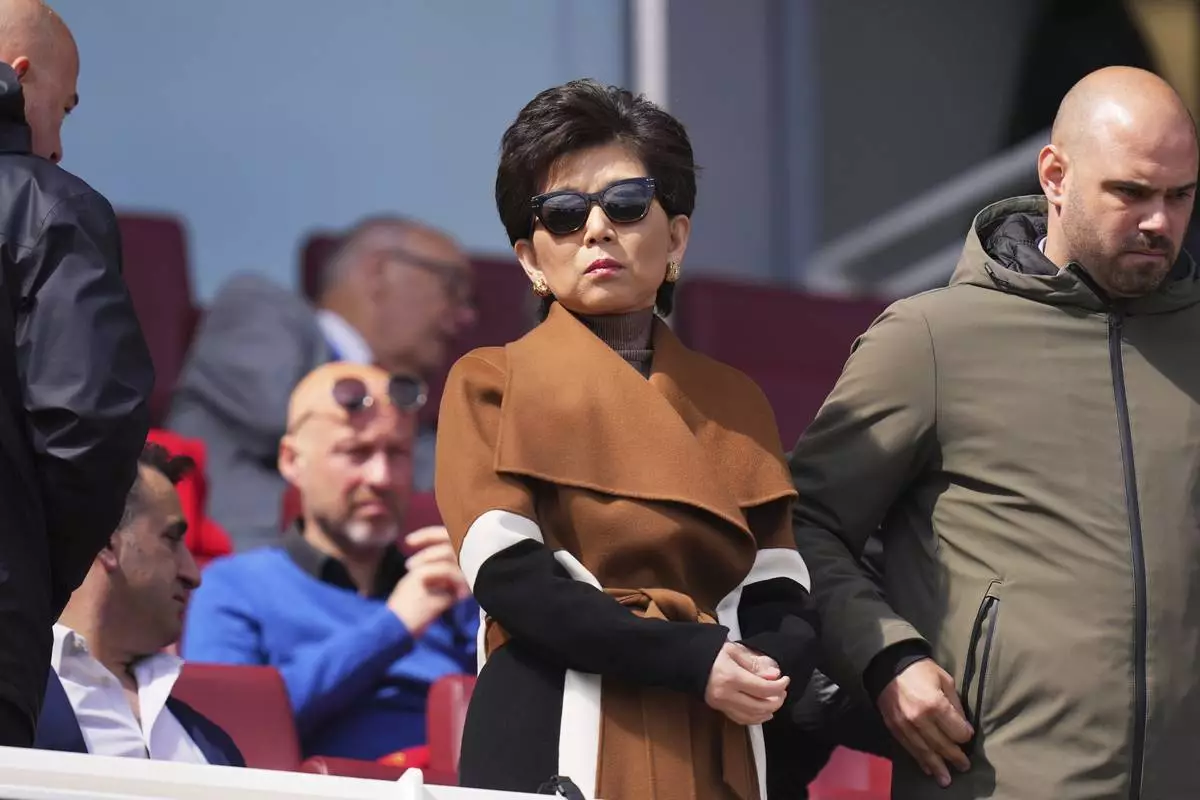
FILE - American businesswoman Michele Kang, owner of Olympique Lyonnais, on the tribune to watch the women's Champions League semifinals, first leg, soccer match between Arsenal FC and Olympique Lyonnais at the Arsenal Stadium, in London, April 19, 2025. (AP Photo/Kirsty Wigglesworth, File)
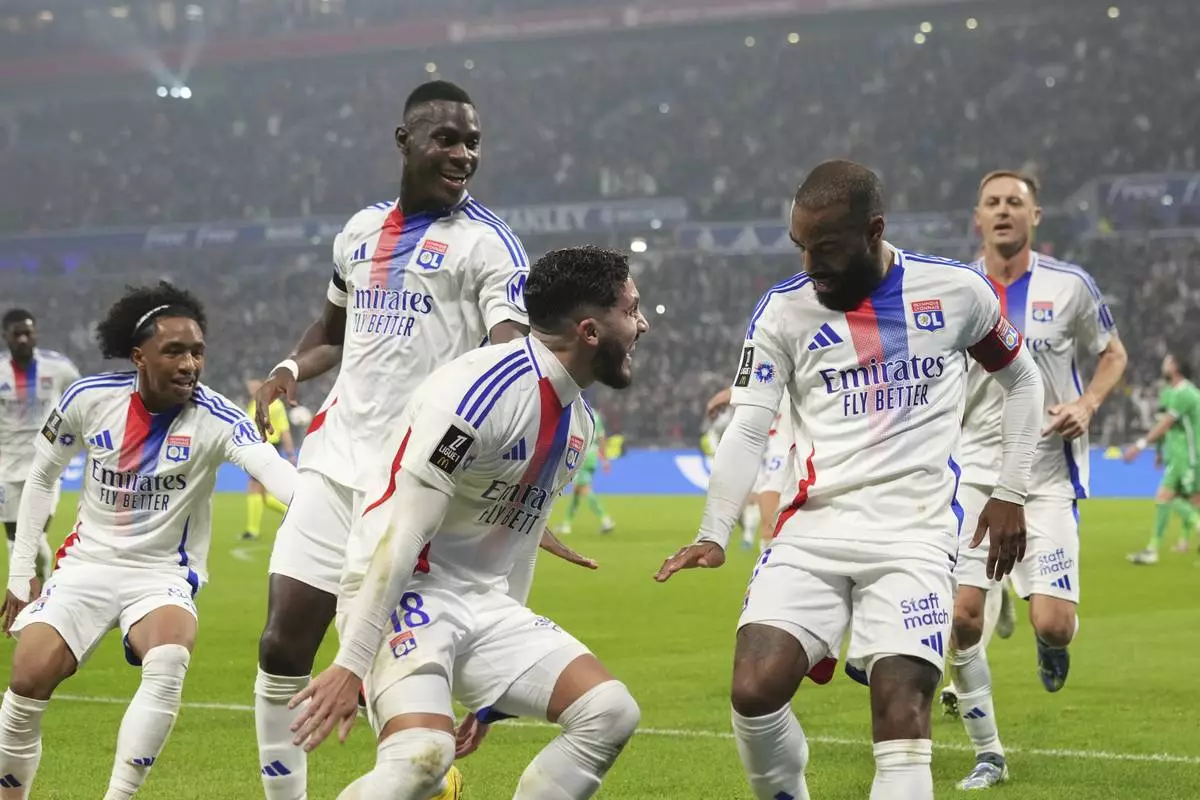
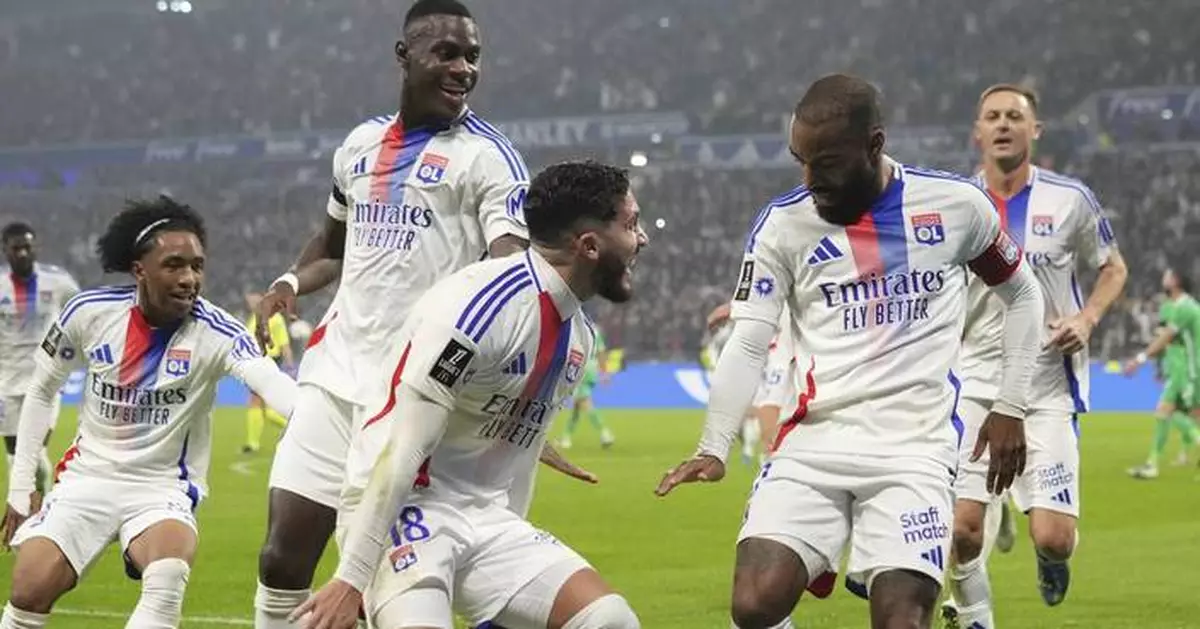
FILE - Lyon's Alexandre Lacazette, right, celebrates with teammates scoring a goal during the French League One soccer match between Lyon and Saint-Etienne at the Groupama stadium in Decines, outside Lyon, France, Nov. 10, 2024. (AP Photo/Laurent Cipriani, File)
HELSINGBORG, Sweden (AP) — NATO allies and defense officials expressed bewilderment Friday at U.S. President Donald Trump’s announcement that he would send 5,000 U.S. troops to Poland just weeks after ordering the same number of forces pulled out of Europe.
The apparent change of mind came after weeks of statements from Trump and his administration about reducing — not increasing — the U.S. military footprint in Europe. Trump's initial order set off a flurry of action among military commanders and left allies already doubtful about America's commitment to Europe's security to ponder what forces they might have to backfill on NATO's eastern flank with Russia and Ukraine.
Earlier this month, the Trump administration said it was reducing levels in Europe by about 5,000 troops, and U.S. officials confirmed about 4,000 service members were no longer rotating into Poland from Germany. The dispatch to Germany of U.S. personnel trained to fire long-range missiles was also halted.
But in a post on Truth Social on Thursday, Trump said he would now send "an additional 5,000 Troops to Poland,” citing his strong ties with Polish President Karol Nawrocki, whom Trump endorsed in elections last year.
“It is confusing indeed, and not always easy to navigate,” Swedish Foreign Minister Maria Malmer Stenergard told reporters Friday at a meeting she was hosting of her NATO counterparts, including U.S. Secretary of State Marco Rubio.
Ministers from the Netherlands and Norway were sanguine about Trump’s latest move, as was Latvian Foreign Minister Baiba Braže, who said allies knew the U.S. troop “posture was being reconsidered, and now there is no change of posture. For now.”
U.S. defense officials also expressed confusion. “We just spent the better part of two weeks reacting to the first announcement. We don’t know what this means either,” said one of two officials who spoke on condition of anonymity to discuss sensitive military matters.
But Rubio said Washington’s allies understand that changes in the U.S. troop presence in Europe will come as the Trump administration reevaluates its force needs. “I think there’s a broad recognition that there are going to be eventually less U.S. troops in Europe than there has historically been for a variety of reasons,” he said.
The latest surprise came despite a U.S. pledge to coordinate troop deployments, including one from NATO’s top military officer, U.S. Lt. Gen. Alex Grynkewich, on Wednesday.
Trump's initial announcement that he would withdraw troops came as he fumed over remarks by German Chancellor Friedrich Merz, who said that the U.S. was being “humiliated” by the Iranian leadership and criticized what he called a lack of strategy in that war.
Trump told reporters that the U.S. would be cutting even more than 5,000 and also announced new tariffs on European cars. Germany is the continent’s biggest auto producer.
Rubio insisted that Trump’s decision “is not a punitive thing. It’s just something that’s ongoing.”
About 80,000 U.S. troops are stationed in Europe. The Pentagon is required to keep at least 76,000 troops and major equipment on the continent unless NATO allies are consulted and there is a determination that such a withdrawal is in U.S. interests.
The withdrawal of 5,000 troops might drop numbers below that limit.
But Trump's latest post suggests that troop numbers in Europe would not change. Polish Foreign Minister Radek Sikorski welcomed the decision to send more forces to his country, saying it ensures that “the presence of American troops in Poland will be maintained more or less at previous levels.”
NATO Secretary-General Mark Rutte also welcomed the move. On Thursday, before Trump took to Truth Social again, Rutte had underlined that it was important for Europe to take care of its own security. “We have a process in place. This is normal business,” he told reporters.
At NATO headquarters in Brussels, meanwhile, U.S. officials briefed the allies on the Pentagon's aims for its commitments to the NATO Force Model, which involves contingency planning for Europe’s defense in the event of serious security concerns. It was widely expected that a further reduction of U.S. forces would be coming.
Asked whether any cuts were announced, Rutte said: “I’m afraid it’s much more complicated than that.” He said the procedure “is highly classified” and declined to give details.
Rubio played down concerns about a shift in U.S. force levels in Europe, saying: "Every country has to constantly reevaluate what their needs are, what their commitments are around the world, and how to properly structure that.”
Cook reported from Brussels. Associated Press writer Emma Burrows in London contributed.
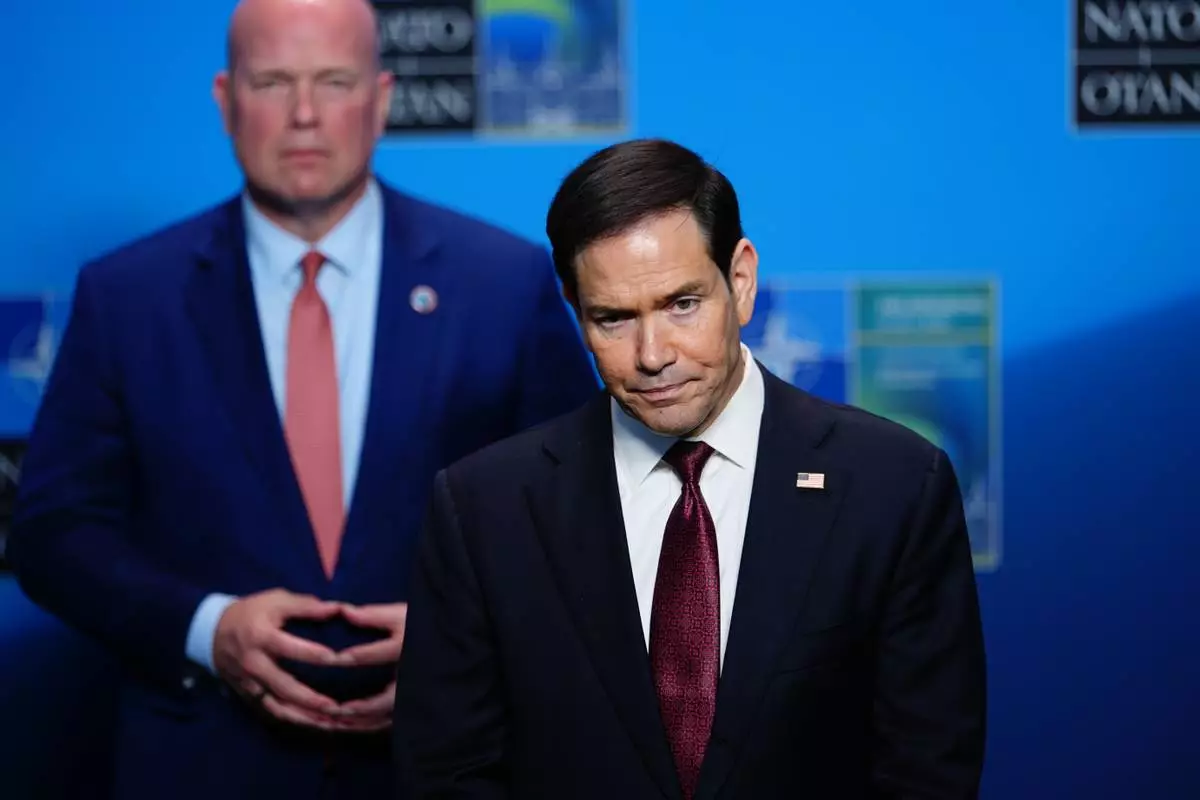
United States Secretary of State Marco Rubio speaks with journalists during a meeting of NATO foreign ministers in Helsingborg, Sweden, Friday, May 22, 2026. (AP Photo/Julia Demaree Nikhinson, Pool)
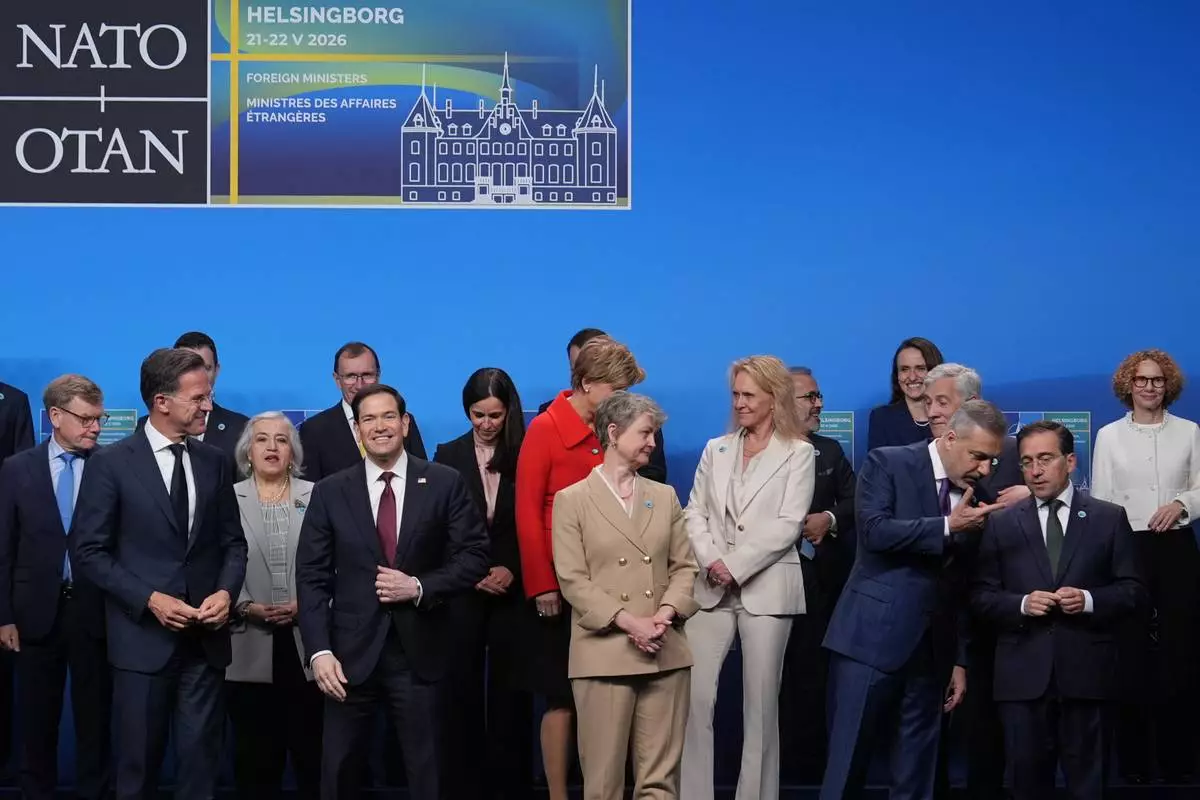
United States Secretary of State Marco Rubio, front second left, and NATO Secretary General Mark Rutte, front left, speak with each other during a group photo at a meeting of NATO foreign ministers in Helsingborg, Sweden, Friday, May 22, 2026. (AP Photo/Julia Demaree Nikhinson, Pool)
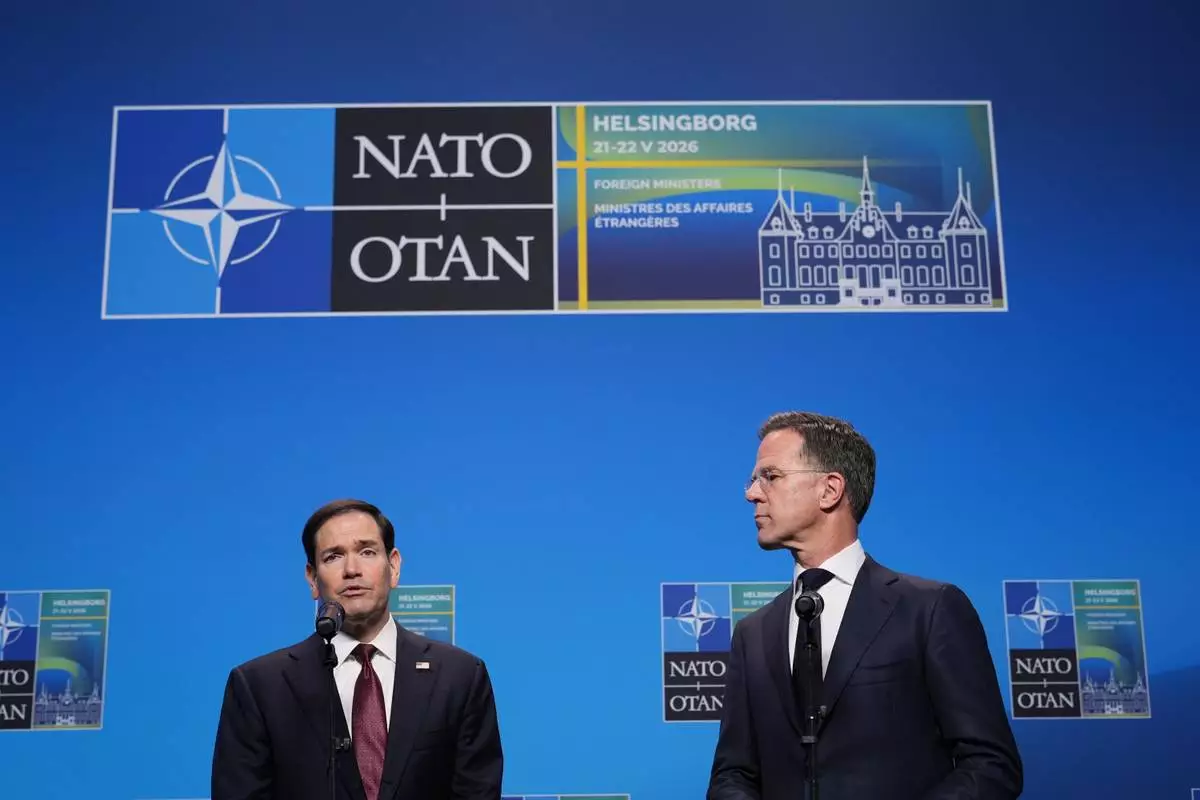
United States Secretary of State Marco Rubio, left, and NATO Secretary General Mark Rutte look at each other as they deliver a statement during a meeting of NATO foreign ministers in Helsingborg, Sweden, Friday, May 22, 2026. (AP Photo/Julia Demaree Nikhinson, Pool)
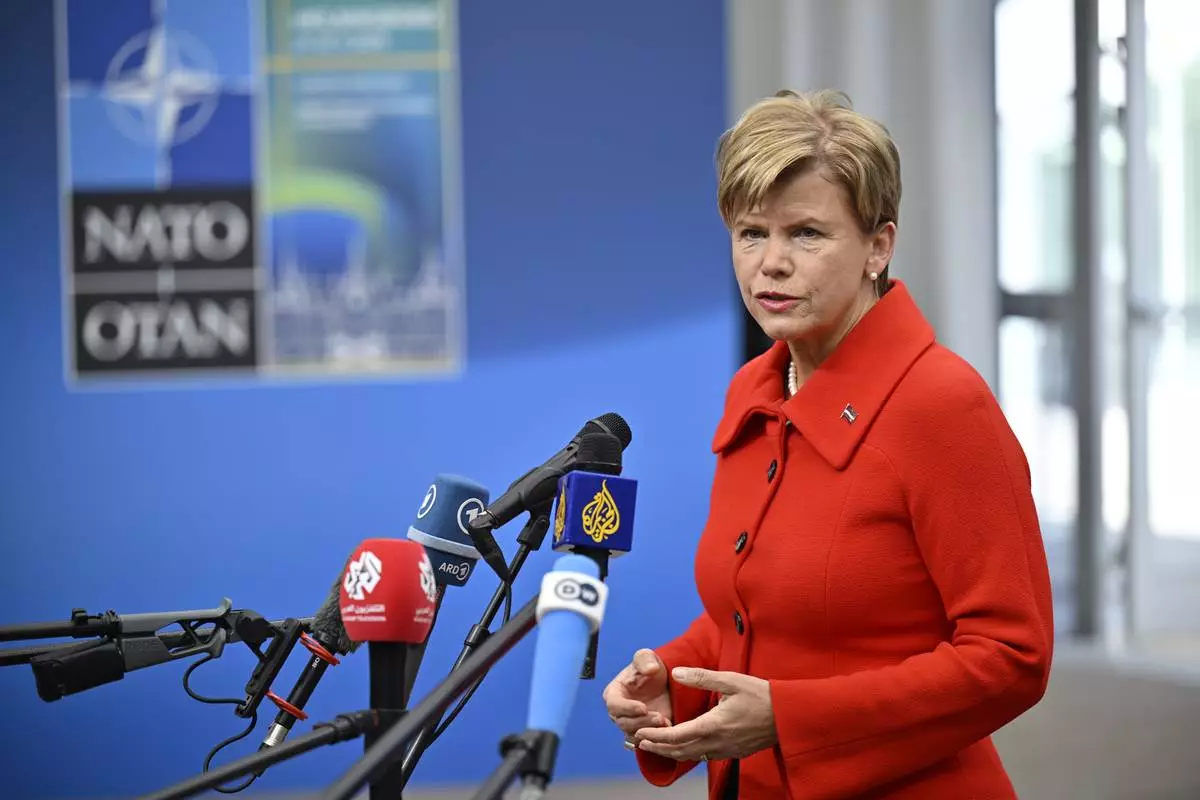
Latvian Foreign Minister Baiba Braže speaks at the doorstep of the NATO foreign ministers' meeting at Sea U in Helsingborg, Sweden, Friday, May 22, 2026. (Johan Nilsson/TT News Agency via AP)
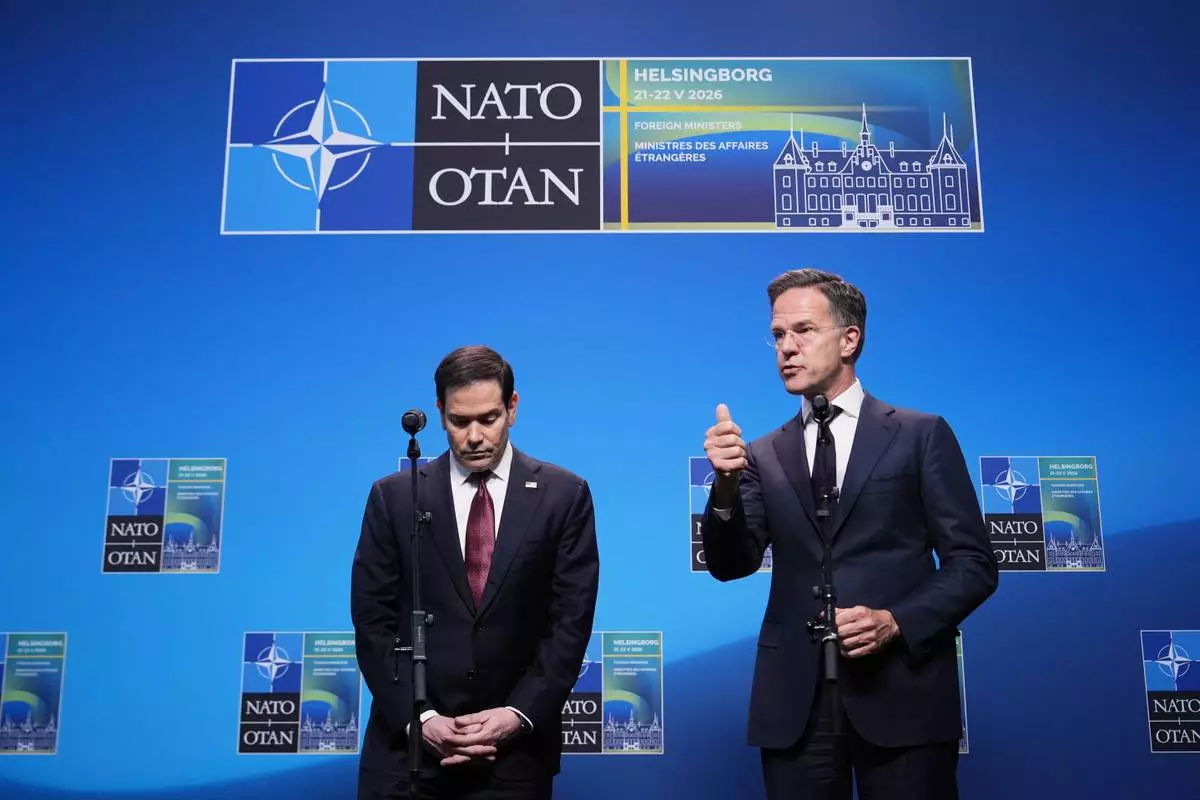
United States Secretary of State Marco Rubio, left, and NATO Secretary General Mark Rutte deliver a statement during a meeting of NATO foreign ministers in Helsingborg, Sweden, Friday, May 22, 2026. (AP Photo/Julia Demaree Nikhinson, Pool)
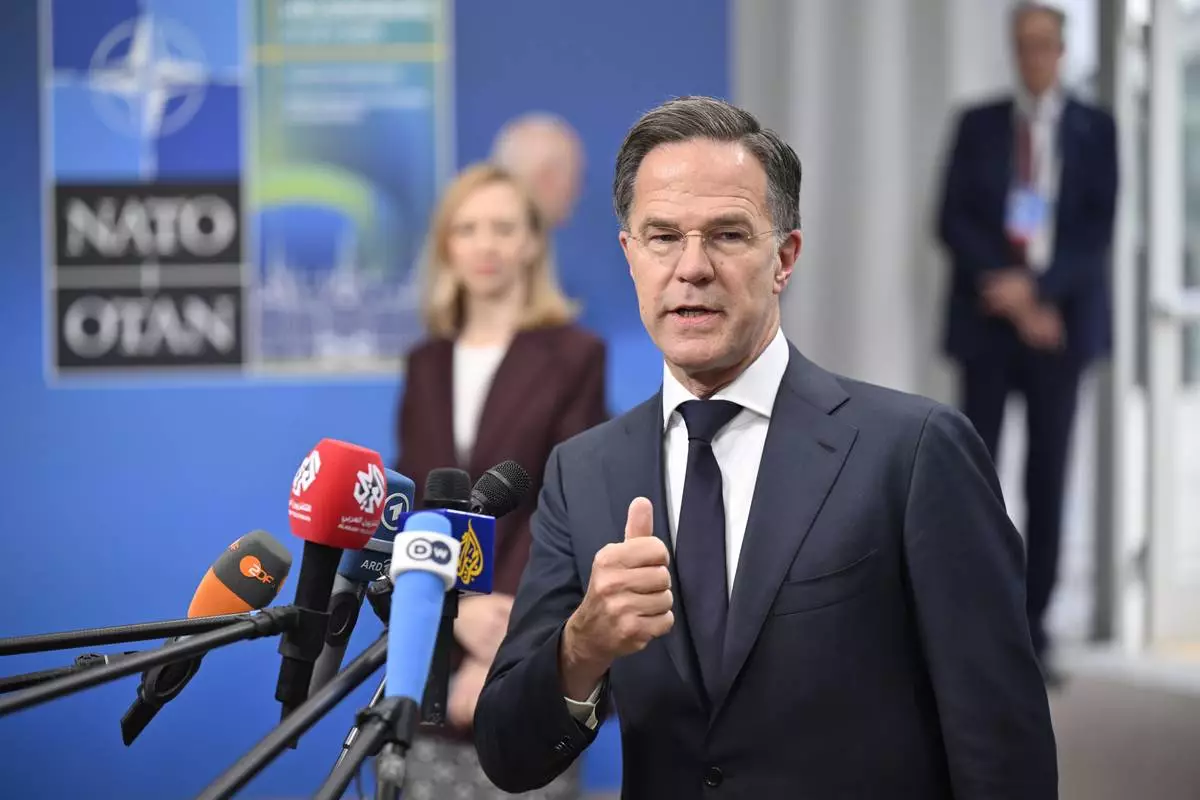
NATO Secretary General Mark Rutte speaks to media at the NATO Foreign Ministers' meeting in Helsingborg, Sweden, Friday, May 22, 2026. (Johan Nilsson/TT News Agency via AP)
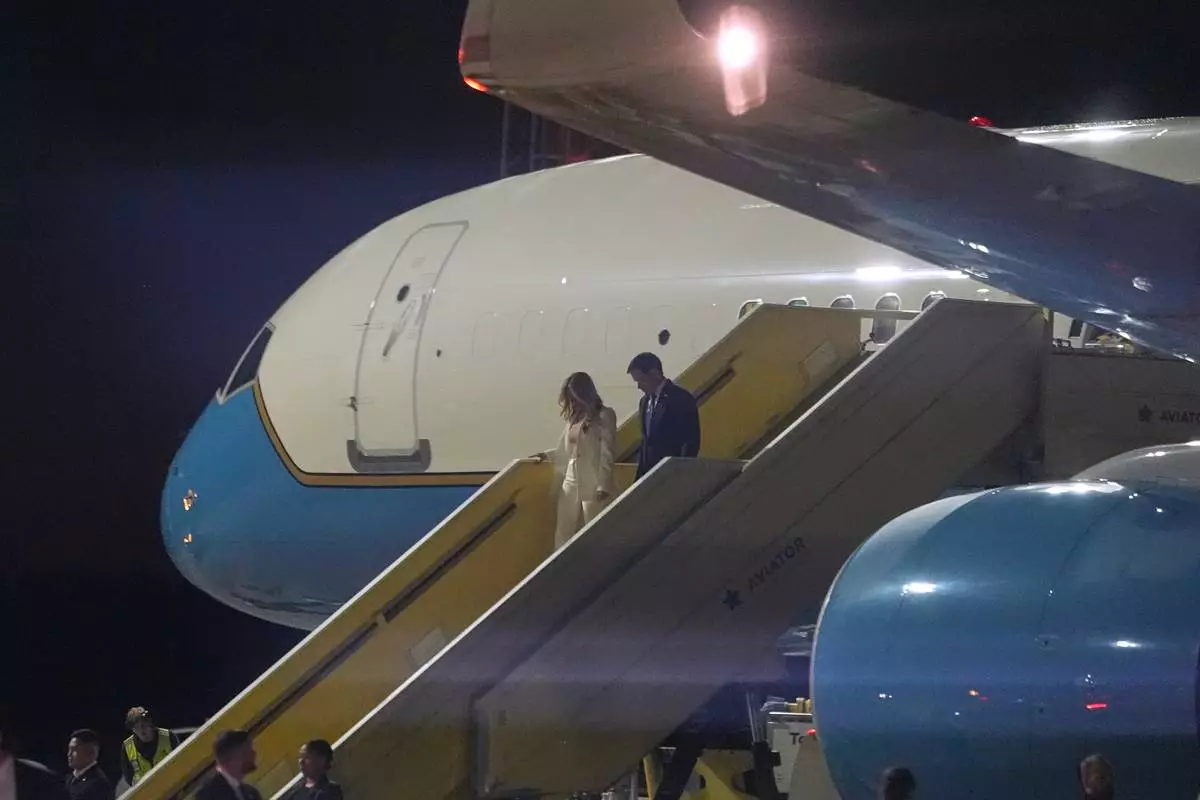
Secretary of State Marco Rubio arrives with his wife Jeanette at Malmo Airport, Friday, May 22, 2026, in Malmo-Sturup, Sweden, ahead of a NATO foreign ministers meeting. (AP Photo/Julia Demaree Nikhinson, Pool)
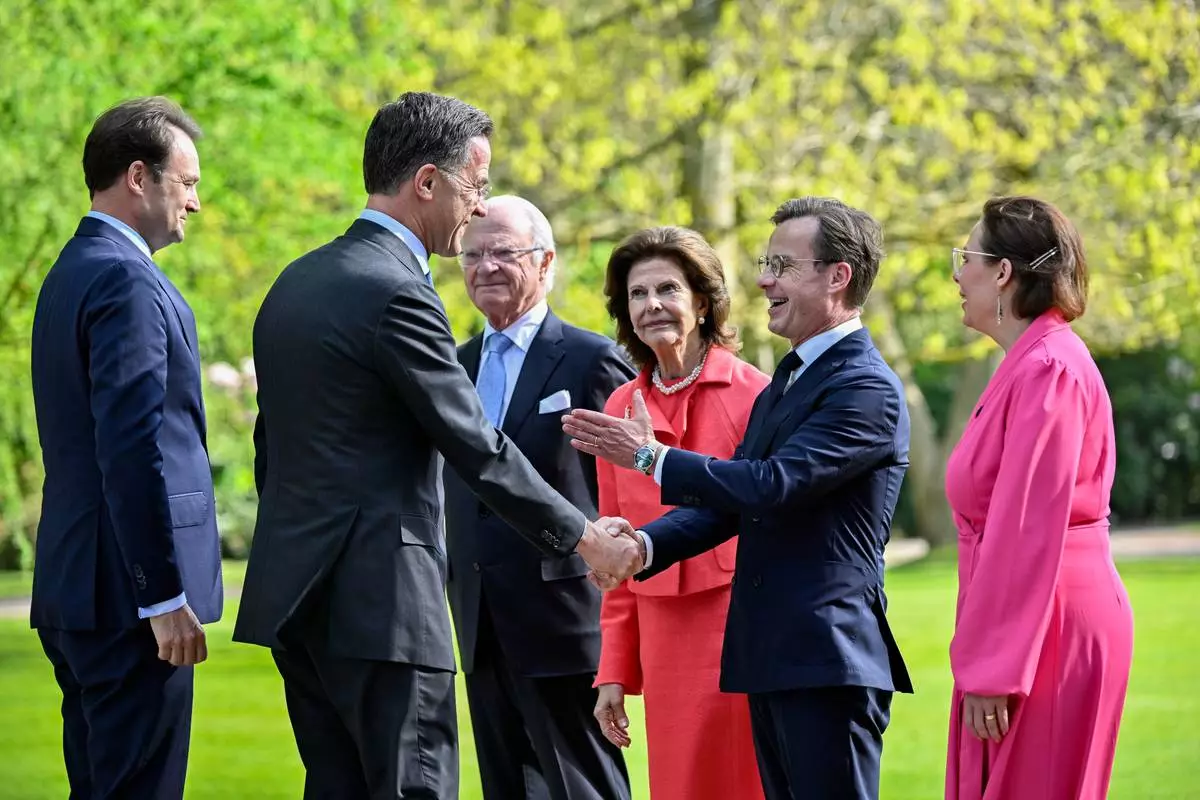
NATO Secretary General Mark Rutte, second from left, shakes hands with Prime Minister of Sweden Ulf Kristersson, as he is greeted by King Carl Gustaf of Sweden, Queen Silvia of Sweden and Minister for Foreign Affairs of Sweden Maria Malmer Stenergard, right, before a dinner at Sofiero Castle in Helsingborg, Sweden, Thursday May 21 2026. (Johan Nilsson/TT News Agency via AP)
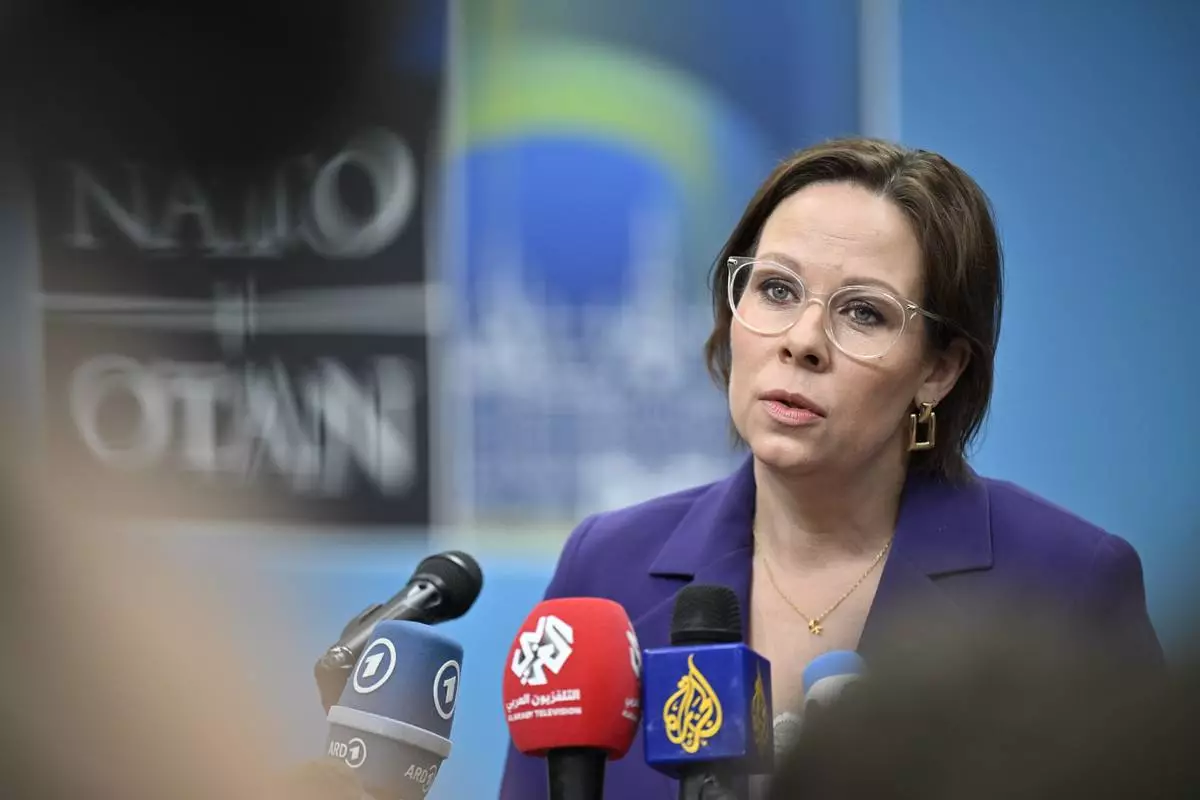
Swedish Foreign Minister Maria Malmer Stenergard speaks to media at the NATO Foreign Ministers' meeting in Helsingborg, Sweden, Friday, May 22, 2026. (Johan Nilsson/TT News Agency via AP)