Singapore is accelerating efforts to diversify its trade partnerships after failing to secure a tariff exemption from the United States, shifting focus toward regional alliances and new trading partners for stability and growth.
Prime Minister Lawrence Wong condemned the U.S. measures, noting that imposing such measures does not reflect how one treats a friendly nation. Senior Minister Lee Hsien Loong also warned of direct trade and economic impacts.
"And it's actually the kind of formula a bully would use. It's designed to actually maximize coercive bargaining power," said Jayant Menon, visiting senior fellow of ISEAS - Yusof Ishak Institute.
In April, the U.S. imposed sweeping tariffs. Singapore was hit with the baseline rate. But for an open economy built on trade, even that 10 percent was enough to rattle business sentiment.
In May, Singapore's non-oil domestic exports fell 3.5 percent, largely due to a sharp 20 percent decline in shipments to the U.S. Factory output has slowed. And the government downgraded its full year GDP forecast by one percent.
"This led to a decline in the business confidence in terms of doing business and engaging in global trade, and the firms will try to postpone their hiring and their huge capital investment and also their shipments," said Guangzhi Ye, assistant professor in economics at the Nanyang Technological University of Singapore.
The uncertainty-driven hesitation is already impacting key sectors. Electronics, led by semiconductors, make up close to half of Singapore's manufacturing and nearly 30 percent of its exports. Supreme Components, a major distributor of electronic parts, has already reported a clear drop in demand.
"Anybody I speak to, any of my customers, suppliers, any of my colleagues in the industry, it's all a wait-and-watch. No investments have been planned. Everything is on hold," said Vick Aggarwala, president of a local electronic component company.
Economists say the government is responding on multiple fronts, from forming a task force to rolling out support for businesses and households.
"Singapore's government aims for the long term. One is to continue to build up its capabilities in high tech like AI, and biomedical-related, and aim for increasing expenditure in research and development," Ye said.
Analysts say Singapore and its neighbors must also prepare for a future where the U.S. plays a smaller role in global trade.
"The U.S. administration under President Trump is not a reliable trading partner. I mean the U.S. contributes about 13 percent when it comes to global imports. They're a fraction of global trade. And the way they are going, it's going to be smaller. So, I think we're already starting to, directly or indirectly, prepare for a world where the U.S. is a less important partner," said Menon.
Singapore has conducted diplomatic outreach to all ASEAN nations and China over the past year, part of what government officials describe as a strategy to strengthen regional economic ties amid changing global trade dynamics.
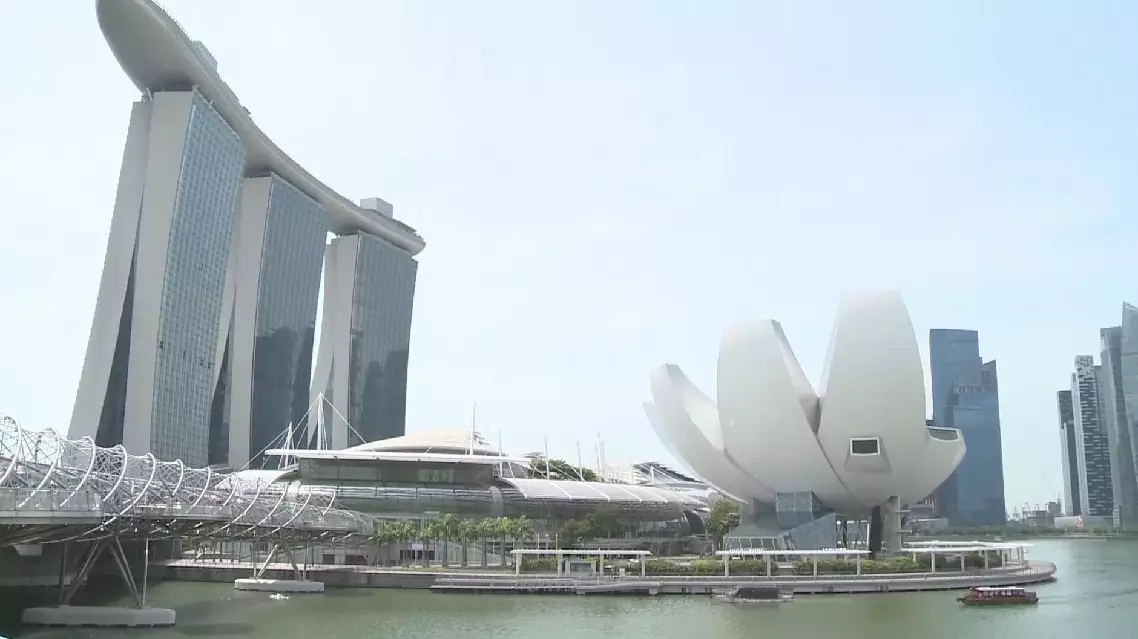
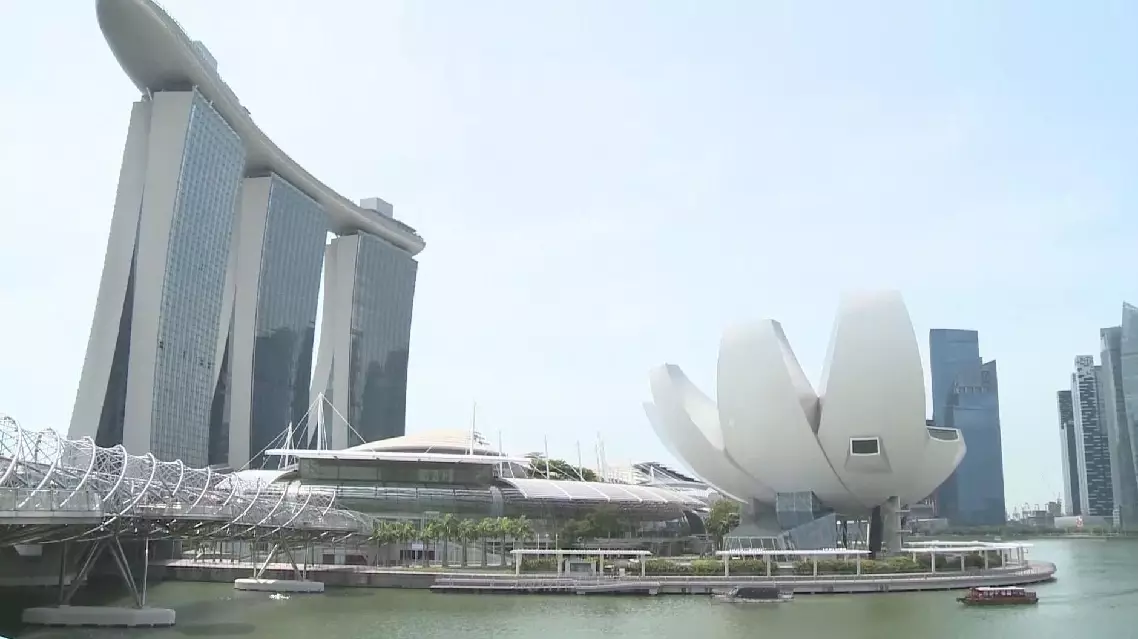
Singapore seeks trade diversification amid U.S. tariff pressure
Singapore seeks trade diversification amid U.S. tariff pressure