The more complex the international situation is, the more necessary it is for the Association of Southeast Asian Nations, China, Japan and South Korea (ASEAN Plus Three countries or 10+3) to eliminate interference and continue to advance the regional integration process, Chinese Foreign Minister Wang Yi said in Kuala Lumpur, Malaysia on Thursday.
Wang, also a member of the Political Bureau of the Communist Party of China Central Committee, made the remarks during the ASEAN Plus Three Foreign Ministers' Meeting.
Since the establishment of the 10+3 cooperation mechanism, we have continuously strengthened our crisis response capabilities, promoted the process of economic integration, and worked together to build up the momentum of new growth drivers, Wang said.
Focusing on development and promoting cooperation is the trend and the mainstream in current East Asian cooperation, Wang stated, adding that the countries are still facing challenges such as the impact of unilateralism and protectionism and the abuse of tariffs by certain major powers.
Noting the need to continuously enhance cooperation momentum and improve development resilience, Wang put forward four suggestions for the next stage of cooperation.
Firstly, build an integrated East Asia. We should resolutely oppose "building walls and barriers." China is willing to work with all parties to implement the leaders' statement and continue to strengthen mutually beneficial cooperation in production and supply chains.
Secondly, build a strong and resilient East Asia. We need to plan the future direction of regional fiscal and financial cooperation. China is willing to work with all parties to explore mechanism innovation and strengthen the level of regional food security cooperation on the basis of enhancing the construction of the 10+3 Emergency Rice Reserve Mechanism.
Thirdly, build an innovative and dynamic East Asia. We must seize the opportunities presented by the new round of technological and industrial revolutions and drive transformation and development with innovation.
Fourthly, build an East Asia with cultural connectivity. We should keep implementing the "CAMPUS Asia" program and promote student exchanges and talent training among the ASEAN Plus Three countries.
Wang stressed that no matter how the external environment changes, China is willing to use its own stable economic development to inject new impetus into the common development of the region, provide new opportunities, and jointly create a brighter future for East Asia.
The foreign ministers of ASEAN countries praised China, Japan and South Korea for supporting ASEAN's central position in the regional architecture.
ASEAN foreign ministers said that the 10+3 mechanism came into being in response to the Asian financial crisis and the cooperation has achieved remarkable results.
Facing rising unilateralism, increased tariffs and trade barriers, and heightened geopolitical tensions, the 10+3 cooperation is even more precious and should continue to play a strategic leading role in promoting inclusive regional development and sustainable peace, the ministers said.
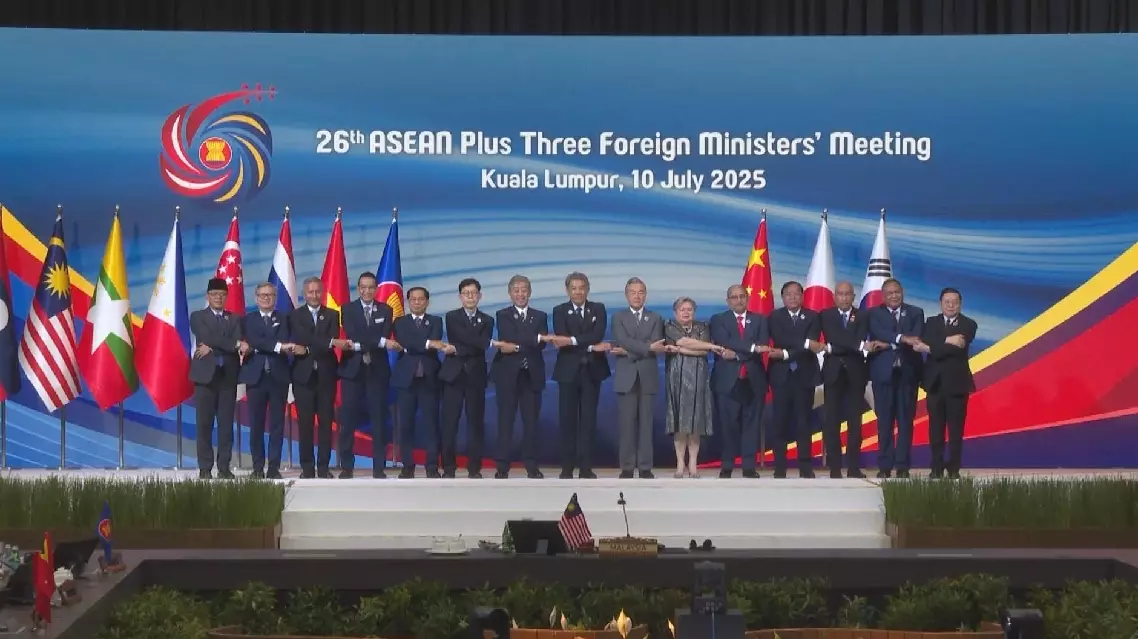
ASEAN Plus Three countries should continue to advance regional integration process: Chinese FM
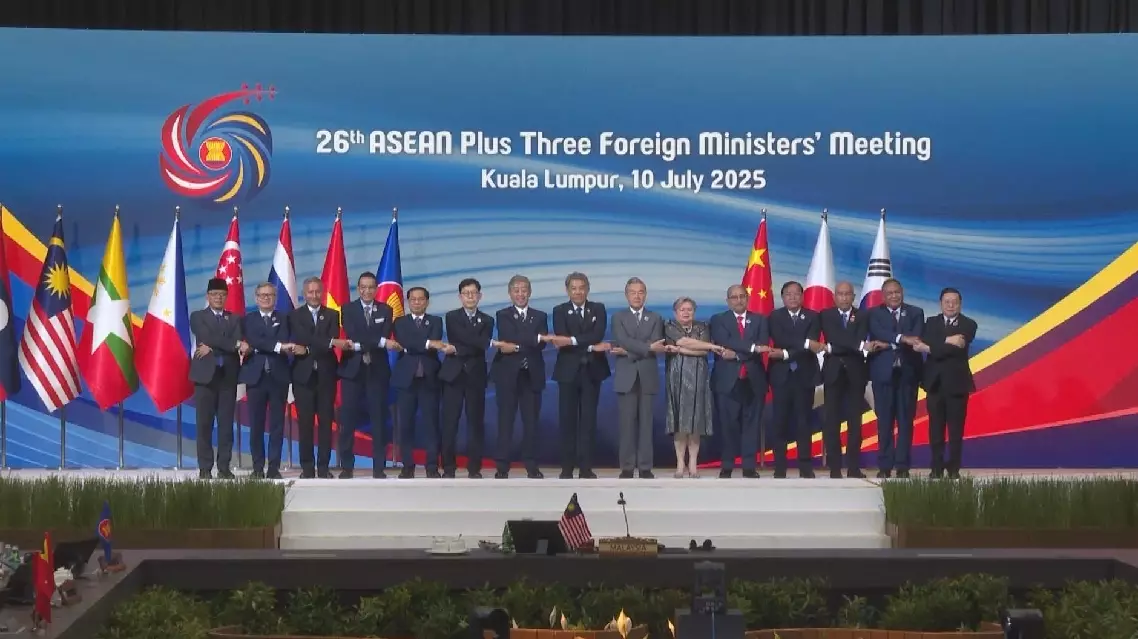
ASEAN Plus Three countries should continue to advance regional integration process: Chinese FM
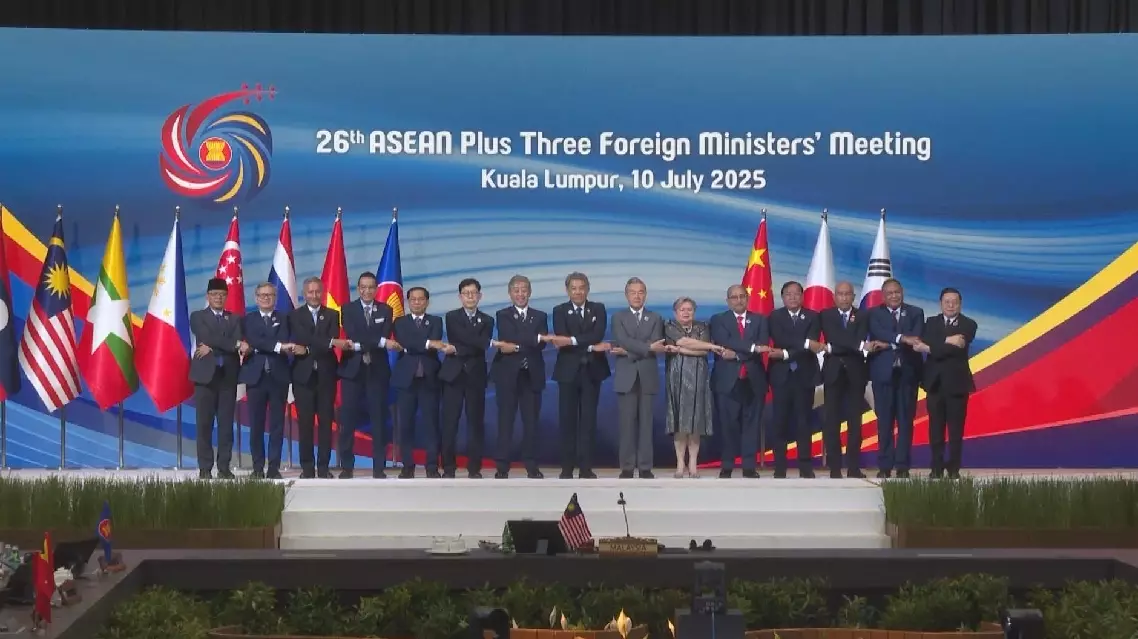
ASEAN Plus Three countries should continue to advance regional integration process: Chinese FM