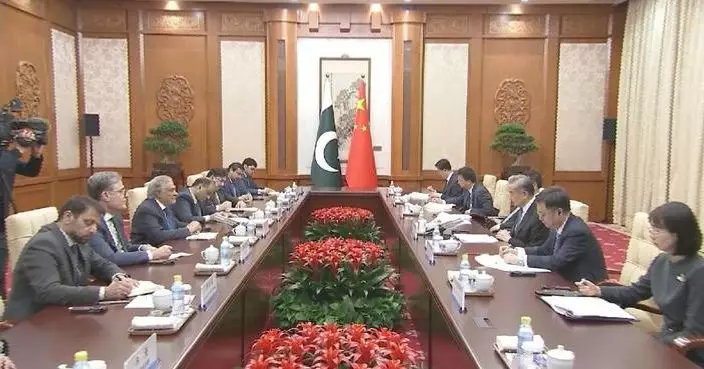
The Global Civilizations Dialogue Ministerial Meeting held six sub-forums in Beijing on Friday, where Chinese and international guests sought to promote mutual learning among civilizations and jointly advocate for peaceful coexistence and harmonious development among diverse cultures.
Through formats including roundtable discussions and academic salons, the attendees focused on six key themes of exchanges and mutual learning -- building an inclusive world, global development and prosperity, cultural inheritance and innovation, understanding and friendship among peoples, innovative development of science and technology, and academic dialogue.
On the sidelines of the discussions, notable attendees underscored the growing role of cross-civilization dialogue in the international system.
"The whole civilizations and human development are always diversified. Diversity is the basic characteristic of human society. There is diversity, there are differences, but we must cooperate each other, we must understand each other, we must learn from each other. Through this learning and dialogue, we have to develop the world," said Jhala Nath Khanal, former prime minister of Nepal and also one of the senior leaders of the ruling Nepal Communist Party.
With today's world facing increasingly complex challenges, many participants emphasized the importance of transcending barriers through civilizational exchange and mutual understanding, particularly through the implementation of China's Global Civilization Initiative (GCI).
"The GCI is internationally adopted, accepted and it resonates with a lot of things, the plans of a lot of countries abroad," said Gert Grobler, a former South African ambassador to Spain, Japan, and Madagascar, and an honorary professor at the Institute of African Studies at Zhejiang Normal University in east China. Ahead of the main conference, many international delegates visited cities across China, gaining first-hand experience of the country's rich and enduring cultural heritage.
"China shows the world how to engage, communicate, and collaborate. Exploring cities like Hangzhou, Shanghai, and Dunhuang helps us better understand the Chinese culture," said Simon Lichtenberg, national board member of the Danish Chamber of Commerce in China.
"We should respect that the cultural heritage should be preserved, it should not be modified or changed, but we should also enhance the innovation. So my answer to this question, how to build the common society for the future of mankind will be to preserve the inheritance, preserve the historic inheritance and enhance the innovation, learn from each other, but at the same time respect each other mutually," said Gabriel Fischer, European Affairs Advisor to the Chairman of Voice-Social Democracy of Slovak and Slovak National Council representative to the European Union.
During the forums, several key initiatives were launched, including the global civilization exchange and mutual learning cooperation research plan and the global public opinion survey blue book, turning the concept of the Global Civilization Initiative into practical action.
"The only way the world can exist is through dialogue, through understanding, through coexistence, respect for other people's cultures. In that way, we are definitely going forward," said Batuke Imenda, secretary general of the Zambian United Party for National Development.
International guests from more than 140 countries have vowed to continue civilizational dialogue at all levels and across sectors, according to a declaration released at the Global Civilizations Dialogue Ministerial Meeting.
Under the theme of "Safeguarding Diversity of Human Civilizations for World Peace and Development," the meeting, held on Thursday and Friday in Beijing, attracted over 600 political figures, scholars and experts.
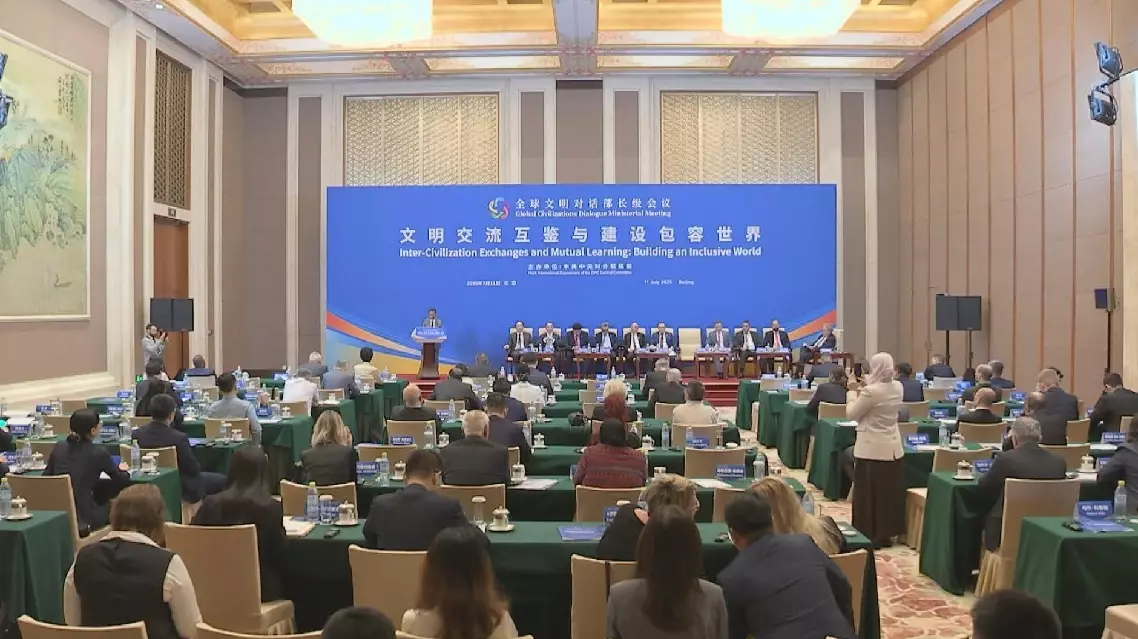
Global Civilizations Dialogue meetings hold forums on mutual learning