The International Telecommunication Union of the United Nations hosted the AI For Good Summit in Geneva from Tuesday to Friday to explore future opportunities in AI's development and governance, attracting thousands of stakeholders across the industry, governments and the tech community.
Through various exhibits, demonstrations and talks, the summit aims to showcase how AI is transforming real-world challenges into opportunities, and inspire the industry on the future directions of AI.
"As you can see from our industry, for AI products, the more people use it, it actually costs more money. [We] lose more money because of the [low] efficiency, or the cost is still not low enough. So I think the biggest challenge is how we can [make] models much more powerful, while the cost is reduced significantly," said Ye Jieping, vice president of China's Zhejiang Lab, a national research hub for smart computing and AI technology, in an interview with China Central Television on the sidelines of the event.
Despite the concerns and challenges, experts reached agreements at the summit that AI has made significant progress in the past two years and is poised to become even stronger.
Nadine, a humanoid with social intelligence displayed at the summit, also gave her answer to AI's future development. "I see the future of AI as incredibly promising. It has the potential to transform industries, improve the quality of life, and solve complex global challenges. However, it's crucial to ensure that AI is developed and used ethically and responsibly," said the robot.
In addition to the showcases, the summit also included conferences on AI governance and standardization, bringing the industry together to help identify the steps needed to bridge the gap between AI applications and regulation.
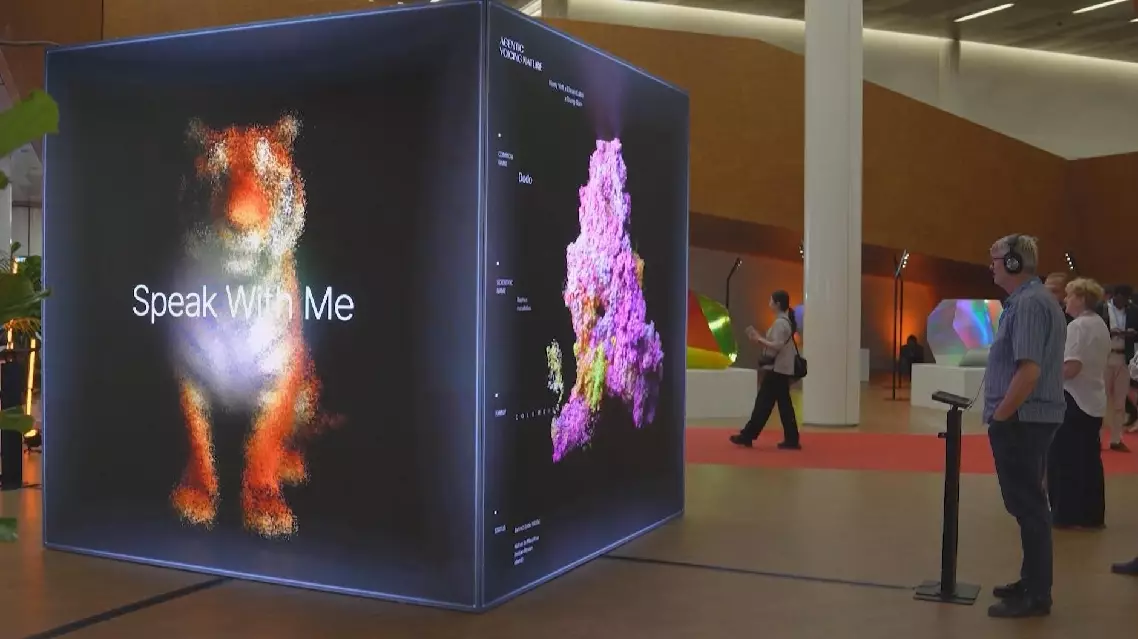
AI summit held in Geneva to explore future opportunities in development, governance
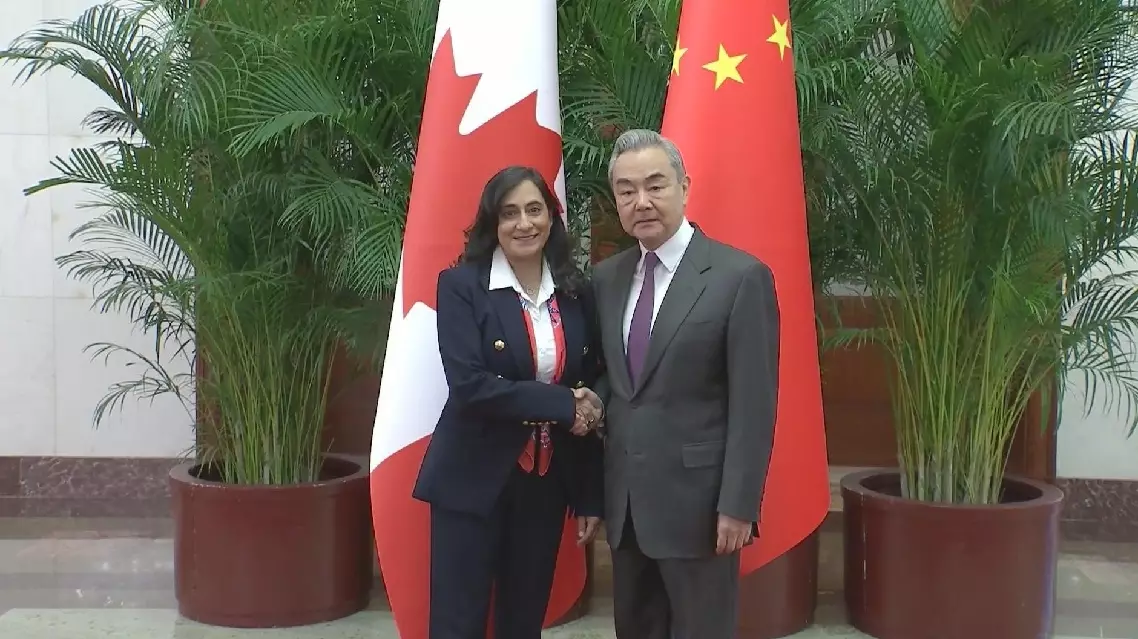
China is willing to strengthen communication, enhance trust, eliminate interference, and deepen cooperation with Canada to bring bilateral relations forward on a steady and sound track in solid strides under the new circumstances, said Chinese Foreign Minister Wang Yi on Thursday.
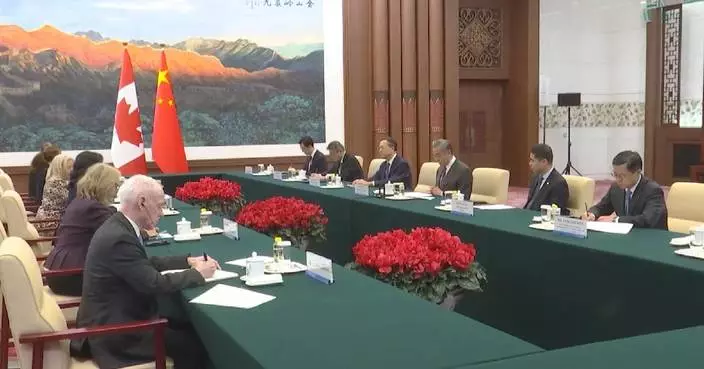
Wang, also a member of the Political Bureau of the Communist Party of China Central Committee, met with Canadian Foreign Minister Anita Anand in Beijing on the day.
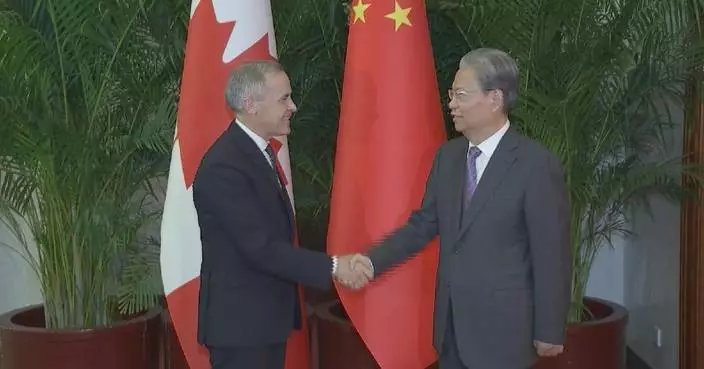
Referring to Canadian Prime Minister Mark Carney's visit to China, the first by a Canadian prime minister in eight years, Wang said the trip marks a milestone in bilateral ties and signals a turning point in the relationship.
The leaders of the two countries will hold meetings and talks, which are expected to open up new prospects for bilateral relations, said Wang.
The world today is undergoing profound and complex changes, and the impact of China-Canada relations transcends the bilateral scope, Wang noted.
Wang said that China and Canada have different social systems, stemming from different historical and cultural heritage, and based on the choices of their respective people.
He urged both sides to view each other in a rational and amicable manner with an inclusive mindset, handle issues on the basis of mutual respect, focus on the agenda of cooperation, and send positive messages so as to foster optimism, inject greater confidence into the development of bilateral relations, and jointly build a new type of strategic partnership between China and Canada.
Anand said the new Canadian government attaches great importance to relations with China. She also added that Prime Minister Carney looks forward to engaging in in-depth exchanges with Chinese leaders during the visit to set the course for the development of bilateral relations, resume dialogue in various fields, pursue more mutually beneficial outcomes, enhance coordination and cooperation in multilateral affairs, and further advance the strategic partnership between the two countries.
China ready to work for steady, sound ties with Canada: FM