Nauruan President David Adeang, who recently embarked on a journey to trace his roots in China, has expressed hope that his family will stay connected and maintain close ties with their rediscovered ancestral relatives.
Earlier this month, Adeang arrived in Jiangmen City in south China's Guangdong Province for a four-day visit, accompanied by his family, to explore their ancestral heritage.
After verification by relevant authorities, it was confirmed that Adeang's great-grandfather's ancestral home is located in the ancient Chikan town of Jiangmen.
Over a century ago, Adeang's ancestors left China for Southeast Asia in search of better opportunities, before eventually settling in Nauru.
"The world is not so big anymore. To think that before today we didn't know each other at all, but now we are going to be communicating by WeChat to keep the families connected. And my daughter who will be schooling at Beijing in a couple of months, she will be responsible for staying connected and bringing the two families closer together," Adeang said in an interview with China Media Group (CMG).
Adeang's great-grandfather belonged to a large family with the surname Situ. To commemorate this meaningful reunion, Adeang posed for a group photo with members of the Situ family.
Adeang also met an elderly woman whom he and his family affectionately called "granny".
"It's good to know her. And I hope that they will welcome us back again and again, because we really want to be close to our family on this side of the world," said the president.
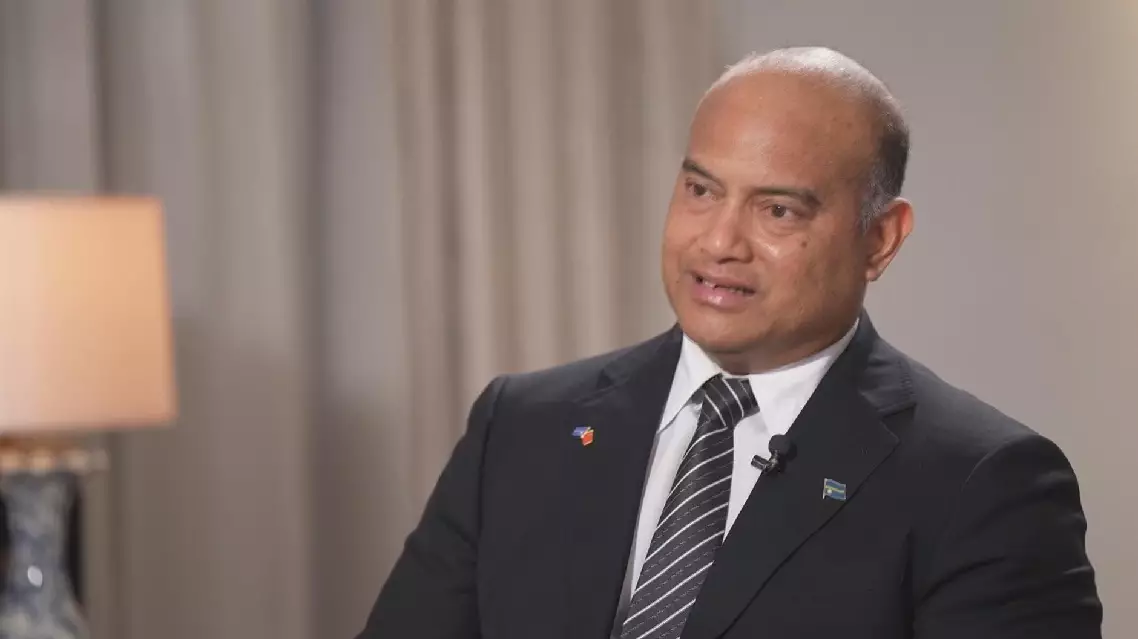
Nauruan president hopes to stay connected with his ancestral relatives in China
China's 2026 box office (including pre-sales) has surpassed 12 billion yuan as of Friday evening, according to the latest data released by online platforms.
The country will also see nearly 20 films being released during the Qingming Festival holiday, which runs from April 4 to 6.
A film analyst said family and kinship became a focus of this year's film season, with three films, namely, "It's OK", "Now I Met Her", and "Sunshine Women's Choir" all telling moving stories about family relationship.
"It's OK", which focuses on the mother-daughter relationship, depicts how a mother and her daughter move from confrontation to mutual understanding by overcoming profound differences in their outlook on life.
"Now I Met Her" tells the story of a rebellious teenage son who embarks on a journey to know his late mom through the diaries she wrote when she was young.
"Sunshine Women's Choir", a production from China's Taiwan region, is a touching story about a group of women who heal each other and reconcile with their past through singing.
"Among domestic productions, three films focus on family and kinship. As a cluster, they are able to generate a collective effect, encouraging audiences to go to cinemas to support and pay attention to films of such themes and styles," said Zhang Jinfeng, chief editor of China Film News.
The suspense film "Game of Identity" follows two persons from vastly different backgrounds who embark on an adventurous "life swap" by accident.
The imported animated film "The Super Mario Galaxy Movie" follows brothers Mario and Luigi on an adventure to explore an uncharted galaxy.
"Regarding film supply, we have more films released during this year's Qingming Festival holiday than last year, which can meet diverse appetites of different groups of audience," said Zhang.

China's 2026 box office surpasses 12 bln yuan