Skip to Content Facebook Feature Image

Israeli strikes kill at least 32 in Gaza as Palestinian war deaths top 58,000

News

Israeli strikes kill at least 32 in Gaza as Palestinian war deaths top 58,000
News

News

Israeli strikes kill at least 32 in Gaza as Palestinian war deaths top 58,000

2025-07-14 03:41 Last Updated At:03:50

DEIR AL-BALAH, Gaza Strip (AP) — Israeli strikes in the Gaza Strip killed at least 32 people on Sunday, including six children at a water collection point, while the Palestinian death toll passed 58,000 after 21 months of war, local health officials said.

Israel and Hamas appeared no closer to a breakthrough in indirect talks meant to pause the war and free some Israeli hostages after Prime Minister Benjamin Netanyahu's Washington visit last week. A sticking point has emerged over Israeli troops ' deployment during a ceasefire.

More Images
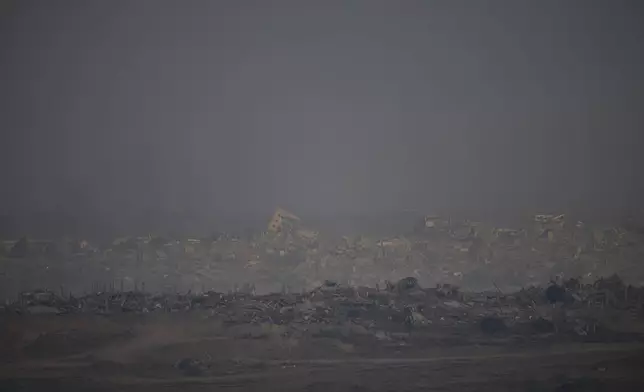
Destroyed buildings in the Gaza Strip are seen from a southern Israel location on Sunday, July 13, 2025. (AP Photo/Ohad Zwigenberg)
Destroyed buildings in the Gaza Strip are seen from a southern Israel location on Sunday, July 13, 2025. (AP Photo/Ohad Zwigenberg)

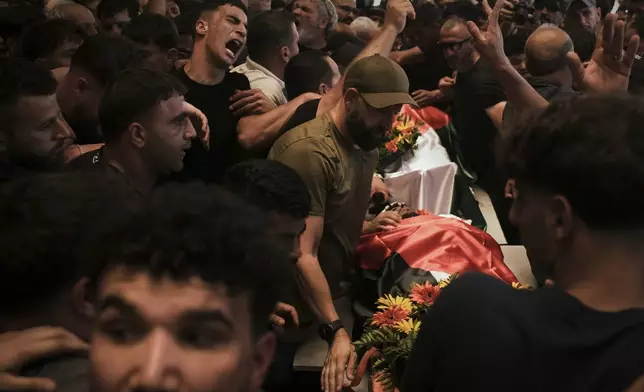
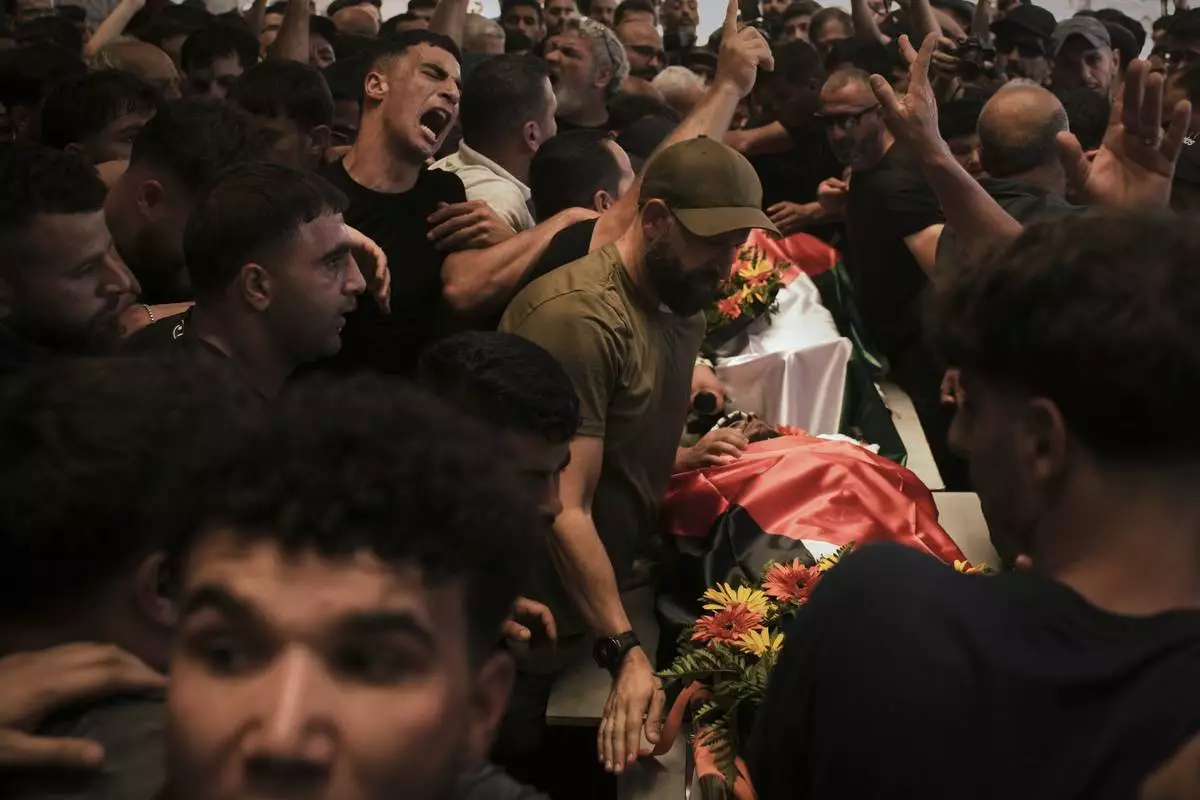
Mourners carry the bodies of Palestinian-American Sayfollah Musallet, 20, and Mohammed al-Shalabi during their funeral in the West Bank village of Al-Mazraa a-Sharqiya on Sunday, July 13, 2025. According to the Palestinian Health Ministry, Musallet was killed in an attack by Israeli settlers and al-Shalabi was shot in the chest. (AP Photo/Leo Correa)
Mourners carry the bodies of Palestinian-American Sayfollah Musallet, 20, and Mohammed al-Shalabi during their funeral in the West Bank village of Al-Mazraa a-Sharqiya on Sunday, July 13, 2025. According to the Palestinian Health Ministry, Musallet was killed in an attack by Israeli settlers and al-Shalabi was shot in the chest. (AP Photo/Leo Correa)

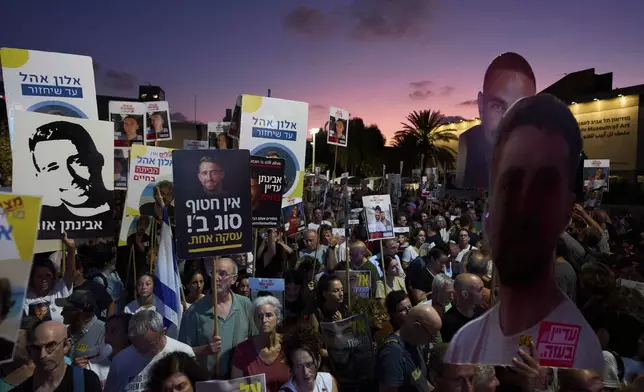
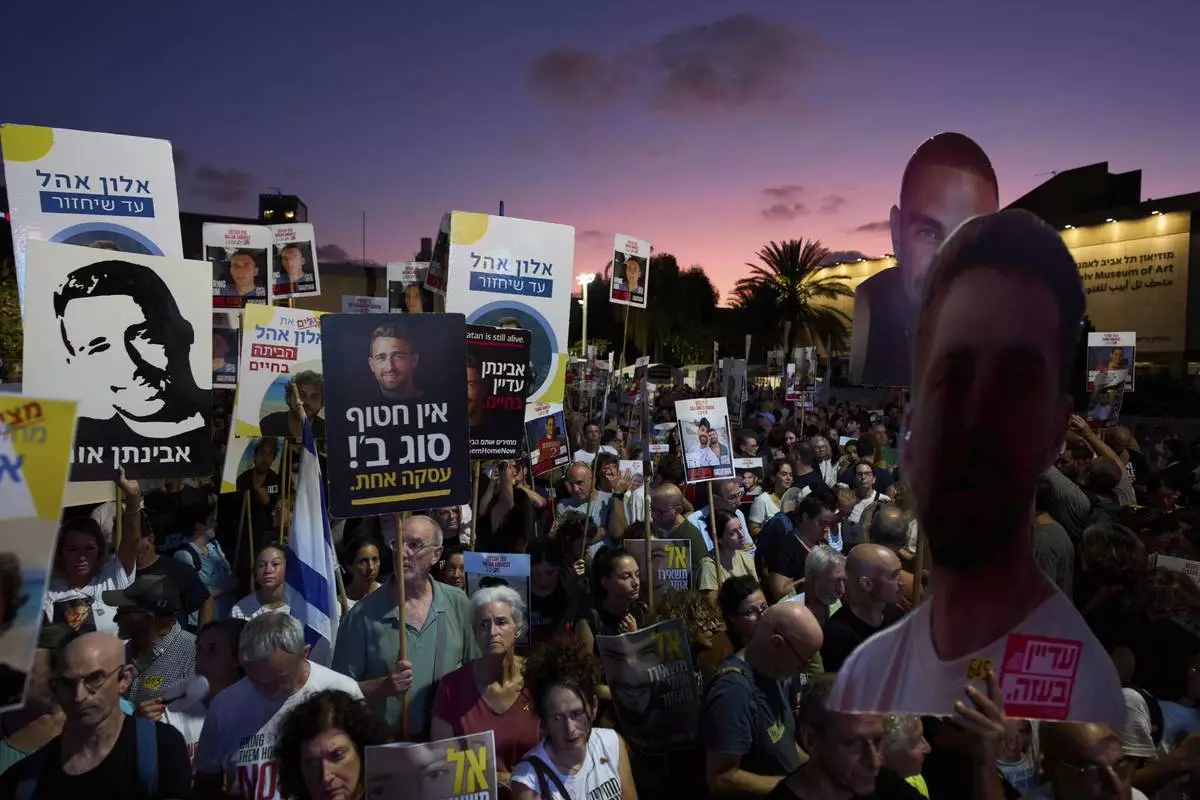
Relatives and supporters of Israeli hostages held in the Gaza Strip attend a rally demanding their release from Hamas captivity and calling for an end to the war, in Tel Aviv, Israel, Saturday, July 12, 2025. (AP Photo/Oded Balilty)
Relatives and supporters of Israeli hostages held in the Gaza Strip attend a rally demanding their release from Hamas captivity and calling for an end to the war, in Tel Aviv, Israel, Saturday, July 12, 2025. (AP Photo/Oded Balilty)

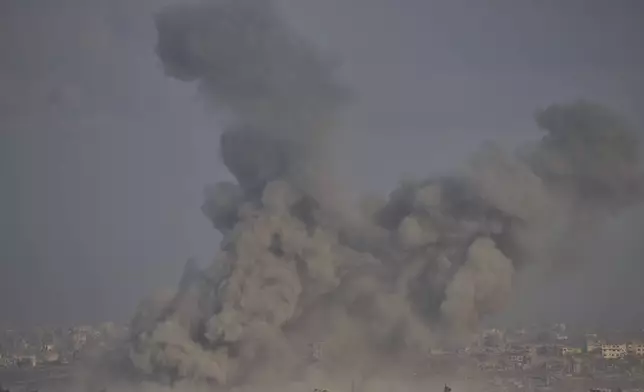
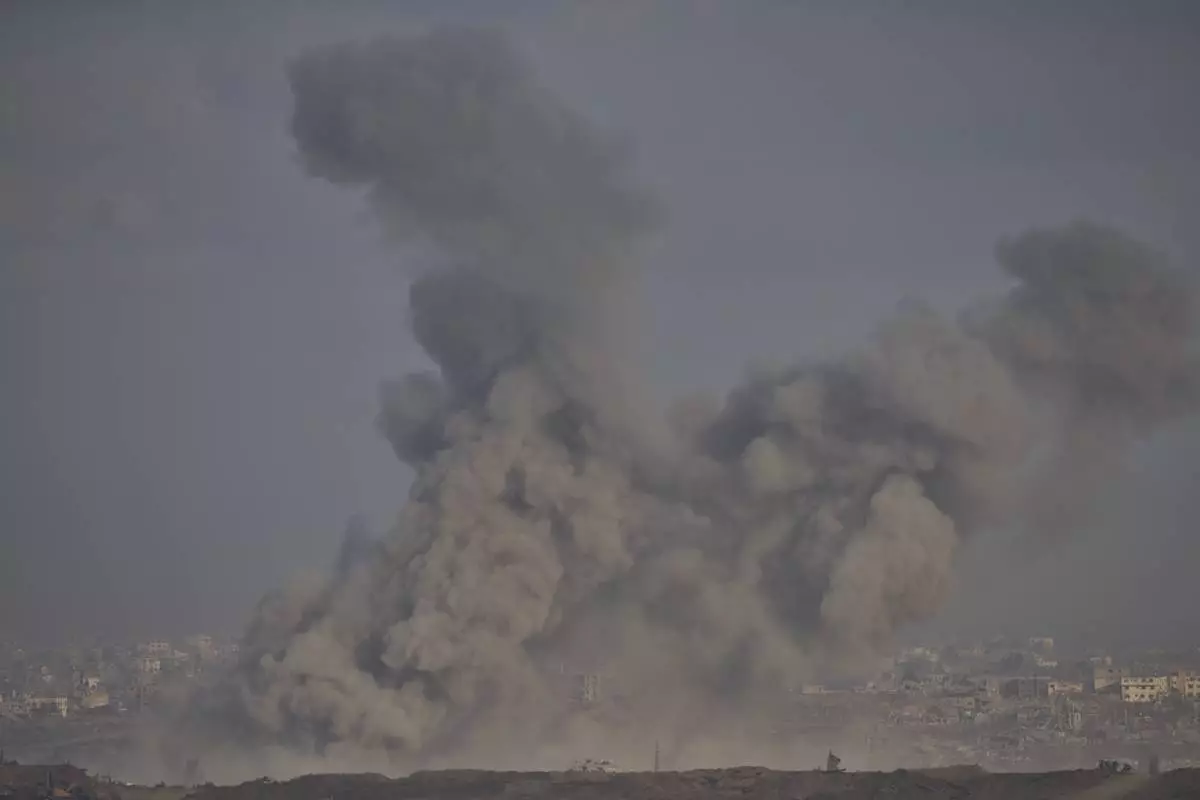
Smoke from an explosion rises in the northern Gaza Strip, as seen from a southern Israel location on Sunday, July 13, 2025. (Photo/Ohad Zwigenberg)
Smoke from an explosion rises in the northern Gaza Strip, as seen from a southern Israel location on Sunday, July 13, 2025. (Photo/Ohad Zwigenberg)

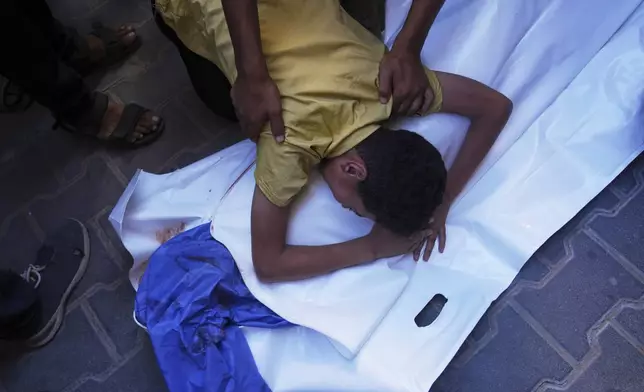
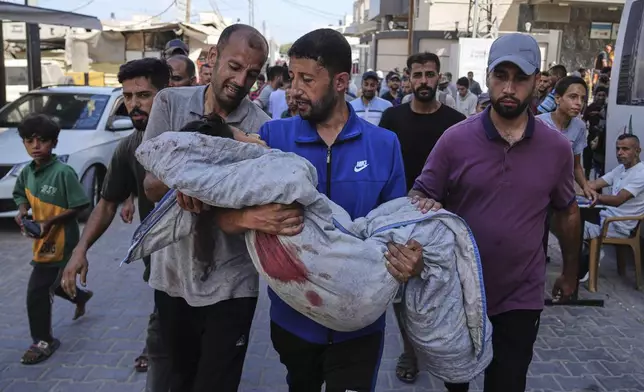
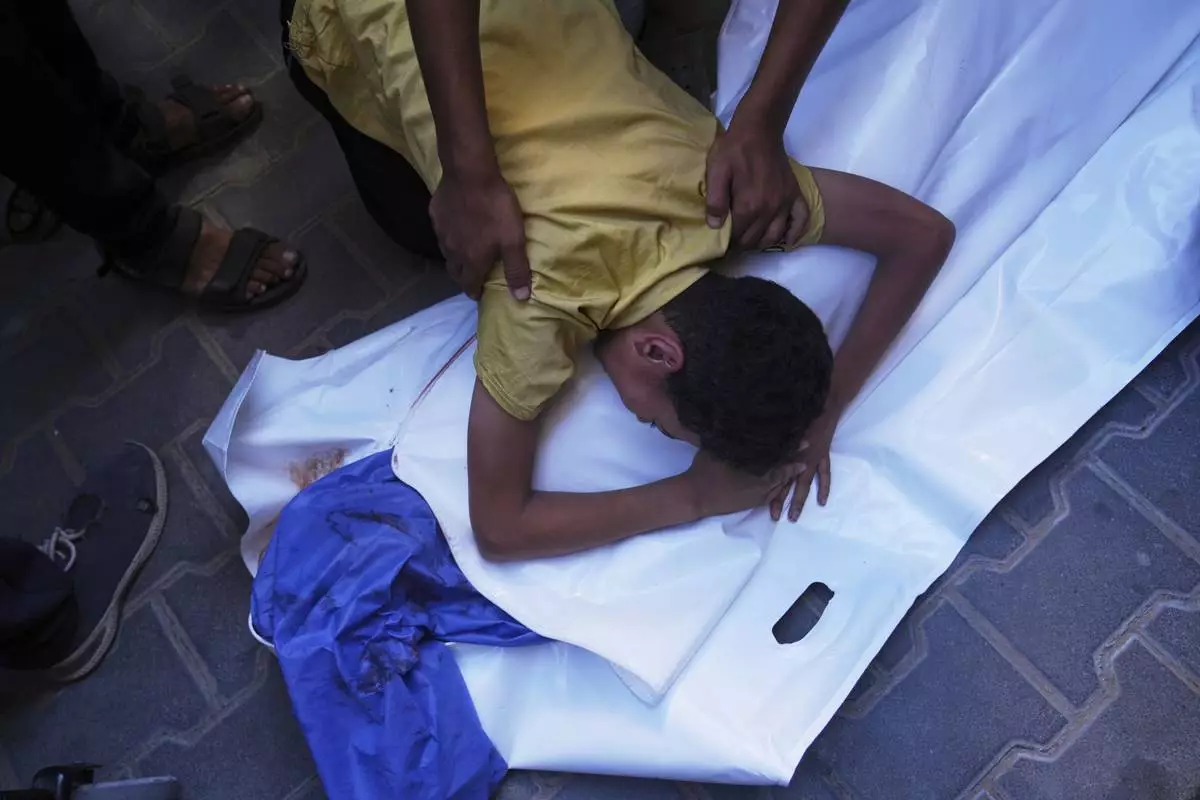
A Palestinian boy mourns over the body of his 12-year-old friend, Abdullah Ahmed, who was killed in an Israeli strike that targeted a drinking water distribution point, at Al-Awda Hospital in Nuseirat, central Gaza Strip, Sunday, July 13, 2025. (AP Photo/Abdel Kareem Hana)
A Palestinian boy mourns over the body of his 12-year-old friend, Abdullah Ahmed, who was killed in an Israeli strike that targeted a drinking water distribution point, at Al-Awda Hospital in Nuseirat, central Gaza Strip, Sunday, July 13, 2025. (AP Photo/Abdel Kareem Hana)
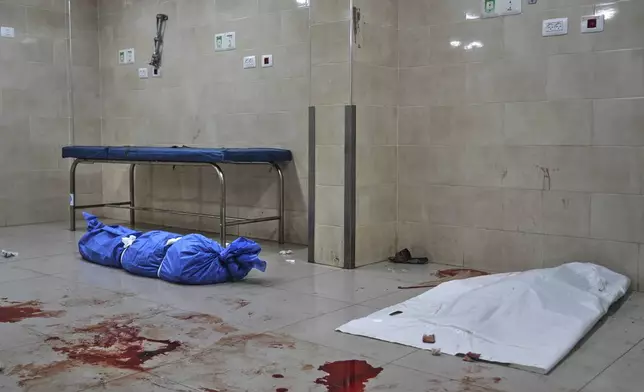
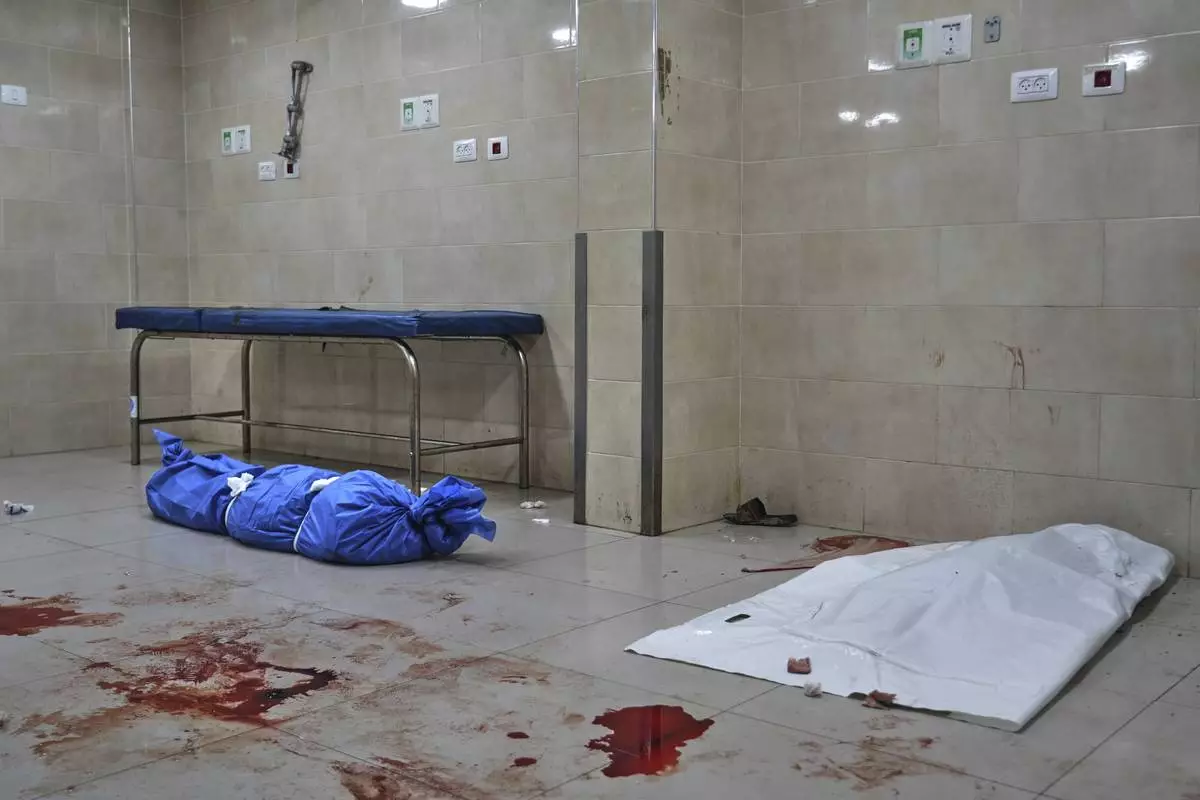
Bodies of Palestinians killed in Israeli strikes, wrapped in plastic bags, lie on the ground at Al-Awda Hospital in Nuseirat, central Gaza Strip, Sunday, July 13, 2025. (AP Photo/Abdel Kareem Hana)

Bodies of Palestinians killed in Israeli strikes, wrapped in plastic bags, lie on the ground at Al-Awda Hospital in Nuseirat, central Gaza Strip, Sunday, July 13, 2025. (AP Photo/Abdel Kareem Hana)

Relatives carry the body of 13-year-old Seraje Ebrahim, killed in an Israeli strike on a drinking water distribution point, for burial outside Al-Awda Hospital in Nuseirat, central Gaza Strip, Sunday, July 13, 2025. (AP Photo/Abdel Kareem Hana)

Relatives carry the body of 13-year-old Seraje Ebrahim, killed in an Israeli strike on a drinking water distribution point, for burial outside Al-Awda Hospital in Nuseirat, central Gaza Strip, Sunday, July 13, 2025. (AP Photo/Abdel Kareem Hana)

Israel says it will end the war only once Hamas surrenders, disarms and goes into exile, something it refuses to do. Hamas says it is willing to free all the remaining 50 hostages, about 20 said to be alive, in exchange for the war's end and the full withdrawal of Israeli forces.

Frustrated, families of some hostages demonstrated outside Netanyahu's office Sunday evening. “The overwhelming majority of the people in Israel have spoken loudly and clearly: We want to do a deal, even at the cost of ending this war, and we want to do it now,” said Jon Polin, father of Hersh Goldberg-Polin, an Israeli-American hostage killed in captivity.

Throughout the war in Gaza, violence has surged in the Israeli-occupied West Bank. Funerals were held there Sunday for two Palestinians, including Palestinian-American Sayfollah Musallet, killed by Israeli settlers, according to the Palestinian Health Ministry.

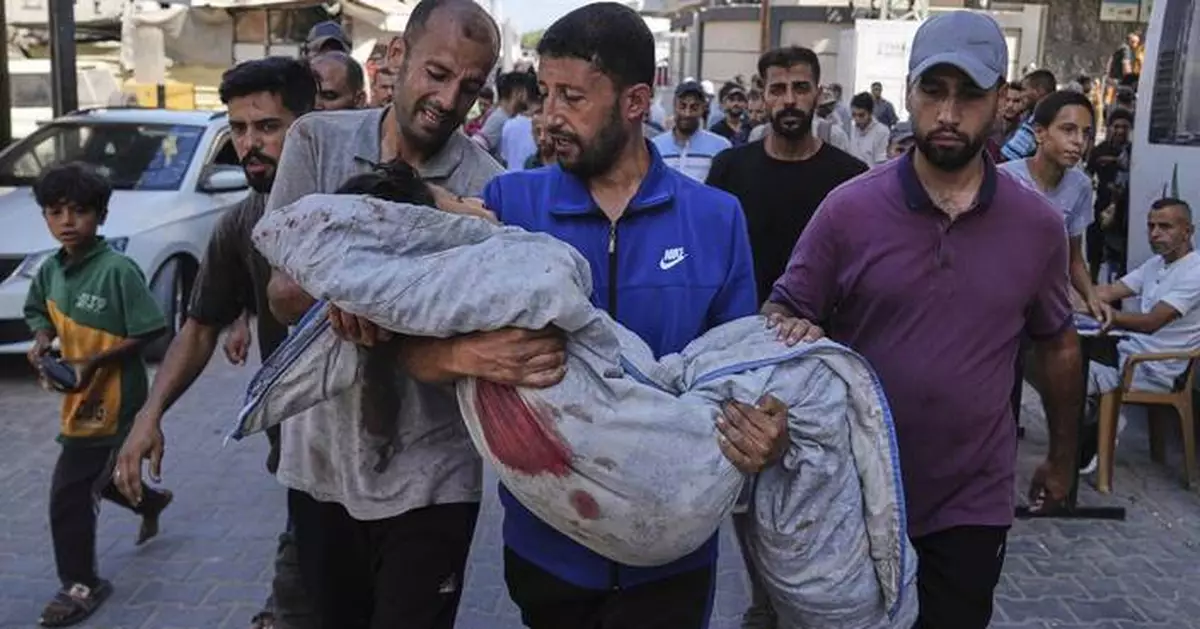
In central Gaza, officials at Al-Awda Hospital said it received 10 bodies after an Israeli strike on a water collection point in nearby Nuseirat. Among the dead were six children.

Ramadan Nassar, a witness who lives in the area, told The Associated Press that around 20 children and 14 adults had been lined up to get water. He said Palestinians walk some 2 kilometers (1.2 miles) to fetch water from the area.

The Israeli military said it was targeting a militant but a technical error made its munitions fall “dozens of meters from the target.”

In Nuseirat, a small boy leaned over a body bag to say goodbye to a friend.

“There is no safe place,” resident Raafat Fanouna said as some people went over the rubble with sticks and bare hands.

Separately, health officials said an Israeli strike hit a group of citizens walking in the street on Sunday afternoon in central Gaza City, killing 11 people and injuring around 30 others.

Dr. Ahmed Qandil, who specializes in general surgery, was among those killed, Gaza's Health Ministry said. A ministry spokesperson, Zaher al-Wahidi, told the AP that Qandil had been on his way to Al-Ahli Arab Baptist Hospital.

In the central town of Zawaida, an Israeli strike on a home killed nine, including two women and three children, officials at Al-Aqsa Martyrs Hospital said. Later, Al-Awda Hospital said a strike on a group of people in Zawaida killed two.

Israel's military said it was unaware of the strike on the home, but said it hit more than 150 targets over the past 24 hours, including what it called weapons storage facilities, missile launchers and sniping posts. Israel blames Hamas for civilian casualties because the militant group operates out of populated areas.

Gaza’s Health Ministry says women and children make up more than half of the over 58,000 dead in the war. The ministry, under Gaza’s Hamas-run government, doesn’t differentiate between civilians and combatants in its count. The U.N. and other international organizations see its figures as the most reliable statistics on war casualties.

The Hamas-led attack on Oct. 7, 2023, that sparked the war killed some 1,200 people and abducted 251.

Israel’s Energy Minister Eli Cohen told right-wing Channel 14 that his ministry will not help rebuild infrastructure in Gaza. “Gaza should remain an island of ruins to the next decades,” he said.

In the West Bank, which has seen violence between Israeli troops and Palestinians and Israeli settlers' attacks on Palestinians, funerals were held for a Palestinian-American and a Palestinian friend.

The Palestinian Health Ministry said Musallet, from Florida, had been beaten by Israeli settlers. Diana Halum, a cousin, said the attack occurred on his family's land. The ministry initially identified him as Seifeddine Musalat, 23.

Musallet's friend, Mohammed al-Shalabi, was shot in the chest, the ministry said.

Israel’s military has said Palestinians hurled rocks at Israelis in the area on Friday, lightly wounding two people and setting off a larger confrontation. Palestinians and rights groups have long accused the military of ignoring settler violence.

Their bodies were carried through the streets on Sunday as mourners waved Palestinian flags and chanted, “God is great.”

Musallet's family has said it wants the U.S. State Department to investigate his death and hold the settlers accountable. The State Department has said it had no comment out of respect for the family.

Isseid reported from Al-Mazraa a-Sharqiya, West Bank. Associated Press writers Fatma Khaled in Cairo and Melanie Lidman in Tel Aviv, Israel, contributed to this report.

Follow AP’s war coverage at https://apnews.com/hub/israel-hamas-war
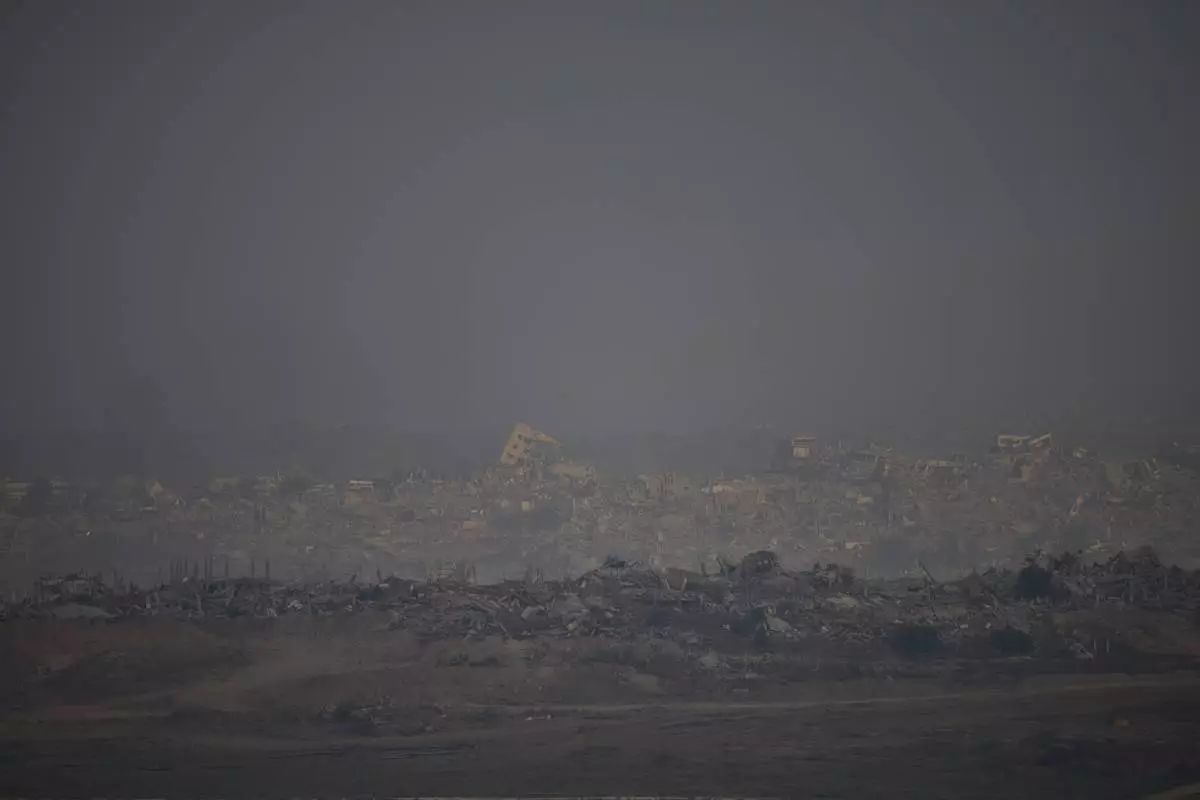
Destroyed buildings in the Gaza Strip are seen from a southern Israel location on Sunday, July 13, 2025. (AP Photo/Ohad Zwigenberg)
Destroyed buildings in the Gaza Strip are seen from a southern Israel location on Sunday, July 13, 2025. (AP Photo/Ohad Zwigenberg)

Mourners carry the bodies of Palestinian-American Sayfollah Musallet, 20, and Mohammed al-Shalabi during their funeral in the West Bank village of Al-Mazraa a-Sharqiya on Sunday, July 13, 2025. According to the Palestinian Health Ministry, Musallet was killed in an attack by Israeli settlers and al-Shalabi was shot in the chest. (AP Photo/Leo Correa)
Mourners carry the bodies of Palestinian-American Sayfollah Musallet, 20, and Mohammed al-Shalabi during their funeral in the West Bank village of Al-Mazraa a-Sharqiya on Sunday, July 13, 2025. According to the Palestinian Health Ministry, Musallet was killed in an attack by Israeli settlers and al-Shalabi was shot in the chest. (AP Photo/Leo Correa)

Relatives and supporters of Israeli hostages held in the Gaza Strip attend a rally demanding their release from Hamas captivity and calling for an end to the war, in Tel Aviv, Israel, Saturday, July 12, 2025. (AP Photo/Oded Balilty)
Relatives and supporters of Israeli hostages held in the Gaza Strip attend a rally demanding their release from Hamas captivity and calling for an end to the war, in Tel Aviv, Israel, Saturday, July 12, 2025. (AP Photo/Oded Balilty)

Smoke from an explosion rises in the northern Gaza Strip, as seen from a southern Israel location on Sunday, July 13, 2025. (Photo/Ohad Zwigenberg)
Smoke from an explosion rises in the northern Gaza Strip, as seen from a southern Israel location on Sunday, July 13, 2025. (Photo/Ohad Zwigenberg)

A Palestinian boy mourns over the body of his 12-year-old friend, Abdullah Ahmed, who was killed in an Israeli strike that targeted a drinking water distribution point, at Al-Awda Hospital in Nuseirat, central Gaza Strip, Sunday, July 13, 2025. (AP Photo/Abdel Kareem Hana)
A Palestinian boy mourns over the body of his 12-year-old friend, Abdullah Ahmed, who was killed in an Israeli strike that targeted a drinking water distribution point, at Al-Awda Hospital in Nuseirat, central Gaza Strip, Sunday, July 13, 2025. (AP Photo/Abdel Kareem Hana)
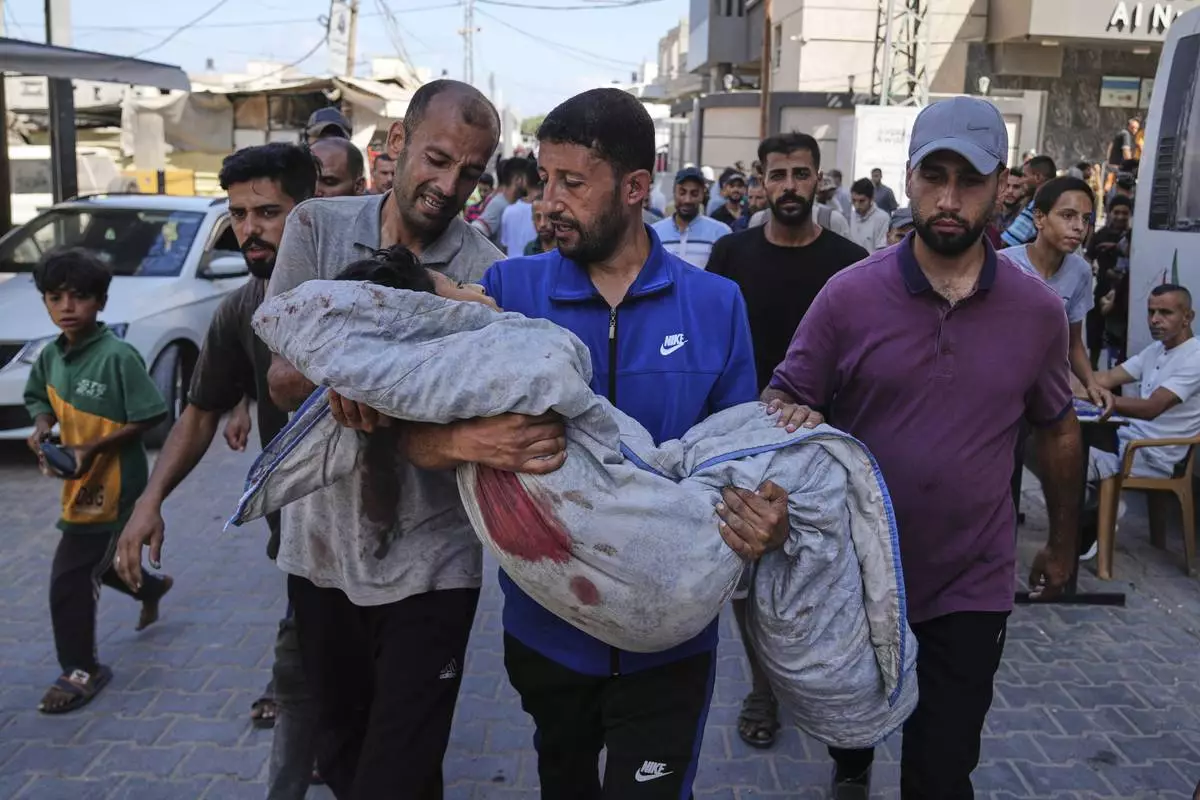
Bodies of Palestinians killed in Israeli strikes, wrapped in plastic bags, lie on the ground at Al-Awda Hospital in Nuseirat, central Gaza Strip, Sunday, July 13, 2025. (AP Photo/Abdel Kareem Hana)
Bodies of Palestinians killed in Israeli strikes, wrapped in plastic bags, lie on the ground at Al-Awda Hospital in Nuseirat, central Gaza Strip, Sunday, July 13, 2025. (AP Photo/Abdel Kareem Hana)

Relatives carry the body of 13-year-old Seraje Ebrahim, killed in an Israeli strike on a drinking water distribution point, for burial outside Al-Awda Hospital in Nuseirat, central Gaza Strip, Sunday, July 13, 2025. (AP Photo/Abdel Kareem Hana)
Relatives carry the body of 13-year-old Seraje Ebrahim, killed in an Israeli strike on a drinking water distribution point, for burial outside Al-Awda Hospital in Nuseirat, central Gaza Strip, Sunday, July 13, 2025. (AP Photo/Abdel Kareem Hana)
A federal appeals panel on Thursday reversed a lower court decision that released former Columbia University graduate student Mahmoud Khalil from an immigration jail, bringing the government one step closer to detaining and ultimately deporting the Palestinian activist.

The three-judge panel of the 3rd U.S. Circuit Court of Appeals didn’t decide the key issue in Khalil’s case: whether the Trump administration’s effort to throw Khalil out of the U.S. over his campus activism and criticism of Israel is unconstitutional.

But in its 2-1 decision, the panel ruled a federal judge in New Jersey didn’t have jurisdiction to decide the matter at this time. Federal law requires the case to fully move through the immigration courts first, before Khalil can challenge the decision, they wrote.

“That scheme ensures that petitioners get just one bite at the apple — not zero or two,” the panel wrote. “But it also means that some petitioners, like Khalil, will have to wait to seek relief for allegedly unlawful government conduct.”

Thursday’s decision marked a major win for the Trump administration’s sweeping campaign to detain and deport noncitizens who joined protests against Israel.

Tricia McLaughlin, a Homeland Security Department spokesperson, called the ruling “a vindication of the rule of law.”

In a statement, she said the department will “work to enforce his lawful removal order” and encouraged Khalil to “self-deport now before he is arrested, deported, and never given a chance to return.”

It was not clear whether the government would seek to detain Khalil, a legal permanent resident, again while his legal challenges continue.

In a statement distributed by the American Civil Liberties Union, Khalil called the appeals ruling “deeply disappointing."

“The door may have been opened for potential re-detainment down the line, but it has not closed our commitment to Palestine and to justice and accountability," he said. "I will continue to fight, through every legal avenue and with every ounce of determination, until my rights, and the rights of others like me, are fully protected.”

Baher Azmy, one of Khalil's lawyers, said the ruling was “contrary to rulings of other federal courts."

“Our legal options are by no means concluded, and we will fight with every available avenue,” he said.

The ACLU said the Trump administration cannot lawfully re-detain Khalil until the order takes formal effect, which won't happen while he can still immediately appeal.

Khalil’s lawyers can request that the panel's decision be set aside and the matter reconsidered by a larger group of judges on the 3rd Circuit Court of Appeals, or they can go to the U.S. Supreme Court.

An outspoken leader of the pro-Palestinian movement at Columbia, Khalil was arrested last March. He then spent three months detained in a Louisiana immigration jail, missing the birth of his first child.

Federal officials have accused Khalil of leading activities “aligned to Hamas,” though they have not presented evidence to support the claim and have not accused him of criminal conduct. They also accused Khalil, 31, of failing to disclose information on his green card application.

The government justified the arrest under a seldom-used statute that allows for the expulsion of noncitizens whose beliefs are deemed to pose a threat to U.S. foreign policy interests.

In June, a federal judge in New Jersey ruled that justification would likely be declared unconstitutional and ordered Khalil released.

President Donald Trump's administration appealed that ruling, arguing the deportation decision should fall to an immigration judge, rather than a federal court.

Khalil has dismissed the allegations as “baseless and ridiculous,” framing his arrest and detention as a “direct consequence of exercising my right to free speech as I advocated for a free Palestine and an end to the genocide in Gaza.”

New York City’s new mayor, Zohran Mamdani, said on social media Thursday that Khalil should remain free.

“Last year’s arrest of Mahmoud Khalil was more than just a chilling act of political repression, it was an attack on all of our constitutional rights,” Mamdani wrote on X. “Now, as the crackdown on pro-Palestinian free speech continues, Mahmoud is being threatened with rearrest. Mahmoud is free — and must remain free.”

Judge Arianna Freeman dissented Thursday, writing that her colleagues were holding Khalil to the wrong legal standard. Khalil, she wrote, is raising “now-or-never claims” that can be handled at the district court level, even though his immigration case isn't complete.

Both judges who ruled against Khalil, Thomas Hardiman and Stephanos Bibas, were Republican appointees. President George W. Bush appointed Hardiman to the 3rd Circuit, while Trump appointed Bibas. President Joe Biden, a Democrat, appointed Freeman.

The two-judge majority rejected Freeman's worry that their decision would leave Khalil with no remedy for unconstitutional immigration detention, even if he later can appeal.

“But our legal system routinely forces petitioners — even those with meritorious claims — to wait to raise their arguments," the judges wrote.

The decision comes as an appeals board in the immigration court system weighs a previous order that found Khalil could be deported to Algeria, where he maintains citizenship through a distant relative, or Syria, where he was born in a refugee camp to a Palestinian family.

His attorneys have said he faces mortal danger if forced to return to either country.

Associated Press writers Larry Neumeister and Anthony Izaguirre contributed to this story.

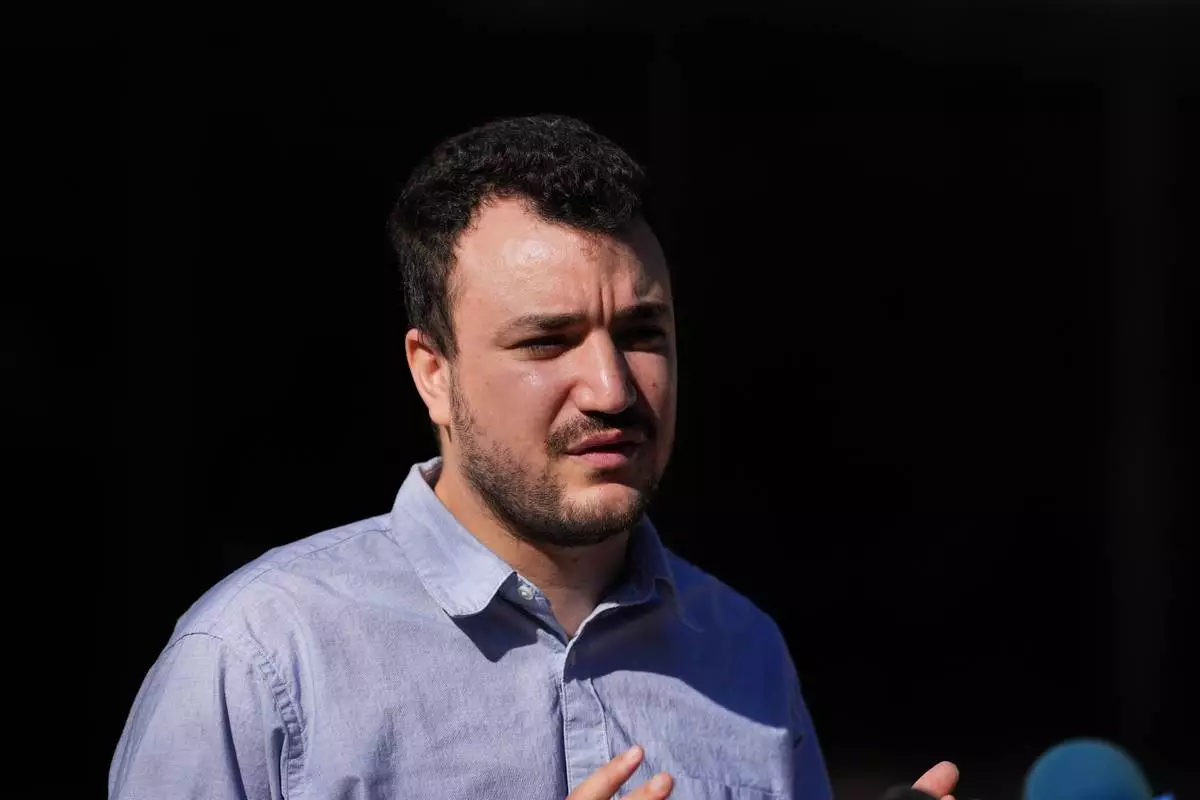
FILE - Palestinian activist Mahmoud Khalil holds a news conference outside Federal Court on Tuesday, Oct. 21, 2025 in Philadelphia (AP Photo/Matt Rourke, File)

FILE - Palestinian activist Mahmoud Khalil holds a news conference outside Federal Court on Tuesday, Oct. 21, 2025 in Philadelphia (AP Photo/Matt Rourke, File)

Recommended Articles