
Skip to Content Facebook Feature Image

'Beautiful' or 'Ugly,' Trump's big bill shapes the battle for House control in 2026 midterms

News

'Beautiful' or 'Ugly,' Trump's big bill shapes the battle for House control in 2026 midterms
News

News

'Beautiful' or 'Ugly,' Trump's big bill shapes the battle for House control in 2026 midterms

2025-07-13 22:12 Last Updated At:22:20

WASHINGTON (AP) — Debate over President Donald Trump’s sweeping budget-and-policy package is over on Capitol Hill. Now the argument goes national.

From the Central Valley of California to Midwestern battlegrounds and suburban districts of the northeast, the new law already is shaping the 2026 midterm battle for control of the House of Representatives. The outcome will set the tone for Trump’s final two years in the Oval Office.

Democrats need a net gain of three House seats to break the GOP’s chokehold on Washington and reestablish a power center to counter Trump. There's added pressure to flip the House given that midterm Senate contests are concentrated in Republican-leaning states, making it harder for Democrats to reclaim that chamber.

As Republicans see it, they've now delivered broad tax cuts, an unprecedented investment in immigration enforcement and new restraints on social safety net programs. Democrats see a law that rolls back health insurance access and raises costs for middle-class Americans while cutting taxes mostly for the rich, curtailing green energy initiatives and restricting some workers’ organizing rights.

“It represents the broken promise they made to the American people,” said Rep. Suzan DelBene, a Washington Democrat who chairs the party's House campaign arm. “We’re going to continue to hold Republicans accountable for this vote.”

Whether voters see it that way will be determined on a district-by-district level, but the battle will be more intense in some places than others. Among the 435 House districts, only 69 contests were decided by less than 10 percentage points in the 2024 general election.

The Democratic Congressional Campaign Committee has so far identified 26 Democratic-held seats it must defend vigorously, along with 35 GOP-held seats it believes could be ripe to flip. Republicans’ campaign arm, the National Republican Congressional Committee, has so far listed 18 GOP incumbents as priorities, plus two districts opened by retirements.

There are a historically low number of so-called crossover districts: Only 13 Democrats represent districts Trump carried in 2024, while just three Republicans serve districts Democratic presidential nominee Kamala Harris carried.

Both committees are busy recruiting challengers and open-seat candidates and more retirements could come, so the competitive map will evolve. Still, there are clusters of districts guaranteed to influence the national result.

California, despite its clear lean to Democrats statewide, has at least nine House districts expected to be up for grabs: three in the Central Valley and six in southern California. Six are held by Democrats, three by the GOP.

Pennsylvania features four districts that have been among the closest national House races for several consecutive cycles. They include a suburban Philadelphia seat represented by Rep. Brian Fitzpatrick, one of just two House Republicans to vote against Trump’s bill and one of the three GOP lawmakers from a district Harris won. Fitzpatrick cited the Medicaid cuts.

Vice President JD Vance plans on Wednesday to be in Republican Rep. Rob Bresnahan’s northwest Pennsylvania district to tout the GOP package. Bresnahan's seat is a top Democratic target.

Iowa and Wisconsin, meanwhile, feature four contiguous GOP-held districts in farm-heavy regions where voters could be swayed by fallout from Trump’s tariffs.

Beyond bumper-sticker labels – Trump’s preferred “Big Beautiful Bill” versus Democrats’ “Big Ugly Bill” retort – the 900-page law is, in fact, an array of policies with varying impact.

Democrats hammer Medicaid and food assistance cuts, some timed to take full effect only after the 2026 midterms, along with Republicans’ refusal to extend tax credits to some people who obtained health insurance through the Affordable Care Act.

The Congressional Budget Office estimates that 11.8 million more Americans would become uninsured by 2034 if the bill became law; 3 million more would not qualify for food stamps, also known as SNAP benefits.

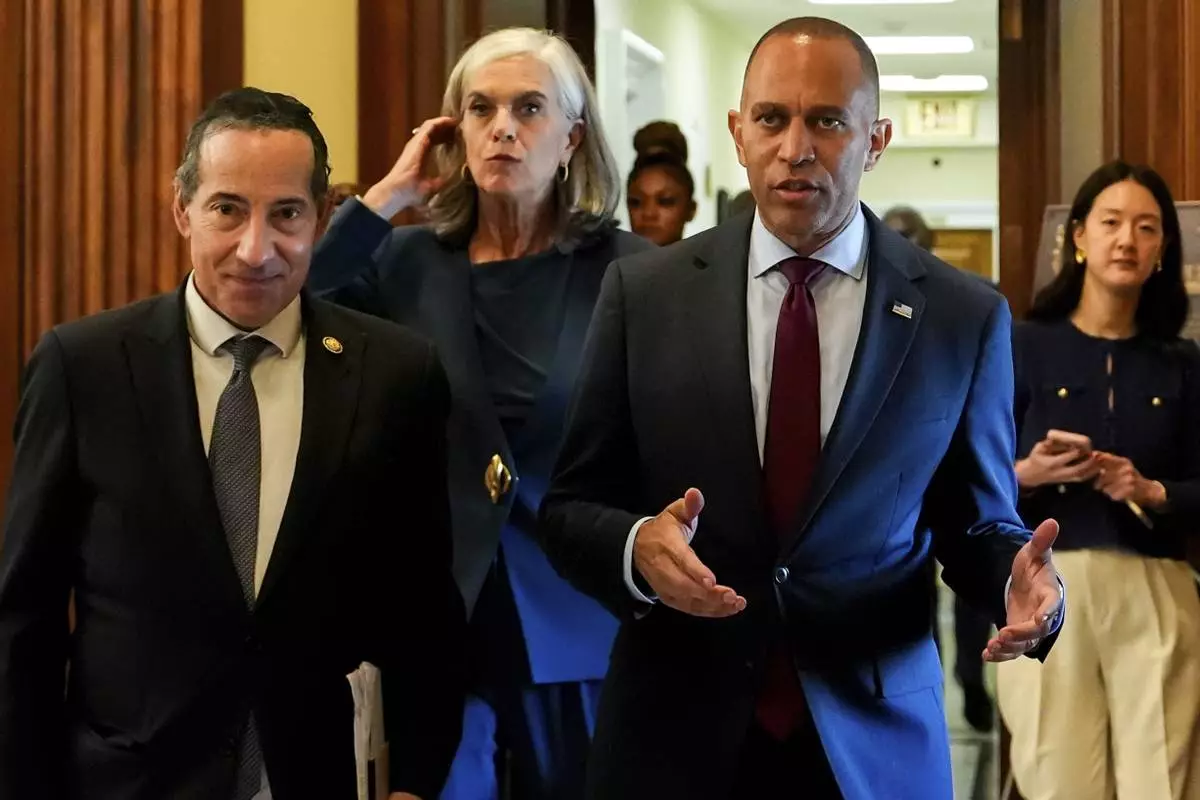
“Folks will die here in Louisiana and in other parts of the country,” House Minority Leader Jeffries warned last week during a town hall in Republican Speaker Mike Johnson’s home state of Louisiana.

Jeffries singled out vulnerable Republicans like California Rep. David Valadao, who represents a heavily agricultural Central Valley district where more than half the population is eligible for the joint state-federal insurance program. California allows immigrants with legal status and those who are undocumented to qualify for Medicaid, so not all Medicaid recipients are voters. But the program helps finance the overall health care system, including nursing homes and hospitals.

Republicans highlight the law's tightened work requirements for Medicaid enrollees. They argue it's a popular provision that will strengthen the program.

“I voted for this bill because it does preserve the Medicaid program for its intended recipients — children, pregnant women, the disabled, and elderly,” Valadao said. “I know how important the program is for my constituents.”

The law includes $4.5 trillion in tax cuts. It makes permanent existing rates and brackets approved during Trump’s first term. Republicans and their allies have hammered vulnerable Democrats for “raising costs” on American households by opposing the bill.

GOP campaign aides point to the popularity of individual provisions: boosting the $2,000 child tax credit to $2,200 (some families at lower income levels would not get the full credit), new deductions on tip and overtime income and auto loans; and a new deduction for older adults earning less than $75,000 a year.

“Everyone will have more take home pay. They’ll have more jobs and opportunity,” Johnson said in a Fox News Sunday interview. “The economy will be doing better and we’ll be able to point to that as the obvious result of what we did.”

Democrats note that the biggest beneficiaries of Trump’s tax code are wealthy Americans and corporations. Pairing that with safety net cuts, Florida Rep. Debbie Wasserman Schultz concluded, “The cruelty is the point.”

Immigration, meanwhile, was Trump’s strongest issue in 2024. NRCC aides say that will continue with the new law’s investments in immigration enforcement. Democrats believe the Trump administration has overplayed its hand with its push for mass deportation.

The president is a titanic variable.

Democrats point to 2018, when they notched a 40-seat net gain in House seats to take control away from the GOP. This year, Democrats have enjoyed a double-digit swing in special elections around the country when compared to 2024 presidential results. Similar trends emerged in 2017 after Trump's 2016 victory. Democrats say that reflects voter discontent with Trump once he's actually in charge.

Republicans answer that Trump’s job approval remains higher at this point than in 2017. But the GOP’s effort is further complicated by ongoing realignments: Since Trump’s emergence, Democrats have gained affluent white voters -– like those in suburban swing districts -– while Trump has drawn more working-class voters across racial and ethnic groups. But Republicans face a stiffer challenge of replicating Trump’s coalition in a midterm election without him on the ballot.

Democrats, meanwhile, must corral voters who are not a threat to vote for Republicans but could stay home.

Jeffries said he's determined not to let that happen: “We’re going to do everything we can until we end this national nightmare.”

__

Editor's note: An earlier version of this story said that there are 34 Republican-held seats Democrats are targeting as of now. This story updates that number to 35.

__

Cooper reported from Phoenix. Brook reported from New Orleans. Associated Press reporters Michael Blood in Los Angeles and Marc Levy in Harrisburg, Pennsylvania, contributed.
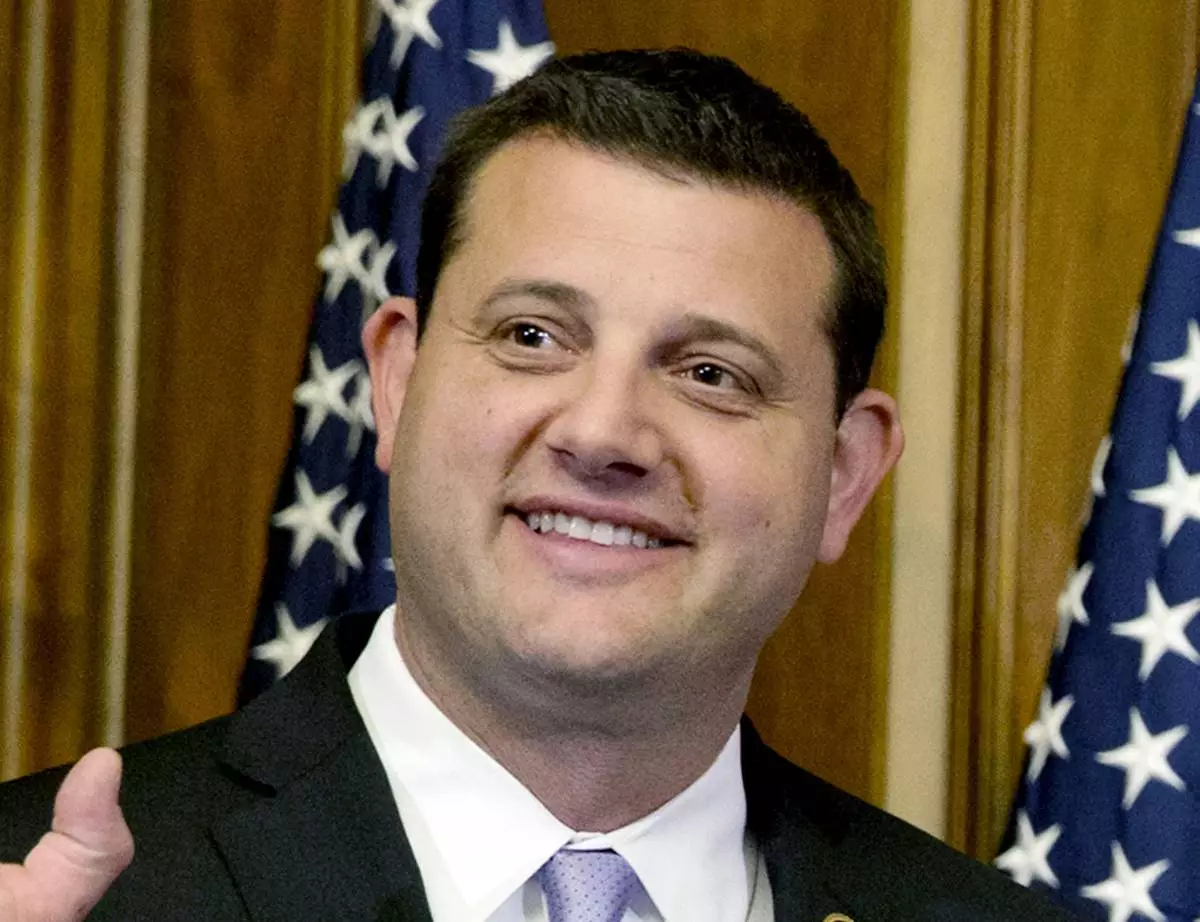
FILE – U.S. Rep. David Valadao, R-Calif., poses for a photo in Washington on Jan. 6, 2015. (AP Photo/Jacquelyn Martin, File)
FILE – U.S. Rep. David Valadao, R-Calif., poses for a photo in Washington on Jan. 6, 2015. (AP Photo/Jacquelyn Martin, File)

House Minority Leader Hakeem Jeffries, D-N.Y., right, leaves his office with Rep. Jamie Raskin, D-Md., left, and Rep. Katherine Clark, D-Mass., center, shortly after speaking in the House chamber during the final vote for President Donald Trump's signature bill of tax breaks and spending cuts, Thursday, July 3, 2025, at the Capitol in Washington. (AP Photo/Julia Demaree Nikhinson)

House Minority Leader Hakeem Jeffries, D-N.Y., right, leaves his office with Rep. Jamie Raskin, D-Md., left, and Rep. Katherine Clark, D-Mass., center, shortly after speaking in the House chamber during the final vote for President Donald Trump's signature bill of tax breaks and spending cuts, Thursday, July 3, 2025, at the Capitol in Washington. (AP Photo/Julia Demaree Nikhinson)

Speaker of the House Mike Johnson, R-La., speaks during a Congressional Gold Medal ceremony for three-time Tour de France winner Greg LeMond at the Capitol, Wednesday, July 9, 2025, in Washington. (AP Photo/Rod Lamkey, Jr.)
Speaker of the House Mike Johnson, R-La., speaks during a Congressional Gold Medal ceremony for three-time Tour de France winner Greg LeMond at the Capitol, Wednesday, July 9, 2025, in Washington. (AP Photo/Rod Lamkey, Jr.)
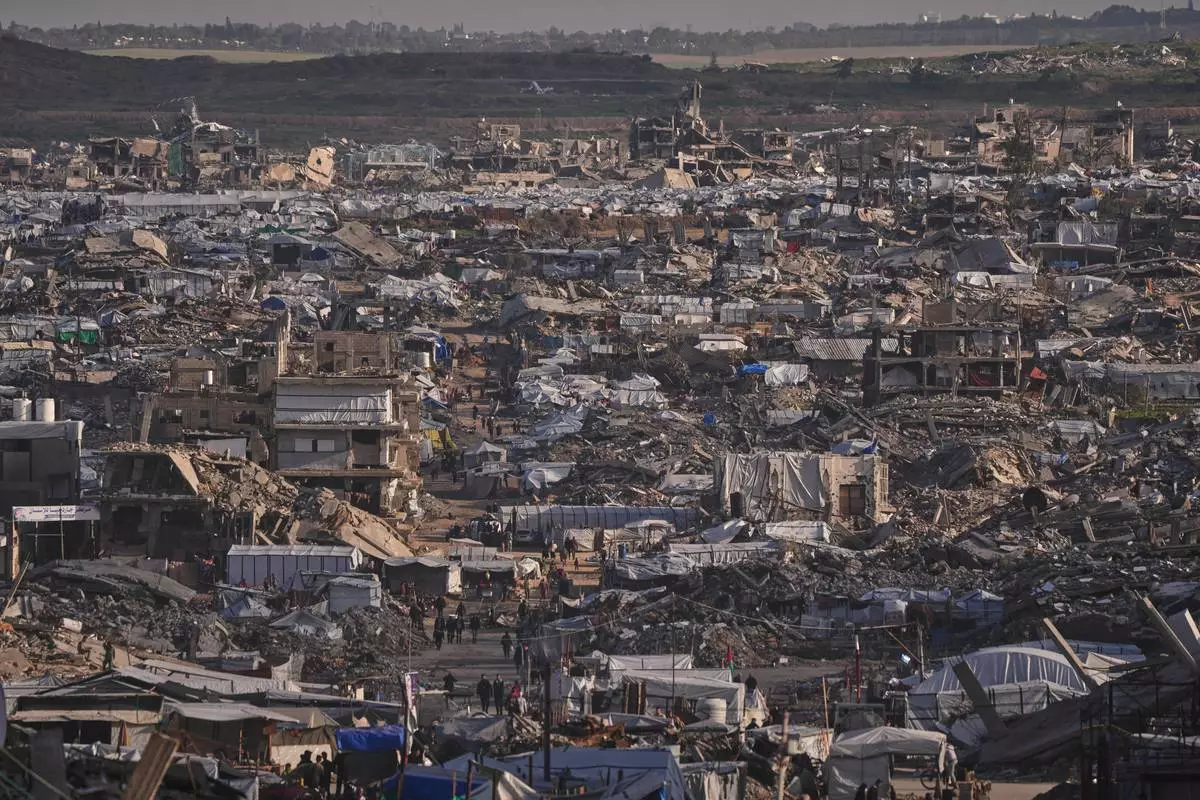
JERUSALEM (AP) — The White House says it is moving into the second phase of President Donald Trump’s Gaza ceasefire plan – breathing new life into a proposal that aims to rebuild the war-ravaged area and reshape the wider Middle East.

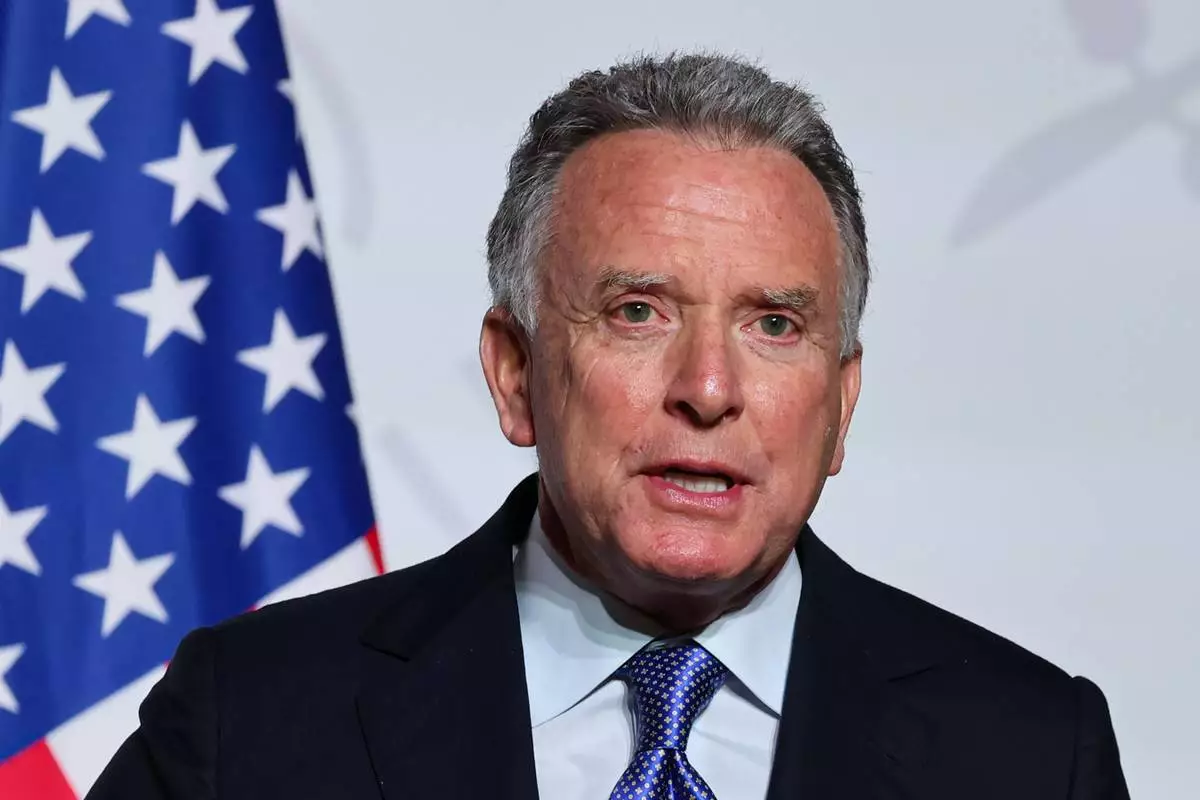
Trump’s Mideast envoy, Steve Witkoff, broke the news Wednesday in a post on X, saying the new phase will include the establishment of a transitional Palestinian governing committee and begin the complicated tasks of disarming Hamas and reconstruction.

But the announcement included few details about the new Palestinian committee or other key aspects of the plan, signaling just how much work lies ahead.

Trump's 20-point plan — which was approved by the U.N. Security Council — lays out an ambitious vision for ending Hamas’ rule in Gaza. If successful, it would see the rebuilding of a demilitarized Gaza under international supervision, the normalization of relations between Israel and the Arab world, and the creation of a possible pathway to Palestinian independence.

But if the deal stalls, Gaza could be trapped in an unstable limbo for years to come, with Hamas remaining in control of parts of the territory, Israel’s army enforcing an open-ended occupation, and its residents stuck homeless, unemployed, unable to travel abroad and dependent on international aid to stay alive.

“We’re going to do our best to try and see if we can work with the Palestinian people to try something new,” said a U.S. official, speaking on condition of anonymity to discuss the evolving plan. “It will be hard to do,” he acknowledged.

Here is a closer look at the next stages of the ceasefire and the potential pitfalls.

The ceasefire took effect on Oct. 10, halting two years of fighting between Israel and Hamas. It also included the release of all remaining hostages held in Gaza in exchange for hundreds of Palestinians held by Israel.

The ceasefire has largely held, though both sides accuse each other of ongoing violations. Israeli fire has killed more than 400 Palestinians, according to Gaza health officials. Israel says it has targeted militants or responded to violations of the ceasefire, but the Palestinians say scores of civilians have been shot.

Palestinian militants, meanwhile, continue to hold the remains of the last hostage — an Israeli police officer killed in the Hamas-led Oct. 7, 2023, attack that triggered the war. Israeli Prime Minister Benjamin Netanyahu has made clear he is in no rush to move forward until the remains are returned.

Netanyahu appeared to play down Witkoff’s announcement as symbolic, calling the creation of a new Palestinian committee a “ declarative move.”

The new committee will consist of independent Palestinian experts who are to run Gaza’s daily affairs under American supervision.

Wednesday’s announcement didn't say who will serve on the committee. But the other mediators of the ceasefire — Egypt, Turkey and Qatar — said it would be led by Ali Shaath, an engineer and former deputy minister in the Palestinian Authority in the West Bank.

The U.S. official who spoke on the condition of anonymity said other names are expected in the next two days, and the committee will focus on attracting investment and improving the quality of life.

“This really will be a technocratic committee,” he said. “They seem to be a group that wants to have peace.”

The committee will report to the Board of Peace, a group of world leaders supervising the ceasefire and led by Trump. If the Palestinian committee is seen as just a façade, it risks not gaining public support.

Also, its exact powers remain unclear. Hamas has said it will dissolve its government once the committee takes office, but it has shown no signs that it will dismantle its military wing or security forces.

The board will oversee the ceasefire, reconstruction and an open-ended reform process by the Palestinian Authority, with the goal of one day allowing the internationally recognized authority to return to Gaza to govern.

The U.S. official said invitations for the board have been extended, but he declined to name any of the people expected to join. “It’s going to be a great list,” he said.

The key challenge will be forming a board that can work with Israel, Hamas, the mediators and international aid agencies.

One key appointment appears to have been made. Nickolay Mladenov, a former Bulgarian politician and U.N. Mideast envoy, is expected to serve as the board’s on-the-ground representative. He already has met with Netanyahu and Palestinian leaders in the occupied West Bank.

Trump's plan calls for the formation of an International Stabilization Force to maintain security and train Palestinian police to one day to take over. That force hasn't been formed yet, and a deployment date hasn't been announced.

The U.S. official insisted there is “great excitement” over the force and said there would be important announcements in the coming weeks.

But the force’s command structure and authorities remain unknown.

Hamas said it will oppose any attempts by the force to disarm it, and contributing nations may not to want to risk clashes with the militant group. Israel, meanwhile, is hesitant to trust an international body with its security needs.

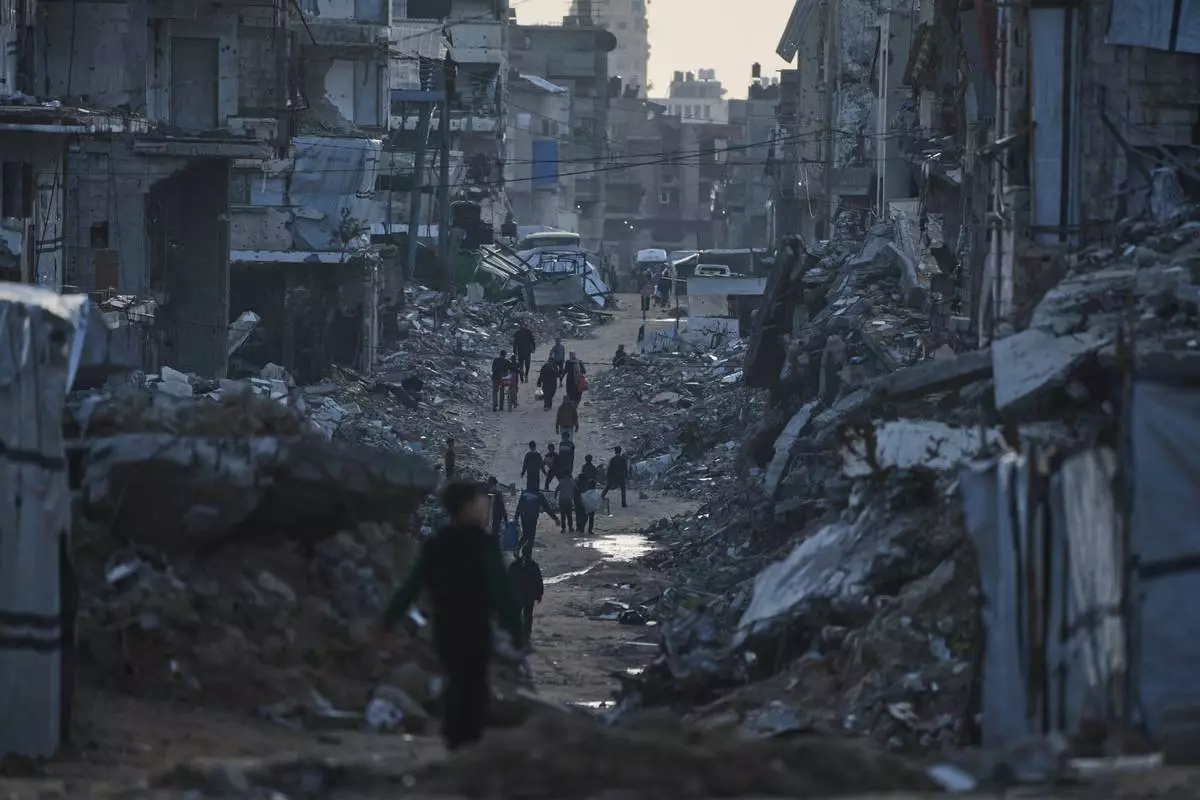
Trump’s plan calls for an economic development outline to “rebuild and energize Gaza,” which suffered widespread destruction during the war and where most of the territory’s 2 million people are displaced and unemployed.

Still, no such plan has been announced, and it remains unclear who will pay for a process the U.N. estimates will cost $70 billion.

The ceasefire deal calls for Hamas to surrender its weapons under the supervision of international monitors. Militants who disarm will be granted amnesty and the option to leave Gaza.

However, Hamas, whose ideology is based on armed resistance against Israel, has said it won't disarm until Israel ends its occupation of Palestinian territories.

Bassem Naim, a senior Hamas official, told The Associated Press last month that the group is open to “ freezing or storing” its weapons while a political process takes place, perhaps over many years. It is unclear whether that would be sufficient for Israel.

Failure to disarm Hamas could lead to renewed fighting with Israel and clashes with international troops, and could block progress on the rest of the peace plan.

Under the ceasefire, Israel is to withdraw from all of Gaza, with the exception of a small buffer zone along the border. At the moment, Israel retains control of just over half of Gaza.

The plan says further withdrawals will be based upon “standards, milestones and timeframes linked to demilitarization” to be negotiated by Israel, the U.S., the international force and other “guarantors.”

There are no firm timelines for further withdrawals, and Israel may refuse to pull back further.

The plan calls for an overhaul of the Palestinian Authority, which runs the West Bank, and the creation of conditions for a “credible pathway” to Palestinian statehood.

Palestinian officials say they have begun making reforms in key areas such as corruption, the education system and payments to families of prisoners convicted in attacks on Israelis.

Israel rejects the creation of a Palestinian state and opposes any role for the authority in postwar Gaza. Without a pathway to statehood, any Palestinian support for the new system could crumble. The plan also offers no clear benchmarks or timelines for the reform process.

US Special Envoy Steve Witkoff delivers a speech upon the signing of the declaration on deploying post-ceasefire force in Ukraine during the 'Coalition of the Willing' summit on security guarantees for Ukraine, at the Elysee Palace in Paris Tuesday, Jan 6, 2026. (Ludovic Marin, Pool photo via AP)

US Special Envoy Steve Witkoff delivers a speech upon the signing of the declaration on deploying post-ceasefire force in Ukraine during the 'Coalition of the Willing' summit on security guarantees for Ukraine, at the Elysee Palace in Paris Tuesday, Jan 6, 2026. (Ludovic Marin, Pool photo via AP)

Palestinians walk amid buildings destroyed by Israeli air and ground operations in Gaza City Thursday, Jan. 15, 2026. (AP Photo/Jehad Alshrafi)

Palestinians walk amid buildings destroyed by Israeli air and ground operations in Gaza City Thursday, Jan. 15, 2026. (AP Photo/Jehad Alshrafi)

Makeshift tents shelter displaced Palestinians stand among buildings destroyed by Israeli air and ground operations in Gaza City Thursday, Jan. 15, 2026. (AP Photo/Jehad Alshrafi)

Makeshift tents shelter displaced Palestinians stand among buildings destroyed by Israeli air and ground operations in Gaza City Thursday, Jan. 15, 2026. (AP Photo/Jehad Alshrafi)

Recommended Articles