Several humanoid robots have recently visited the Beijing Central Business District as part of an "energy relay" for the upcoming 2025 World Humanoid Robot Games (WHRG).
The humanoid robots were tasked to collect energy by shopping for clothes, performing dances for shoppers at the China Central Mall, and dinning on a sightseeing bus to light up "energy cubes" fastened to their chests.
The energy cube is a diamond-shaped metal pendant, with a blue, multifaceted crystal embedded inside.
During the energy relay, which began at the Badaling section of the Great Wall in the northwestern suburbs of Beijing last Tuesday, the robots are supposed to carry these cubes to visit UNESCO World Heritage sites, dual-Olympic venues, and other iconic landmarks in Beijing.
Their journey will conclude on August 14 at the National Speed Skating Oval -- the main venue of the WHRG. There, the energy cubes will assemble into a "smart core" and will be lit up at the event's opening ceremony on the same day.
Initiated by China Media Group, the energy relay aims to demonstrate connectivity between human and technology, bringing cutting-edge technology to the public.
Following the 2025 World Robot Conference from August 8 to 12, the inaugural WHRG will take place from August 15 to 17 in Beijing.
As the world's first multi-sport competition for humanoid robots, the WHRG will feature main events to test the athletic and functional skills of robots in track and field, soccer, dance, handling materials, and medical sorting, as well as peripheral events like badminton, table tennis and basketball that emphasize entertainment and audience interaction.
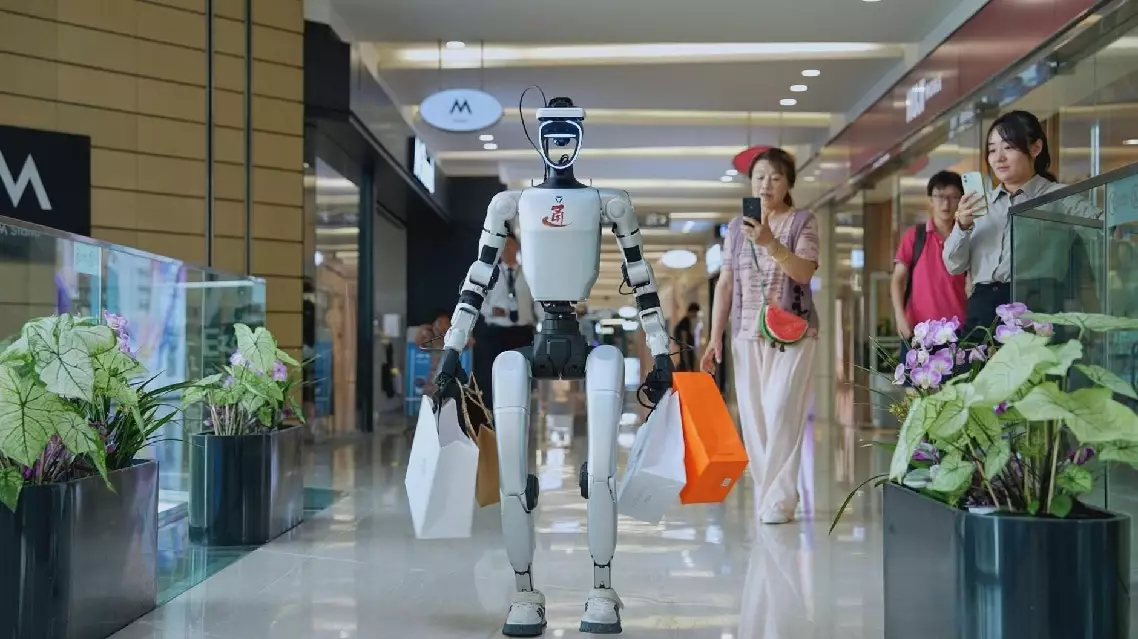
Humanoid robots visit Beijing CBD as part of energy relay for world's first robot games
Hong Kong's first astronaut lifted off into space on Sunday, sparking a wave of enthusiasm for space exploration in the special administrative region, while inspiring a new generation to look to the stars.
The Shenzhou-23 crewed spaceship, atop a Long March-2F carrier rocket, blasted off from the Jiuquan Satellite Launch Center in northwest China at 23:08 (Beijing Time) on Sunday. The crew members include Lai Ka-ying, the first astronaut and payload specialist from Hong Kong to join a national space mission, whose achievements have motivated many Hong Kong residents.
"I feel so happy and thrilled. This is the first time a Hong Kong astronaut has gone to space, and to see a true Hong Konger, who is also a mother of three, just really touches my heart," said Chow, a local resident.
The successful spaceflight of Lai has especially captivated the younger generation to dream bigger about the future.
"I want to be an astronaut, because I want to discover more things about space," said a young student surnamed Chow.
"I have seen things related to spaceflights of astronauts. I hope when I grow up, I could receive training and go to space myself," said another student surnamed Koo.
To meet public expectations, the Hong Kong Space Museum has updated its space-themed exhibition with the latest development of the Shenzhou-23 mission, extending the display until July 6. Parents are seizing the moment to enrich their children's knowledge.
"At his age, I want him to be exposed to a wide range of information. With all the recent astronaut news, I brought him here specially to see for himself. We will also check out a film about space knowledge at the planetarium. I hope he can get more out of this from an early age," said Cheung, a father.
"We just watched the Shenzhou-23 launch at home with my son last night, and decided to take him to the Space Museum," a mother surnamed Chun shared.
"I saw on TV that so many people were cheering for the launch. When the rocket was launched, fire burst out from its body. I was really happy they succeeded," said Chun's son.
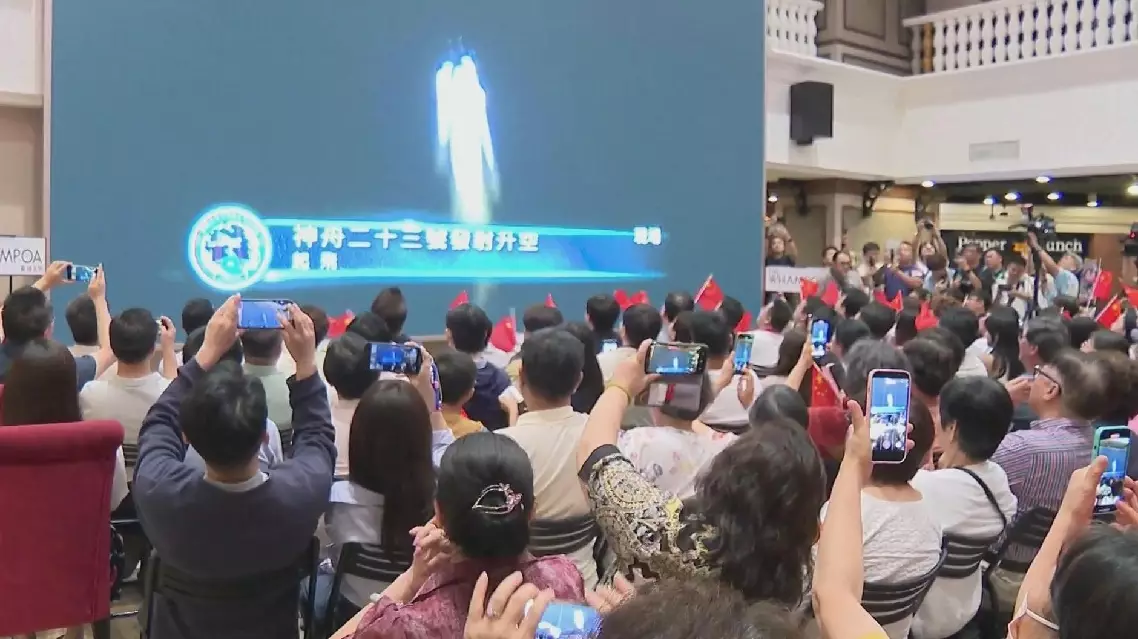
Hong Kong's first astronaut ignites citywide enthusiasm over space exploration