Changqing oilfield, China's largest oil-and-gas field, produced over 10,000 tons of shale oil in a single day for the first time, marking a milestone in the oilfield's shale oil drilling capabilities.
Located in northwest China's Ordos Basin, the Changqing oilfield contains estimated 1 billion tons of shale oil.
It produced 3.21 million tons of shale oil in 2024, accounting for 52.2 percent of the country's total. So far, the cumulative output of shale oil from Changqing oilfield has exceeded 18.5 million tons.
"The daily output of shale oil at Changqing oilfield exceeds 10,000 tons, making an annual production capacity of 3.65 million tons, comparable to that of a medium-sized oilfield. We plan to further enhance shale oil drilling efforts, aiming to reach an annual production of 4.5 million tons by 2030," said Lei Qihong, manager of the shale oil drilling branch of Changqing oilfield.
To date, Changqing oilfield has discovered proven oil reserves of 50.24 million tons and estimated oil reserves of 56.2 million tons in the area.
Since the 1970s, Changqing oilfield accumulated proven oil and gas reserves account for one-third of the country's total, playing an important role in safeguarding the national energy security.
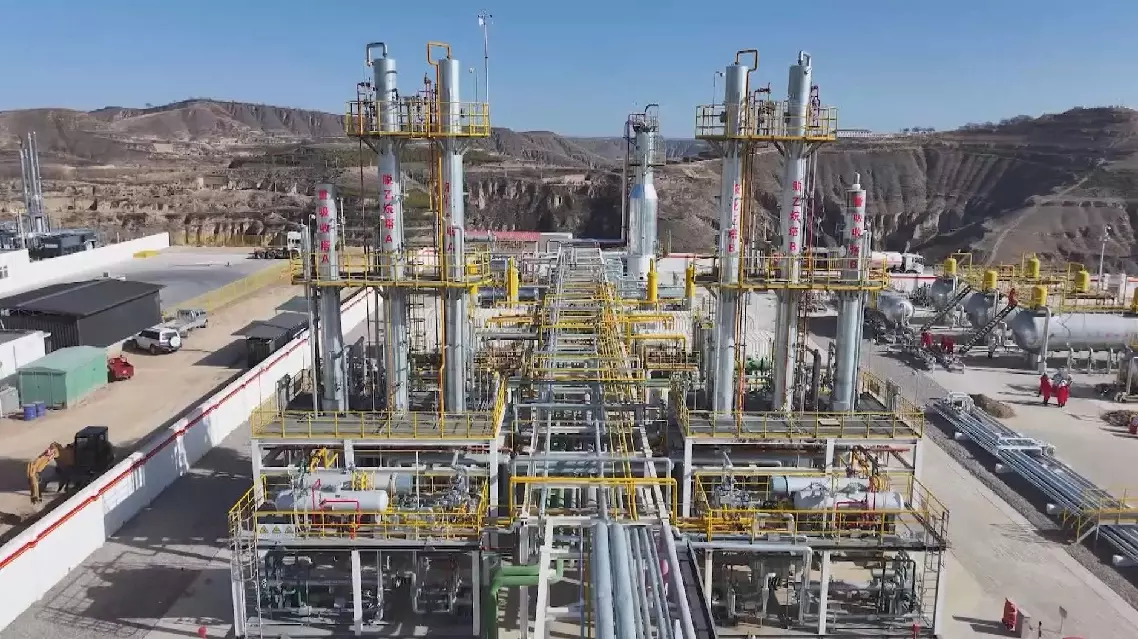
Daily shale oil output of China's largest oil-and-gas field exceeds 10,000 tons
The World Bank predicted Tuesday that energy prices may surge 24 percent in 2026 to their highest level since the Russia-Ukraine conflict erupted in 2022 due to the war in the Middle East, while overall commodity prices are projected to increase 16 percent.
In its latest Commodity Markets Outlook released on Tuesday, the World Bank said that attacks on energy infrastructure and shipping disruptions in the Strait of Hormuz, which handles about 35 percent of global seaborne crude oil trade, have triggered the largest oil supply shock on record, with an initial reduction in global oil supply of about 10 million barrels per day.
Fertilizer prices are projected to increase by 31 percent in 2026, driven by a 60-percent jump in urea prices, while prices for base metals, including aluminum, copper and tin, are expected to reach all-time highs.
Precious metals prices are forecast to increase 42 percent as geopolitical uncertainty fuels demand for safe-haven assets.
Commodity prices could rise even higher if hostilities escalate or supply disruptions from the Iran war last longer than projected, the report said.
Indermit Gill, the World Bank Group's chief economist and senior vice president for Development Economics, said the war is hitting the global economy in cumulative waves, warning that poorer populations will be hardest hit.

World Bank forecasts 24-pct surge in energy prices in 2026
World Bank forecasts 24-pct surge in energy prices in 2026