THE HAGUE, Netherlands (AP) — The United Nations' top court has issued a landmark advisory opinion on climate change, its 15 black-robed judges weighing in for the first time on what the court's president called “an existential problem of planetary proportions that imperils all forms of life and the very health of our planet.”
The International Court of Justice's unanimous non-binding opinion, which runs to over 500 pages, was immediately hailed by activists as a turning point in international climate law.
Click to Gallery
Activists demonstrate outside The Peace Palace, housing the International Court of Justice, ahead of an advisory opinion on what legal obligations nations have to address climate change and what consequences they may face if they don't, Wednesday, July 23, 2025, in The Hague, Netherlands. (AP Photo/Peter Dejong)
Journalists scramble to get a copy of the readings as Presiding judge Yuji Iwasawa can be seen speaking onscreen at the International Court of Justice for an advisory opinion on what legal obligations nations have to address climate change and what consequences they may face if they don't, Wednesday, July 23, 2025, in The Hague, Netherlands. (AP Photo/Peter Dejong)
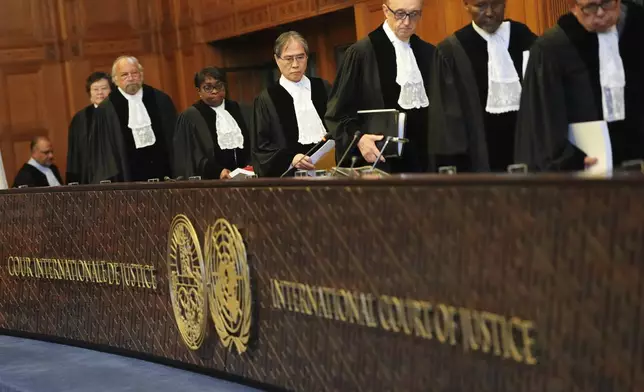
Presiding judge Yuji Iwasawa, fourth from right, enters the International Court of Justice ahead of an advisory opinion on what legal obligations nations have to address climate change and what consequences they may face if they don't, Wednesday, July 23, 2025, in The Hague, Netherlands. (AP Photo/Peter Dejong)
Judges are seated as the International Court of Justice opens a hearing to deliver an advisory opinion on what legal obligations nations have to address climate change and what consequences they may face if they don't, Wednesday, July 23, 2025, in The Hague, Netherlands. (AP Photo/Peter Dejong)
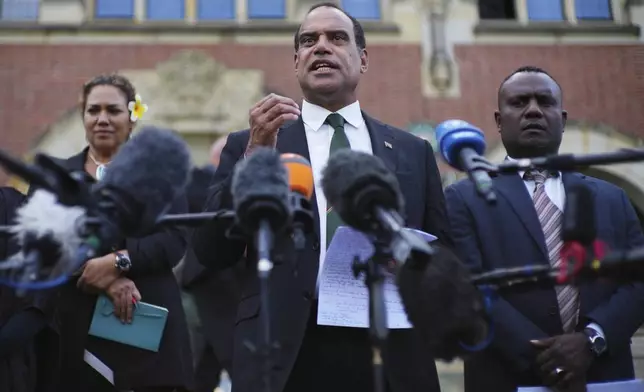
Ralph Regenvanu, center, Vanuatu's minister for climate change, speaks after the International Court of Justice's advisory opinion about nations' obligations to tackle climate change and consequences they may face if they don't, Wednesday, July 23, 2025, in The Hague, Netherlands. (AP Photo/Peter Dejong)
After years of lobbying by island nations who fear they could disappear under rising sea waters, the U.N. General Assembly asked the court in 2023 to answer two questions: What are countries obliged to do under international law to protect the climate and environment from human-caused greenhouse gas emissions? And what are the legal consequences for governments when their acts, or lack of action, have significantly harmed the climate and environment?
Here are some of the key points from the opinion delivered Wednesday.
In a simple statement that could have profound legal ramifications, the court said everyone is entitled to a habitable planet.
“The human right to a clean, healthy and sustainable environment is therefore inherent in the enjoyment of other human rights,” court President Yuji Iwasawa said during a two-hour hearing.
A livable planet is a human right and is part of international customary law, meaning every country is obliged to protect it, not just countries that have signed climate treaties and other agreements.
A failure to address climate change, the court said, could be a violation of international law.
That matters because it applies to all countries and paves the way for legal actions, including states returning to the ICJ to hold each other to account; domestic lawsuits; and investment agreements that have to conform to international law.
“With today’s authoritative historic ruling, the International Court of Justice has broken with business-as-usual and delivered a historic affirmation: Those suffering the impacts of climate devastation have a right to remedy and full reparation,” said Joie Chowdhury, a senior attorney at the Center for International Environmental Law.
The court ruled that some countries or individuals suffering from the effects of climate change could be eligible for compensation.
For climate damage linked to greenhouse gas emissions, “restitution may take the form of reconstructing damaged or destroyed infrastructure, and restoring ecosystems and biodiversity,” the court said.
If that’s not possible, financial compensation could be assessed, though the judges conceded it “may be difficult to calculate, as there is usually a degree of uncertainty with respect to the exact extent of the damage caused.”
Activists hailed that part of the decision as a historic turning point in their search for justice.
“The ICJ’s decision brings us closer to a world where governments can no longer turn a blind eye to their legal responsibilities. It affirms a simple truth of climate justice: Those who did the least to fuel this crisis deserve protection, reparations, and a future,” said Vishal Prasad, director of Pacific Islands Students Fighting Climate Change.
While the court’s opinion is far-reaching, no one expects it to immediately solve the problems created by climate change.
The judges noted that people may be forced to flee their homes to escape the dangers posed by climate change and countries are obliged to not turn away climate refugees when their lives are endangered. If a country disappears under rising ocean levels, that country doesn’t cease to exist, they said.
For the Pacific Island nations that pushed for the opinion, the threat is real. Since 1993, sea levels around Vanuatu’s shores have risen by about 6 millimeters (.24 inches) per year — significantly faster than the global average — and in some areas, tectonic activity has doubled that rate.
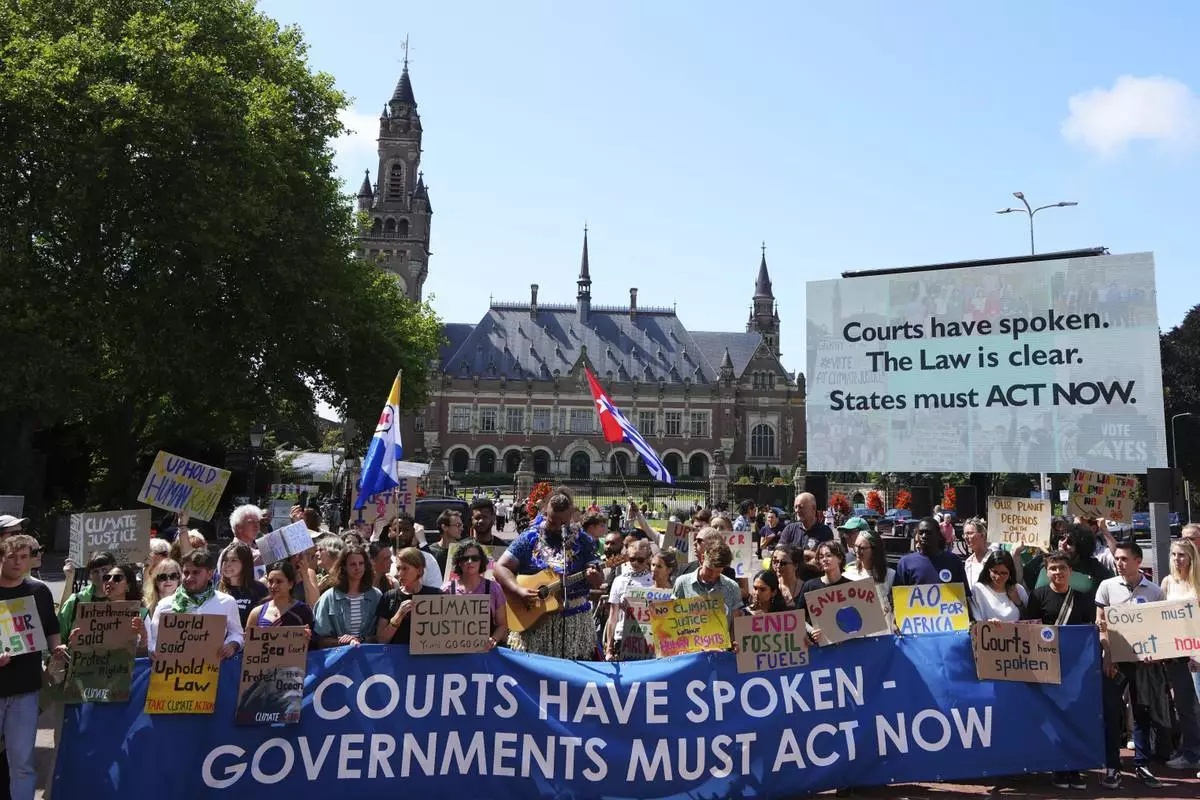
Activists demonstrate outside The Peace Palace, housing the International Court of Justice, ahead of an advisory opinion on what legal obligations nations have to address climate change and what consequences they may face if they don't, Wednesday, July 23, 2025, in The Hague, Netherlands. (AP Photo/Peter Dejong)
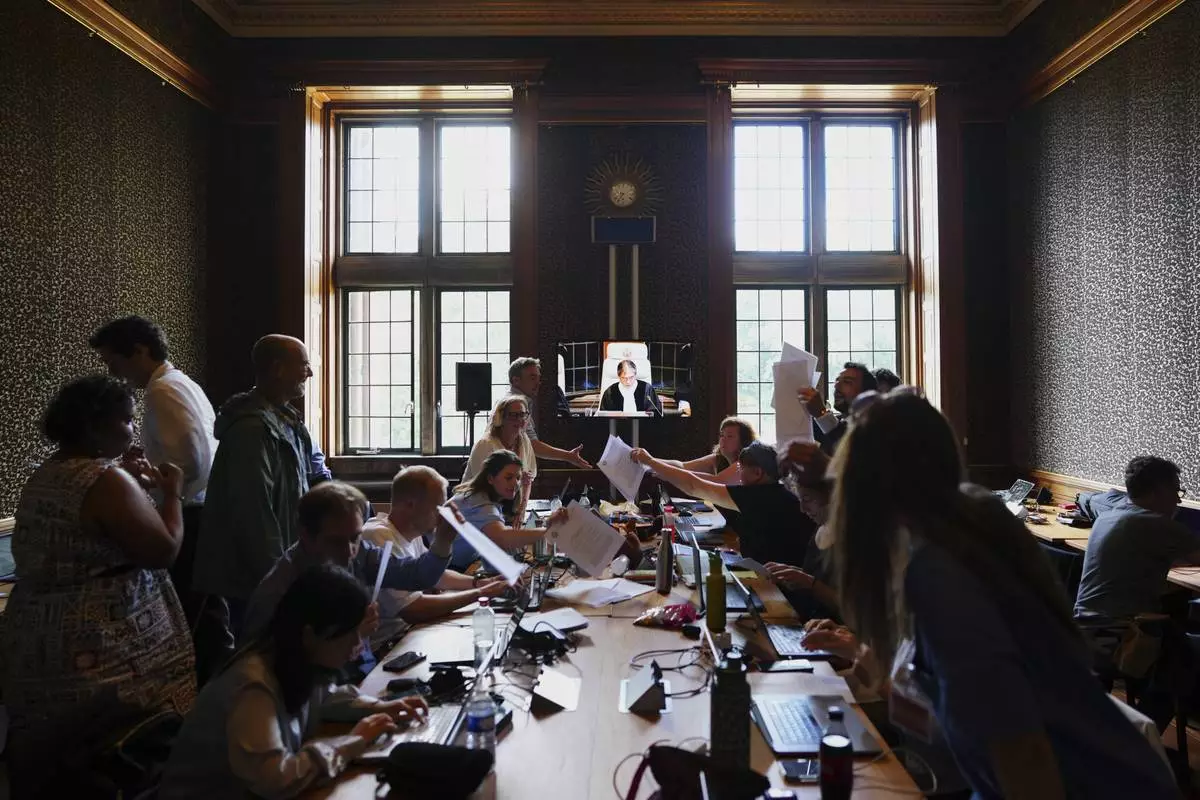
Journalists scramble to get a copy of the readings as Presiding judge Yuji Iwasawa can be seen speaking onscreen at the International Court of Justice for an advisory opinion on what legal obligations nations have to address climate change and what consequences they may face if they don't, Wednesday, July 23, 2025, in The Hague, Netherlands. (AP Photo/Peter Dejong)
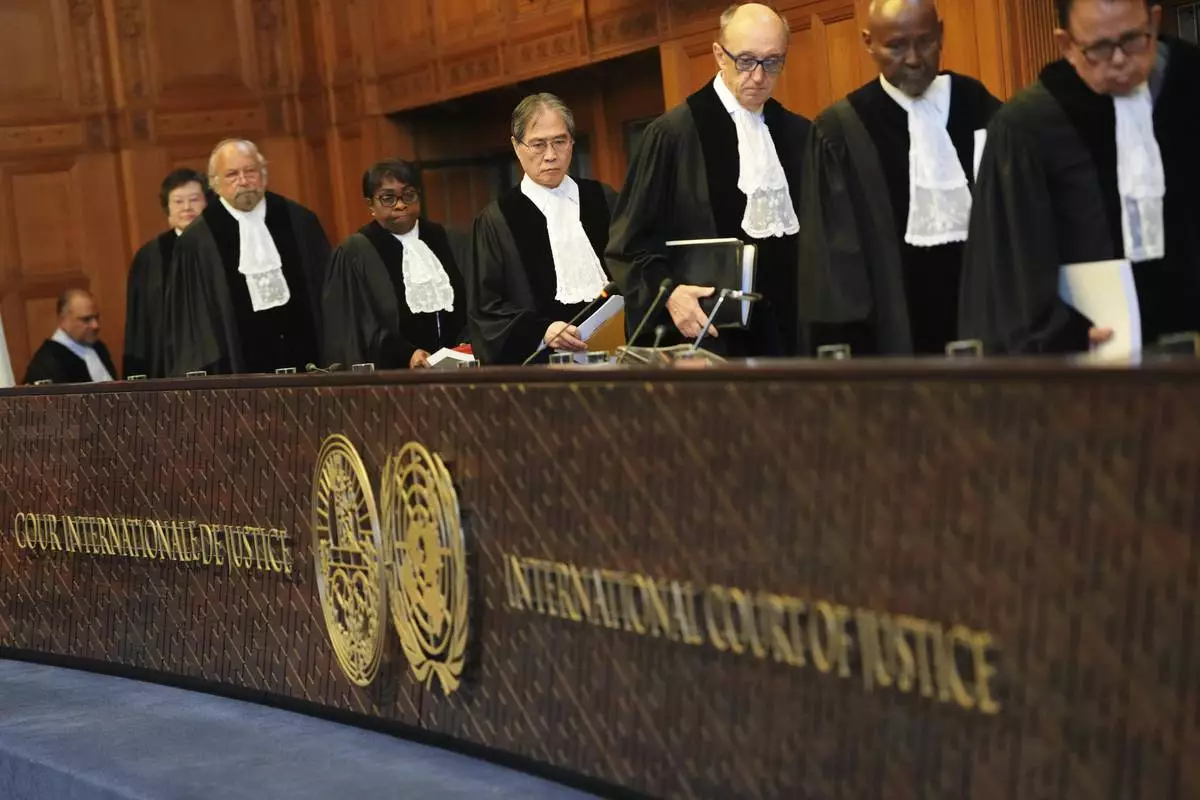
Presiding judge Yuji Iwasawa, fourth from right, enters the International Court of Justice ahead of an advisory opinion on what legal obligations nations have to address climate change and what consequences they may face if they don't, Wednesday, July 23, 2025, in The Hague, Netherlands. (AP Photo/Peter Dejong)
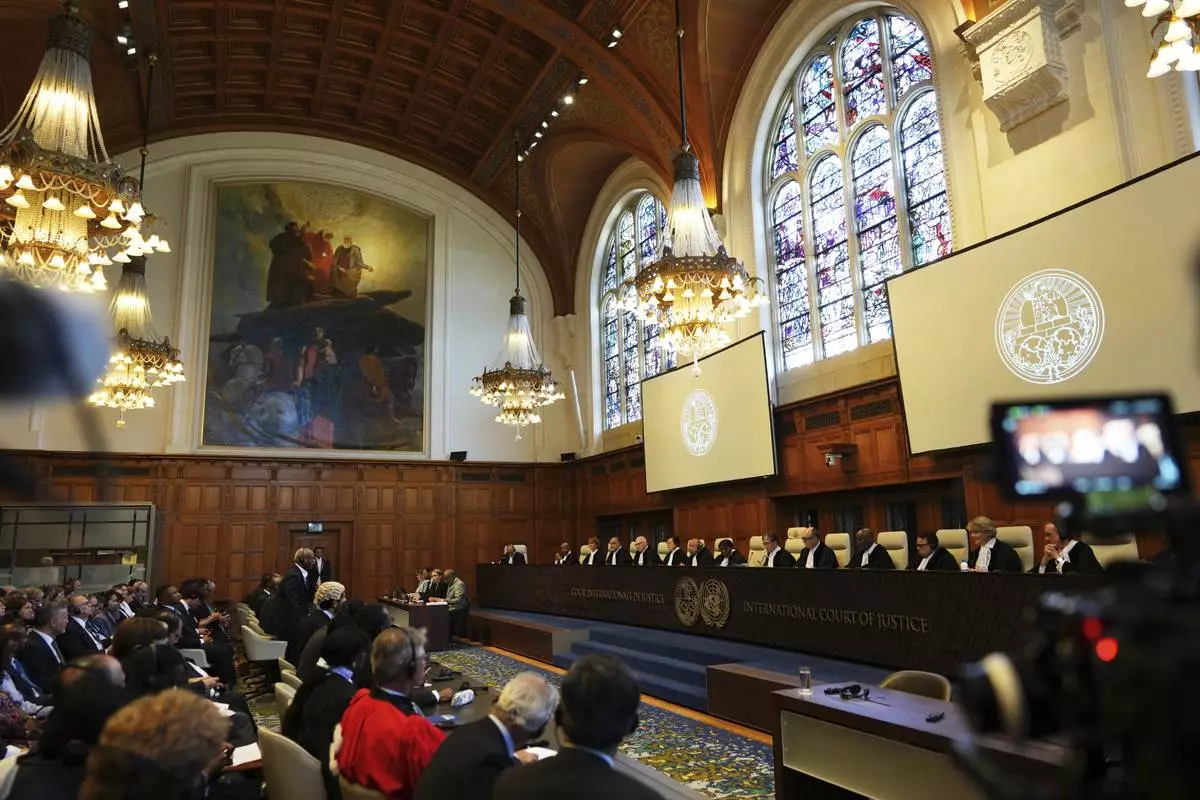
Judges are seated as the International Court of Justice opens a hearing to deliver an advisory opinion on what legal obligations nations have to address climate change and what consequences they may face if they don't, Wednesday, July 23, 2025, in The Hague, Netherlands. (AP Photo/Peter Dejong)
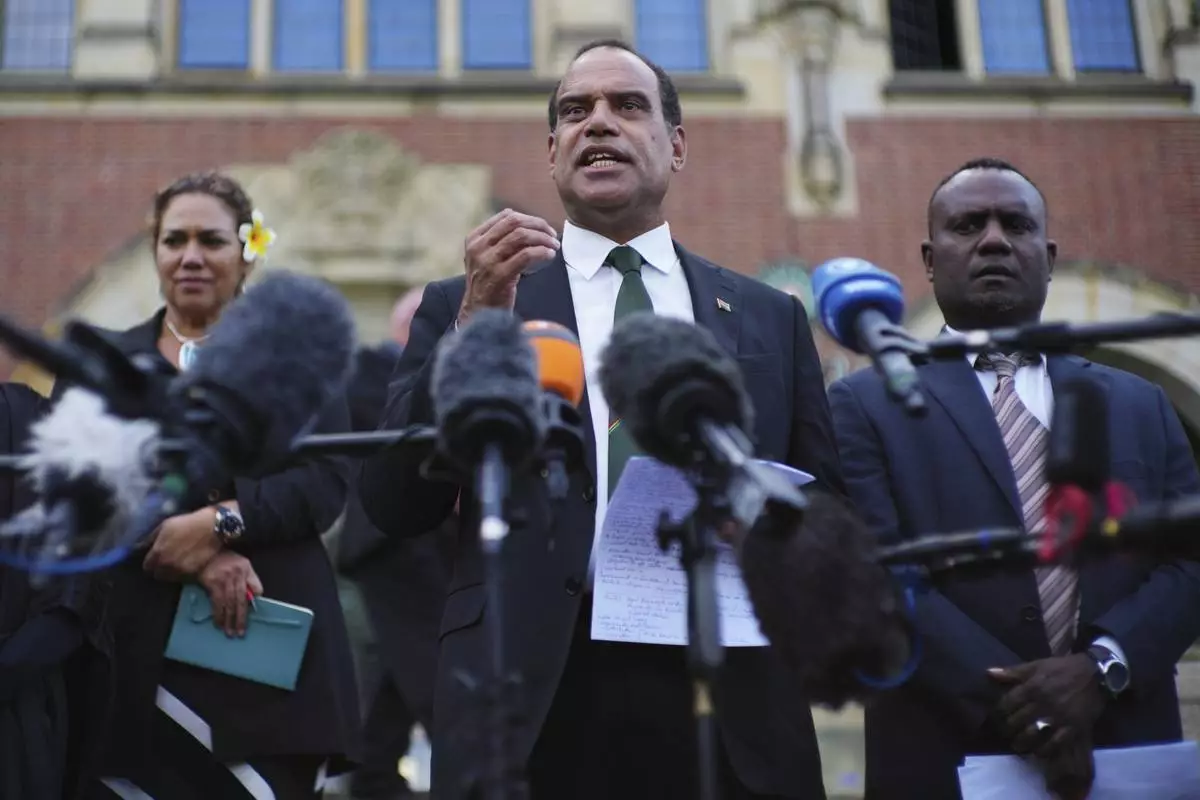
Ralph Regenvanu, center, Vanuatu's minister for climate change, speaks after the International Court of Justice's advisory opinion about nations' obligations to tackle climate change and consequences they may face if they don't, Wednesday, July 23, 2025, in The Hague, Netherlands. (AP Photo/Peter Dejong)
Federal immigration agents deployed to Minneapolis have used aggressive crowd-control tactics that have become a dominant concern in the aftermath of the deadly shooting of a woman in her car last week.
They have pointed rifles at demonstrators and deployed chemical irritants early in confrontations. They have broken vehicle windows and pulled occupants from cars. They have scuffled with protesters and shoved them to the ground.
The government says the actions are necessary to protect officers from violent attacks. The encounters in turn have riled up protesters even more, especially as videos of the incidents are shared widely on social media.
What is unfolding in Minneapolis reflects a broader shift in how the federal government is asserting its authority during protests, relying on immigration agents and investigators to perform crowd-management roles traditionally handled by local police who often have more training in public order tactics and de-escalating large crowds.
Experts warn the approach runs counter to de-escalation standards and risks turning volatile demonstrations into deadly encounters.
The confrontations come amid a major immigration enforcement surge ordered by the Trump administration in early December, which sent more than 2,000 officers from across the Department of Homeland Security into the Minneapolis-St. Paul area. Many of the officers involved are typically tasked with arrests, deportations and criminal investigations, not managing volatile public demonstrations.
Tensions escalated after the fatal shooting of Renee Good, a 37-year-old woman killed by an immigration agent last week, an incident federal officials have defended as self-defense after they say Good weaponized her vehicle.
The killing has intensified protests and scrutiny of the federal response.
On Monday, the American Civil Liberties Union of Minnesota asked a federal judge to intervene, filing a lawsuit on behalf of six residents seeking an emergency injunction to limit how federal agents operate during protests, including restrictions on the use of chemical agents, the pointing of firearms at non-threatening individuals and interference with lawful video recording.
“There’s so much about what’s happening now that is not a traditional approach to immigration apprehensions,” said former Immigration and Customs Enforcement Director Sarah Saldaña.
Saldaña, who left the post at the beginning of 2017 as President Donald Trump's first term began, said she can't speak to how the agency currently trains its officers. When she was director, she said officers received training on how to interact with people who might be observing an apprehension or filming officers, but agents rarely had to deal with crowds or protests.
“This is different. You would hope that the agency would be responsive given the evolution of what’s happening — brought on, mind you, by the aggressive approach that has been taken coming from the top,” she said.
Ian Adams, an assistant professor of criminal justice at the University of South Carolina, said the majority of crowd-management or protest training in policing happens at the local level — usually at larger police departments that have public order units.
“It’s highly unlikely that your typical ICE agent has a great deal of experience with public order tactics or control,” Adams said.
DHS Secretary Tricia McLaughlin said in a written statement that ICE officer candidates receive extensive training over eight weeks in courses that include conflict management and de-escalation. She said many of the candidates are military veterans and about 85% have previous law enforcement experience.
“All ICE candidates are subject to months of rigorous training and selection at the Federal Law Enforcement Training Center, where they are trained in everything from de-escalation tactics to firearms to driving training. Homeland Security Investigations candidates receive more than 100 days of specialized training," she said.
Ed Maguire, a criminology professor at Arizona State University, has written extensively about crowd-management and protest- related law enforcement training. He said while he hasn't seen the current training curriculum for ICE officers, he has reviewed recent training materials for federal officers and called it “horrifying.”
Maguire said what he's seeing in Minneapolis feels like a perfect storm for bad consequences.
“You can't even say this doesn't meet best practices. That's too high a bar. These don't seem to meet generally accepted practices,” he said.
“We’re seeing routinely substandard law enforcement practices that would just never be accepted at the local level,” he added. “Then there seems to be just an absence of standard accountability practices.”
Adams noted that police department practices have "evolved to understand that the sort of 1950s and 1960s instinct to meet every protest with force, has blowback effects that actually make the disorder worse.”
He said police departments now try to open communication with organizers, set boundaries and sometimes even show deference within reason. There's an understanding that inside of a crowd, using unnecessary force can have a domino effect that might cause escalation from protesters and from officers.
Despite training for officers responding to civil unrest dramatically shifting over the last four decades, there is no nationwide standard of best practices. For example, some departments bar officers from spraying pepper spray directly into the face of people exercising Constitutional speech. Others bar the use of tear gas or other chemical agents in residential neighborhoods.
Regardless of the specifics, experts recommend that departments have written policies they review regularly.
“Organizations and agencies aren’t always familiar with what their own policies are,” said Humberto Cardounel, senior director of training and technical assistance at the National Policing Institute.
“They go through it once in basic training then expect (officers) to know how to comport themselves two years later, five years later," he said. "We encourage them to understand and know their training, but also to simulate their training.”
Adams said part of the reason local officers are the best option for performing public order tasks is they have a compact with the community.
“I think at the heart of this is the challenge of calling what ICE is doing even policing,” he said.
"Police agencies have a relationship with their community that extends before and after any incidents. Officers know we will be here no matter what happens, and the community knows regardless of what happens today, these officers will be here tomorrow.”
Saldaña noted that both sides have increased their aggression.
“You cannot put yourself in front of an armed officer, you cannot put your hands on them certainly. That is impeding law enforcement actions,” she said.
“At this point, I’m getting concerned on both sides — the aggression from law enforcement and the increasingly aggressive behavior from protesters.”
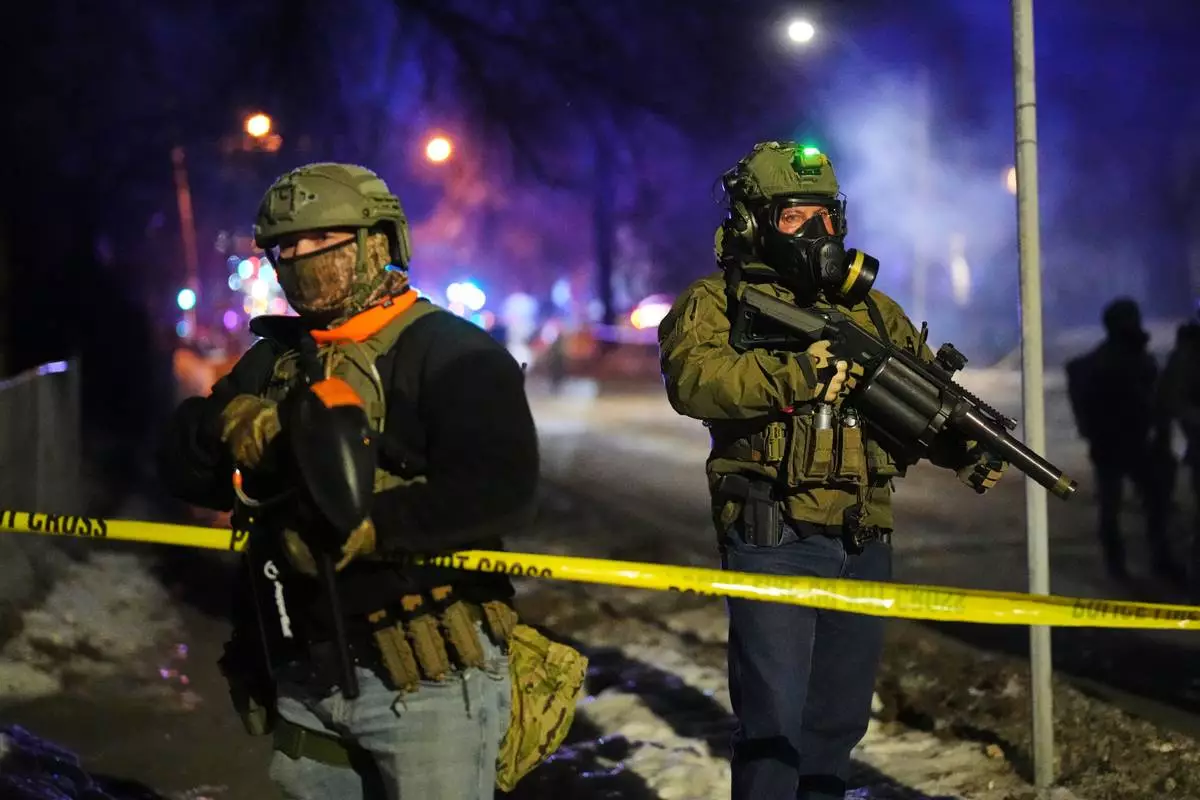
Law enforcement officers at the scene of a reported shooting Wednesday, Jan. 14, 2026, in Minneapolis. (AP Photo/Adam Gray)
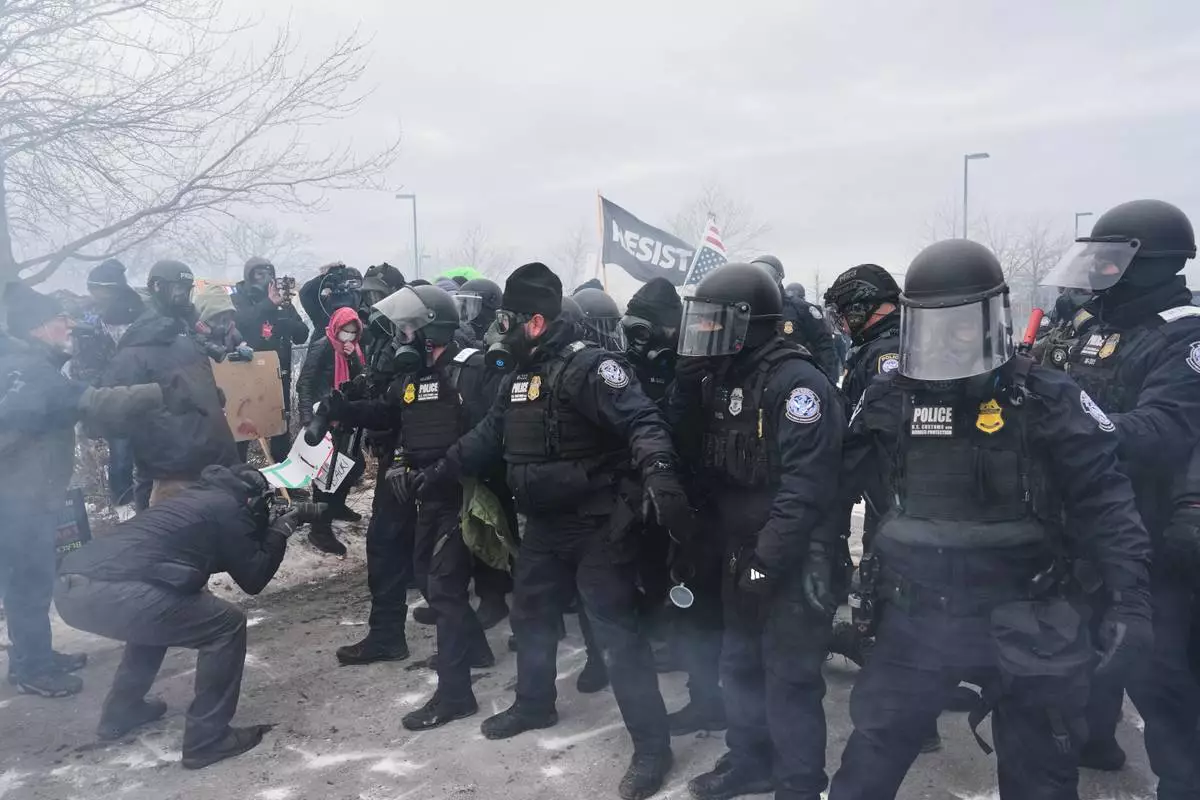
Federal immigration officers confront protesters outside Bishop Henry Whipple Federal Building, Thursday, Jan. 15, 2026, in Minneapolis. (AP Photo/Adam Gray)
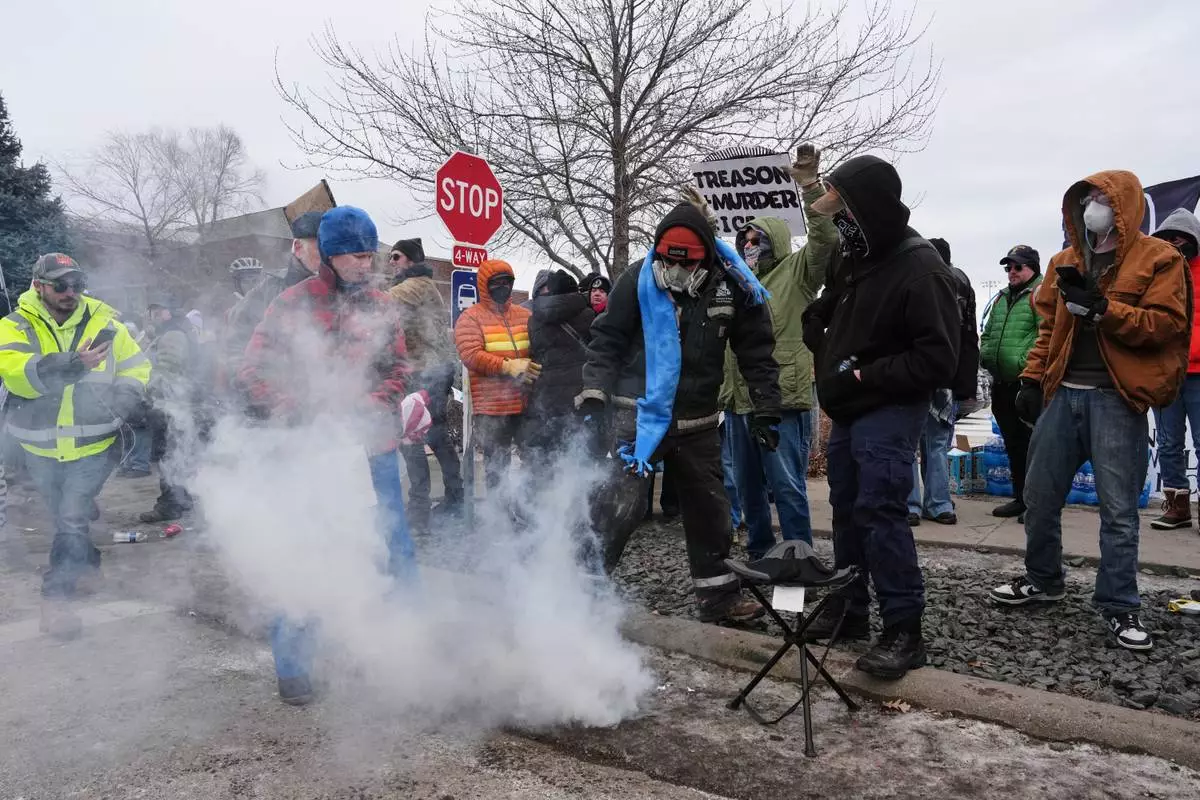
People cover tear gas deployed by federal immigration officers outside Bishop Henry Whipple Federal Building, Thursday, Jan. 15, 2026, in Minneapolis. (AP Photo/Adam Gray)
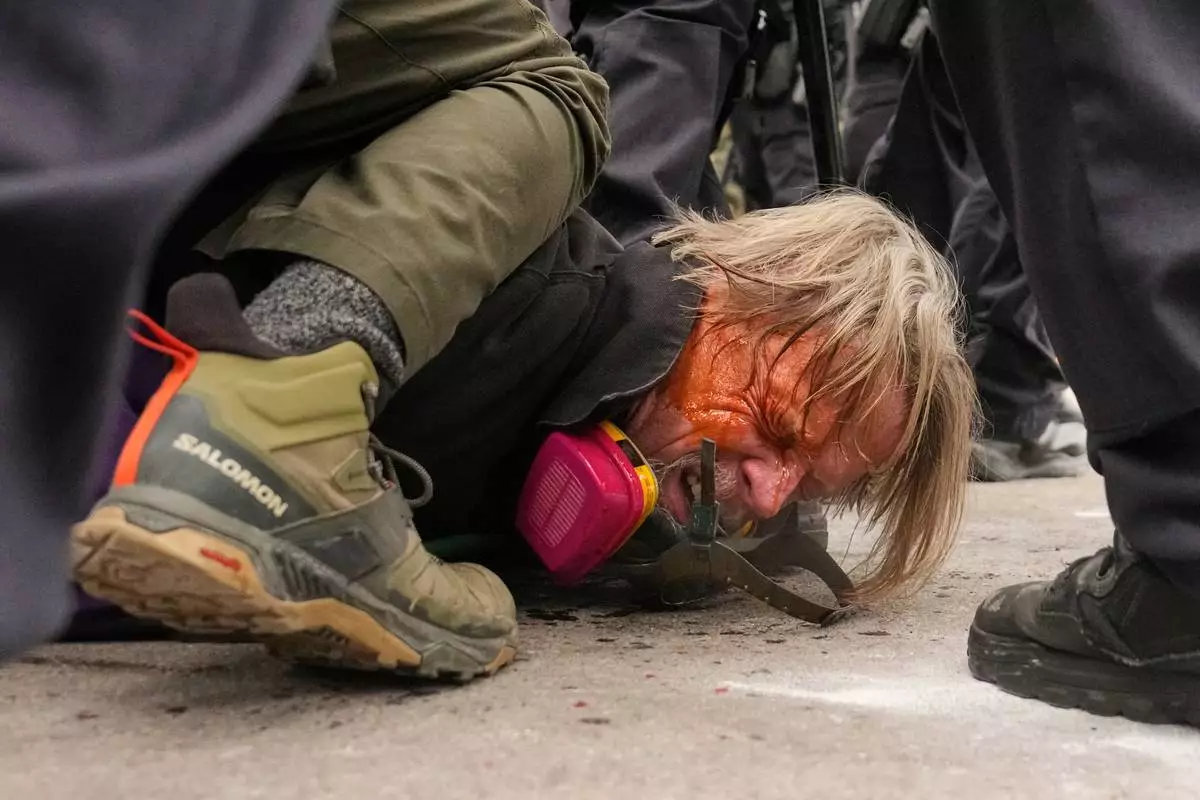
A man is pushed to the ground as federal immigration officers confront protesters outside Bishop Henry Whipple Federal Building, Thursday, Jan. 15, 2026, in Minneapolis. (AP Photo/John Locher)
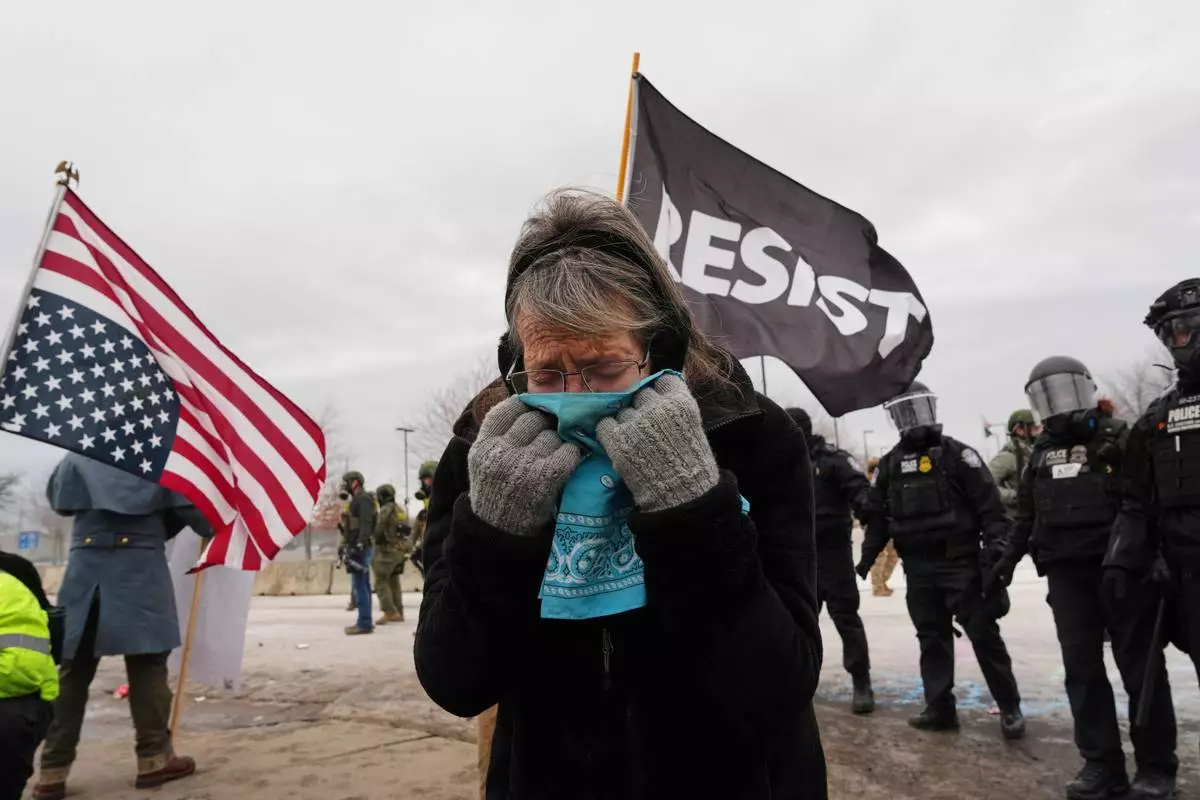
A woman covers her face from tear gas as federal immigration officers confront protesters outside Bishop Henry Whipple Federal Building, Thursday, Jan. 15, 2026, in Minneapolis. (AP Photo/Adam Gray)