Skip to Content Facebook Feature Image

Xizang promotes Tibetan Opera inheritance, engaging more young performers

China

China

China

Xizang promotes Tibetan Opera inheritance, engaging more young performers

2025-07-24 17:51 Last Updated At:21:07

In Namling County of Xigaze City in southwest China's Xizang Autonomous Region, one of the birthplaces of Tibetan Opera, local authorities are working alongside inheritors and young performers to organize various performances and activities to preserve and revitalize this centuries-old art form.

Known as a "living fossil" of Tibetan culture, Tibetan Opera bears a history of more than 700 years. In 2006, it was included in China's first batch of National Intangible Cultural Heritage.

The Xiangba school of Tibetan Opera, one of the four major styles, originated in Namling County. To keep this cultural treasure alive, Namling has adopted multiple measures, including community performances, school-based training, and cultural product development.

As part of the efforts, Namling County launched a three-day Xiangba Tibetan Opera showcase last Wednesday to celebrate the 60th anniversary of the founding of the Xizang Autonomous Region, attracting the participation of more than 30 troupes.

These efforts have revitalized Tibetan Opera, bringing the art form into the lives of many young people.

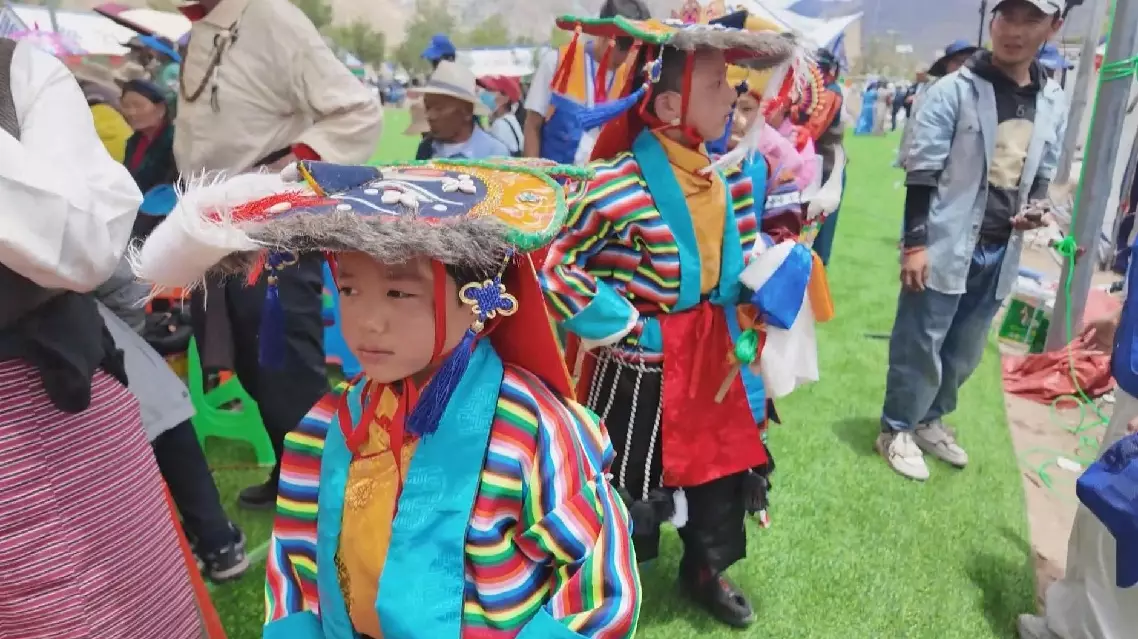
"Female performers are rare in Tibetan Opera. I joined to encourage more women to help carry on this tradition," said Drolma Yangkyi, a high school student who also joined the performance.

Among the many Xiangba troupes, a children's team drew particular attention. Though their singing and movements were not yet sophisticated, their performances offered a glimpse into the future of Tibetan Opera.

"Our Xiangba Tibetan Opera troupe [in Duojiao Township] currently has 25 members. They have done well in both preserving and performing the opera. I am confident we can train more young people to better preserve and carry on this legacy," said Ciduo, a National-level Inheritor of Xiangba Tibetan Opera.

With supporting government policies, Tibetan Opera has seen strong growth in the region. As of now, there are over 30 troupes in Namling County alone.

"The country has been giving more and more attentions to traditional culture. The fact that Namling alone has more than 30 Tibetan Opera troupes is a testament to the success of these preservation efforts," said Bandian Wangchuk, chairman of Xizang Theatre Association.

As Namling County now works toward establishing a cultural preservation zone, it is making systematic efforts to protect and pass on the art of Tibetan Opera as the "Hometown of Tibetan Opera."
Xizang promotes Tibetan Opera inheritance, engaging more young performers

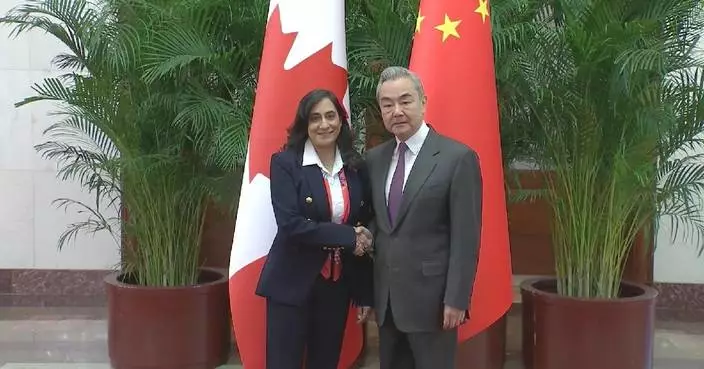
Xizang promotes Tibetan Opera inheritance, engaging more young performers

Canadian Prime Minister Mark Carney's official visit to China signals a policy shift towards building a more pragmatic relationship between the two countries, according to a Canadian researcher.

Carney arrived in Beijing on Wednesday to begin an official visit to China through Saturday, which marks the first trip by a Canadian Prime Minister to the country in eight years.

Robert Hanlon, director and principal investigator of Canada and the Asia Pacific Policy Project (CAPPP) at Thompson Rivers University in British Columbia, told the China Global Television Network (CGTN) that Carney's visit indicates Canada is recalibrating its strategic perception of China, which could cement the foundation for the country's economic diversification efforts and boost the development of bilateral cooperation.

"I think it's a clear message that he has moved Canada's strategy to a much more pragmatic, interest-based, -focused relationship with our trading partners, moving away from values-based narratives that we might have heard on previous governments. Canada has spoken about moving from what the Prime Minister's Office is calling "from reliance to resilience", and that means diversifying our economies and our trade everywhere in the world. And so China being our second largest trading partner, it makes perfect sense for our PM to head to Beijing," he said.

The scholar also noted the huge cooperation potential between the two sides in economic and trade fields, citing Canada's efforts to step up shipments of liquefied natural gas (LNG) and the planned construction of an oil pipeline in Alberta which aims to increase export access to Asian markets. "Canada and China both share tremendous economic opportunities together and so finding ways to enhance our exports. Canada specifically looking to build out its LNG and oil, kind of export market. We know Canada is a major producer of critical minerals and China is a buyer. And so there's a lot of synergy between that kind of those kind of markets," he said.

Canadian PM's visit to China paves way for more pragmatic trade ties: scholar

Canadian PM's visit to China paves way for more pragmatic trade ties: scholar

Recommended Articles