East China's coastal province of Zhejiang is bracing for Typhoon Francisco, the seventh typhoon of the year, which is expected to bring strong winds and heavy rains.
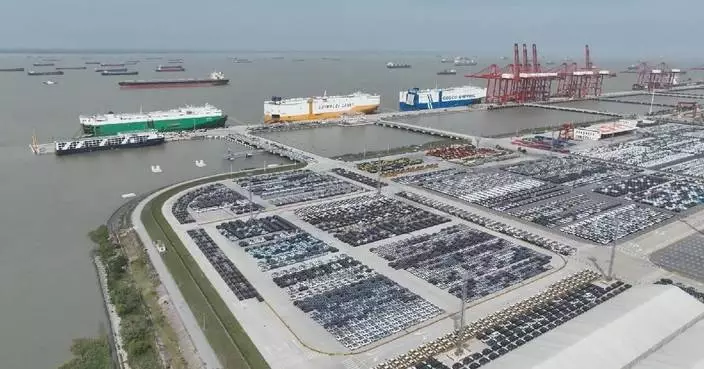
In Zhoushan City, authorities have strengthened supervision in key port areas, increased maritime patrol inspections, and employed advanced technology to guide ships away from the storm.
On Thursday morning, staff at the Aoshan port area conducted thorough inspections, issued early warnings and provided guidance to anchored ships via patrol boats to ensure their safety.
Yueqing City has activated a typhoon emergency response mechanism to closely monitor the approaching typhoon and protect local ships.
At the intelligent control center of Yueqing Bay maritime affairs office, workers are utilizing an advanced platform for ship inspections and waterway monitoring.
"We are carrying out round-the-clock monitoring of the location, speed and anchoring status of ships in sheltered waters to gather real-time information on typhoon's trajectory and changes in sea weather," said Pan Enqin, an official at the Yueqing Bay maritime affairs office.
In preparation for Francisco, sluices in Taizhou City began drainage efforts on Thursday morning to lower the water level in the Wenhuang Plain river channel and alleviate flood pressure.
A total of six gates of Jinqing New Sluice, one of the largest flood-drainage sluices in Taizhou, were opened.
"The draining operation of the Jinqing New Sluice lasted about eight hours, successfully lowering the water level in Wenhuang Plain river channel by about five centimeters," said Yang Haoran, operation director of the sluice.
Several other sluices in the city also conducted drainage operations on Thursday morning, ensuring that the water level remained manageable.
Typhoon Francisco formed in the waters east of the Philippines on Wednesday morning and is expected to reach southern Zhejiang Province and the north of neighboring Fujian Province, bringing continued rainfall in the coming days, according to China's National Meteorological Center.

Coastal province of Zhejiang braces for Typhoon Francisco