Thanks to pristine water resources and top-notch breeding tech, Qinghai Province in northwest China leads the country in rainbow trout exports, tapping into the global seafood market.
Longyangxia Reservoir in Qinghai is making waves with its booming rainbow trout farming industry. Each day, over 50 tons of rainbow trout, referred to as "plateau salmon", are shipped from these pristine waters to dinner tables across China and abroad.
Rainbow trout, a fish native to the rivers and lakes of North America, is famous for having few bones and a lot of meat, which makes it an ideal food.
Diners often express surprise at both the origin and taste of the fish.
"Qinghai has salmon? I truly didn't expect that. This is delicious. The skin is crispy while the (meat) inside tastes incredibly tender and smooth. It's very unique -- I've never had anything like it before. Really never. It's so tasty, I can't help but take another bite," said Zeng Zhenzhong, a diner, while taking the meal in a local restaurant.
The magic of the flavor is a result of both nature's bounty and technical innovation.
Longyangxia Reservoir offers ideal conditions for large-scale fish farming. Situated at an altitude of over 2,600 meters, the reservoir's water comes from glacier and snowmelt upstream, with minimal human contamination. The vast water surface spans 383 square kilometers, with an average farming depth of 120 meters. Temperature here remains steady year-round at around 12 degrees Celsius, which is perfect for cold-water fish like rainbow trout.
At one harvest platform at Longyangxia's rainbow trout base, several workers are gathering around a net pen, busy catching large, lively fish with each weighing between 4 to 5 kilograms.
After being caught, the fish are then transferred by a transparent vacuum pipe. This pipe is part of a vacuum fish pump system, independently developed by a local fishing company. Compared with traditional net fishing, this method can reduce lactic acid released by fish when they are struggling, thus preserving the meat's fresh and tender texture.
Since the beginning of the year, the company’s orders have been flooding in, with an average daily volume exceeding 50 tons.
The booming trout fish farming industry here is backed by scientific management. More than 200 round net pens are distributed across the reservoir. At the heart of each is a feeding pipeline linked to a remote feeding system which automatically adjusts feed volume based on real-time water temperature and dissolved oxygen levels. It ensures the fish have nutritious meals.
In addition, the fishing farm practices a mode of aquaculture with ultra low density. Often, there is only one fish per cubic meter, which is far lower than international averages.
To improve the meat quality, the company has also developed a smart equipment to monitor water quality and achieve disease prevention and control.
Meanwhile, Xining Customs has worked with the farm to implement an intelligent regulatory system, monitoring all stages, from breeding to harvesting, around the clock through 58 real-time surveillance points.
The processing of the fish is also intelligent. Equipped with fully automated lines, a local processing plant can sort fish by size and weight, weighting, classifying and palletizing them automatically. A fish caught can be cleaned, processed, packaged, and dispatched within four hours.
Following the completion of a deep-processing production line, the company now offers customized products, ranging from whole fish, fillets to ready-to-eat options.
Backed by targeted local policies supporting the cold-water fishing, Longyangxia rainbow trout now take over 50 percent of the domestic market and are exported to more than 10 countries.
The thriving industry also helps boost logistics, packaging, catering, and even rural tourism, creating jobs for more than 2,000 people.
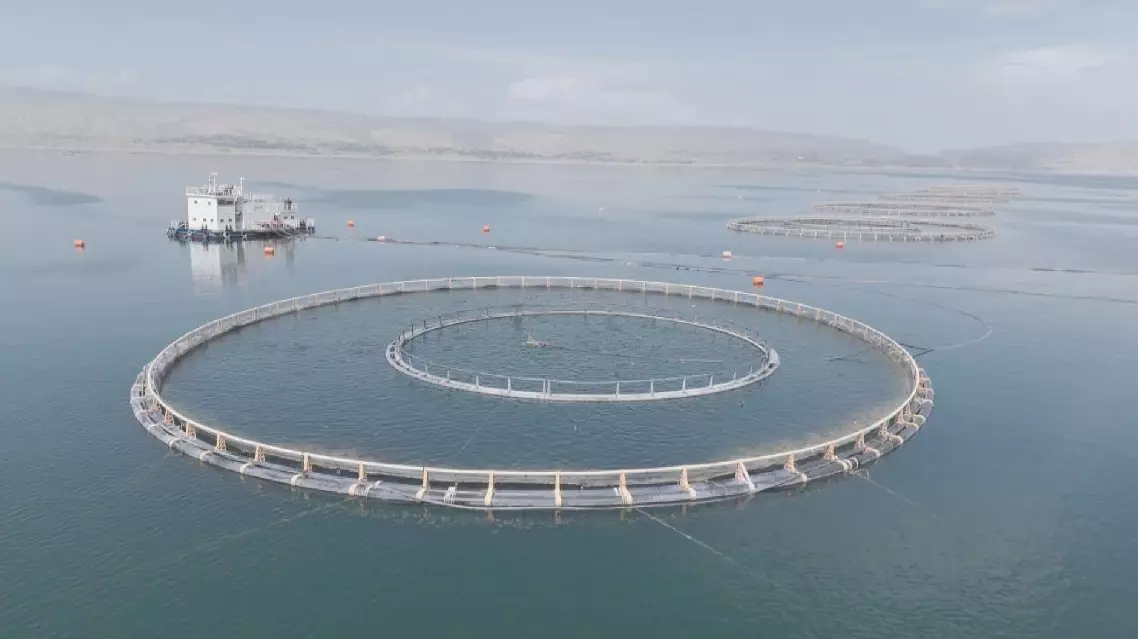
Qinghai uses high-tech, natural resources to explore rainbow trout market