The AI Agent for Multi-Hazard Early Warning, known as the MAZU-Urban, was launched on Saturday at the 2025 World Artificial Intelligence Conference (WAIC).
The AI system integrates tools such as AI-based meteorological forecasting models and real-time disaster monitoring and analysis models. Its technological core spans the entire process of early-stage disaster warning, enabling rapid deployment and efficient operation.
"The main functions are in four key areas. First is disaster assessment and analysis - identifying how frequently a country experiences disasters and pinpointing where they typically occur. Second is in monitoring and early warning. We leverage China's Fengyun meteorological satellites to carry out global satellite monitoring and incorporate this data into our numerical forecasting. With our numerical models and the Fengqing large model developed by the CMA, we are enhancing monitoring and forecasting services globally, thereby improving the forecasting capabilities of other countries. Third is the issuance of warnings. Once the forecasts are in place, the key lies in how to ensure the general public receives the warnings right away and immediately knows what actions to take. The fourth aspect is the service mechanism. We are incorporating the progressive response service mechanism, which has already been fully implemented by the CMA and widely recognized around the world, into the AI system as corpus material. This enables countries to, based on their own circumstances, rapidly establish national meteorological disaster response plans and standards through AI-generated outputs, thereby enhancing and accelerating institutional development," said Feng Lei, director of the Shanghai Meteorological Service.
Meanwhile, the CMA donated the system to Mongolia and Djibouti to support developing countries in strengthening their disaster early warning capabilities.
"I have great expectations with regards to MAZU-Urban, because there are many countries, more than half of the countries across the world do not have early warning systems in place. So you are moving in that direction. We are very supportive and we are very proud of the efforts done by Shanghai and China," said Celeste Saulo, Secretary-General of the World Meteorological Organization (WMO).
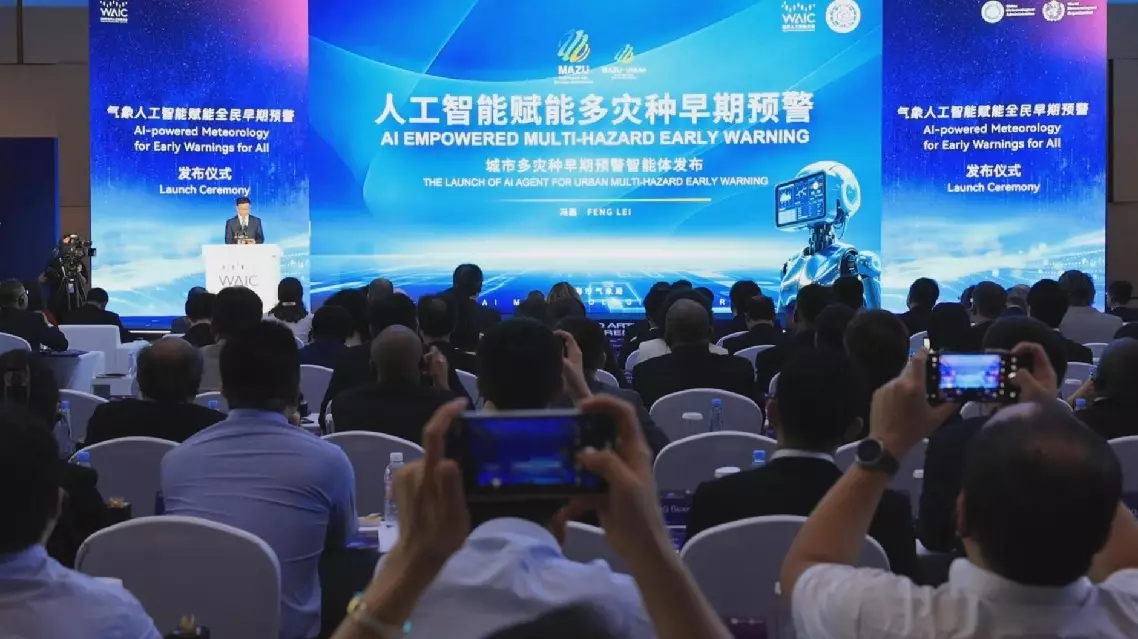
China launches AI agent for urban multi-hazard early warning