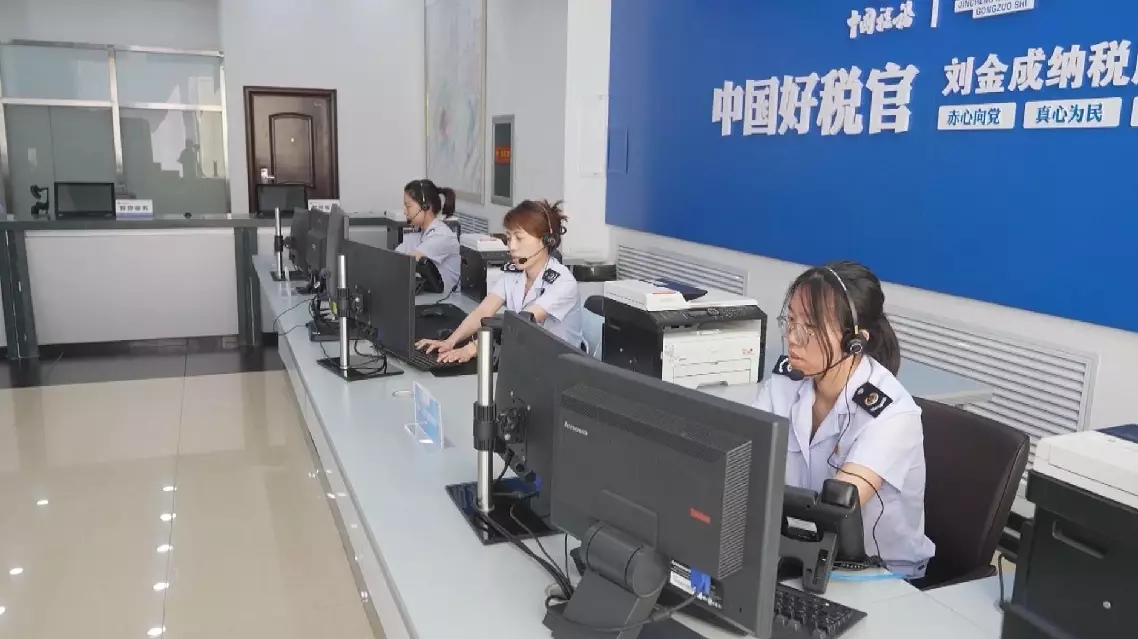
China's newly introduced tax and fee cuts during the 14th Five-Year Plan period (2021-2025) are expected to reach 10.5 trillion yuan (about 1.47 trillion U.S. dollars), providing a strong support for improving people's livelihood, said Hu Jinglin, commissioner of the State Taxation Administration, on Monday.
Speaking at a press conference, Hu elaborated on the development and achievements of China's tax reforms in this period.
"During the 14th Five-Year Plan period, China has introduced a series of tax and fee cut policies. These cuts are projected to reach 10.5 trillion yuan, with export tax rebates exceeding nine trillion yuan. Tax reforms and policies on tax and fee cuts have provided strong support for improving people's livelihood. Taking individual income tax, which is closely related to the general public, as an example. According to the recently concluded individual income tax annual reconciliation, a total of 119 million people enjoyed special additional deductions, a 55 percent increase compared with the initial reconciliation in 2020. Meanwhile, the amount of tax reduction has grown by 156.5 percent from 116 million yuan in 2020 to this year's 300 billion yuan," said Hu.
China's new tax, fee cuts expected to reach 10.5 trillion yuan during 2021-2025 period
A growing number of Chinese energy companies are increasing their presence in the Persian Gulf as they get deeply involved in the region's energy transition.
As a highlight of China-Gulf cooperation, green energy projects carried out by Chinese companies in Gulf states gained spotlight at the 18th World Future Energy Summit, which took place from Wednesday to Thursday in Abu Dhabi, the United Arab Emirates (UAE).
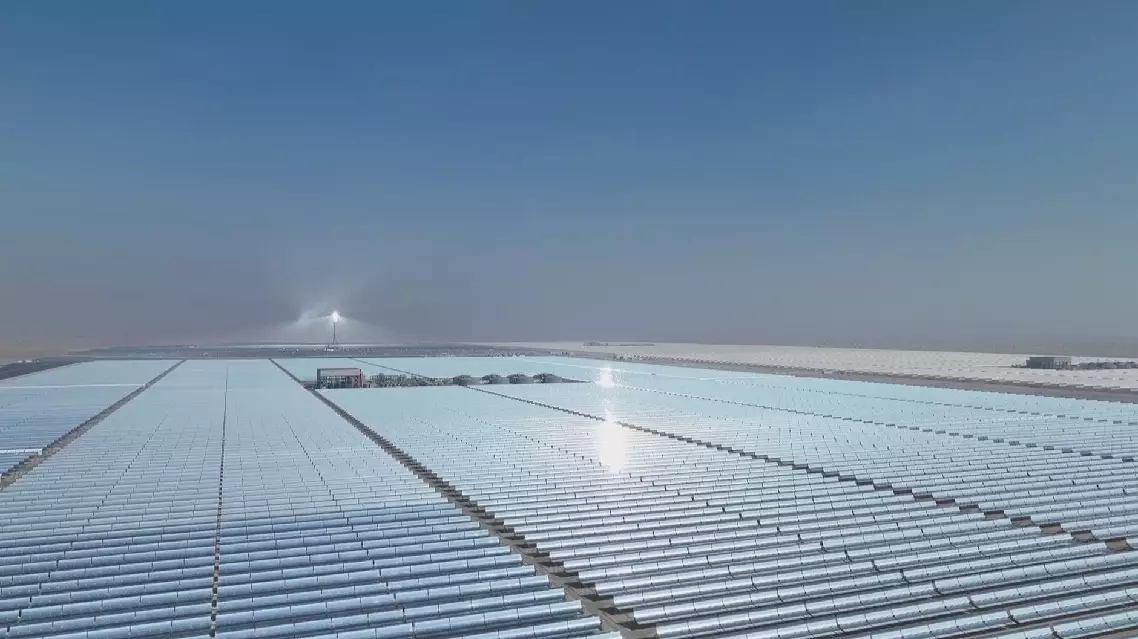
A shining example is the Mohammed bin Rashid Al Maktoum Solar Park in Dubai. As one of the largest single-site solar parks in the world, the solar thermal plant is a key project to help Dubai achieve its carbon reduction goals and significantly increase the share of clean energy in the city's power mix.
"Upon completion in 2030, it will exceed 8,000 megawatts, and it will reduce 8.5 million tons of carbon emmissions on an annual basis. And it will raise Dubai's clean energy capacity up to 36 percent," said Ali Hayat, a senior engineer of the project.
In recent years, more and more Chinese energy product suppliers have transitioned to a new role as investors by building plants and regional offices in the Gulf region to deepen their participation in local energy transition.
"China has been absurdly in the lead in both ways -- in providing technologies that make the cost of solar panel to be affordable around the world, and also in an amazing increase of the share of renewable energy in the energy system," said Francesco La Camera, director-general of the International Renewable Energy Agency.
Chinese companies seek greater role in Gulf states' energy transition