
UNITED NATIONS (AP) — High-level representatives at a U.N. conference on Tuesday urged Israel to commit to a Palestinian state and gave “unwavering support” to a two-state solution, signaling widespread international determination to end one of the world’s longest conflicts.
The “New York Declaration” sets out a phased plan to end the nearly eight-decade conflict and the ongoing war in Gaza. The plan would culminate with an independent, demilitarized Palestine living side by side peacefully with Israel, and their eventual integration into the wider Mideast region.
Click to Gallery
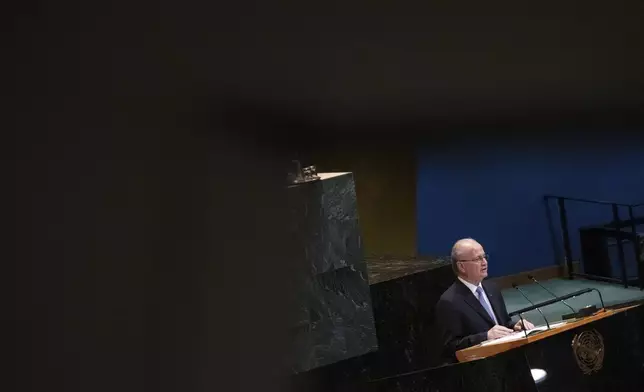
Palestinian Prime Minister Mohammed Mustafa speaks during a high-level International Conference for the Peaceful Settlement of the Question of Palestine and the Implementation of the Two-State solution at United Nations Headquarters, Monday, July 28, 2025. (AP Photo/Adam Gray)
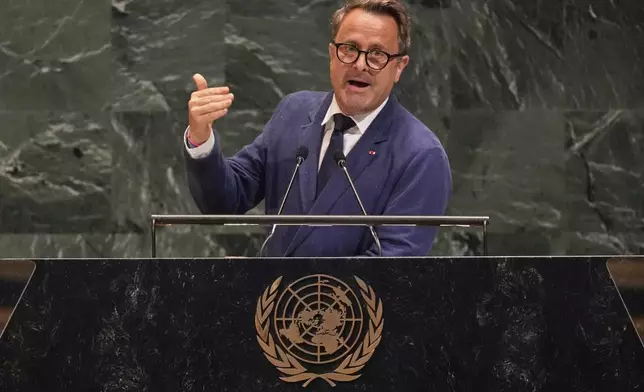
Luxembourg Deputy Prime Minister and Foreign Minister Xavier Bettel addresses the United Nations General Assembly, Monday, July 28, 2025. (AP Photo/Richard Drew)
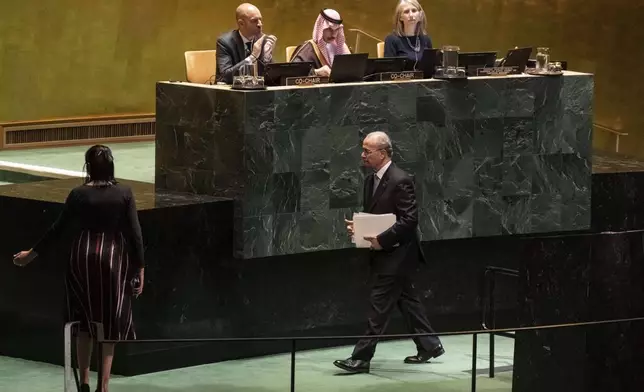
Palestinian Prime Minister Mohammed Mustafa walks off stage after speaking at a high-level International Conference for the Peaceful Settlement of the Question of Palestine and the Implementation of the Two-State solution at United Nations Headquarters, on Monday, July 28, 2025. (AP Photo/Adam Gray)
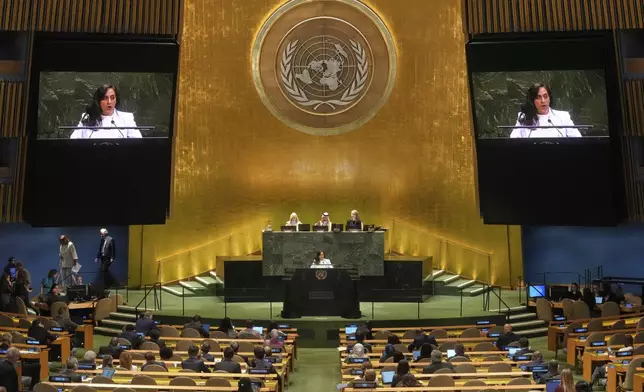
Canada Foreign Minister Anita Anand addresses the United Nations General Assembly, Monday, July 28, 2025. (AP Photo/Richard Drew)
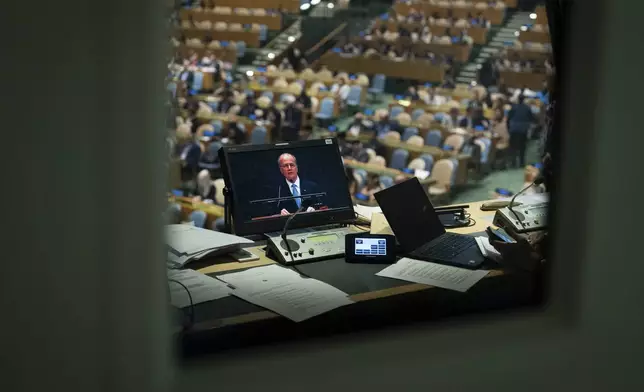
Palestinian Prime Minister Mohammed Mustafa is seen on a interpreter monitor as he speaks during a high-level International Conference for the Peaceful Settlement of the Question of Palestine and the Implementation of the Two-State solution at United Nations Headquarters, Monday, July 28, 2025. (AP Photo/Adam Gray)
The meeting is taking place amid the latest reports that starvation and famine are taking place in Gaza, and growing global outrage at Palestinians not getting food due to Israeli policies and practices – which Israel denies. Planned for two days, the meeting was extended into Wednesday because representatives of about 50 countries have not spoken.
Israeli Prime Minister Benjamin Netanyahu opposes a two-state solution and has rejected the meeting on both nationalistic and security grounds. Israel's close ally, the United States, is also boycotting, calling the meeting “unproductive and ill-timed.”
Israel’s U.N. Ambassador Danny Danon late Tuesday sharply criticized the some 125 countries participating in the conference, saying “there are those in the world who fight terrorists and extremist forces and then there are those who turn a blind eye to them or resort to appeasement.”
The conference, which was postponed from June and downgraded from world leaders to ministers, for the first time established eight high-level working groups to examine and make proposals on wide-ranging topics related to a two-state solution.
The declaration’s plan says conference co-chairs France and Saudi Arabia, the European Union and Arab League, and 15 countries that led the working groups agreed “to take collective action to end the war in Gaza.”
Saudi Foreign Minister Prince Faisal bin Farhan urged the rest of the 193 U.N. member nations “to support this document” before the start of the 80th session of the U.N. General Assembly in mid-September.
The declaration condemns “the attacks committed by Hamas against civilians” in southern Israel on Oct. 7, 2023. It marks a first condemnation by Arab nations of Hamas, whose attacks killed about 1,200, mainly Israeli civilians, and whose militants took about 250 people hostage. Some 50 are still being held.
The declaration condemns Israel's attacks on civilians and civilian infrastructure in Gaza and its “siege and starvation, which have produced a devastating humanitarian catastrophe and protection crisis.” Israel’s offensive against Hamas has killed over 60,000 Palestinians, according to the Gaza Health Ministry, which doesn’t distinguish between civilians and combatants.
The conference plan envisions the Palestinian Authority governing and controlling all Palestinian territory, with a transitional administrative committee immediately established under its umbrella after a ceasefire in Gaza.
“In the context of ending the war in Gaza, Hamas must end its rule in Gaza and hand over its weapons to the Palestinian Authority,” the declaration says.
It also supports deployment of “a temporary international stabilization mission” operating under U.N. auspices to protect Palestinian civilians, support the transfer of security to the Palestinian Authority and provide security guarantees for Palestine and Israel — “including monitoring of the ceasefire and of a future peace agreement.”
The declaration urges countries to recognize the state of Palestine, calling this “an essential and indispensable component of the achievement of the two-state solution.” Without naming Israel but clearly referring to it, the document says “illegal unilateral actions are posing an existential threat to the realization of the independent state of Palestine.”
French President Emmanuel Macron announced ahead of the meeting that his country will recognize the state of Palestine at the General Assembly's meeting of world leaders in late September. The French Foreign Ministry on Tuesday pushed back on Israeli claims that recognition of Palestine would “reward” Hamas, saying that “on the contrary, it has contributed to isolating Hamas.”
United Kingdom Prime Minister Keir Starmer announced Tuesday that Britain would recognize the state of Palestine before September's meeting, but would refrain if Israel agrees to a ceasefire and long-term peace process in the next eight weeks. The countries are now the biggest Western powers and the only two members of the Group of Seven major industrialized nations to make such a pledge.
A separate one-page statement titled the “New York Call" was circulated by France, but the language was considered too strong, especially for Arab nations. It was only approved by 15 Western nations, including six that have recognized the state of Palestine and nine others: Andorra, Australia, Canada, Finland, Luxembourg, Malta, New Zealand, Portugal and San Marino.
The statement, issued late Tuesday, says the 15 countries have recognized, “expressed or express the willingness or the positive consideration ... to recognize the state of Palestine, as an essential step towards the two-state solution, and invite all countries that have not done so to join this call.”
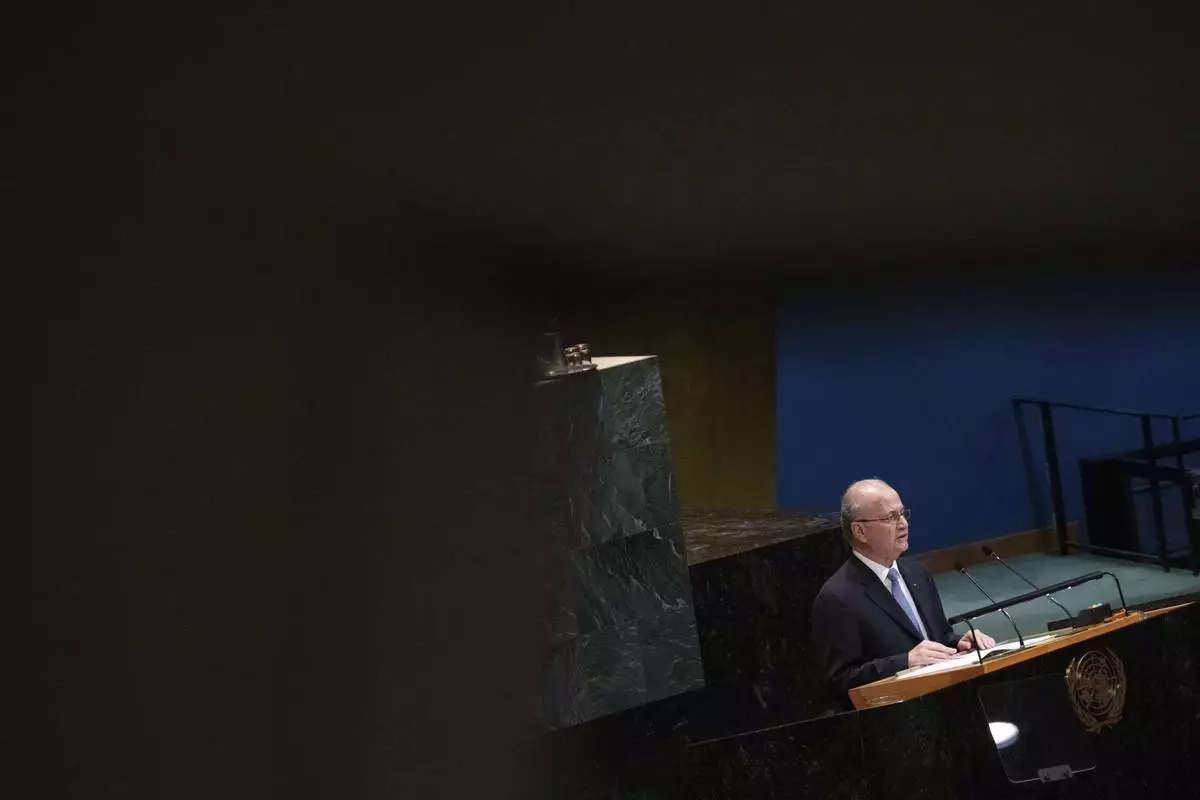
Palestinian Prime Minister Mohammed Mustafa speaks during a high-level International Conference for the Peaceful Settlement of the Question of Palestine and the Implementation of the Two-State solution at United Nations Headquarters, Monday, July 28, 2025. (AP Photo/Adam Gray)
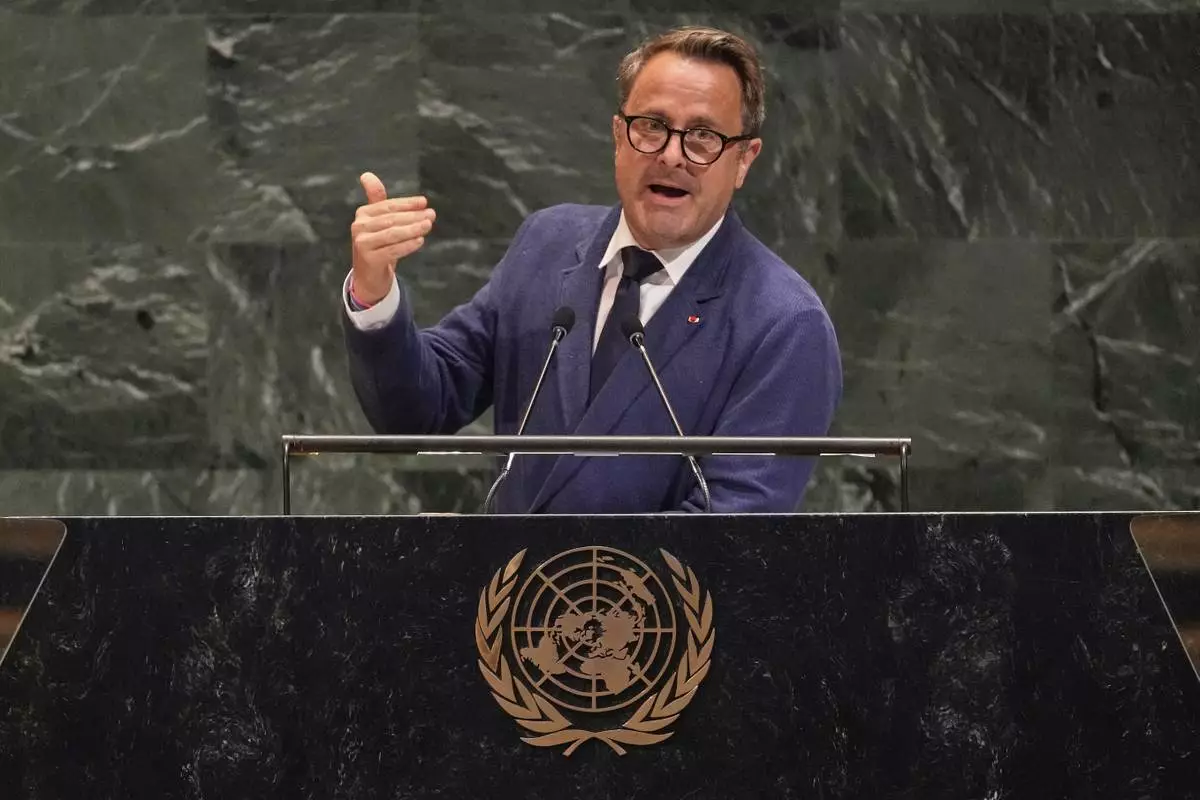
Luxembourg Deputy Prime Minister and Foreign Minister Xavier Bettel addresses the United Nations General Assembly, Monday, July 28, 2025. (AP Photo/Richard Drew)
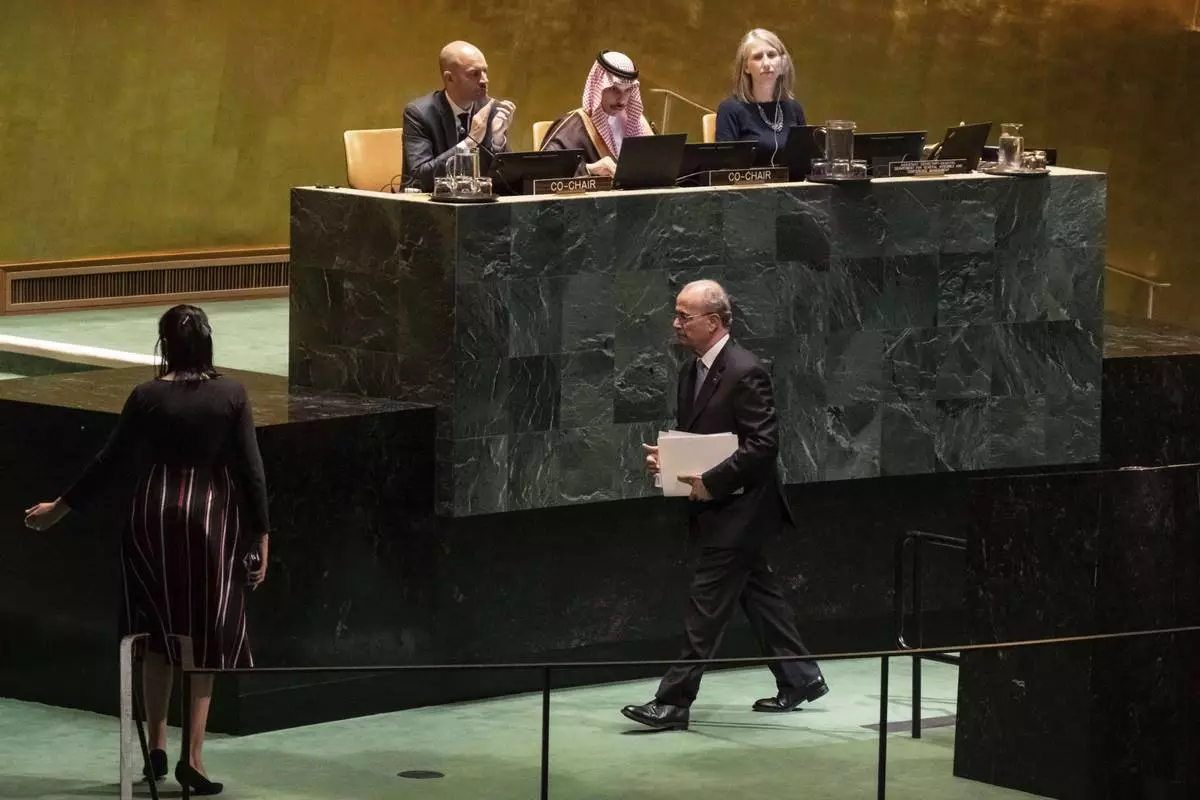
Palestinian Prime Minister Mohammed Mustafa walks off stage after speaking at a high-level International Conference for the Peaceful Settlement of the Question of Palestine and the Implementation of the Two-State solution at United Nations Headquarters, on Monday, July 28, 2025. (AP Photo/Adam Gray)
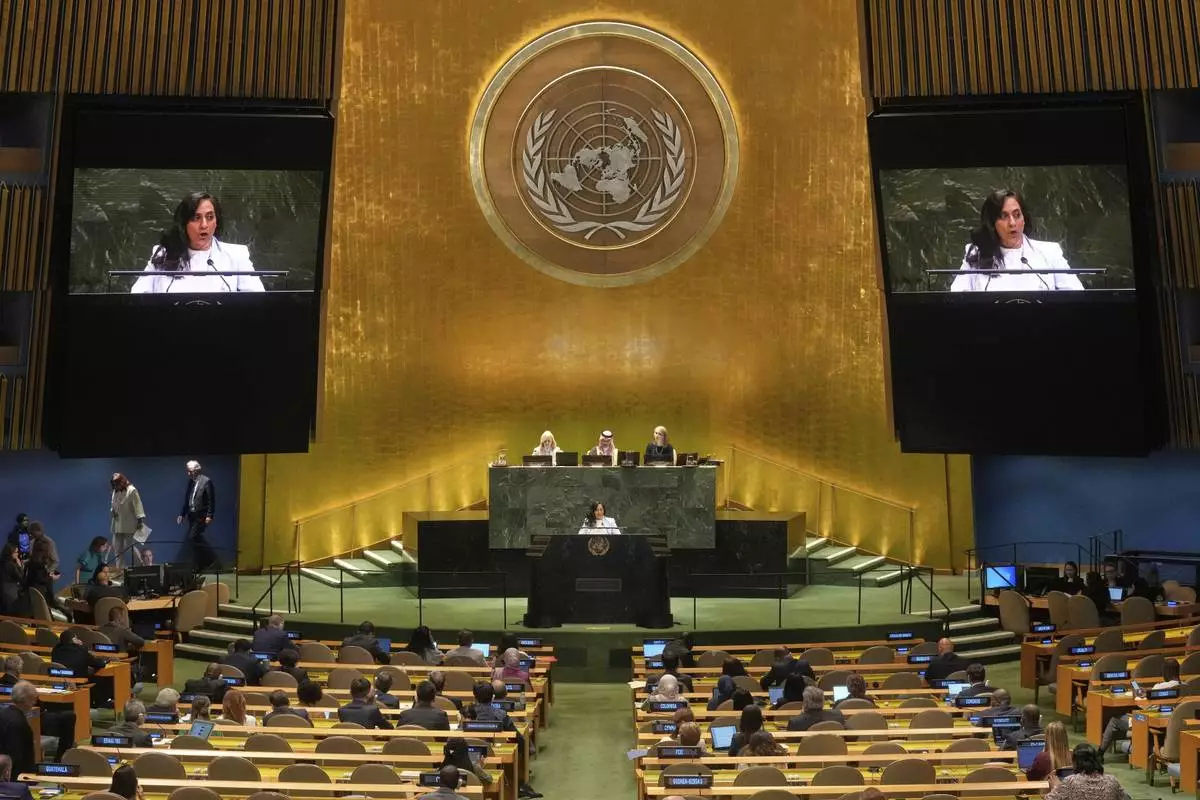
Canada Foreign Minister Anita Anand addresses the United Nations General Assembly, Monday, July 28, 2025. (AP Photo/Richard Drew)

Palestinian Prime Minister Mohammed Mustafa is seen on a interpreter monitor as he speaks during a high-level International Conference for the Peaceful Settlement of the Question of Palestine and the Implementation of the Two-State solution at United Nations Headquarters, Monday, July 28, 2025. (AP Photo/Adam Gray)