NEW YORK (AP) — For one Wisconsin couple, the loss of government-sponsored health subsidies next year means choosing a lower-quality insurance plan with a higher deductible. For a Michigan family, it means going without insurance altogether.
For a single mom in Nevada, the spiking costs mean fewer Christmas gifts this year. She is stretching her budget already while she waits to see if Congress will act.
Less than three weeks remain until the expiration of COVID-era enhanced tax credits that have helped millions of Americans pay their monthly fees for Affordable Care Act coverage for the past four years.
The Senate on Thursday rejected two proposals to address the problem and an emerging health care package from House Republicans does not include an extension, all but guaranteeing that many Americans will see much higher insurance costs in 2026.
Here are a few of their stories.
Chad Bruns comes from a family of savers. That came in handy when the 58-year-old military veteran had to leave his firefighting career early because of arm and back injuries he incurred on the job.
He and his wife, Kelley, 60, both retirees, cut their own firewood to reduce their electricity costs in their home in Sawyer County, Wisconsin. They rarely eat out and hardly ever buy groceries unless they are on sale.
But to the extent that they have always been frugal, they will be forced to be even more so now, Bruns said. That is because their coverage under the health law enacted under former President Barack Obama is getting more expensive -– and for worse coverage.
This year, the Brunses were paying $2 per month for a top-tier gold-level plan with less than a $4,000 deductible. Their income was low enough to help them qualify for a lot of financial assistance.
But in 2026, that same plan is rising to an unattainable $1,600 per month, forcing them to downgrade to a bronze plan with a $15,000 deductible.
Kelley Bruns said she is concerned that if something happens to their health in the next year, they could go bankrupt. While their monthly fees are low at about $25, their new out-of-pocket maximum at $21,000 amounts to nearly half their joint income.
“We have to pray that we don’t have to have surgery or don’t have to have some medical procedure done that we’re not aware of,” she said. “It would be very devastating.”
Dave Roof’s family of four has been on ACA insurance since the program started in 2014. Back then, the accessibility of insurance on the marketplace helped him feel comfortable taking the leap to start a small music production and performance company in his hometown of Grand Blanc, Michigan. His wife, Kristin, is also self-employed as a top seller on Etsy.
The coverage has worked for them so far, even when emergencies come up, such as an ATV accident their 21-year-old daughter had last year.
But now, with the expiration of subsidies that kept their premiums down, the 53-year-old Roof said their $500 per month insurance plan is jumping to at least $700 a month, along with spiking deductibles and out-of-pocket costs.
With their joint income of about $75,000 a year, that increase is not manageable, he said. So, they are planning to go without health insurance next year, paying cash for prescriptions, checkups and anything else that arises.
Roof said his family is already living cheaply and has not taken a vacation together since 2021. As it is, they do not save money or add it to their retirement accounts. So even though forgoing insurance is stressful, it is what they must do.
“The fear and anxiety that it’s going to put on my wife and I is really hard to measure,” Roof said. “But we can’t pay for what we can’t pay for.”
If you ask Katelin Provost, the American middle class has gone from experiencing a squeeze to a “full suffocation.”
The 37-year-old social worker in Henderson, Nevada, counts herself in that category. As a single mom, she already keeps a tight budget to cover housing, groceries and day care for her 4-year-old daughter.
Next year, that is going to be even tougher.
The monthly fee on her plan is going up from $85 to nearly $750. She decided she is going to pay that higher cost for January and reevaluate afterward, depending on whether lawmakers extend the subsidies, which as of now appears unlikely. She hopes they will.
If Congress does not act, she will drop herself off the health insurance and keep it only for her daughter because she cannot afford the higher fee for the two of them over the long term.
The strain of one month alone is enough to have an impact.
“I’m going to have to reprioritize the next couple of months to rebalance that budget,” Provost said. “Christmas will be much smaller.”

FILE - Pages from the U.S. Affordable Care Act health insurance website healthcare.gov are seen on a computer screen in New York, Aug. 19, 2025. (AP Photo/Patrick Sison, File)
WINDER, Ga. (AP) — A Georgia man who gave his teenage son the gun he's accused of using to kill two students and two teachers at a high school was convicted Tuesday of second-degree murder and involuntary manslaughter.
Jurors took less than two hours to find Colin Gray guilty of all charges in the September 2024 shooting at Apalachee High School in Winder, northeast of Atlanta. Gray now joins a growing number of parents being held responsible in court after their children were accused in shootings.
Colin Gray was found guilty of second-degree murder in the deaths of two 14-year-old students, Mason Schermerhorn and Christian Angulo. Georgia law defines second-degree murder as causing the death of a child by committing the crime of cruelty to children. Gray was found guilty of involuntary manslaughter in the killings of teachers Richard Aspinwall, 39, and Cristina Irimie, 53.
Another teacher and eight other students were wounded. Gray was also convicted of multiple counts of reckless conduct and cruelty to children.
Gray showed little emotion as the verdict was read and each juror was polled by the judge. Deputies then cuffed his hands behind his back as he stood at the defense table, speaking with his lawyer. He will be sentenced at a later date. Second-degree murder is punishable by at least 10 but no more than 30 years in prison, while involuntary manslaughter carries a penalty of one to 10 years in prison.
Some relatives of victims wept as the verdicts were read. They declined to comment after court. Gray’s defense lawyers left without speaking to reporters.
“We talk a lot about rights in our country,” Barrow County District Attorney Brad Smith said after the verdict. “But God gave us a duty to protect our children, and I hope that we remember that, as parents, as community members, to protect our children because that is our God-given duty.”
The teen's mother, Marcee Gray, wasn't charged. She testified that she had urged her estranged husband to take any guns and lock them inside his truck so they would not be accessible to their son. She and Colin Gray were separated in the months leading up to the shooting, and Colt Gray lived mostly with his father during that time. She declined to comment when reached by phone after the verdict.
Prosecutors said Gray gave his son the gun as a Christmas gift and allowed him access to it along with ammunition despite the boy's deteriorating mental health. They said he had “sufficient warning that Colt Gray would harm and endanger” other people.
Fourteen at the time of the shooting, Colt Gray has pleaded not guilty to a total of 55 counts, including murder. A judge has set a status hearing for mid-March.
Investigators said Colt Gray carefully planned the Sept. 4, 2024, shooting at the school attended by 1,900 students.
He boarded the school bus with a semiautomatic, assault-style rifle in his book bag, the barrel sticking out and wrapped in poster board, investigators said. He left his second-period class and emerged from a bathroom with the gun and shot people in a classroom and hallways, investigators said.
Colin Gray knew his son was obsessed with school shooters, even having a shrine in his bedroom to Nikolas Cruz, the shooter in the 2018 massacre at Florida's Marjory Stoneman Douglas High School, prosecutors said.
“It wasn’t like one parent missed one warning,” Smith told reporters. “This was multiple warnings over a lengthy period of time and, like we said, you just had to do one thing — take that rifle away and this would have been prevented.”
Jennifer and James Crumbley, the first U.S. parents held criminally responsible for a mass school shooting committed by a child, are serving 10-year prison terms for involuntary manslaughter after their son Ethan killed four students and wounded others in Michigan in 2021.
Colin Gray was the first such parent to be charged in Georgia. Smith said Marcee Gray had seen what happened in Michigan and asked her husband to remove the weapons as a result. “So Michigan was able to move the needle to the point that it almost stopped this tragedy,” he said. “We hope we’ve moved the needle a little further.”
Georgia lawmakers last year passed a school safety bill in response to the shooting. It directs state officials to create an alert system, including the names of students who an investigation has found threatened violence or committed violence at schools.
It also requires law enforcement to notify schools when officers learn a child has threatened death or injury to someone at a school, the implementation of mobile panic alert buttons at schools, quicker transfers of records when students switch schools and mental health coordinators in each of the state’s 180 school districts.
Legislators also approved a request by Gov. Brian Kemp to spend an extra $50 million on school safety.
Associated Press writer Kate Brumback in Atlanta contributed reporting.
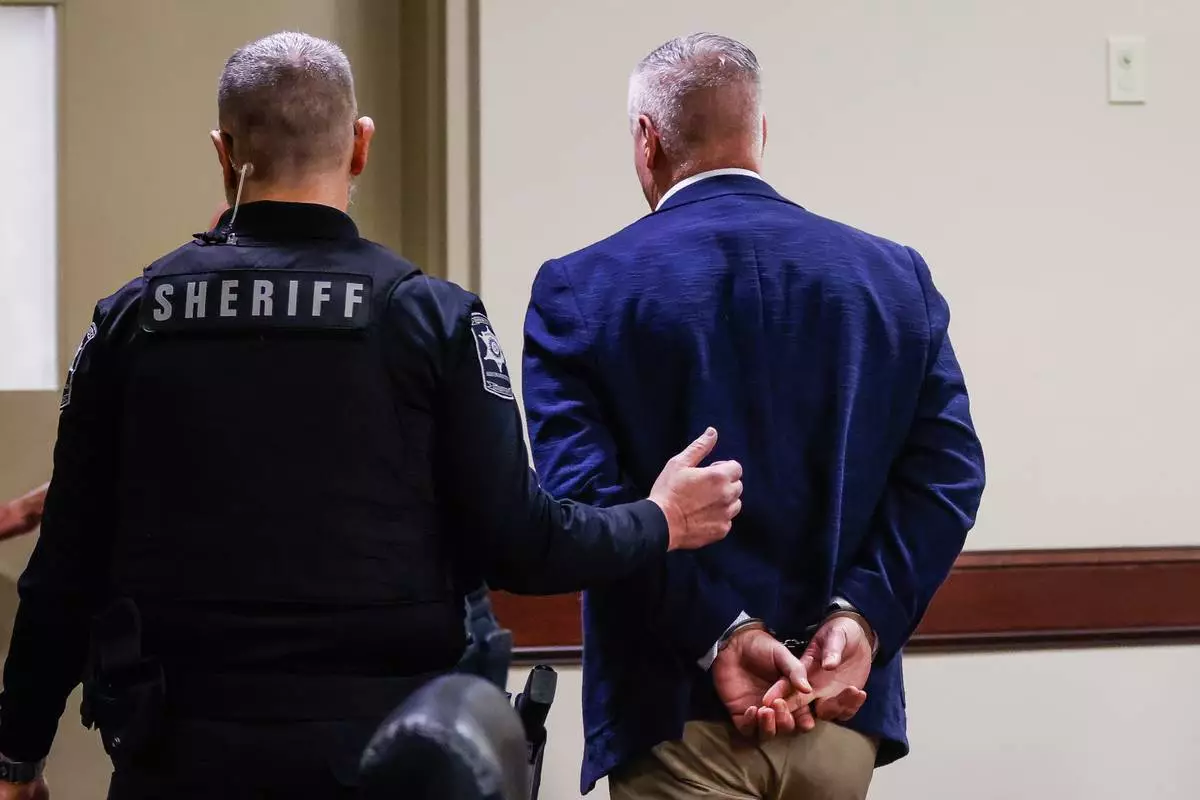
Colin Gray, the father of Apalachee High School shooting suspect Colt Gray, is handcuffed and escorted out of the room after jury deliberations at his trial at Barrow County Courthouse in Winder, Ga., Tuesday, March 3, 2026. (Abbey Cutrer/Atlanta Journal-Constitution via AP, Pool)
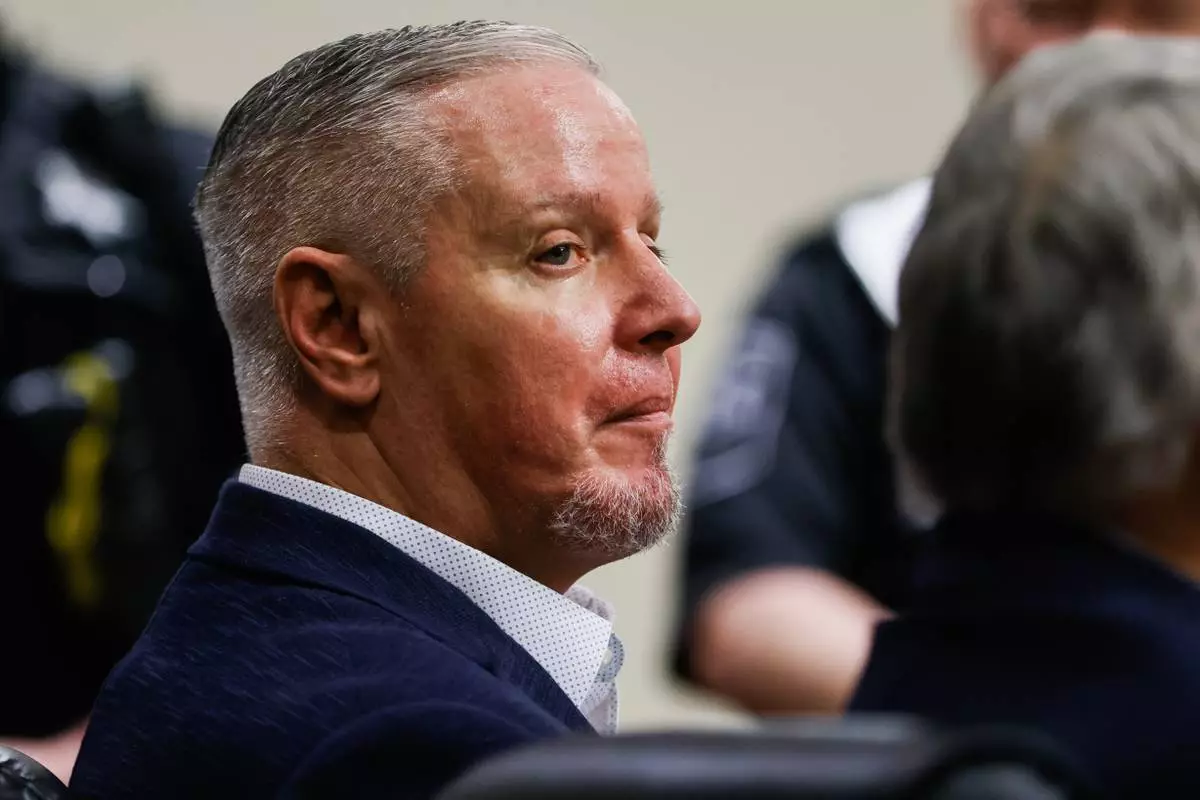
Colin Gray, the father of Apalachee High School shooting suspect Colt Gray, reacts after a jury convicted him of second-degree murder and involuntary manslaughter at Barrow County Courthouse in Winder, Ga., Tuesday, March 3, 2026. (Abbey Cutrer/Atlanta Journal-Constitution via AP, Pool)
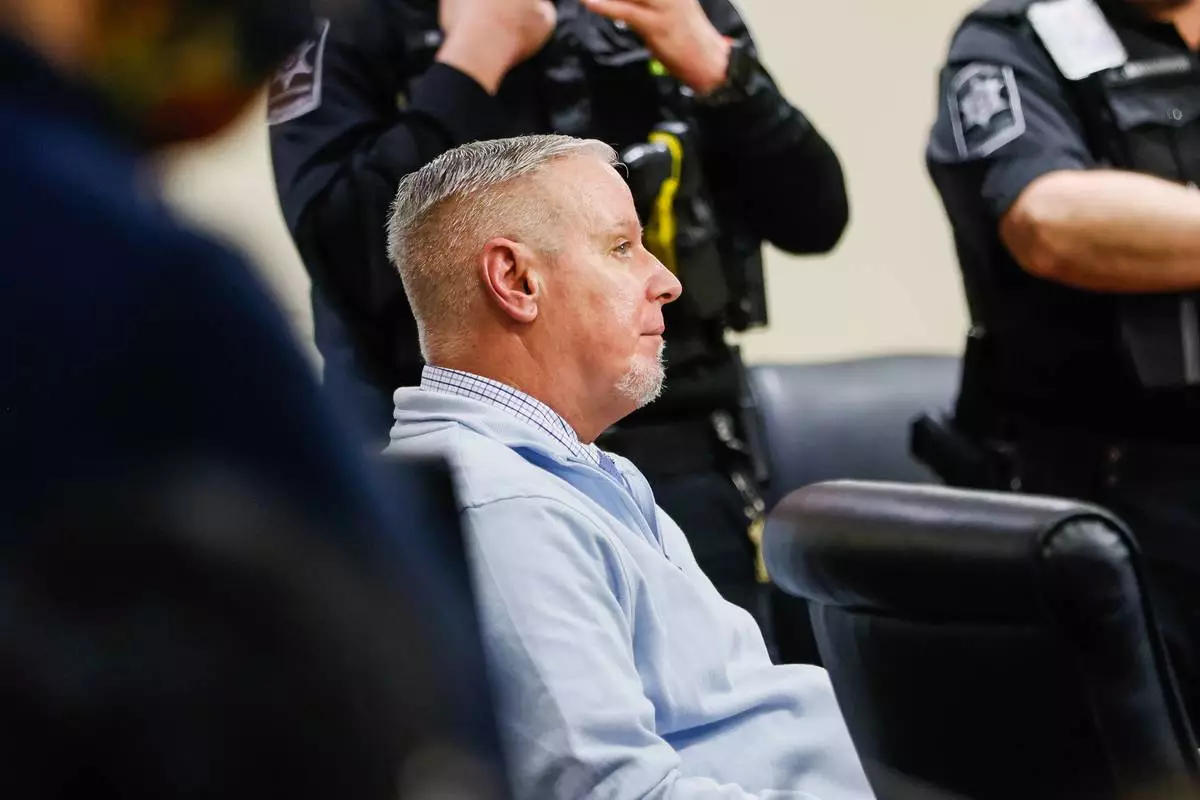
Colin Gray, the father of Apalachee High School shooting suspect Colt Gray, listens during closing arguments in his trial at Barrow County Courthouse in Winder, Ga., on Monday, March 2, 2026. (Abbey Cutrer/Atlanta Journal-Constitution via AP)
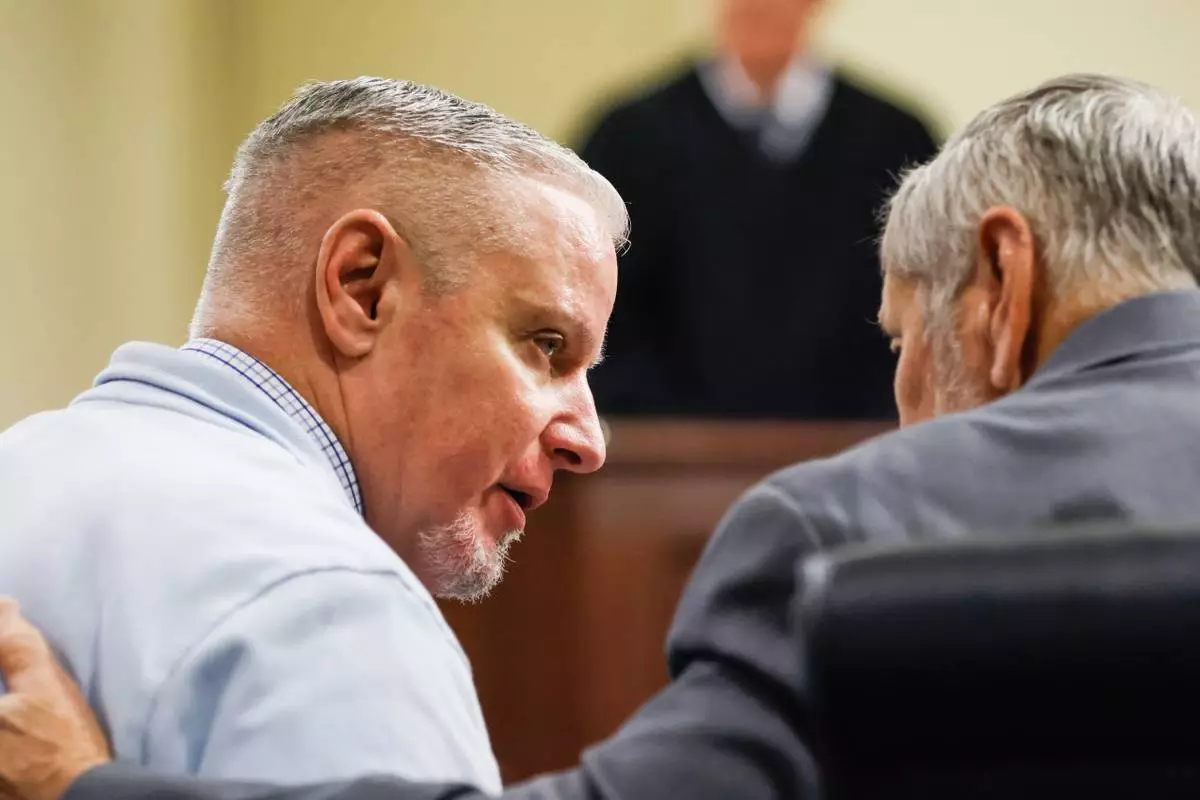
Colin Gray listens to his attorney during closing arguments in his trial at Barrow County Courthouse in Winder, Ga., on Monday, March 2, 2026. (Abbey Cutrer/Atlanta Journal-Constitution via AP)

Colin Gray, the father of Apalachee High School shooting suspect Colt Gray, takes the stand during his trial on Friday, Feb. 27, 2026 in Atlanta. (AP Photo/Pool)

Colin Gray, the father of Apalachee High School shooting suspect Colt Gray, listens during his trial, Friday, Feb. 27, 2026, at the Barrow County Courthouse in Winder, Ga. (Hyosub Shin/Atlanta Journal-Constitution via AP)