BRUSSELS (AP) — Text messages exchanged between European Commission President Ursula von der Leyen and a pharmaceutical boss during the COVID-19 pandemic were seen by her top adviser and have likely been destroyed, the New York Times reported Friday.
Von der Leyen and Pfizer CEO Albert Bourla exchanged the messages as COVID-19 ravaged European communities from Portugal to Finland and the EU scrambled to buy millions of hard to find vaccines. She was under intense scrutiny to deliver.
The U.S. newspaper took the European Union’s executive branch to court after it refused to share the messages under the bloc’s transparency laws. In May, the court said the commission had failed to provide a credible explanation for declining access.
In a letter to the Times dated July 28, the commission said von der Leyen’s head of cabinet, Bjoern Seibert, had last month examined the phone she uses and its Signal app and “did not find any messages corresponding to the description given” in the newspaper’s request.
It said Seibert also checked her phone in 2021 and found the messages only helped to ensure that calls between von der Leyen and Bourla could be arranged as needed, so they were not kept as official documents.
The commission insists text messages and other “ephemeral” electronic communications do not necessarily constitute documents of interest that should be saved or made public.
Von der Leyen herself was responsible for deciding whether the texts constituted documents of value and worth keeping.
The commission also noted in its letter that her phone has been replaced “several times” since the messages were exchanged, the last time in mid-2024. Her cabinet said the old messages were not saved and the phones were “formatted and recycled.”
Critics accuse von der Leyen and Seibert of centralizing power in the EU’s powerful executive branch, tightly controlling who works in the cabinets of the various policy commissioners and vetting communications.
Von der Leyen survived a July 10 no-confidence vote in the European Parliament, the first against a commission president in over a decade, which was called in part over the text messaging scandal dubbed Pfizergate, the alledged misuse of EU funds and doubtful allegations about election interference.
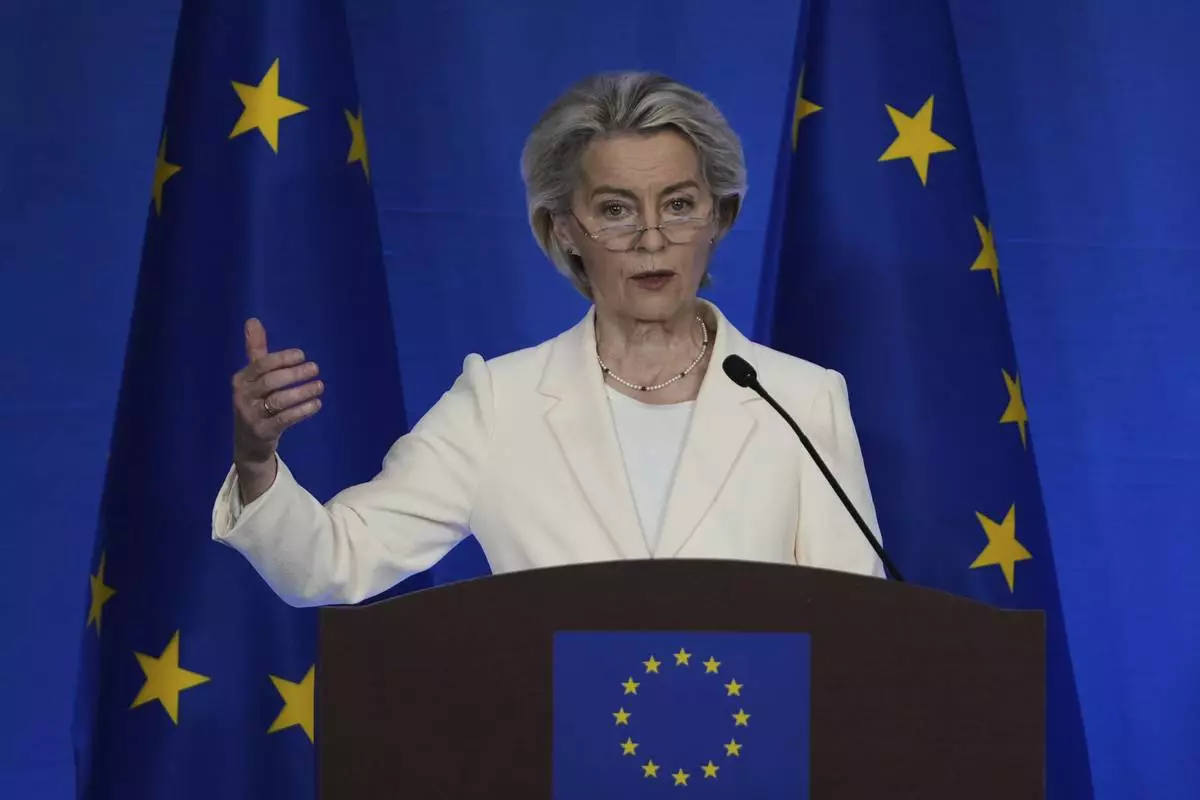
President of the European Commission Ursula von der Leyen speaks during a press conference with President of the European Council Antonio Costa after attending the China EU Summit with Chinese leaders, in Beijing, Thursday, July 24, 2025. (AP Photo/Andy Wong)

European Commission President Ursula von der Leyen listens as she meets President Donald Trump at the Trump Turnberry golf course in Turnberry, Scotland Sunday, July 27, 2025. (AP Photo/Jacquelyn Martin)

European Commission President Ursula von der Leyen listens as she meets President Donald Trump at the Trump Turnberry golf course in Turnberry, Scotland Sunday, July 27, 2025. (AP Photo/Jacquelyn Martin)
CAPE CANAVERAL, Fla. (AP) — An ailing astronaut returned to Earth with three others on Thursday, ending their space station mission more than a month early in NASA’s first medical evacuation.
SpaceX guided the capsule to a middle-of-the-night splashdown in the Pacific near San Diego, less than 11 hours after the astronauts exited the International Space Station.
“It’s so good to be home,” said NASA astronaut Zena Cardman, the capsule commander.
It was an unexpected finish to a mission that began in August and left the orbiting lab with only one American and two Russians on board. NASA and SpaceX said they would try to move up the launch of a fresh crew of four; liftoff is currently targeted for mid-February.
Cardman and NASA’s Mike Fincke were joined on the return by Japan’s Kimiya Yui and Russia’s Oleg Platonov. Officials have refused to identify the astronaut who had the health problem or explain what happened, citing medical privacy.
While the astronaut was stable in orbit, NASA wanted them back on Earth as soon as possible to receive proper care and diagnostic testing. The entry and splashdown required no special changes or accommodations, officials said, and the recovery ship had its usual allotment of medical experts on board. It was not immediately known when the astronauts would fly from California to their home base in Houston. Platonov’s return to Moscow was also unclear.
NASA stressed repeatedly over the past week that this was not an emergency. The astronaut fell sick or was injured on Jan. 7, prompting NASA to call off the next day’s spacewalk by Cardman and Fincke, and ultimately resulting in the early return. It was the first time NASA cut short a spaceflight for medical reasons. The Russians had done so decades ago.
The space station has gotten by with three astronauts before, sometimes even with just two. NASA said it will be unable to perform a spacewalk, even for an emergency, until the arrival of the next crew, which has two Americans, one French and one Russian astronaut.
The Associated Press Health and Science Department receives support from the Howard Hughes Medical Institute’s Department of Science Education and the Robert Wood Johnson Foundation. The AP is solely responsible for all content.
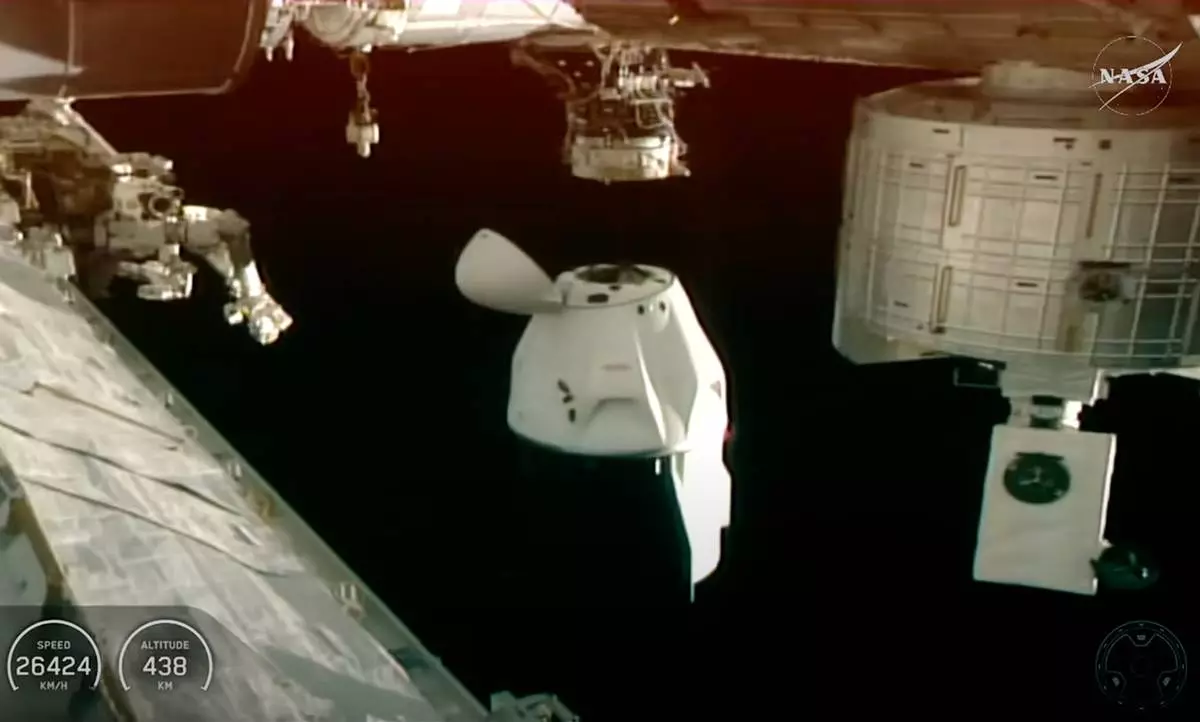
This screengrab from video provided by NASA TV shows the SpaceX Dragon departing from the International Space Station shortly after undocking with four NASA Crew-11 members inside on Wednesday, Jan. 14, 2026. (NASA via AP)
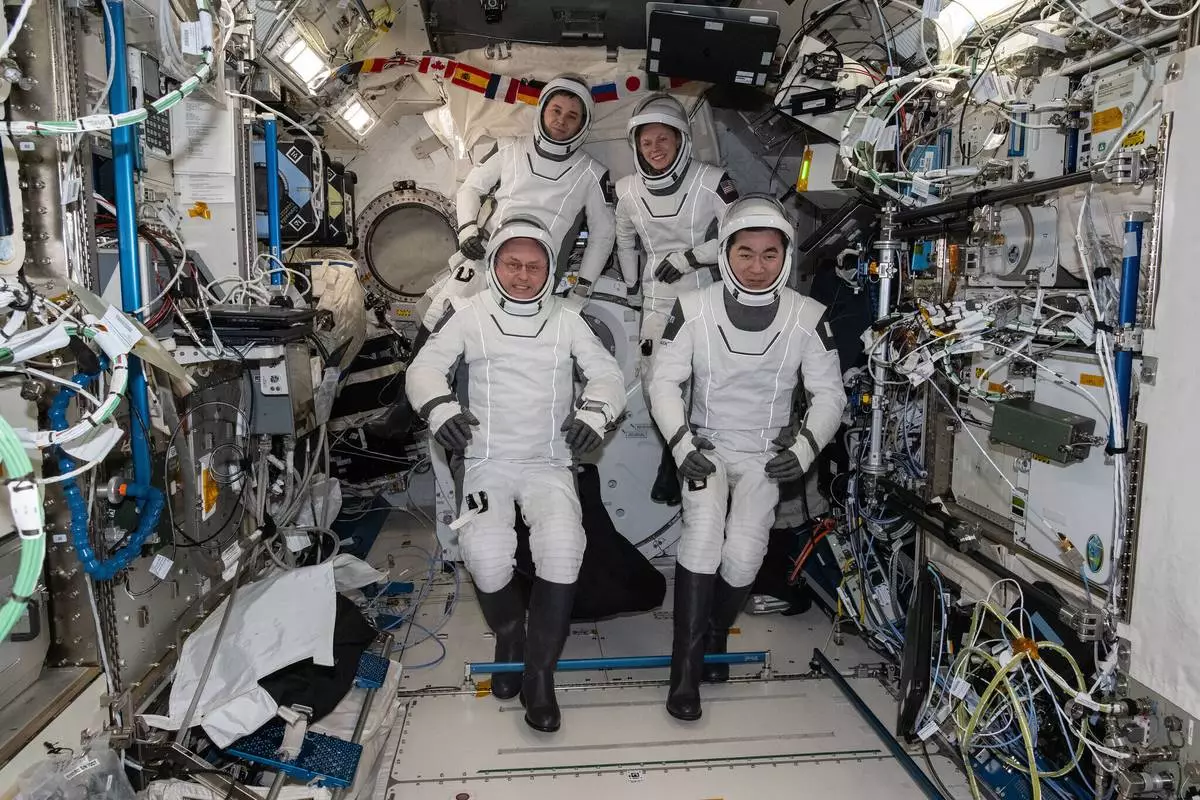
This photo provided by NASA shows clockwise from bottom left are, NASA astronaut Mike Fincke, Roscosmos cosmonaut Oleg Platonov, NASA astronaut Zena Cardman, and JAXA (Japan Aerospace Exploration Agency) astronaut Kimiya Yui gathering for a crew portrait wearing their Dragon pressure suits during a suit verification check inside the International Space Station’s Kibo laboratory module, Wednesday, Jan. 14, 2026. (NASA via AP)
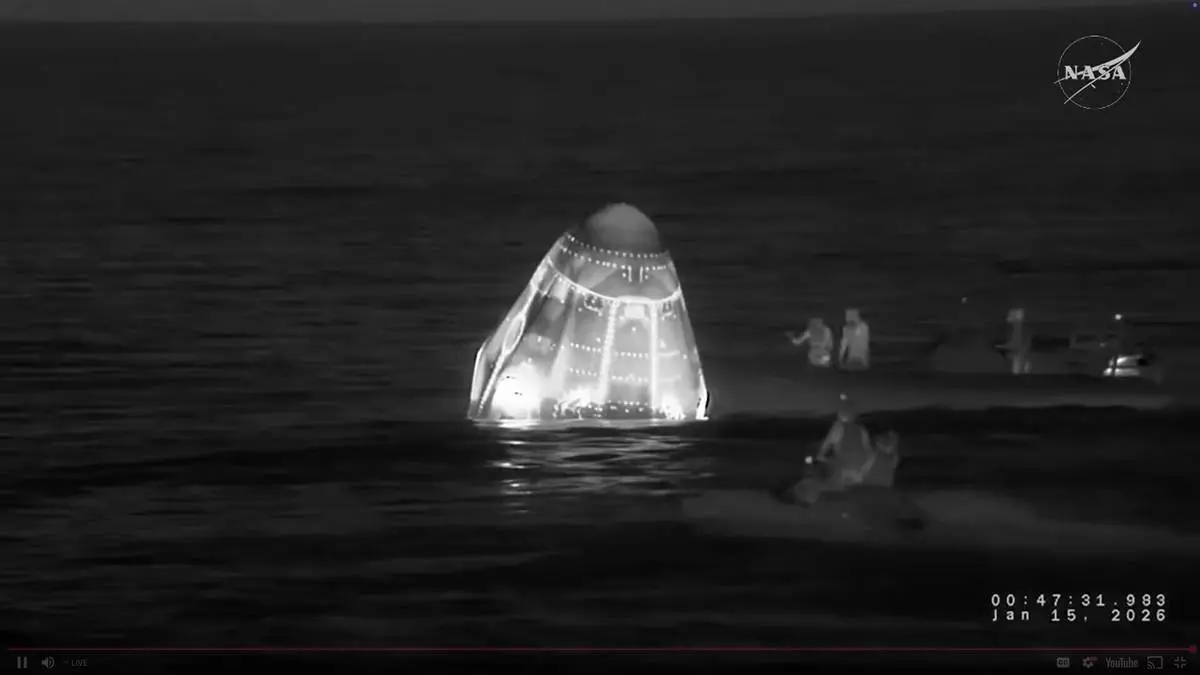
This screengrab from video provided by NASA shows recovery vessels approaching the NASA's SpaceX Crew-11 capsule to evacuate one of the crew members after they re-entered the earth in a middle-of-the-night splashdown near San Diego, Calif., Thursday, Jan. 15, 2026. (NASA via AP)
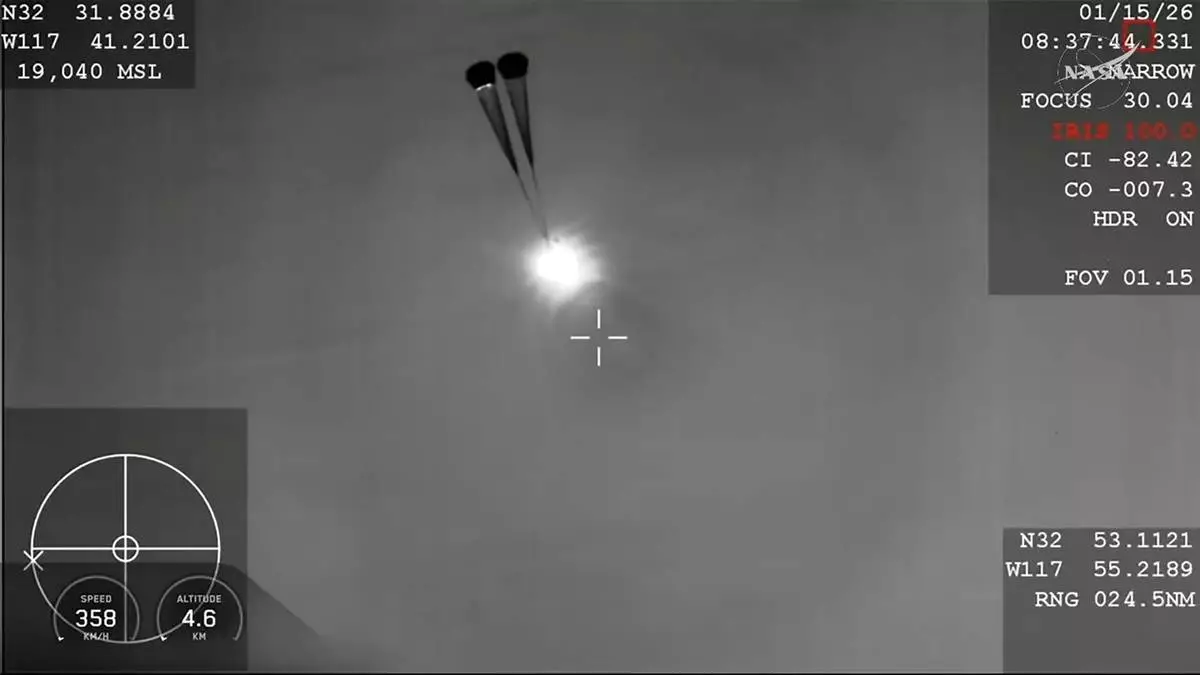
This screengrab from video provided by NASA shows the NASA's SpaceX Crew-11 members re entering the earth in a middle-of-the-night splashdown near San Diego, Calif., Thursday, Jan. 15, 2026. (NASA via AP)
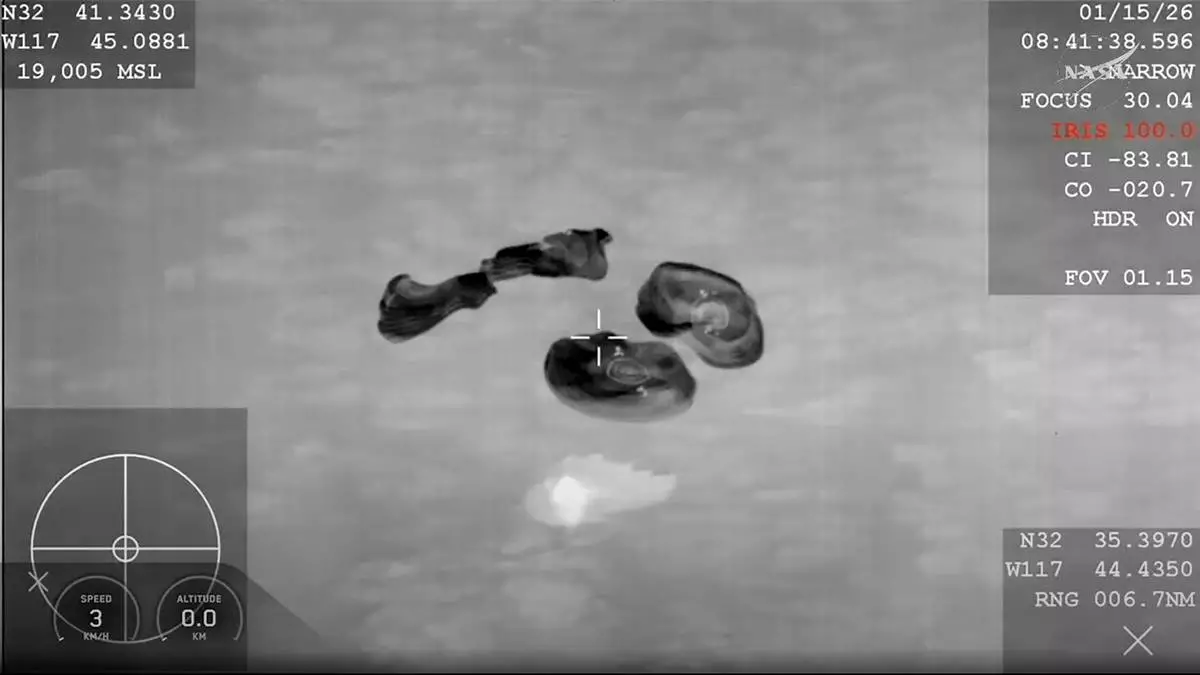
This screengrab from video provided by NASA shows the NASA's SpaceX Crew-11 members re entering the earth in a middle-of-the-night splashdown near San Diego, Calif., Thursday, Jan. 15, 2026. (NASA via AP)