Skip to Content Facebook Feature Image

Israeli airdrops trigger chaos amid calls for safer distribution

China

China

China

Israeli airdrops trigger chaos amid calls for safer distribution

2025-08-01 17:14 Last Updated At:08-02 00:37

Humanitarian airdrops in Gaza have led to chaotic scenes as hundreds of thousands of displaced civilians scramble for life-saving aid, highlighting urgent calls for more organized and humane distribution methods.

The resumption of aid airdrops comes amid months of warnings from humanitarian organizations of a worsening starvation in Gaza, where access to necessities has been severely restricted since Israel closed all crossings to the strip in March.

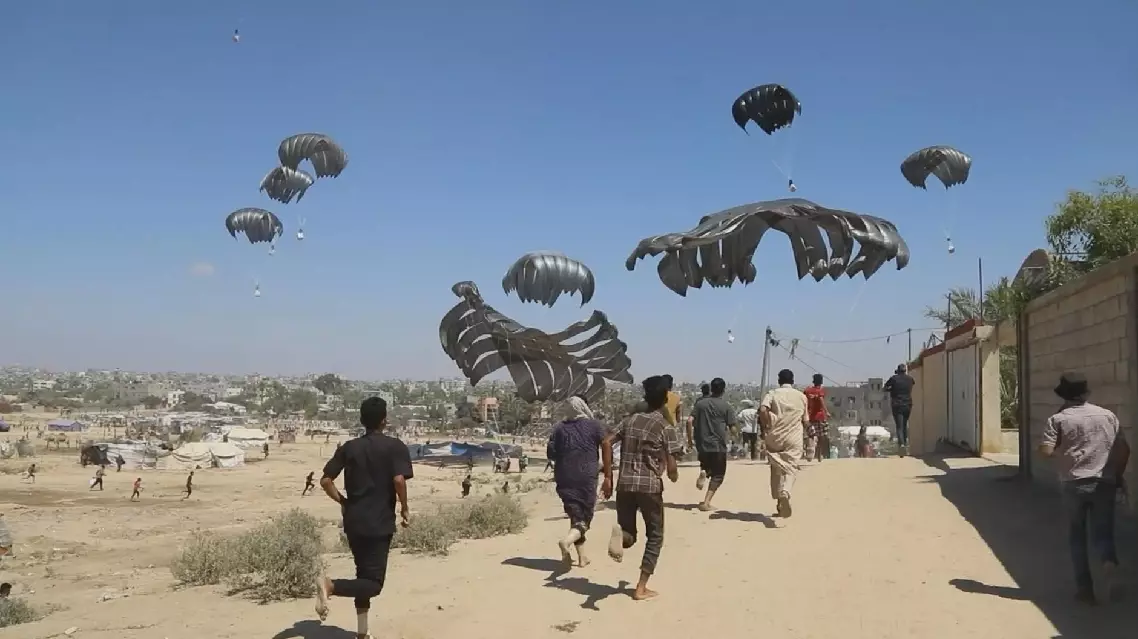
Pressured by international outcry, Israeli military aircraft parachuted aid parcels into open fields over Al-Zawaida in central Gaza.

As the supplies hit the ground, displaced civilians surged toward the packages in a frenzy. Chaos ensued, pushing, falls, and frantic scrambles for provisions. Some aid parcels were damaged on impact, while others caused injuries as they landed, emphasizing the need for safer distribution methods.

"These airdrops are a mistake. Look how people are trampling each other. There must be an organized alternative-like establishing a dedicated committee to distribute aid supplies," said Raji Abu Amra,a displaced Palestinian.

Near the drop zone, a woman trembles-ill and frantic, as she searches for her missing children who had run after the falling supplies.

"This aid distribution method is wrong. It has destroyed us. My children ran after the aid parcels. I don't know if they're injured or dead. Finding food is now nearly impossible. I'm sick, look at me shaking all over," said Um Osama Mlihhi, another displaced Palestinian. Displaced Palestinians report being forced to resort to extreme measures to reach the long-awaited parcels.

"This is a brutal siege. I was never like this before, now my bones protrude. My children suffer the same. For a full month, we've survived on lentils mixed with sand," said Nasser Al-Mashi, a displaced Palestinian. Despite ongoing airdrops, humanitarian aid groups warn that food reaching Gazans falls catastrophically short of preventing mass starvation.

Relief organizations and United Nations (UN) officials stress that only reopening the border crossings and restoring the UN's role in relief efforts can ensure enough supplies reach the starving and displaced.
Israeli airdrops trigger chaos amid calls for safer distribution
Israeli airdrops trigger chaos amid calls for safer distribution
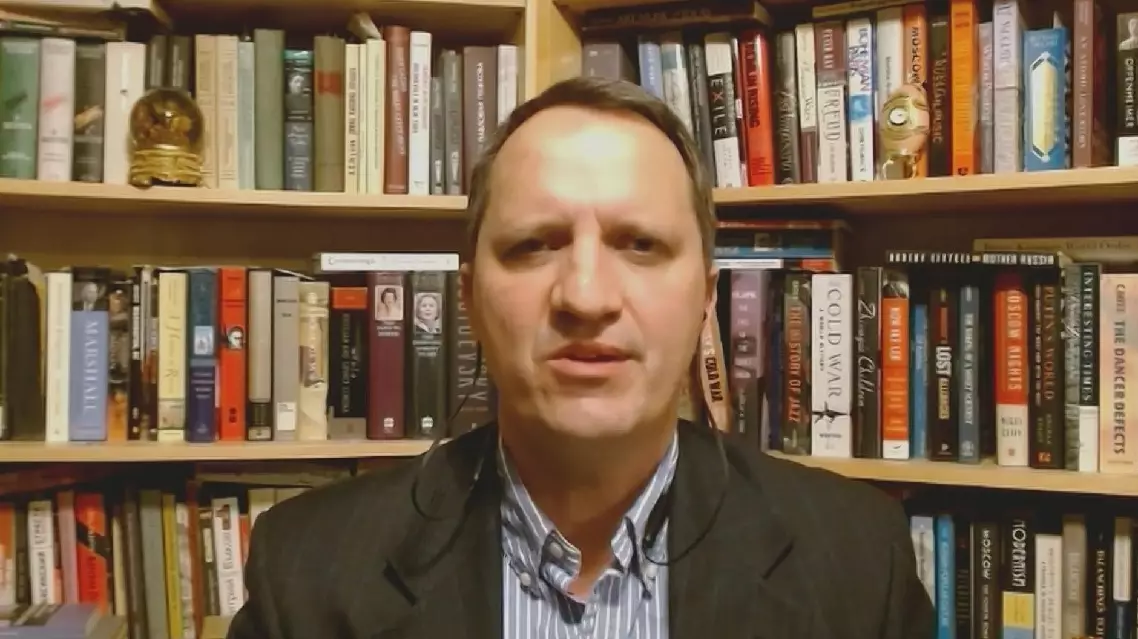
Washington's assertive moves, from attacks on Venezuela to threats against Iran and Greenland, reflect the final outburst of a declining unipolar order and may encourage countries in the Global South to band together as uncertainty grows, said American University history professor Anton Fedyashin.

U.S. President Donald Trump's policy agenda has drawn widespread criticism from governments around the world, as Latin American governments condemn the kidnapping of Venezuelan President Nicolas Maduro, and the European Union sharply rejects Trump's claims on Greenland, a territory of Denmark.

In a recent interview with China Global Television Network (CGTN), Fedyashin said that the U.S. president's brazen actions signal an impending end to America's excessive global influence.

"I think we are entering a period of global fragmentation, and that we are certainly entering a period when American hegemony is in relative decline. And I think that Donald Trump, by the way, is a manifestation. It's the 'extinction burst' of American hegemony, of the unipolar moment," he said.

Fedyashin predicted that stronger cooperation among Global South nations will become increasingly urgent as countries seek new pathways to accelerate development amid the renewed uncertainties from the U.S.

"What I think is more likely to start happening is that countries around the world will start banding together, in order to protect themselves against the United States, and against the West and whatever other outside actors there are. The world, the members of the Global South will start looking for alternatives to Western-dominated organizations, both economically and from the point of view of security. So I think that if the United States continues to be so unpredictable and aggressive, that the Global South, at least, will start coming together," said the historian.

US aggression signals hegemony faces "extinction burst": historian

US aggression signals hegemony faces "extinction burst": historian

Recommended Articles