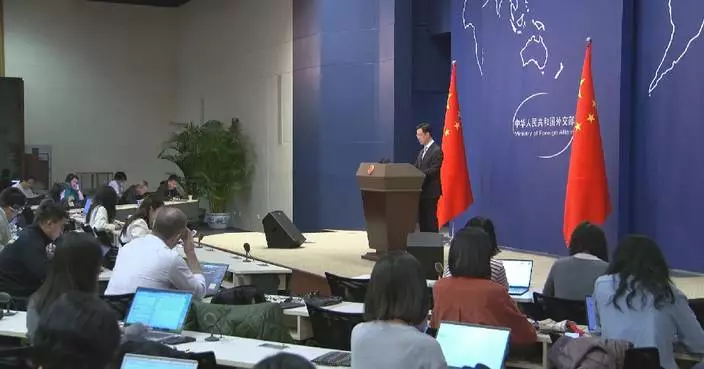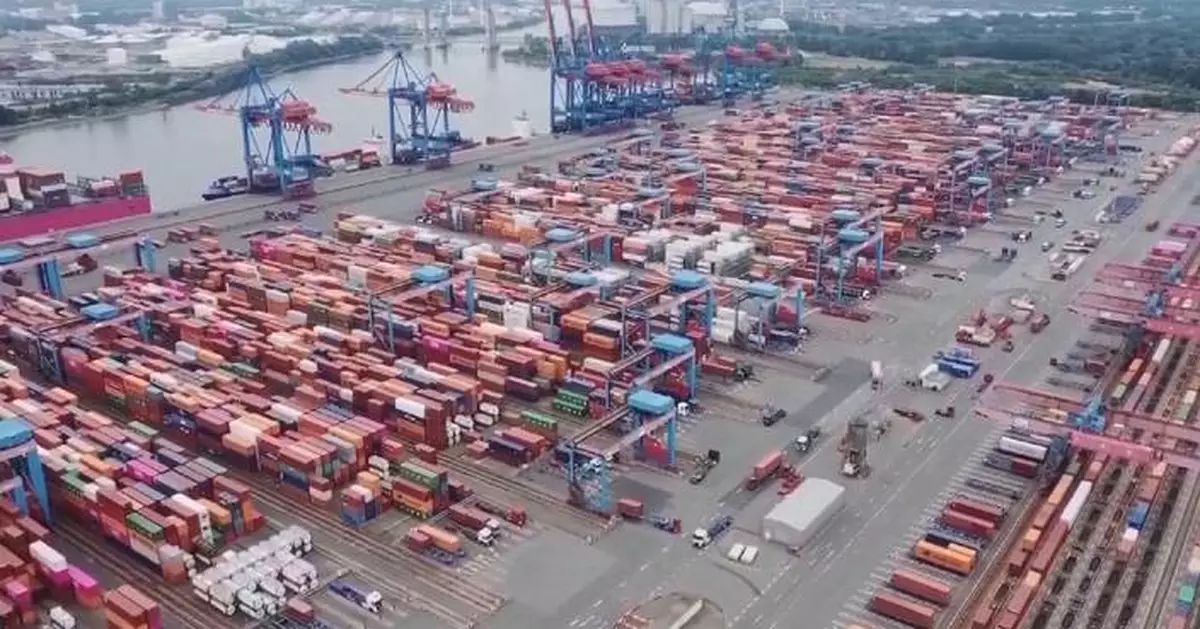
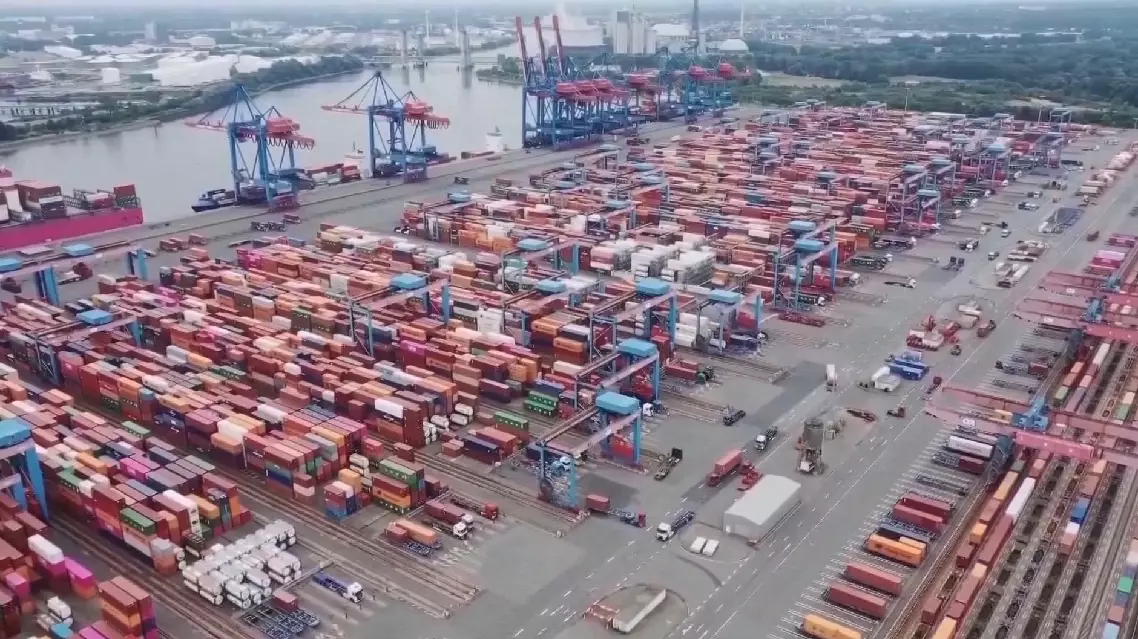
The economies of China and the European Union (EU) are highly complementary and closely intertwined, with the two sides being each other's second-largest trading partners, China's General Administration of Customs (GAC) spokesman Lv Daliang said Wednesday in Beijing.
"China and the EU are each other's second-largest trading partners. Statistics from the GAC showed that China's imports from and exports to the EU reached 5.93 trillion yuan in 2025, an increase of six percent year-on-year, accounting for 13 percent of China's total import and export value and contributing 0.8 percentage points to the growth of China's foreign trade. Data from the EU showed that in the first ten months of 2025, the total trade volume between the EU and China exceeded 700 billion U.S. dollars, representing 14.5 percent of the EU's total import and export value and contributing more than 0.8 percentage points to the growth of the EU's foreign trade," Ly said at a press conference held by the State Council Information Office.
Lv said the EU is China's second-largest source of imports for high-tech products and its third-largest export market for such goods.
"Over one-quarter of the total goods trade between China and the EU is concentrated in the high-tech product sector. In 2025, China's exports of high-tech products to the EU increased by 7.5 percent, while its imports of high-tech products from the EU grew by 11.1 percent," he said.
Lv said both China and the EU have actively supported the advancement of low-carbon transition and green development, with green being a distinctive feature of their trade relations.
"In 2025, China's export of wind power generators to the EU surged by 65.9 percent, and export of electrical equipment such as DC charging piles and energy storage batteries increased by 25.4 percent. Meanwhile, China's imports of recyclable products from the EU grew by 18.9 percent. As China's pace of green and low-carbon transformation continues to accelerate, there is broad potential for cooperation between the two sides in the green sector," he said.
China and EU have also engaged in in-depth cooperation in the trade of consumer goods such as healthcare products, passenger vehicles, cosmetics, electronics, clothing and kitchenware.
Lv said the EU is China's largest source of imports and largest export market for consumer goods, accounting for 26.8 percent of its total imports and 16.2 percent of its total exports, respectively.
Currently, unilateralism and protectionism are prevalent, and the rules-based multilateral trading system faces severe challenges, Lv said.
As constructive forces that uphold multilateralism and actively advocate for open cooperation, both China and the EU should work together in the same direction, persist in dialogue and cooperation, properly manage differences, jointly safeguard free trade, practice multilateralism together, and promote the healthy and stable development of China-EU economic and trade relations, he added.
China, EU economies highly complementary, closely intertwined: spokesman