OMAHA, Neb. (AP) — Warren Buffett's company reported less than half as much profit in the second quarter as it took a $3.76 billion writedown on the value of its stake in Kraft Heinz, as that iconic food producer considers largely undoing the merger that Berkshire Hathaway helped bankroll.
Berkshire said it earned $12.37 billion, or $8,601 per Class A share, during the quarter. That's down from $30.248 billion, or $21,122 per Class A share, a year ago, because it recorded a much smaller paper investment gain this year.
Berkshire's earnings can swing wildly from quarter to quarter because it has to record the current value of its massive investment portfolio even though it doesn't sell most of the stocks. That's why Buffett has long recommended that investors pay more attention to Berkshire's operating earnings, which exclude those investment gains. Although last year Berkshire did surprise shareholders by selling off a huge chunk of its Apple stake which inflated the investment gains then.
By that measure, Berkshire's operating earnings were only down slightly at $11.16 billion, or $7,759.58 per Class A share. That compares with $11.598 billion, or $8,072.16 per Class A share, a year ago. Most of Berkshire's myriad assortment of companies — major insurers like Geico, BNSF railroad, a group of utilities and a collection of manufacturing and retail businesses — generally performed well despite the uncertainty about the economy and President Donald Trump's tariffs.
The four analysts surveyed by FactSet Research expected Berkshire to report earnings per Class A share of $7,508.10, so the Omaha, Nebraska-based conglomerate's results were ahead of that.
Berkshire owns more than 27% of Kraft Heinz' stock and, for years, it had representatives on the company's board. Buffett has said previously that he believes the company's iconic brands will do well over time, but in hindsight, he overpaid for the investment and underestimated the challenges branded foods face from retailers and the growth of private label products.
This spring, Berkshire's representatives resigned from the Kraft Heinz board shortly before the company announced it is exploring strategic options that may include spinning off a large part of its portfolio of brands.
Over the years since Berkshire helped Kraft buy Heinz in 2015, the company has been hurt by changing consumer tastes and a shift toward healthier options than Kraft’s core collection of processed foods.
Another writedown could be coming in the future because CFRA Research analyst Cathy Seifert pointed out that Berkshire's holding of 28% of Occidental Petroleum's stock, which is currently valued at about $5.3 billion less than the $16.5 billion that Buffett paid for it.
Buffett's is still sitting on a massive pile of $344.1 billion in cash, although the company's reserves dipped slightly from the $347.7 billion cash it was holding at the end of the first quarter. Buffett told shareholders in May he just isn't finding any attractive deals for companies he understands.
Buffett surprised shareholders at the annual meeting when he announced that he plans to give up the CEO title at the end of the year and hand over operations to Vice Chairman Greg Abel, but Buffett will remain Chairman.
Berkshire shareholders might be disappointed that the company didn't repurchase any of its shares this quarter, even though the price has fallen more than 12% since just before Buffett announced his retirement. But investor Chris Ballard, who is managing director at Check Capital, said he wasn't surprised at the lack of buybacks because even after the recent drop, Berkshire's stock is still selling at a premium compared to the value of its businesses.
Many investors are watching Berkshire's BNSF closely after rival Union Pacific announced a plan to buy Norfolk Southern earlier this week to create the nation's first transcontinental railroad. The speculation is that BNSF needs to pursue a merger with eastern rail CSX to be able to compete.
But Seifert said it isn't Buffett's style to jump into a deal just because the market thinks he should. Over the decades, he has built Berkshire by finding strong companies selling for less than they are worth. CSX is trading near its 52-week high at $35.01 amid all the deal speculation.
“He wants to do it because he found an undervalued franchise -- not because the market says you need to do a deal,” Seifert said. “I think one of the reasons why that cash hasn’t been deployed is that valuations run through the Berkshire M-and-A model tend to be too rich. But if there’s a logical case to be made they’ll accept it.”
And BNSF appears to be doing fine right now on its own. The railroad recorded a 19% jump in its operating profit this quarter at $1.47 billion as it cut costs and delivered about 1% more shipments.
Berkshire's insurance results disappointed a bit as it appeared the company might be pulling back from writing as much property insurance at a time when premiums aren't as attractive. Even in areas where it is growing, like Geico, Seifert said Berkshire lagged behind peers such as Progressive and Allstate. Berkshire normally pulls back on writing insurance when it doesn't like the premiums.
“The insurance business has struggled a bit. I would say the takeaways for me is on that front, they’re doing less property and casualty insurance,” said Ballard, who's firm counts Berkshire as its largest holding.
Berkshire said it's underwriting operating profit dipped to just below $2 billion in the quarter from last year's $2.26 billion.
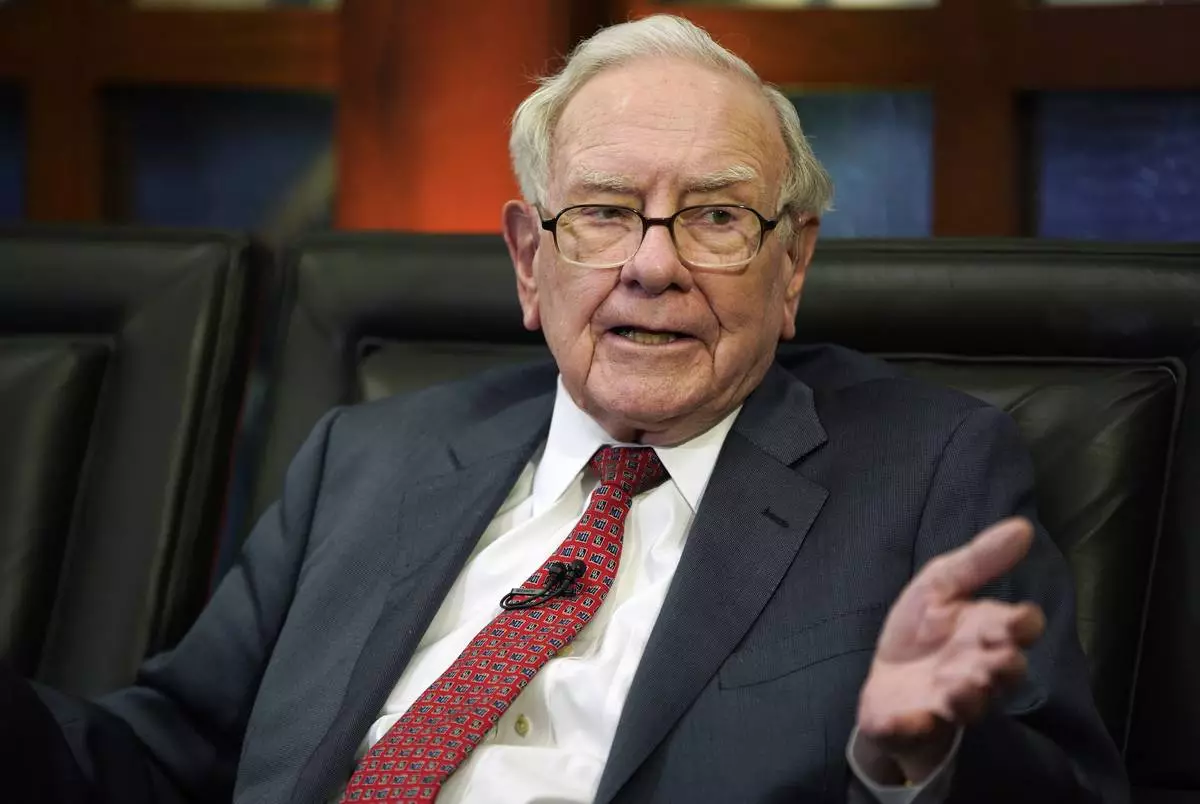
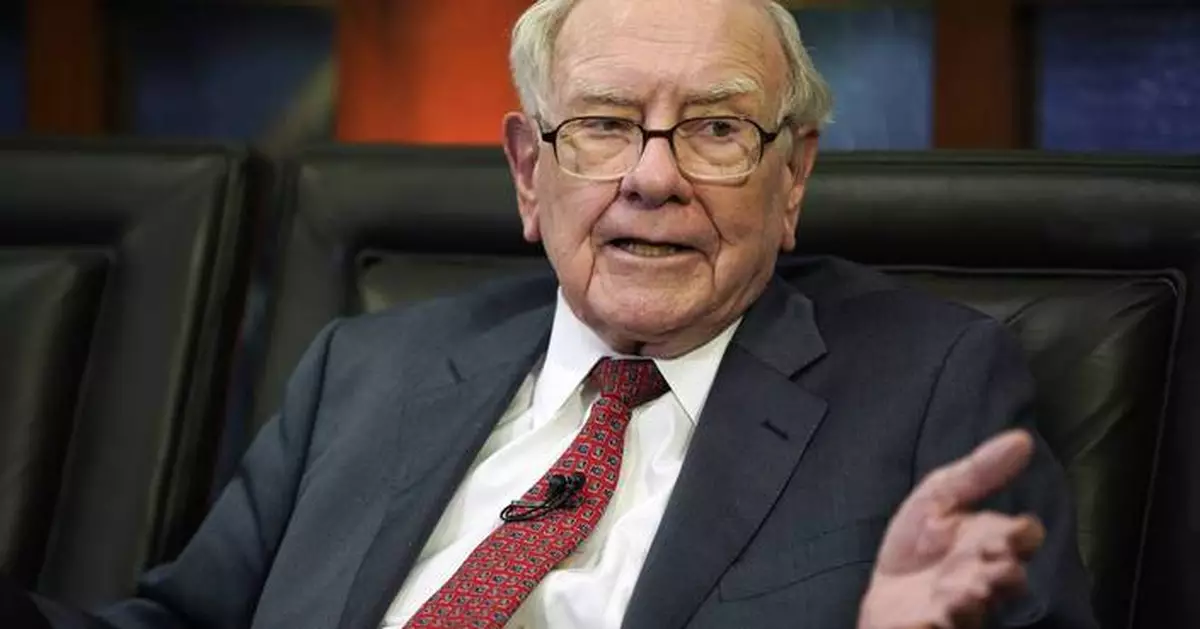
FILE - Berkshire Hathaway Chairman and CEO Warren Buffett speaks during an interview with Liz Claman on Fox Business Network's "Countdown to the Closing Bell," May 7, 2018, in Omaha, Neb. (AP Photo/Nati Harnik, File)
MINNEAPOLIS (AP) — President Donald Trump on Thursday threatened to invoke the Insurrection Act and deploy troops to quell persistent protests against the federal officers sent to Minneapolis to enforce his administration's massive immigration crackdown.
The threat comes a day after a man was shot and wounded by an immigration officer who had been attacked with a shovel and broom handle. That shooting further heightened the fear and anger that has radiated across the city since an Immigration and Customs Enforcement agent fatally shot Renee Good in the head.
Trump has repeatedly threatened to invoke the rarely used federal law to deploy the U.S. military or federalize the National Guard for domestic law enforcement, over the objections of state governors.
“If the corrupt politicians of Minnesota don’t obey the law and stop the professional agitators and insurrectionists from attacking the Patriots of I.C.E., who are only trying to do their job, I will institute the INSURRECTION ACT, which many Presidents have done before me, and quickly put an end to the travesty that is taking place in that once great State,” Trump said in social media post.
Presidents have indeed invoked the Insurrection Act more than two dozen times, most recently in 1992 by President George H.W. Bush to end unrest in Los Angeles. In that instance, local authorities had asked for the assistance.
Minnesota Attorney General Keith Ellison responded to Trump's post by saying he would challenge any deployment in court. He's already suing to try to stop the surge by the Department of Homeland Security, which says it has made more than 2,000 arrests in the state since early December. ICE is a DHS agency.
In Minneapolis, smoke filled the streets Wednesday night near the site of the latest shooting as federal officers wearing gas masks and helmets fired tear gas into a small crowd. Protesters responded by throwing rocks and shooting fireworks.
Demonstrations have become common in Minneapolis since Good was fatally shot on Jan. 7. Agents who have yanked people from their cars and homes have been confronted by angry bystanders demanding they leave.
“This is an impossible situation that our city is presently being put in and at the same time we are trying to find a way forward to keep people safe, to protect our neighbors, to maintain order,” Minneapolis Mayor Jacob Frey said.
Frey said the federal force — five times the size of the city’s 600-officer police force — has “invaded” Minneapolis, and that residents are scared and angry.
Homeland Security said in a statement that federal law enforcement officers on Wednesday stopped a driver from Venezuela who is in the U.S. illegally. The person drove off then crashed into a parked car before fleeing on foot, DHS said.
Officers caught up, then two other people arrived and the three started attacking the officer, according to DHS.
“Fearing for his life and safety as he was being ambushed by three individuals, the officer fired a defensive shot to defend his life,” DHS said. The confrontation took place about 4.5 miles (7.2 kilometers) from where Good was killed.
Police chief Brian O’Hara said the shot man was being treated for a non-life-threatening injury. The two others are in custody, DHS said. O’Hara's account of what happened largely echoed that of Homeland Security.
Earlier Wednesday, Gov. Tim Walz described Minnesota said what's happening in the state “defies belief.”
“Let’s be very, very clear: this long ago stopped being a matter of immigration enforcement,” he said. “Instead, it’s a campaign of organized brutality against the people of Minnesota by our own federal government.”
Jonathan Ross, the Immigration and Customs Enforcement officer who killed Good, suffered internal bleeding to his torso during the encounter, a Homeland Security official told The Associated Press.
The official spoke to AP on condition of anonymity in order to discuss Ross’ medical condition. The official did not provide details about the severity of the injuries, and the agency did not respond to questions about the bleeding, how he suffered the injury, when it was diagnosed or his medical treatment.
Good was killed after three ICE officers surrounded her SUV on a snowy street near her home. Bystander video shows one officer ordering Good to open the door and grabbing the handle. As the vehicle begins to move forward, Ross, standing in front, raises his weapon and fires at least three shots at close range. He steps back as the SUV advances and turns.
Homeland Security Secretary Kristi Noem has said Ross was struck by the vehicle and that Good was using her SUV as a weapon — a self-defense claim that has been criticized by Minnesota officials.
Chris Madel, an attorney for Ross, declined to comment.
Good’s family has hired the same law firm that represented George Floyd’s family in a $27 million settlement with Minneapolis. Floyd, who was Black, died after a white police officer pinned his neck to the ground 2020.
Madhani reported from Washington, D.C. Associated Press reporters Bill Barrow in Atlanta; Julie Watson in San Diego; Rebecca Santana in Washington; Ed White in Detroit and Giovanna Dell’Orto in Minneapolis contributed.
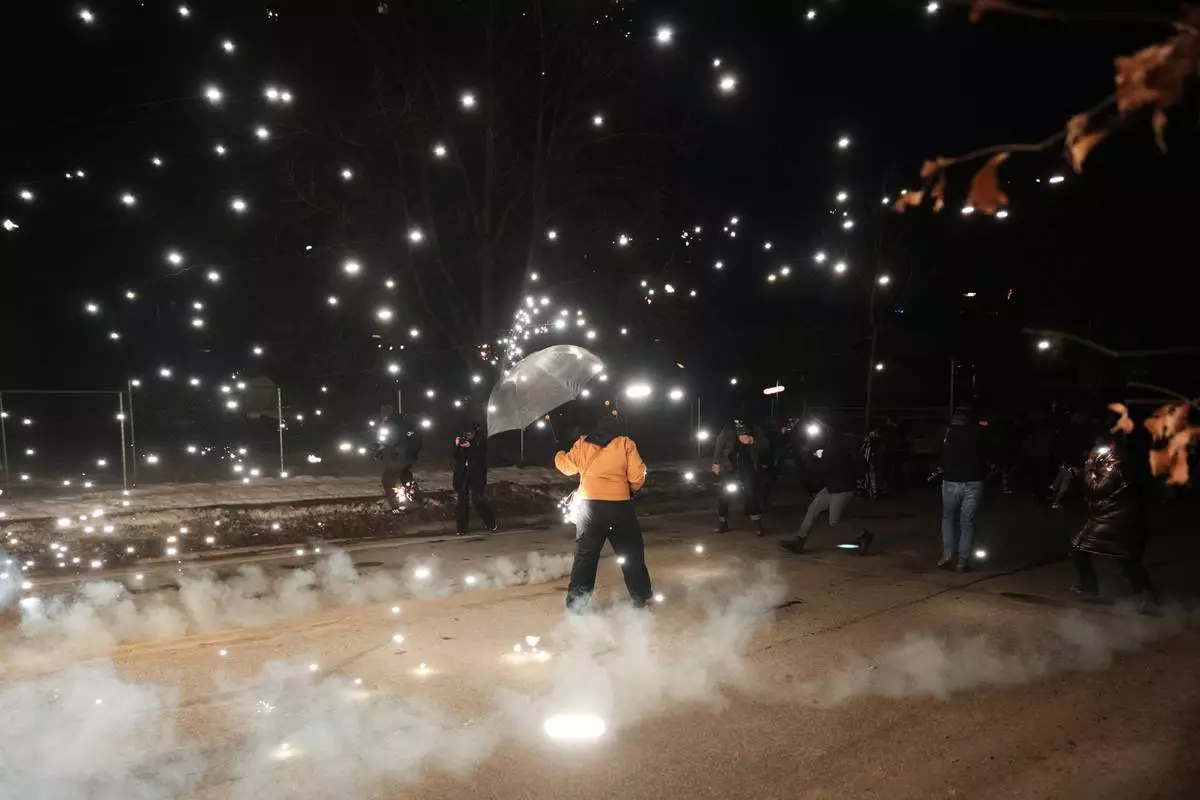
A protester holds an umbrella as sparks fly from a flash bang deployed by law enforcement on Wednesday, Jan. 14, 2026, in Minneapolis. (AP Photo/Adam Gray)
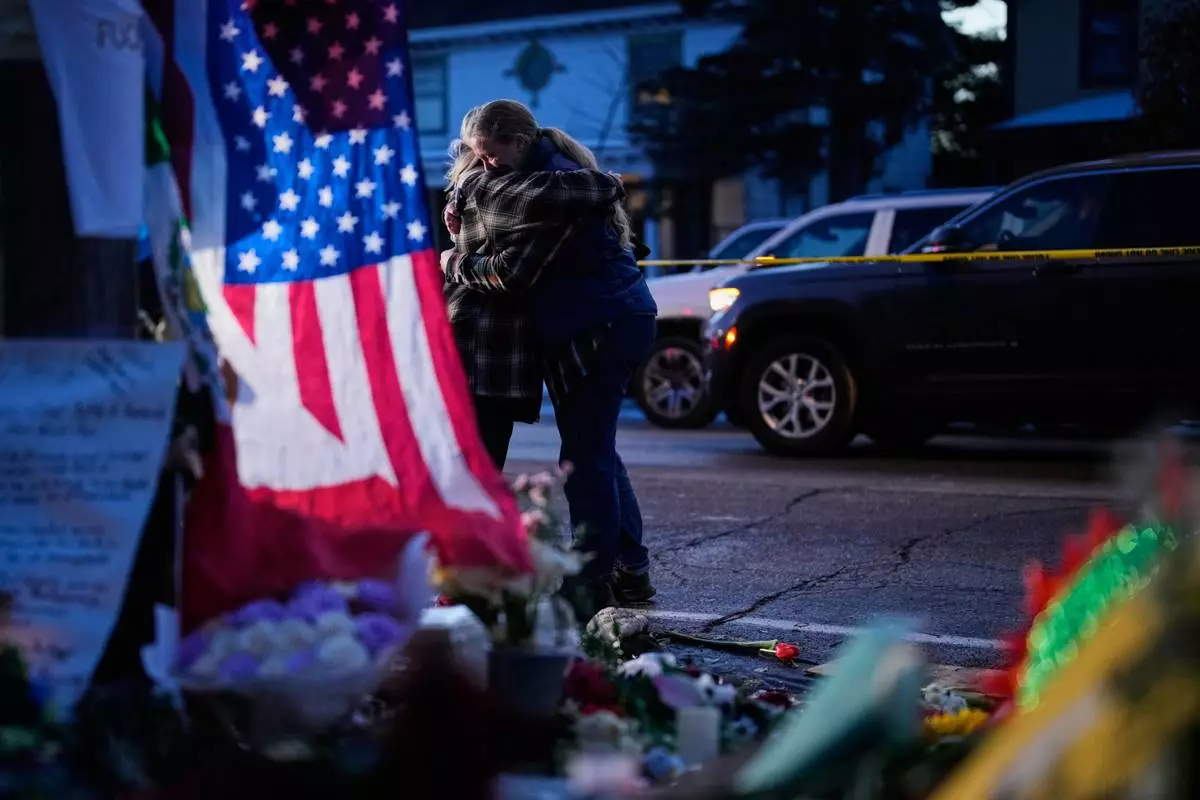
Monica Travis shares an embrace while visiting a makeshift memorial for Renee Good, who was fatally shot by an ICE officer last week, Monday, Jan. 12, 2026, in Minneapolis. (AP Photo/John Locher)
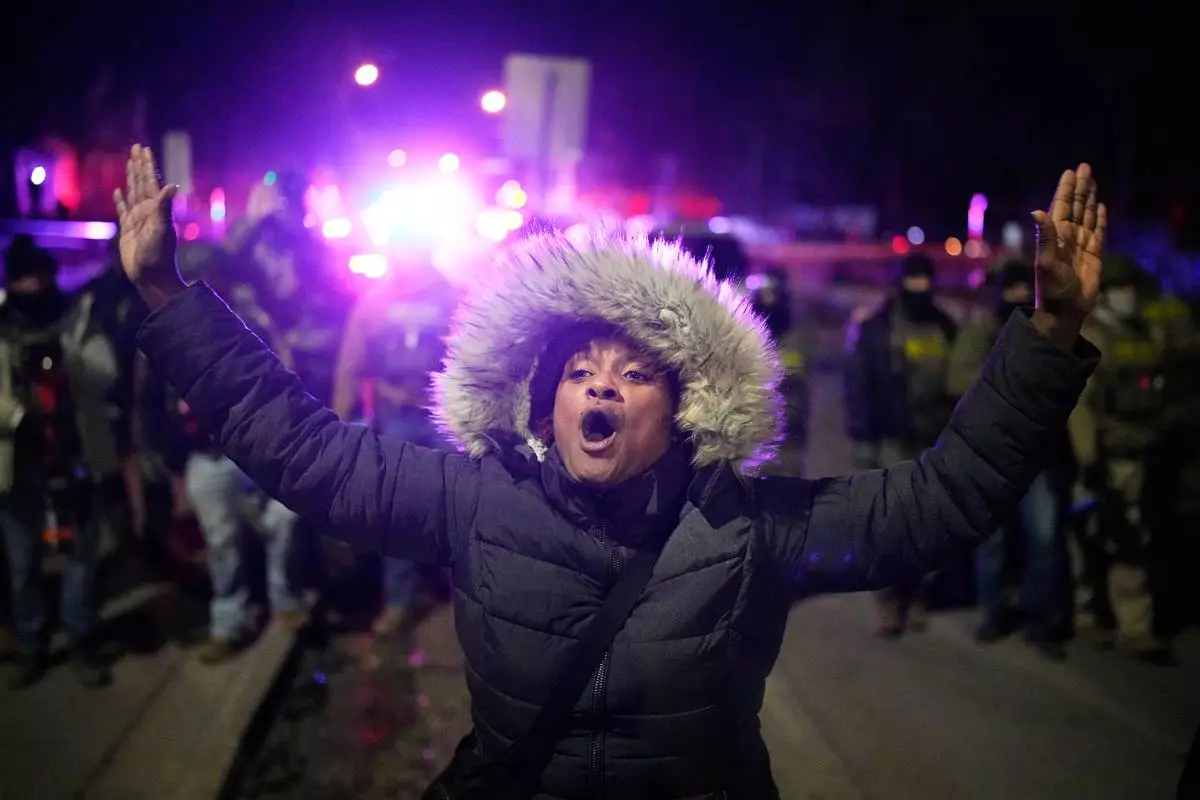
A protester yells in front of law enforcement after a shooting on Wednesday, Jan. 14, 2026, in Minneapolis. (AP Photo/John Locher)
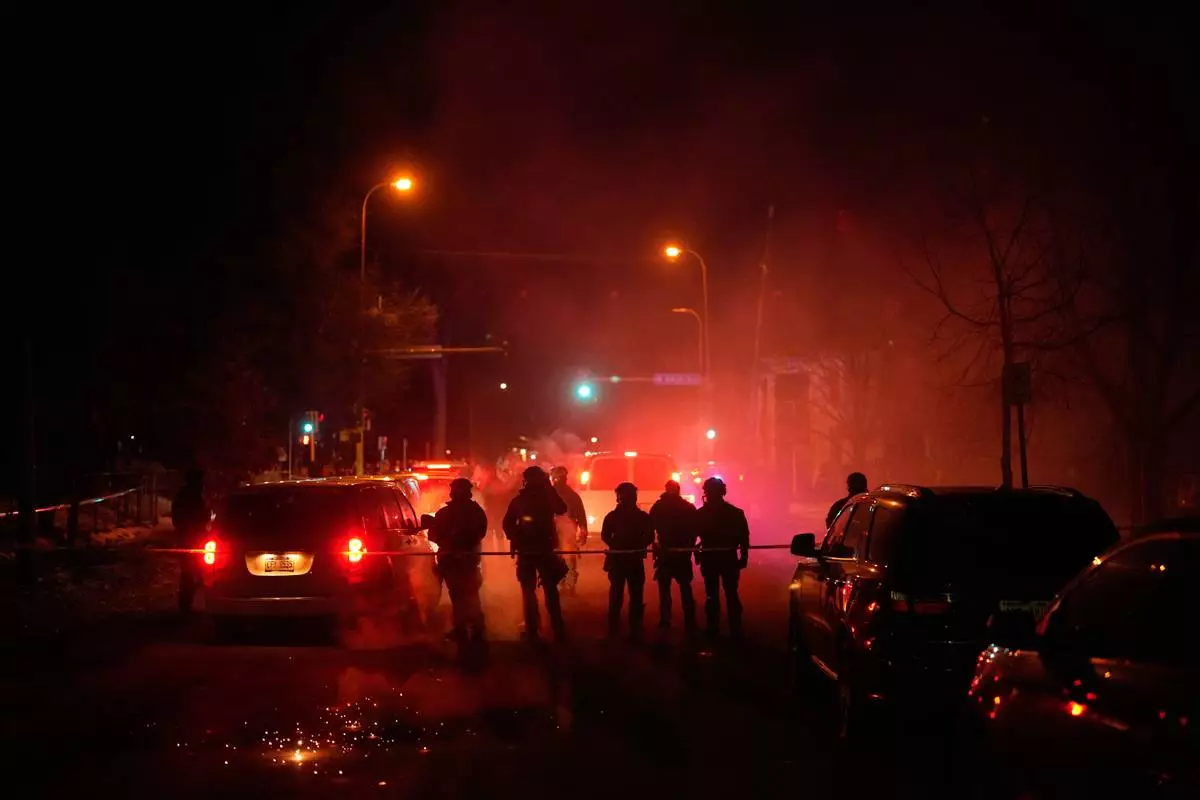
Tear gas surrounds federal law enforcement officers as they leave a scene after a shooting on Wednesday, Jan. 14, 2026, in Minneapolis. (AP Photo/John Locher)
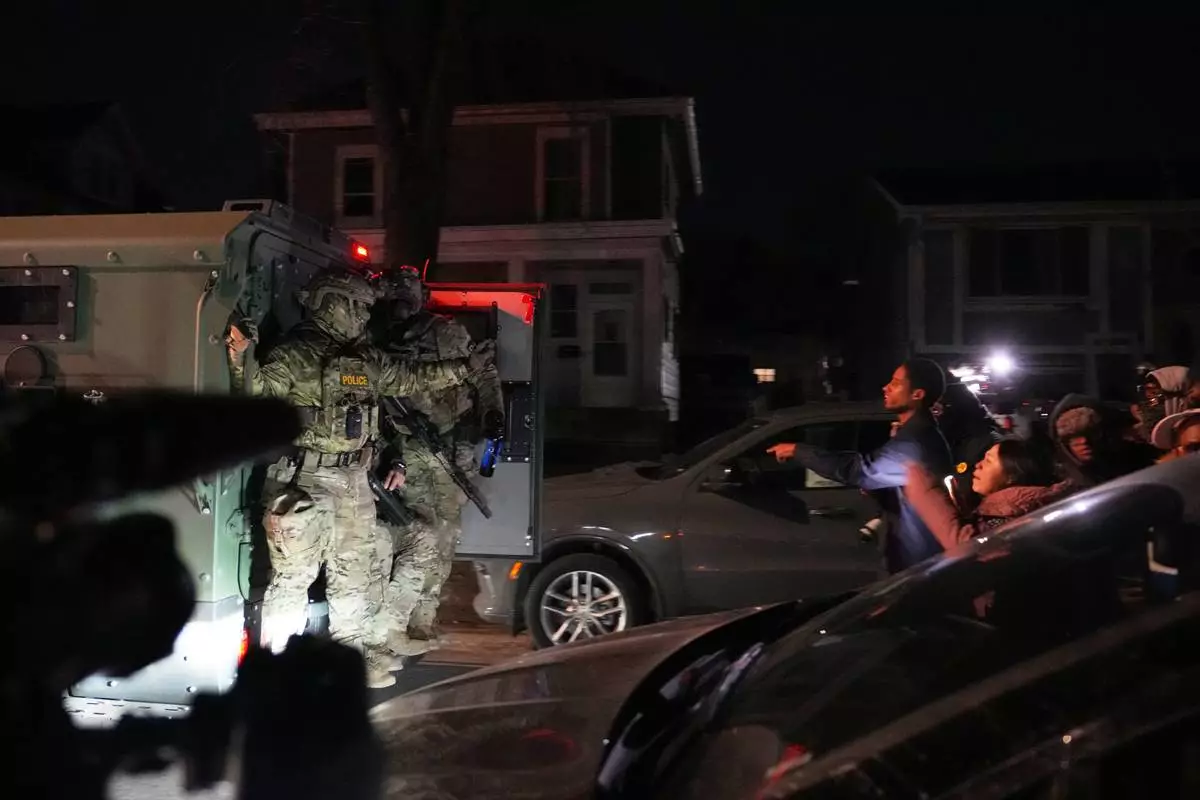
Protesters shout at law enforcement officers after a shooting on Wednesday, Jan. 14, 2026, in Minneapolis. (AP Photo/Abbie Parr)
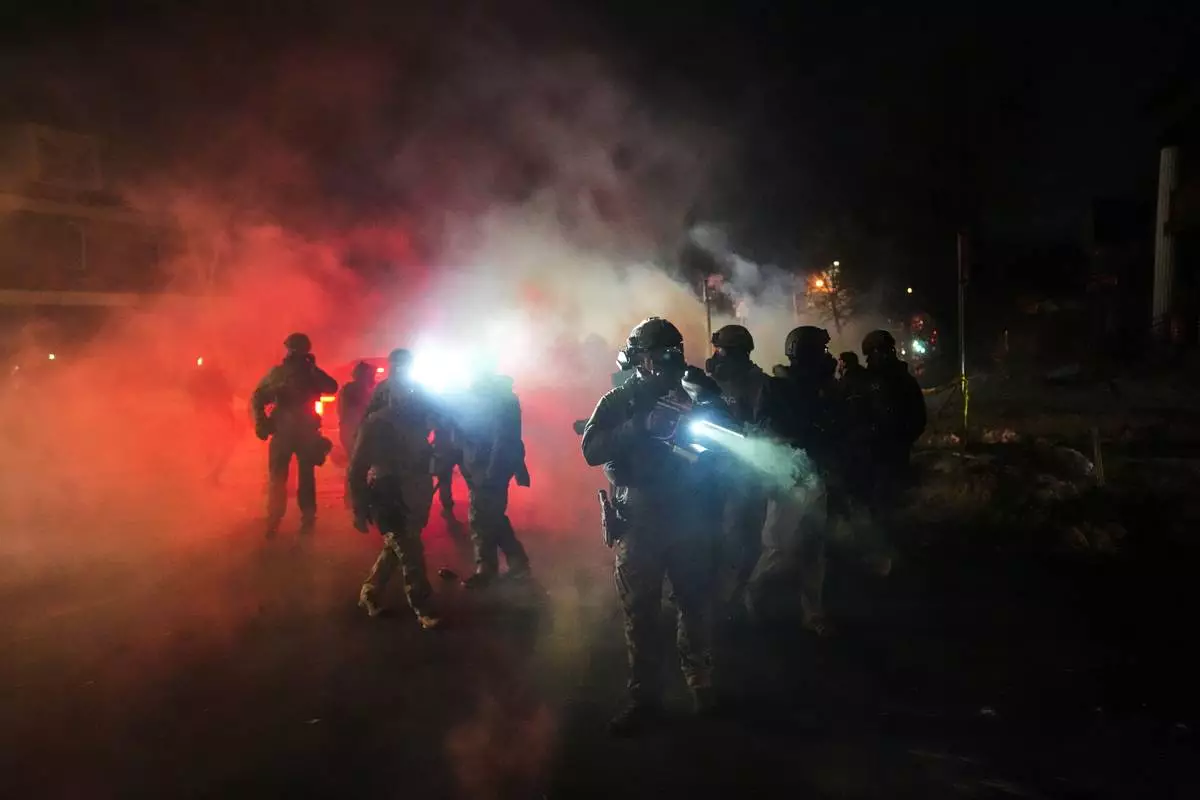
Law enforcement officers stand amid tear gas at the scene of a reported shooting Wednesday, Jan. 14, 2026, in Minneapolis. (AP Photo/Adam Gray)