Chinese and Japanese experts in the fields of architecture and culture gathered during the Osaka Expo to discuss how digital tools can bridge cultures and preserve history.
The dialog is part of a China Global Television Network's (CGTN) event that includes the launch of the Japanese edition of "Tang Architecture: Building Timeless Glory," the third season of the CGTN Art Series.
This interactive digital exhibition highlights the beauty of architectural marvels made during the Tang Dynasty (618-907) and immerses viewers in the aesthetics of that golden age. It brings to life wooden structures that profoundly influenced global design and are revered as the pinnacle of ancient Chinese architecture. In this way, it opens a new window for people to explore traditional Chinese art and culture.
Using AI-based animation and 3D modeling, the exhibition provides an interactive glimpse into the grandeur and elegance of the Tang era.
Key highlights include recreations of iconic Tang-era structures such as Foguang Temple and Daming Palace, along with depictions of ancient Chang'an, the capital of the Tang Dynasty, located near modern-day Xi'an in Shaanxi Province.
In addition to the architectural displays, paintings from the Song Dynasty (960-1279) are also featured, offering insights into China's rich artistic heritage. The vibrancy of these works emphasizes the ability of cultural heritage to transcend national and cultural boundaries.
"Today, with advanced technology, AI can analyze past events that were previously inaccessible and visualize them. This means data visualization is becoming crucial. Instead of reading text or charts, we can now experience things like being physically present in a scene. This shared, realistic experience helps us understand places beyond our perspective," said Yuko Hasegawa, visiting professor of Graduate School of Management at Kyoto University.
"Many people in many countries have had thoughts about the history of architecture. For instance, in Japan, research on modern architecture began in 1975 and the book 'Modern Architecture in Japan' was published around the 1980s. In China, the year of 1959 marked the early stage of Chinese architectural history. In 1984, the book 'History of Ancient Chinese Architecture' was officially published," said Wang Yiwu, a Chinese architect in Japan.
In the Osaka City Museum of Art, there is a rich collection of Chinese books, calligraphy and paintings, especially its Tang-Song dynasty exhibits, which are highly praised.
"When Japanese people explore Chinese culture, especially Tang dynasty artifacts, their interest often connects to the Silk Road. Chinese culture heavily influenced Japan's development. Envoys to China in the Tang Dynasty (618-907) brought back enormous knowledge, which Japan adapted uniquely. But this Chinese culture itself blended Persian, Indian, and other influences. So Japan learned about the world through China's lens," said Sakae Naito, director of the National Museum of Art in Osaka.
Themed "Designing the Future Society of Our Lives," the World Expo 2025 is underway in Osaka, Japan's third-largest city, running from April 13 to Oct 13.
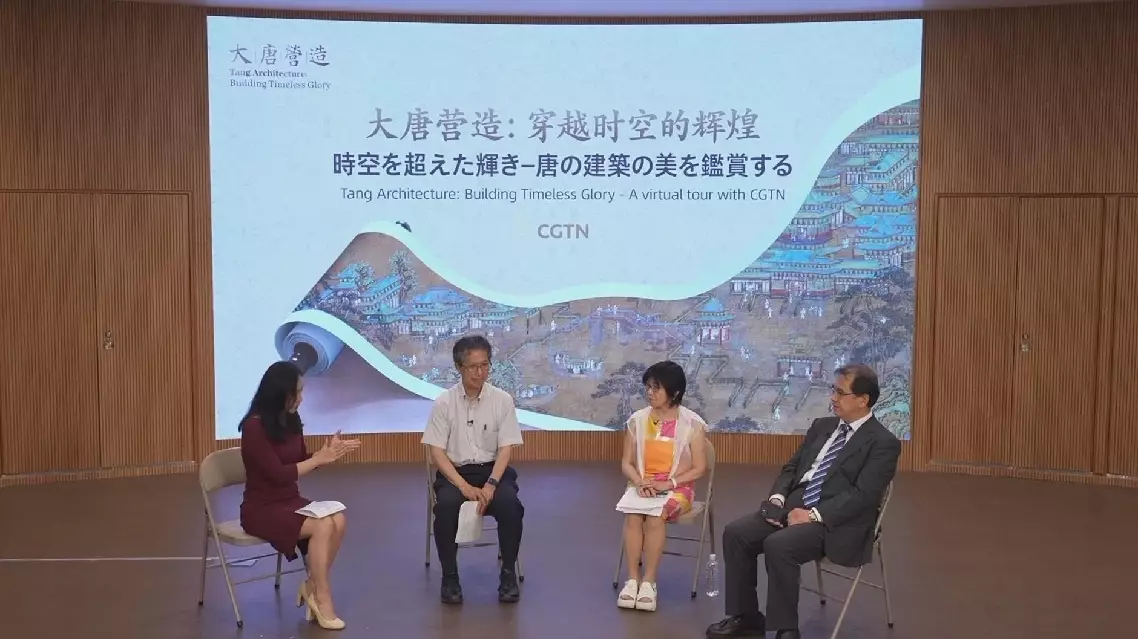
Chinese, Japanese experts explore digital tools in architecture cultural exchange
Chinese, Japanese experts explore digital tools in architecture cultural exchange
Chinese, Japanese experts explore digital tools in architecture cultural exchange