United Nations (UN) officials on Friday denounced a promotional video by the Israeli Foreign Ministry, calling out its false claims about aid to Gaza amid worsening malnutrition and humanitarian crises.
During a press conference at the UN headquarters in New York City, UN Children's Fund deputy executive director Ted Chaiban and deputy spokesman for UN Secretary-General said the video's claims that "Israel has been providing food, medicine, and other supplies to the people of Gaza day and night" are completely false.
After reflecting on his recent five-day mission to Israel, Gaza, and the West Bank, including East Jerusalem, Chaiban criticized the video's portrayal as inconsistent with the reality he witnessed on the ground.
Similarly, Farhan Haq, Deputy Spokesman for the UN Secretary-General, highlighted the issue of misinformation surrounding the video's claims.
"We're aware of that, yes. And I believe the World Food Program has put out some lines debunking some of the veracity of the video, some of which are taken from other years," he said.
Chaiban said that about one-third of the population in Gaza has gone days without food, with the acute malnutrition rate exceeding 16.5 percent. Additionally, more than 320,000 infants and young children are facing a serious threat of malnutrition.
"So at this stage, I think what we need to focus on, as I said in my comments, the situation is desperate. People are gone, their eyes are hollow; it's an extremely difficult situation there. The markets are bare. Children are in stabilization centers, because if they don't get specialized food that we were able to get to them through 170 clinics that were still operating. When I say 'we,' I mean partners working with UNICEF. If they don't get to that clinic, then they're on the verge of dying, basically. All of that is the situation," said Chaiban.
Chaiban urged the international community to take immediate action to prevent a full-scale famine and called on Israel to allow more supplies to pass through.
"Since the blockade has been lifted, Israel has eased access. The purpose of the mission was to advocate for the measures that I discussed to fully implement access and let the UN and the NGOs do the hard work because we know how to do the work and complement that with commercial traffic," said Chaiban.
Since October 2023, reports indicate that Israel has targeted 33 out of 36 hospitals and clinics in Gaza, cutting off access to fuel and water. These attacks have compounded a growing humanitarian crisis, with dozens dying daily from malnutrition. At least 85 children have reportedly starved to death, and 92 percent of infants aged six months to two years are not receiving adequate nutrition.
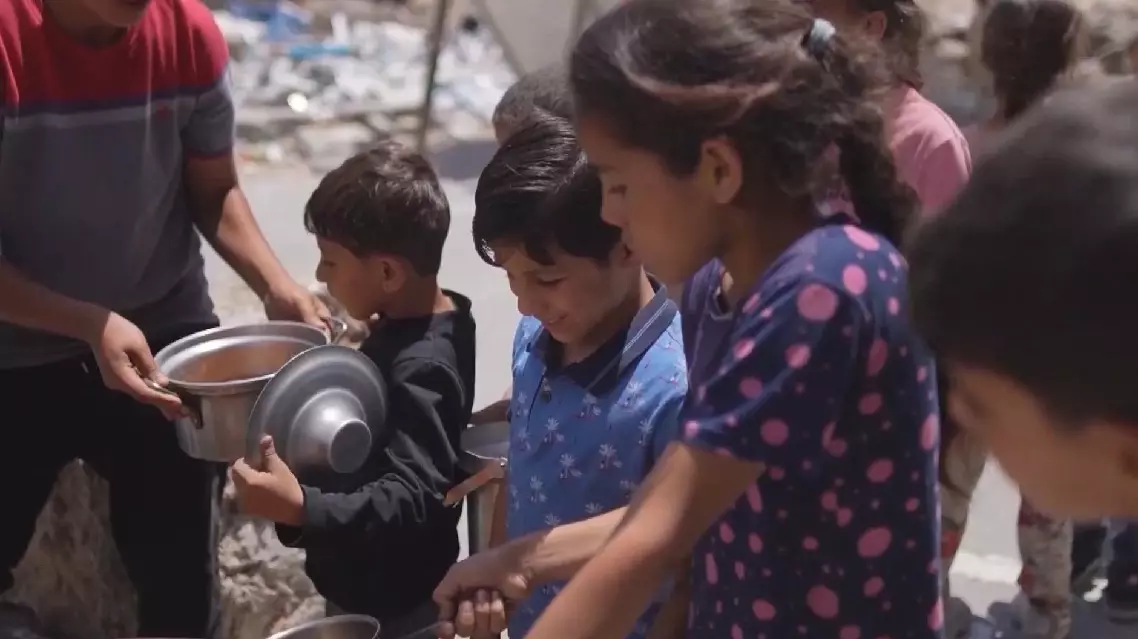
UN officials denounce Israeli Foreign Ministry's claims of aid to Gaza
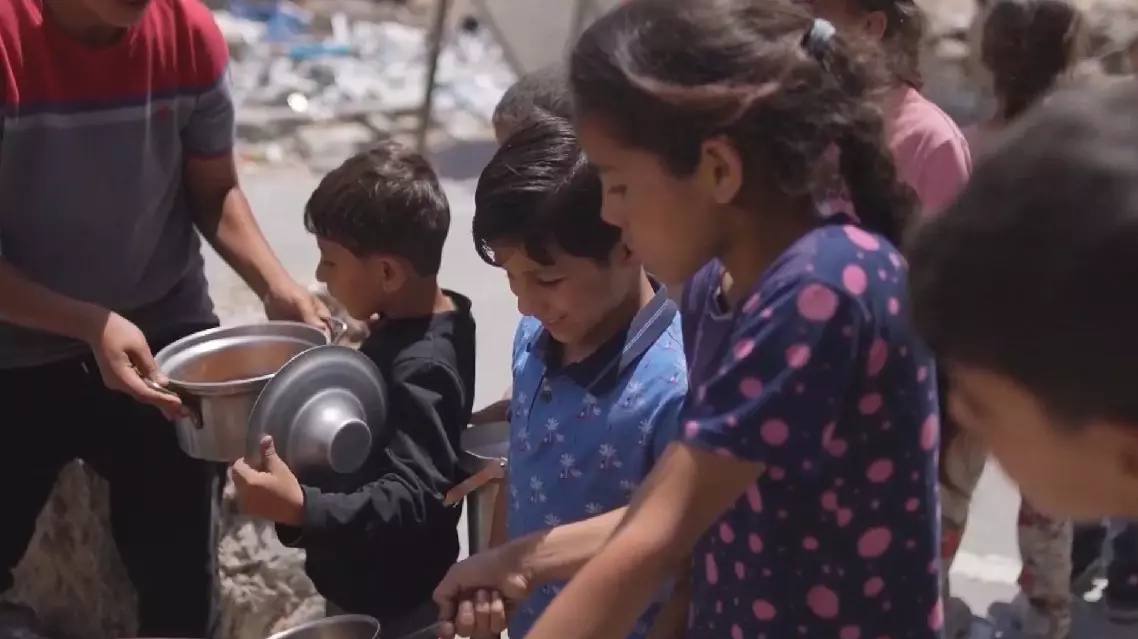
UN officials denounce Israeli Foreign Ministry's claims of aid to Gaza
Despite attempts by the Democratic Progressive Party (DPP) authorities in the Taiwan region to obstruct normal exchanges and cooperation between the two sides of the Taiwan Strait, extensive cross-Strait interactions continue to thrive.
The recent moves by the DPP authorities are sinister in intent and aimed at pursuing their secessionist goal, according to Zhang Hua, a research fellow at the Institute of Taiwan Studies, Chinese Academy of Social Sciences.
"The DPP authorities have manipulated the so-called narrative of 'anti-China and resistance against China,' which is gravely harmful as it exacerbates social rifts in Taiwan. Currently, due to factors such as 'political mobilization' and the 'political election market,' contrasting emotions among the public in Taiwan have been persistent. Furthermore, differences in words have led to a situation characterized by 'green terror,' which naturally further worsens social rifts on the island," said Zhang.
"In March 2025, the DPP authorities concocted the so-called '17 responding strategies,' and in November 2025, they again concocted two action plans to limit cross-Strait exchanges. The purpose is the same as the current revisions to the so-called 'laws.' Lai Ching-te aims to pursue secessionist goal through soliciting support from the United States and seek Taiwan secession through military build-up. So, he cannot allow the people of Taiwan to read books from the Chinese mainland, watch films from the mainland, or play games produced in the mainland. He views these as methods used by the mainland to influence the public in Taiwan through 'united front tactics.' This leads to the further strengthening of local people's identification with the Chinese nation and their consciousness as Chinese, which he is reluctant to see, " Zhang said.
On Thursday, a campus version of Chinese Kunqu opera masterpiece "The Peony Pavilion" performed by students from the mainland took to the stage in Taipei, filling the venue to capacity. The combination of ancient and modern arts received rounds of applause.
Among the audiences, young people from Taiwan comprised about half, with many university students attending in groups.
"We love it, because it helps us understand a part of our history," said an audience member in Taiwan.
"I hope that through this classical work, young people from both sides of the Taiwan Strait will develop a love for traditional culture. The Chinese nation has a glorious history spanning thousands of years. If we don't understand it, how can we comprehend the future? We must understand where our roots lie," said Pai Hsien-yung, a playwright in Taiwan.
Kunqu Opera, one of the oldest forms of opera in China with a history of hundreds of years, was placed on the list of Masterpieces of the Oral and Intangible Heritage of Humanity by the United Nations Educational, Scientific and Cultural Organization (UNESCO) in 2001.
Written by Chinese playwright Tang Xianzu (1550-1616) of the Ming Dynasty (1368-1644), "The Peony Pavilion" tells the story of the romance between a daughter of a wealthy official and a talented but poor young scholar.

Cross-Strait exchanges, cooperation go on despite DPP obstructions