Persistent rain pounded north China's Shanxi Province in recent days, triggering flash floods and damaging greenhouses, roads, and bridges.
Along the Nanyang River in Tianzhen County, Datong City, rapidly rising water damaged several bridges.
Bulldozers, excavators, and trucks were rushed in to make emergency repairs.
In Liujiazhuang Village, Salipu Town, authorities deployed pumps to empty floodwater from greenhouses.
"I have 20 mu (about 1.33 hectares) of greenhouses, all flooded. The village has helped me to drain the flood water. Once the tunnels are dry, we'll replant to minimize losses," said Xiong Xian, a villager.
The county flood-control headquarters reported that 5,400 mu (360 hectares) of vegetable plots were damaged, and drainage had been completed in 3,000 mu (200 hectares) of them. A total of 220 road sections and five bridges were damaged.
By Sunday morning, 148 road sections had reopened to traffic, while repair efforts on other bridges and road sections were still underway.
Heavy downpours also lashed Mount Wutai in Shanxi's Xinzhou City on Saturday night, triggering flash floods that briefly cut off Zhulinsi Village and halted traffic.
At Mount Wutai scenic spot, a cloudburst began around 18:30 on Saturday, dumping 45.1 mm and 38.2 mm of rainfall in its northern and central parts, respectively, in a short period.
Rescuers, including police and firefighters, rushed to evacuate tourists from the attraction.
No casualties have been reported so far.
The flash floods in Zhulinsi Village submerged roads and swept several vehicles away.
Rescuers cleared the debris overnight, and traffic has resumed in the village.
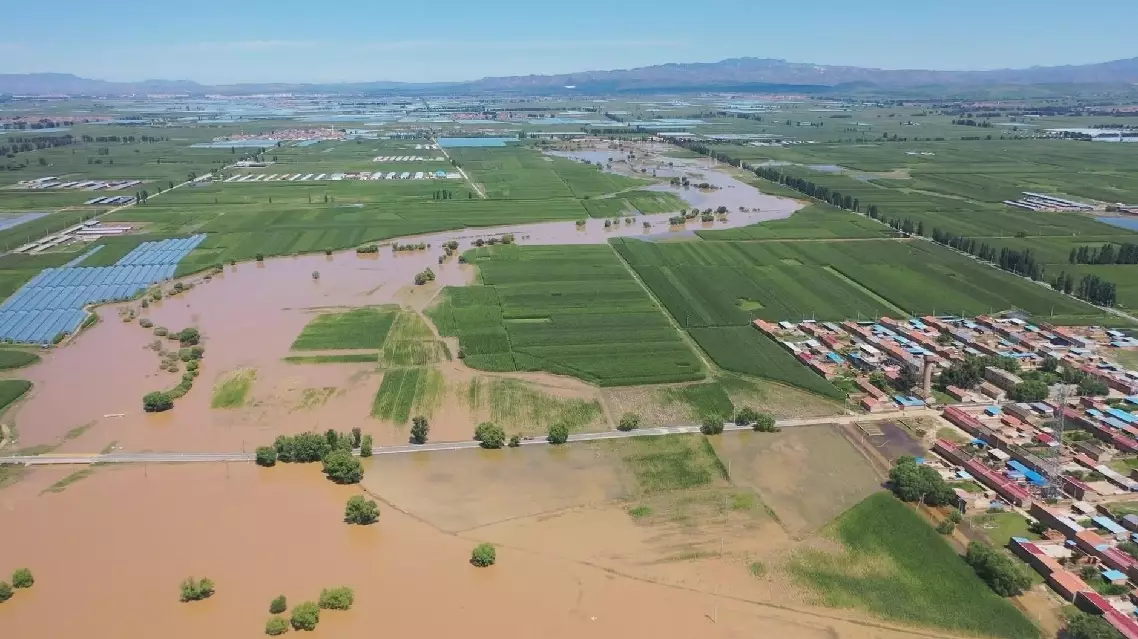
Heavy rain breaks roads, bridges, triggers floods in north China's Shanxi
China's consumer goods industry got off to a good start in 2026, with main indicators registering steady growth in the first two months, according to the data from the Ministry of Industry and Information Technology.
The value added of enterprises above the designated size -- whose annual main business income reaches 20 million yuan (about 2.93 million U.S. dollars) or more -- in this sector increased by 4.8 percent year on year in January and February, accounting for 29.2 percent of the total value added, 3.1 percentage points higher than that of last year. Among the 14 major industry categories, 10 achieved positive growth.
In the two months, these enterprises achieved a business revenue of approximately 5.1 trillion yuan, up 4.4 percent year on year, while the total retail sales of consumer goods exceeded 8.6 trillion yuan, a year-on-year increase of 2.8 percent.
"The first two months were in the traditional peak consumption season, driving the growth of orders and helping to unleash production capacity in the consumer goods industry. Some emerging consumption patterns, such as experience consumption and trendy toy consumption, grew rapidly, and the supply market showed a diversified growth trend," said Dai Xiaoxia, deputy director of the Institute of Consumer Goods Industry Research of China Center for Information Industry Development.
In terms of foreign trade, exporters above the designated size delivered consumer goods worth around 592.54 billion yuan, up 2.2 percent year on year, with the pharmaceutical manufacturing industry, the papermaking and paper products industry registering relatively rapid growth.
China will increase the supply of high-quality products in the consumer goods industry, steadily promoting the intelligent, green and integrated development of the sector.
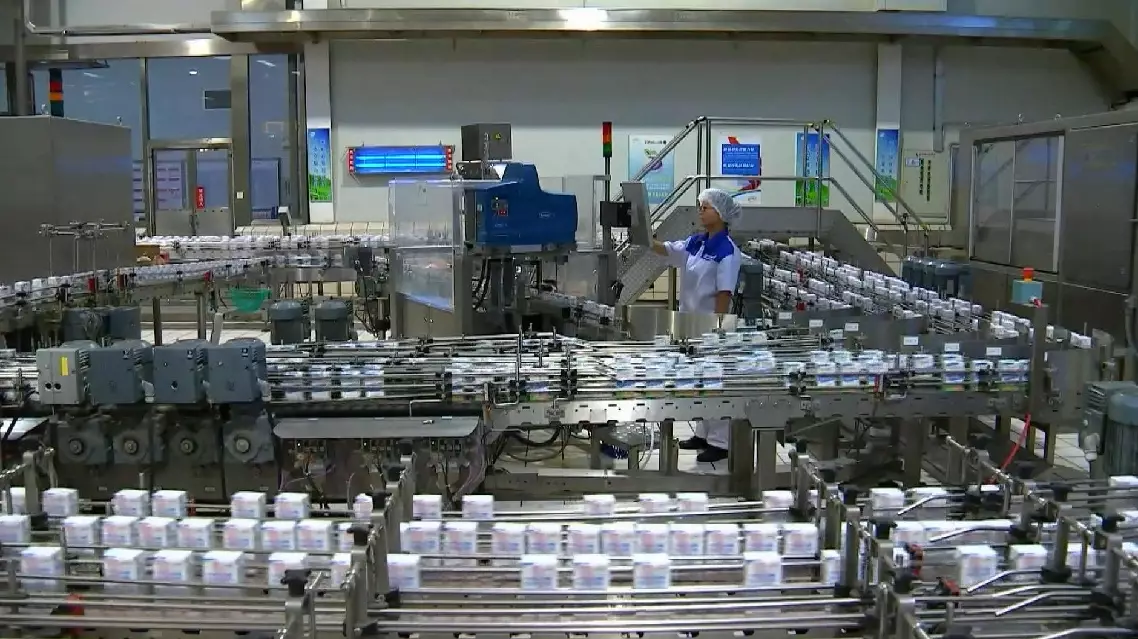
China's consumer goods industry posts steady growth in first 2 months