SANTA CLARA, Calif. (AP) — The NFL is banning the use of “smelling salts” during games, saying the products aren't proven to be safe and also could mask signs of a concussion.
The league sent a memo to teams on Tuesday explaining the decision to ban smelling salts and any other ammonia inhalant during pregame activities, games and halftime on the sideline or locker rooms.
“In 2024, the FDA issued a warning to companies that produce commercially available ammonia inhalants (AIs), as well as to consumers about the purchase and use of AIs, regarding the lack of evidence supporting the safety or efficacy of AIs marketed for improving mental alertness or boosting energy,” according to the memo obtained by The Associated Press. “The FDA noted potential negative effects from AI use. AIs also have the potential to mask certain neurologic signs and symptoms, including some potential signs of concussion. As a result, the NFL Head, Neck, and Spine Committee recommended prohibiting the use of AIs for any purpose during play in the NFL.”
San Francisco 49ers tight end George Kittle first disclosed the ban during an interview with NFL Network on Tuesday, adding that he hoped the league would relent and "figure out a middle ground.”
That won't happen, according to the memo, which explicitly prohibits any club personnel from providing or supplying products such as ammonia capsules, inhalers, ammonia in a cup, and any form of “smelling salts.”
Smelling salts and other similar products have been a staple on NFL sidelines for years with many players believing they can provide a sudden jolt of energy or alertness.
AP NFL: https://apnews.com/hub/nfl

FILE - Smelling salts lay on the sidelines during an NFL football game between the Indianapolis Colts and Pittsburgh Steelers, Dec. 16, 2023, in Indianapolis. (AP Photo/Zach Bolinger, File)
WASHINGTON (AP) — A federal judge Thursday cleared the way for a New York offshore wind project to resume construction, a victory for the developer who said a Trump administration order to pause it would likely kill the project in a matter of days.
District Judge Carl J. Nichols, an appointee of President Donald Trump, ruled construction on the Empire Wind project could go forward while he considers the merits of the government’s order to suspend the project. He faulted the government for not responding to key points in Empire Wind’s court filings, including the contention that the administration violated proper procedure.
Norwegian company Equinor owns Empire Wind. Spokesperson David Schoetz said they welcome the court's decision and will continue to work in collaboration with authorities. It’s the second developer to prevail in court against the administration this week.
The Trump administration froze five big offshore wind projects on the East Coast days before Christmas, citing national security concerns. Trump has targeted offshore wind from his first days back in the White House, most recently calling wind farms “losers” that lose money, destroy the landscape and kill birds.
Developers and states sued seeking to block the order. Large, ocean-based wind farms are the linchpin of plans to shift to renewable energy in East Coast states that have limited land for onshore wind turbines or solar arrays.
New York Gov. Kathy Hochul applauded the court decision, telling reporters the projects had been “stopped under the bogus pretense of national security.”
“When I heard this I said one thing: I’m the governor of New York, if there is a national security threat off the coast of New York, you need to tell me what it is. I want a briefing right now. Well, lo and behold, they had no answer,” she said.
On Monday, a judge ruled that the Danish energy company Orsted could resume its project to serve Rhode Island and Connecticut. Senior Judge Royce Lamberth said the government did not sufficiently explain the need for a complete stop to construction. That wind farm, called Revolution Wind, is nearly complete. It’s expected to meet roughly 20% of the electricity needs in Rhode Island, the smallest state, and about 5% of Connecticut’s electricity needs.
Orsted is also suing over the pause of its Sunrise Wind project for New York, with a hearing still to be set. Dominion Energy Virginia, which is developing Coastal Virginia Offshore Wind, plans to ask a judge Friday to block the administration’s order so it can resume construction, too.
Trump has also dismissed offshore wind developments as ugly, but the Empire project is about 14 miles (22.5 kilometers) offshore and the Sunrise project is about 30 miles (48 kilometers) offshore.
The fifth paused project is Vineyard Wind, under construction in Massachusetts. Vineyard Wind LLC, a joint venture between Avangrid and Copenhagen Infrastructure Partners, joined the rest of the developers in challenging the administration on Thursday. They filed a complaint in District Court in Boston.
In contrast to the halted action in the U.S., the global offshore wind market is growing, with China leading the world in new installations. Nearly all of the new electricity added to the grid in 2024 was renewable. The British government said Wednesday it secured a record 8.4 gigawatts of offshore wind in Europe’s largest offshore wind auction, enough clean electricity to power more than 12 million homes.
Robin Shaffer, president of Protect Our Coast New Jersey, said the Trump administration was right to stop construction on national security grounds. He urged officials to immediately appeal the adverse rulings and seek to halt all work pending appellate review. Opponents of offshore wind projects are particularly vocal and well-organized in New Jersey.
Empire Wind is 60% complete and designed to power more than 500,000 homes. Equinor said the project was in jeopardy due to the limited availability of specialized vessels, as well as heavy financial losses.
During a hearing Wednesday, Judge Nichols said the government’s main security concern seemed to be over operation of the wind turbines, not construction, although the government pushed back on that contention.
In presenting the government’s case, Associate Attorney General Stanley Woodward, Jr. was skeptical of the perfect storm of horrible events that Empire Wind said would derail their entire project if construction didn’t resume. He disagreed with the contention that the government’s main concern was over operation.
“I don’t see how you can make this distinction,” Woodward said. He likened it to a nuclear project being built that presented a national security risk. The government would oppose it being built, and it turning on.
Molly Morris, Equinor’s senior vice president overseeing Empire Wind, said in an interview that the company wants to build this project and deliver a major, essential new source of power for New York.
McDermott reported from Providence, Rhode Island. Associated Press writer Anthony Izaguirre contributed to this report from Albany, New York.
The Associated Press’ climate and environmental coverage receives financial support from multiple private foundations. AP is solely responsible for all content. Find AP’s standards for working with philanthropies, a list of supporters and funded coverage areas at AP.org.
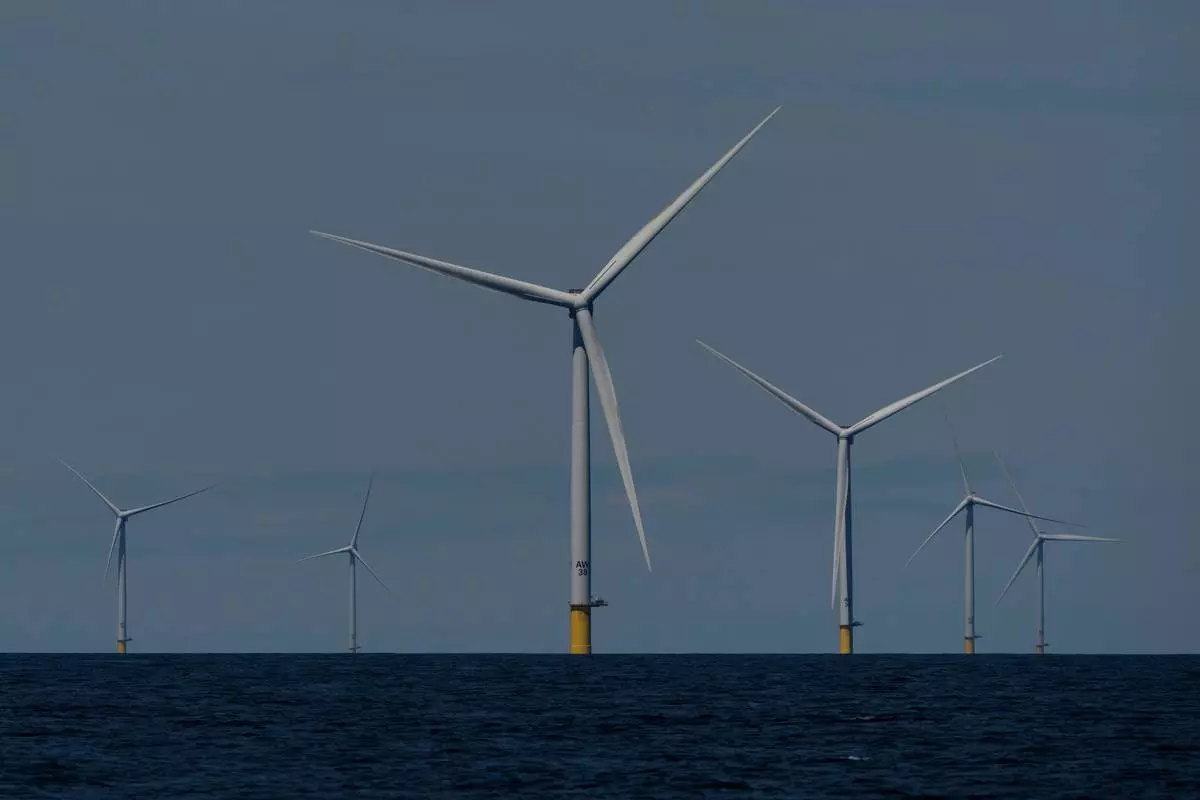
FILE - Wind turbines operate at Vineyard Wind 1 offshore wind farm off the coast of Massachusetts, July 19, 2025. (AP Photo/Carolyn Kaster, File)
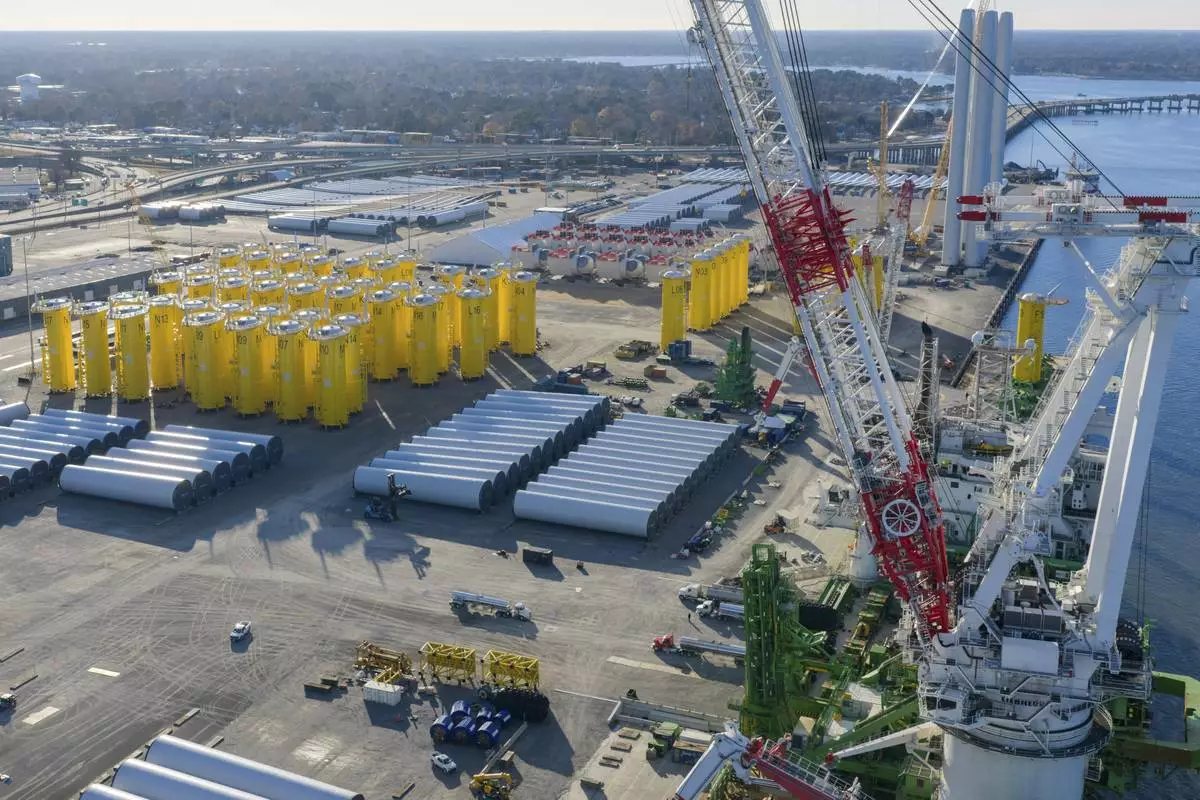
FILE - Wind turbine bases, generators and blades sit along with support ships at The Portsmouth Marine terminal that is the staging area for Dominion Energy Virginia, which is developing Coastal Virginia Offshore Wind, Dec. 22, 2025, in Portsmouth, Va. (AP Photo/Steve Helber, File)

FILE - A sign for the company Equinor is displayed on Oct. 28, 2020, in Fornebu, Norway. (Håkon Mosvold Larsen/NTB Scanpix via AP, File)
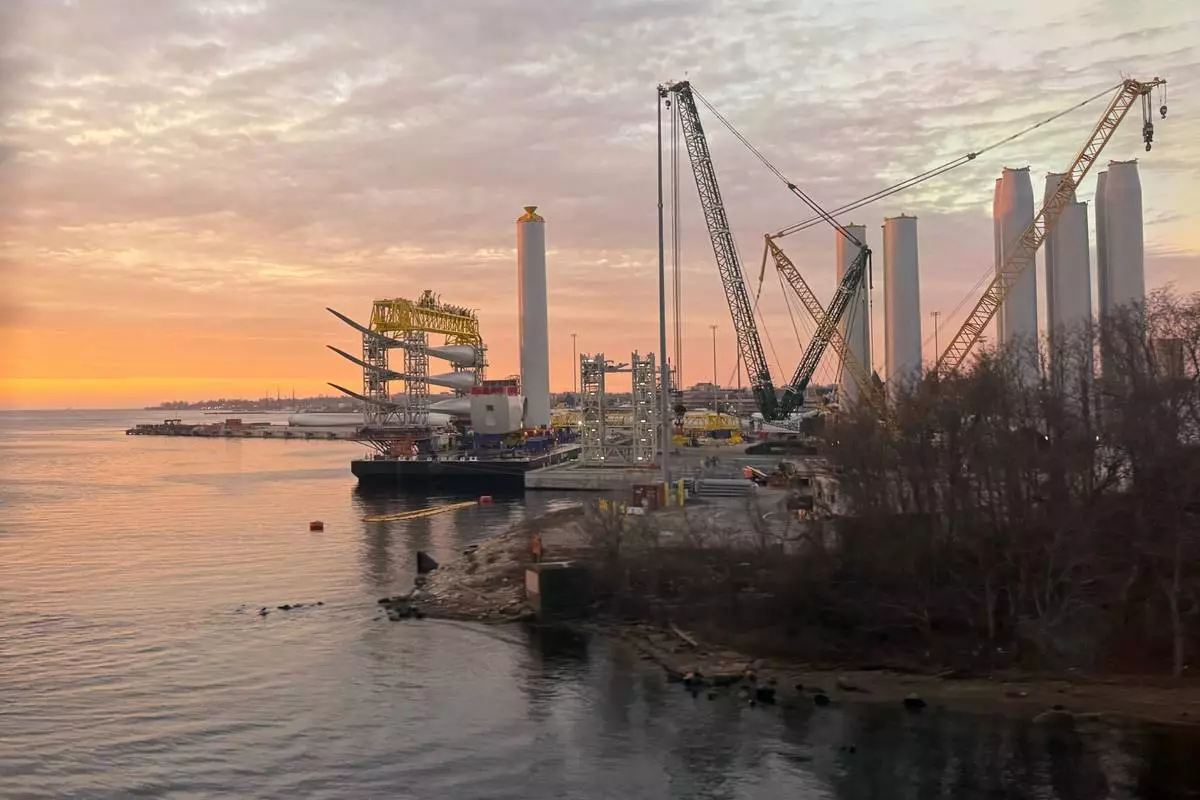
Blades and turbine bases for offshore wind sit at a staging area at New London State Pier, Wednesday, Jan. 14, 2026, in New London, Conn. (AP Photo/Matt O'Brien)