BERLIN (AP) — A motorist was clocked driving at more than 320 kph (199 mph) on the Autobahn west of Berlin, a record high at more than 124 mph above the speed limit, German police said.
The speedster, who was not identified, was caught while racing along the A2 highway near Burg on July 28.
The driver was handed a fine of 900 euros ($1,043), stripped of two points from his driver’s license and banned from driving for three months, the Magdeburg police office said Tuesday.
A roadside radar stand, known as an “Enforcement Trailer,” caught the motorist in a routine check. A reading from its display showed “the highest record speed” of 321 kph, police said.
Germany's famed Autobahn motorways have captured fascination and interest around the world for their lack of speeding limits. German authorities and driving clubs have argued over the years about whether the policy should continue.
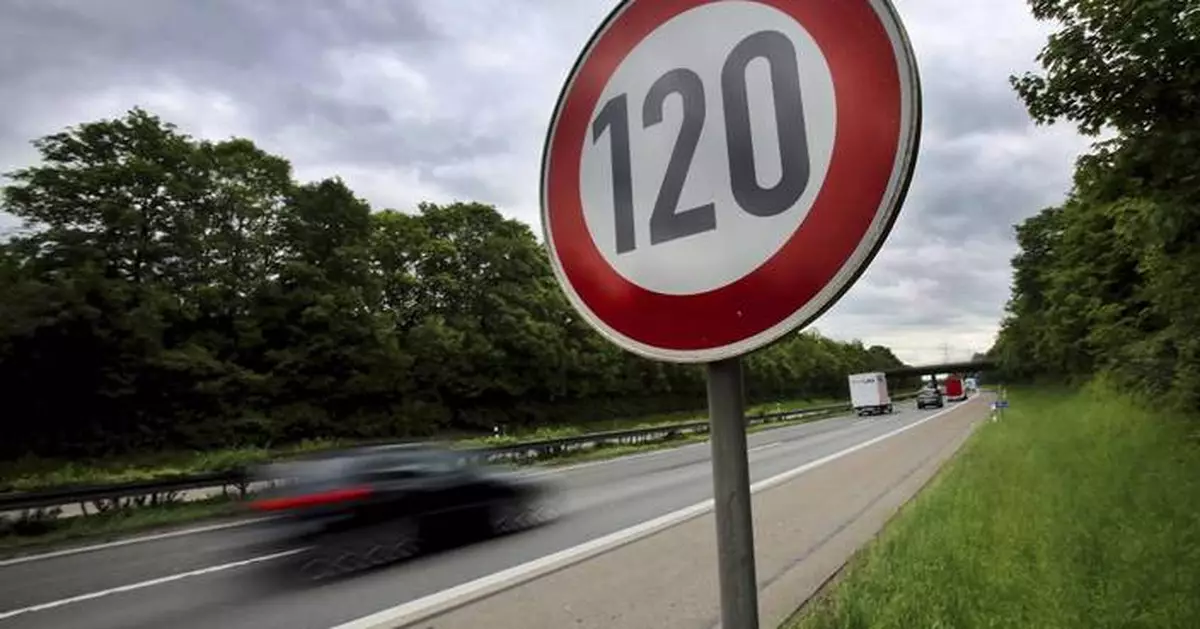
Limitless speeds aren’t universal on the Autobahn, though, as parts of the motorway are subject to speed limits. The section of the motorway where the record-breaking driver was caught has a limit of 120 kph (74.5 mph).
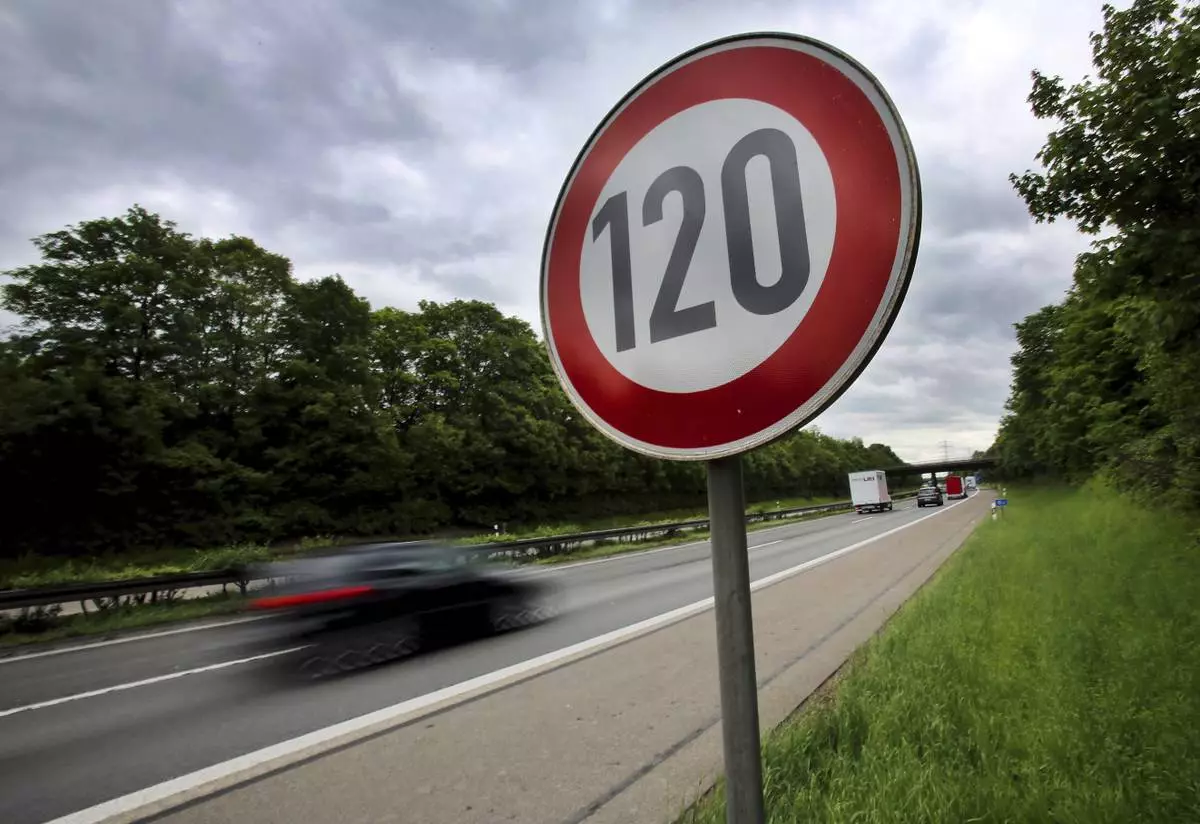
FILE - In this May 15, 2013 file photo a traffic sign indicating a speed limit of 120 km/h (75 mph) is pictured at the highway A59 close to Troisdorf, Germany. (Oliver Berg/dpa via AP, file)
A federal appeals panel on Thursday reversed a lower court decision that released former Columbia University graduate student Mahmoud Khalil from an immigration jail, bringing the government one step closer to detaining and ultimately deporting the Palestinian activist.
The three-judge panel of the 3rd U.S. Circuit Court of Appeals didn’t decide the key issue in Khalil’s case: whether the Trump administration’s effort to throw Khalil out of the U.S. over his campus activism and criticism of Israel is unconstitutional.
But in its 2-1 decision, the panel ruled a federal judge in New Jersey didn’t have jurisdiction to decide the matter at this time. Federal law requires the case to fully move through the immigration courts first, before Khalil can challenge the decision, they wrote.
“That scheme ensures that petitioners get just one bite at the apple — not zero or two,” the panel wrote. “But it also means that some petitioners, like Khalil, will have to wait to seek relief for allegedly unlawful government conduct.”
Thursday’s decision marked a major win for the Trump administration’s sweeping campaign to detain and deport noncitizens who joined protests against Israel.
Tricia McLaughlin, a Homeland Security Department spokesperson, called the ruling “a vindication of the rule of law.”
In a statement, she said the department will “work to enforce his lawful removal order” and encouraged Khalil to “self-deport now before he is arrested, deported, and never given a chance to return.”
It was not clear whether the government would seek to detain Khalil, a legal permanent resident, again while his legal challenges continue.
In a statement distributed by the American Civil Liberties Union, Khalil called the appeals ruling “deeply disappointing."
“The door may have been opened for potential re-detainment down the line, but it has not closed our commitment to Palestine and to justice and accountability," he said. "I will continue to fight, through every legal avenue and with every ounce of determination, until my rights, and the rights of others like me, are fully protected.”
Baher Azmy, one of Khalil's lawyers, said the ruling was “contrary to rulings of other federal courts."
“Our legal options are by no means concluded, and we will fight with every available avenue,” he said.
The ACLU said the Trump administration cannot lawfully re-detain Khalil until the order takes formal effect, which won't happen while he can still immediately appeal.
Khalil’s lawyers can request that the panel's decision be set aside and the matter reconsidered by a larger group of judges on the 3rd Circuit Court of Appeals, or they can go to the U.S. Supreme Court.
An outspoken leader of the pro-Palestinian movement at Columbia, Khalil was arrested last March. He then spent three months detained in a Louisiana immigration jail, missing the birth of his first child.
Federal officials have accused Khalil of leading activities “aligned to Hamas,” though they have not presented evidence to support the claim and have not accused him of criminal conduct. They also accused Khalil, 31, of failing to disclose information on his green card application.
The government justified the arrest under a seldom-used statute that allows for the expulsion of noncitizens whose beliefs are deemed to pose a threat to U.S. foreign policy interests.
In June, a federal judge in New Jersey ruled that justification would likely be declared unconstitutional and ordered Khalil released.
President Donald Trump's administration appealed that ruling, arguing the deportation decision should fall to an immigration judge, rather than a federal court.
Khalil has dismissed the allegations as “baseless and ridiculous,” framing his arrest and detention as a “direct consequence of exercising my right to free speech as I advocated for a free Palestine and an end to the genocide in Gaza.”
New York City’s new mayor, Zohran Mamdani, said on social media Thursday that Khalil should remain free.
“Last year’s arrest of Mahmoud Khalil was more than just a chilling act of political repression, it was an attack on all of our constitutional rights,” Mamdani wrote on X. “Now, as the crackdown on pro-Palestinian free speech continues, Mahmoud is being threatened with rearrest. Mahmoud is free — and must remain free.”
Judge Arianna Freeman dissented Thursday, writing that her colleagues were holding Khalil to the wrong legal standard. Khalil, she wrote, is raising “now-or-never claims” that can be handled at the district court level, even though his immigration case isn't complete.
Both judges who ruled against Khalil, Thomas Hardiman and Stephanos Bibas, were Republican appointees. President George W. Bush appointed Hardiman to the 3rd Circuit, while Trump appointed Bibas. President Joe Biden, a Democrat, appointed Freeman.
The two-judge majority rejected Freeman's worry that their decision would leave Khalil with no remedy for unconstitutional immigration detention, even if he later can appeal.
“But our legal system routinely forces petitioners — even those with meritorious claims — to wait to raise their arguments," the judges wrote.
The decision comes as an appeals board in the immigration court system weighs a previous order that found Khalil could be deported to Algeria, where he maintains citizenship through a distant relative, or Syria, where he was born in a refugee camp to a Palestinian family.
His attorneys have said he faces mortal danger if forced to return to either country.
Associated Press writers Larry Neumeister and Anthony Izaguirre contributed to this story.
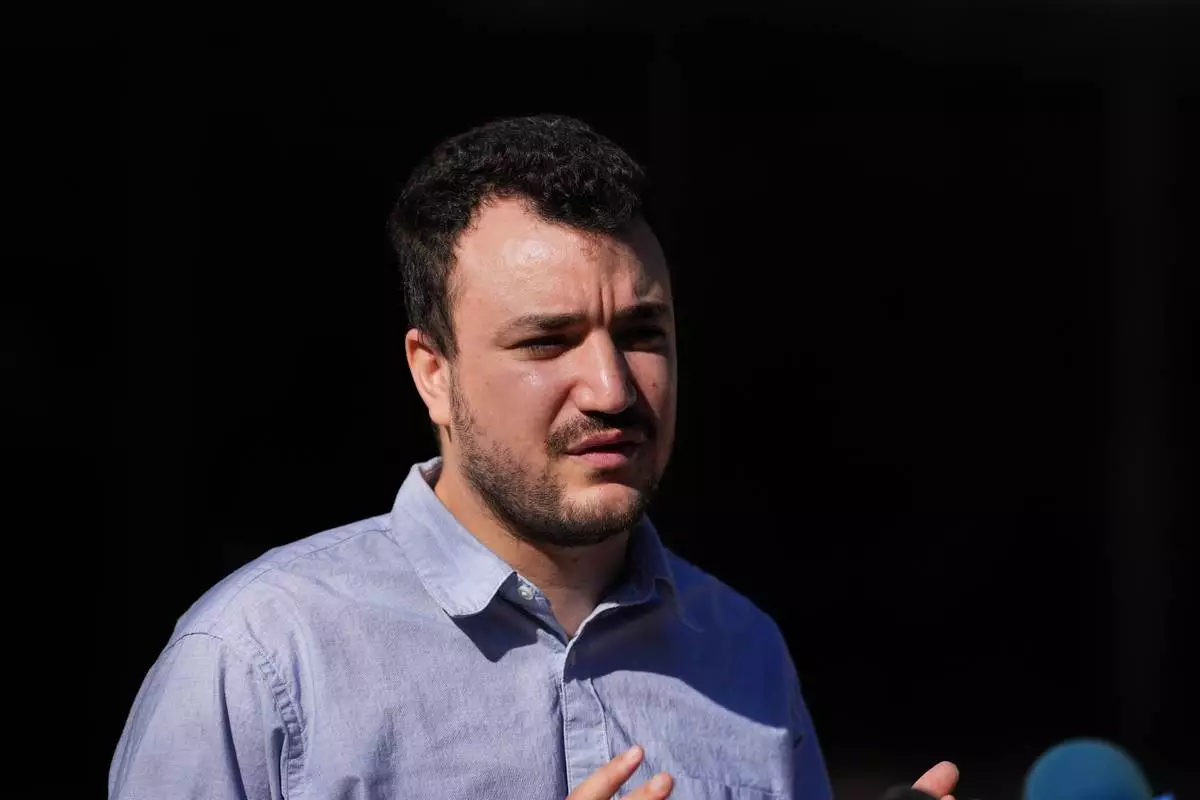
FILE - Palestinian activist Mahmoud Khalil holds a news conference outside Federal Court on Tuesday, Oct. 21, 2025 in Philadelphia (AP Photo/Matt Rourke, File)