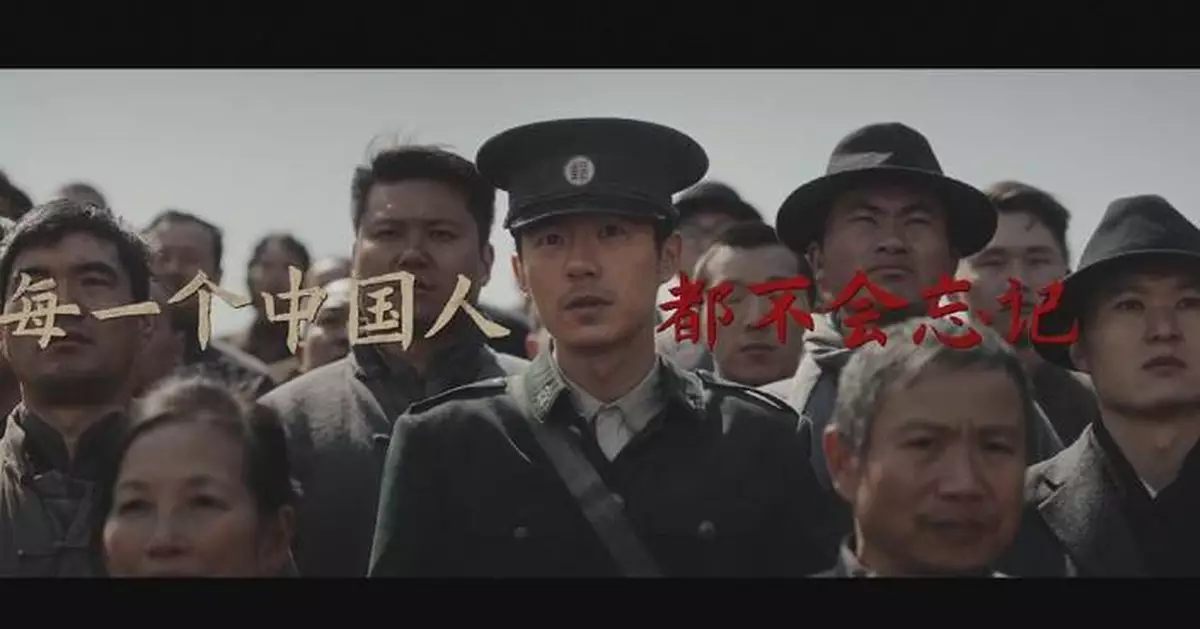
"Dead to Rights," a film on the Nanjing Massacre, holds an irreplaceable place in the memories of the entire Chinese nation and serves as an important carrier of the global consensus on the world anti-fascist war, according to the film's screenwriter Zhang Ke.
Since its premiere on July 25, the domestic box office revenue for "Dead to Rights" has exceeded 1.7 billion yuan, topping the daily box office rankings for the previous weekend.
The film centers on a group of Chinese civilians who take refuge in a photography studio during the Japanese aggressors' brutal occupation of Nanjing.
In a desperate attempt to stay alive, they are forced to assist a Japanese military photographer in developing film -- only to discover that the negatives contain damning evidence of atrocities committed by Japanese forces across the city. They secretly keep the negatives and risk their lives to deliver them to the outside world, hoping that the truth would be revealed.
According to the screenwriter, the film is particularly significant in the current international environment as this year marks the 80th anniversary of the victory in the Chinese People's War of Resistance Against Japanese Aggression.
"I think that on the one hand, the film is a work of art, and on the other hand, it actually is an irreplaceable part of the national identity of the entire country. In other words, many children, when seeking to understand the Nanjing Massacre, primarily rely on reading books, visiting the Memorial Hall, and viewing related exhibitions. However, an equally significant avenue of communication is through film and television dramas. Therefore, we believe that this film could be integrated into our collective national memory," said Zhang.
"Furthermore, film serves as the most suitable medium for international cultural communication. When striving to shape the global narrative and assert our perspective on the anti-fascist efforts during World War II, film emerges as the most effective platform for establishing our discourse and defining our historical narrative. We believe our film should not only remain a part of our own national identity and memory, but we also hope to make it an important carrier of the world consensus on the world anti-fascist war," said Zhang.
Starting from Thursday, the film will be released in international markets including Australia, New Zealand, the United States, Canada, and other countries around the globe.
Chinese film on Nanjing Massacre gives stage to country's voice: screenwriter