Skip to Content Facebook Feature Image

Iran's president warns strikes on Khamenei would lead to "all-out war"
China

China

China

Iran's president warns strikes on Khamenei would lead to "all-out war"

2026-01-19 11:50 Last Updated At:19:27

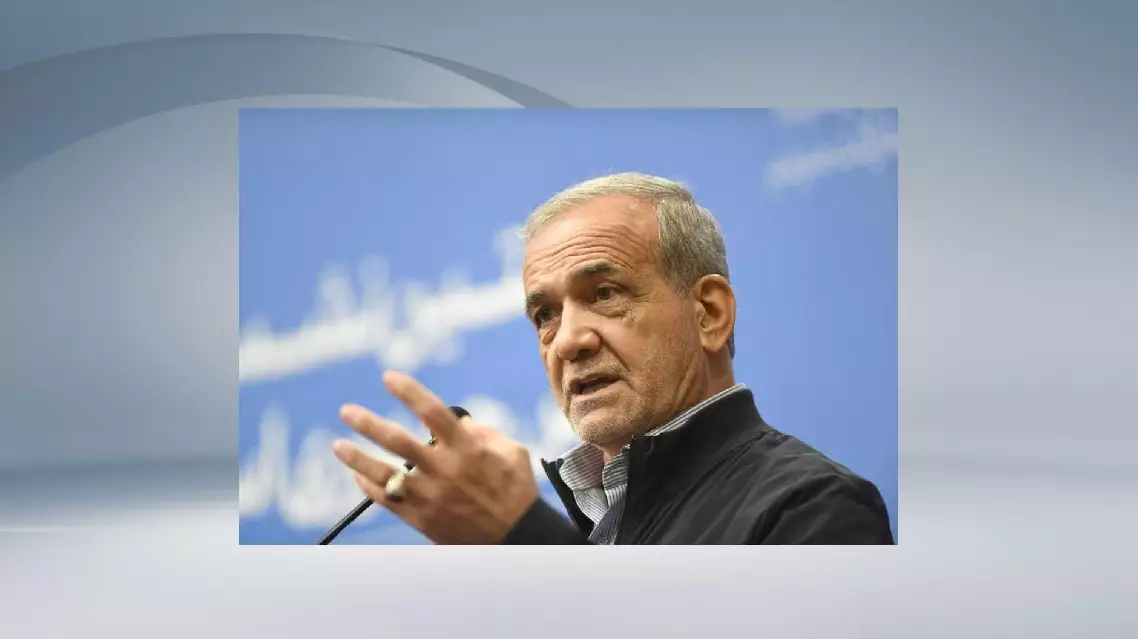
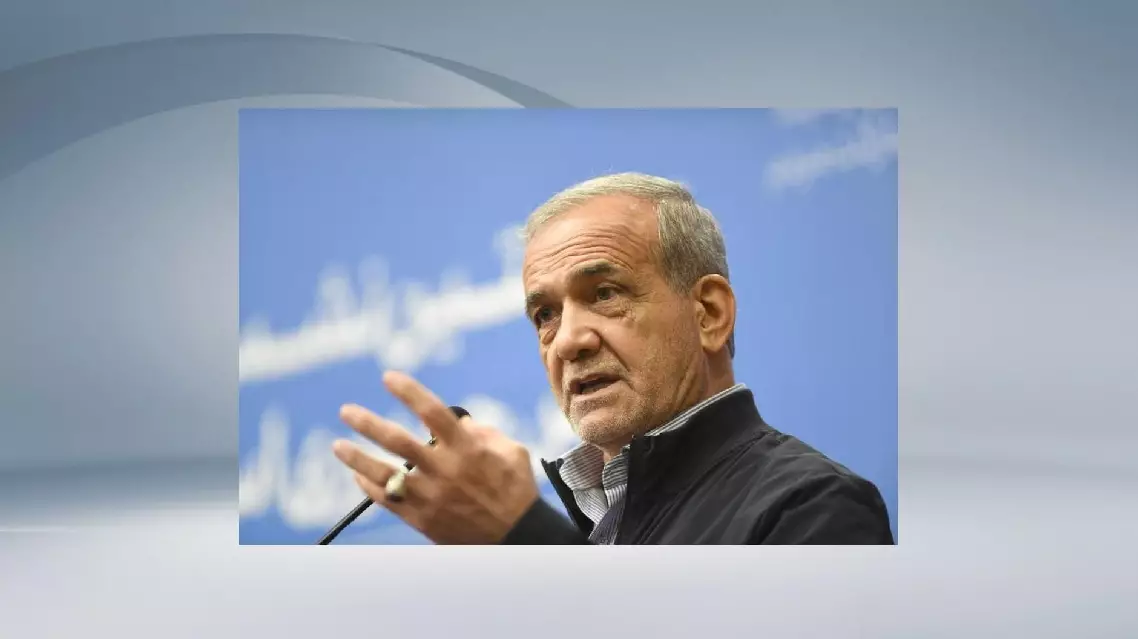
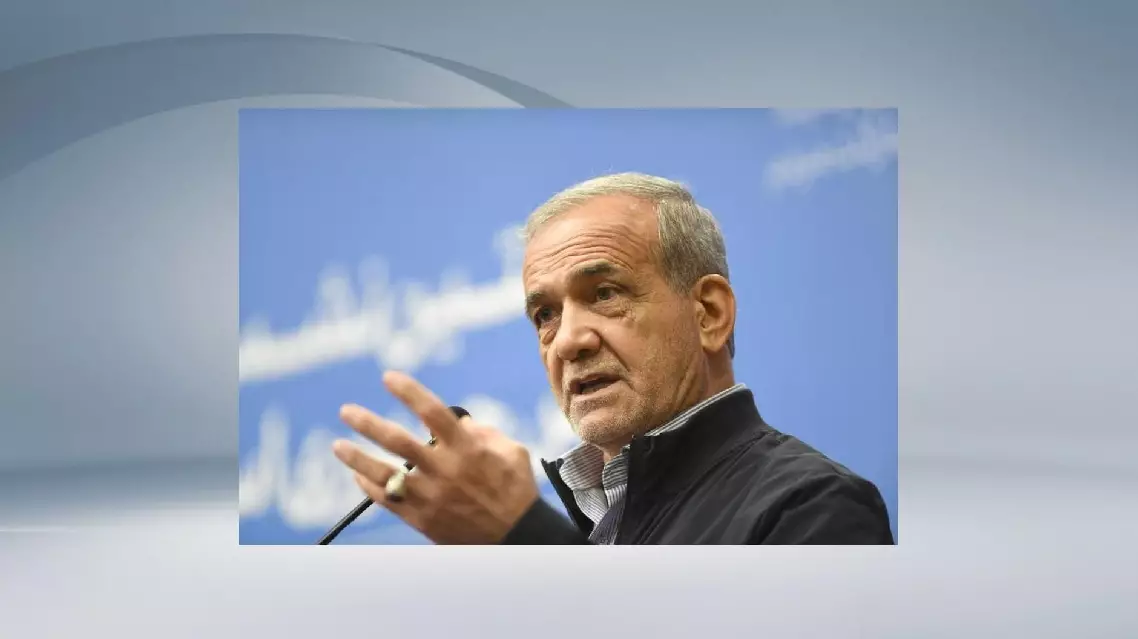
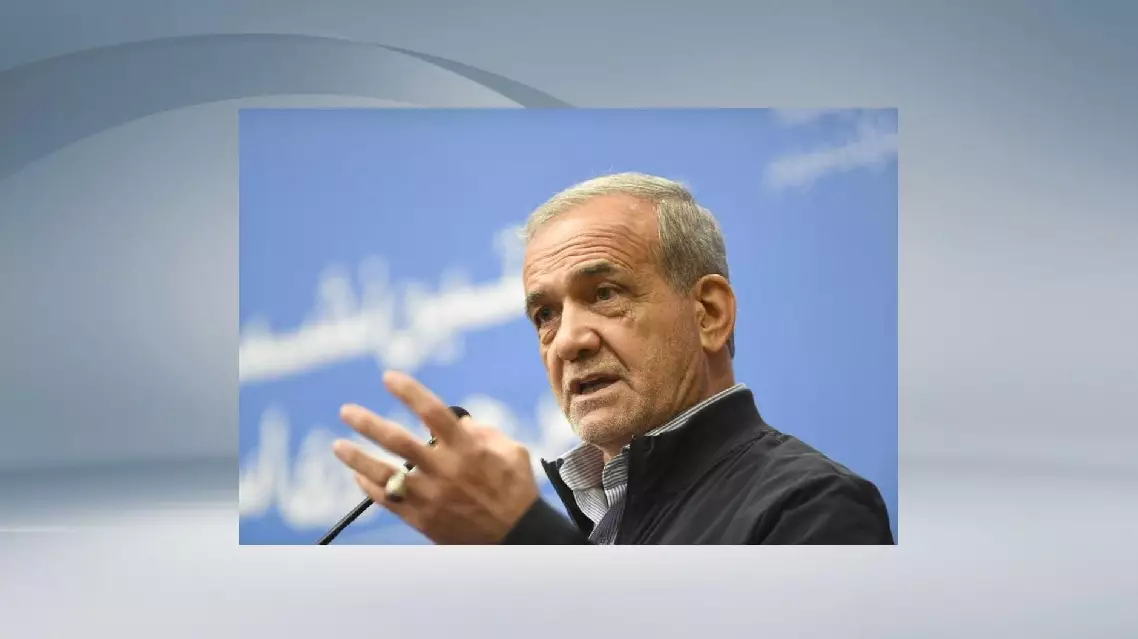
Iranian President Masoud Pezeshkian warned on Sunday that any attack on Supreme Leader Ali Khamenei would be considered a declaration of "all-out war" against the Iranian nation, following a sharp exchange of rhetoric with U.S. President Donald Trump.

Pezeshkian's comments, posted on social media platform X, come amid heightened tensions after Trump told Politico on Saturday that it was "time to look for new leadership in Iran."

More Images
Iran's president warns strikes on Khamenei would lead to "all-out war"

Iran's president warns strikes on Khamenei would lead to "all-out war"
Iran's president warns strikes on Khamenei would lead to "all-out war"
Iran's president warns strikes on Khamenei would lead to "all-out war"
Iran's president warns strikes on Khamenei would lead to "all-out war"

Iran's president warns strikes on Khamenei would lead to "all-out war"

Iran's president warns strikes on Khamenei would lead to "all-out war"

Iran's president warns strikes on Khamenei would lead to "all-out war"

"Any attack on our great leader will be tantamount to an all-out war against the Iranian nation," Pezeshkian wrote.

The Iranian president also blamed Washington for the country's economic woes, citing "longstanding hostility" and "inhumane sanctions" imposed by the United States and its allies as the primary drivers of hardship for the Iranian people.

Also on Sunday, Iranian Foreign Ministry spokesman Esmaeil Baghaei said that it is the United States that interferes in Iran's affairs and should be responsible for escalating tensions with Tehran.

He added that the intentions of hostile forces were clear, but many of their attempts ultimately ended in failure.

In response to the cancellation of an invitation for Iran to attend the Munich Security Conference, the spokesman said that the decision was made under pressure from the German Ministry of Foreign Affairs.

He said the move revealed the reality that some countries who claim to be advocates for dialogue and freedom of speech are actually unable to tolerate different voices.

Iran's president warns strikes on Khamenei would lead to "all-out war"

Iran's president warns strikes on Khamenei would lead to "all-out war"
Iran's president warns strikes on Khamenei would lead to "all-out war"

Iran's president warns strikes on Khamenei would lead to "all-out war"

Iran's president warns strikes on Khamenei would lead to "all-out war"

Iran's president warns strikes on Khamenei would lead to "all-out war"

Iran's president warns strikes on Khamenei would lead to "all-out war"

Iran's president warns strikes on Khamenei would lead to "all-out war"

The return capsule of the debris-hit Shenzhou-20 spaceship landed safely back on Earth on Monday, with ground search teams overcoming the unique challenges of locating and retrieving the unmanned craft as China's first emergency space mission came to a successful conclusion.

The China Manned Space Agency (CMSA) confirmed the capsule touched down safely at the Dongfeng Landing Site in north China's Inner Mongolia Autonomous Region at 09:34 local time on Monday morning, bringing an end to the extraordinary mission.

Launched from the Jiuquan Satellite Launch Center last April, Shenzhou-20's return was postponed in early November due to concerns over damage caused by a suspected space debris impact, after the CMSA said tiny cracks were found in the Shenzhou-20 return capsule's viewport window.

An alternative spacecraft was later used to transport the three Chinese astronauts of the Shenzhou-20 mission safely back to Earth.

Monday's return began shortly after midnight Beijing time, when the spaceship undocked from the Tiangong space station and began its descent.

Despite sustaining damage, the capsule withstood temperatures of thousands of degrees Celsius during the re-entry process and successfully returned to Earth after in-orbit reinforcement and sealing work carried out by the Shenzhou-21 astronauts, who arrived to take over duties from the Shenzhou-20 crew in November.

Xu Peng, the on-site commander at the Dongfeng Landing Site, said that this particular unmanned landing represented a whole new set of challenges to the search and recovery teams on the ground.

He said the ground search forces made targeted adjustments in order to better cope with the extreme weather conditions in the area, with frigid temperatures and strong winds posing further difficulties to retrieving the return capsule.

"This marks the first time the Dongfeng Landing Site has carried out a spaceship recovery mission during the coldest season of the year, with cold weather posing a test for both our search and rescue teams and equipment. We made special cold-protection preparations in advance to ensure that both personnel and the equipment remained in good condition throughout the mission," Xu said.

Xu also noted another unique factor of this unmanned return which put extra pressure on the ground teams to respond quickly to its touchdown.

"As the Shenzhou-20 return capsule was unmanned, there was no astronaut to manually separate the parachute. As a result, the main parachute did not automatically detach upon landing, and in strong winds, it could have dragged the return capsule along the ground. This requires our ground personnel to reach the landing point and cut the parachute as quickly as possible. ," Xu said.

Ground teams were keen to secure the spacecraft as quickly as possible so that a comprehensive assessment can be made on the damage it sustained in space which necessitated the emergency response operation.

On-site personnel promptly took steps to protect the damaged porthole on the return capsule upon its landing, which will provide essential data for the optimization of key spaceship components in the future.

Additionally, Xu said the ground teams deployed new methods, such as drones and other high-tech equipment, to assist in this unprecedented recovery operation.

"Adjustments were made to our recovery forces. The helicopter unit did not participate in this mission, and the drone and unmanned ground vehicle units made their debut. This new model, combining unmanned search equipment with ground personnel, was applied in the recovery of the uncrewed capsule," he said.

Though without any crew members, the return capsule was instead carrying several space application system items from the space station, including a well-used spacesuit which had far exceeded its service life while supporting some 20 extravehicular activities during space missions.

Monday's mission came after the three Shenzhou-20 crew members jointly met with the press in Beijing on Friday after completing their standard isolation period following their delayed return in November, with experienced mission commander Chen Dong hailing the calm and methodical response to the debris incident and the coordination with teams on the ground which ensured the trio got home safely.

Ground teams overcome challenges as unmanned Shenzhou-20 return capsule touches down

Ground teams overcome challenges as unmanned Shenzhou-20 return capsule touches down

Recommended Articles