SACRAMENTO, Calif. (AP) — California Gov. Gavin Newsom and former House Speaker Nancy Pelosi appeared shoulder-to-shoulder Friday with Texas Democratic lawmakers in a show of support for their nearly weeklong walkout, which has blocked a vote on congressional redistricting maps sought by President Donald Trump in a widening national battle over U.S. House control.
Texas has been the epicenter of Trump’s push to gerrymander congressional maps to shore up Republicans’ narrow House majority before next year. But the standoff is threatening to spill into other states — including California, New York, Florida and Indiana — in an emerging proxy war for control of Congress in 2026.
Click to Gallery
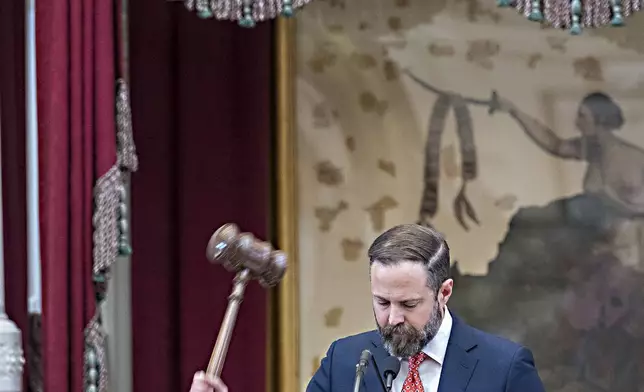
Texas House Speaker, Dustin Borrow, R - Lubbock, adjourns the House after a quorum was not met at the State Capitol, Friday, Aug. 8, 2025, in Austin, Texas. (AP Photo/Rodolfo Gonzalez)
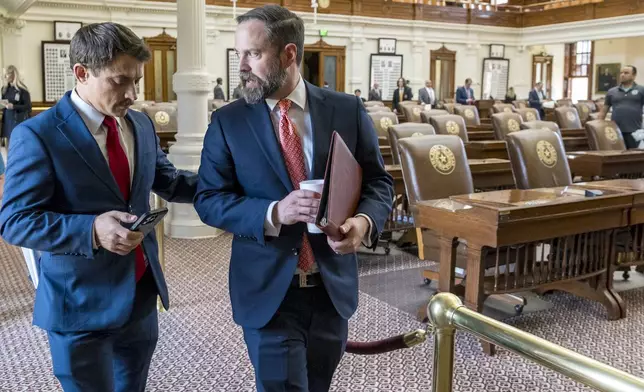
Texas House Speaker, Dustin Borrow, R - Lubbock, right, speaks with House Rep. Briscoe Cain, R - Deer Park, following a Republican Caucus meeting at the State Capitol, Friday, Aug. 8, 2025, in Austin, Texas. (AP Photo/Rodolfo Gonzalez)
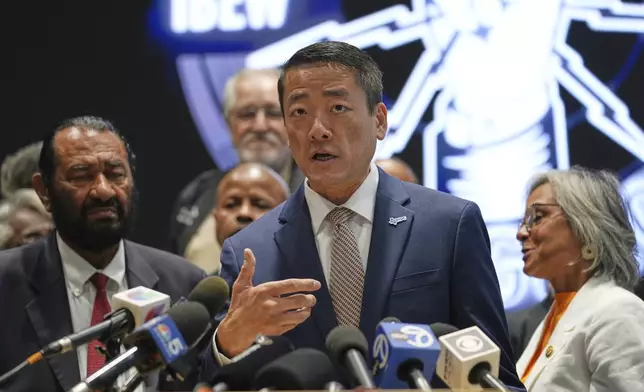
Democratic Texas Rep. Gene Wu, center, surrounded by other Texas House Democrats and Democratic members of Congress, speaks during a press conference at the Democratic Party in Warrenville, Ill., Monday, Aug. 4, 2025. (AP Photo/Nam Y. Huh)
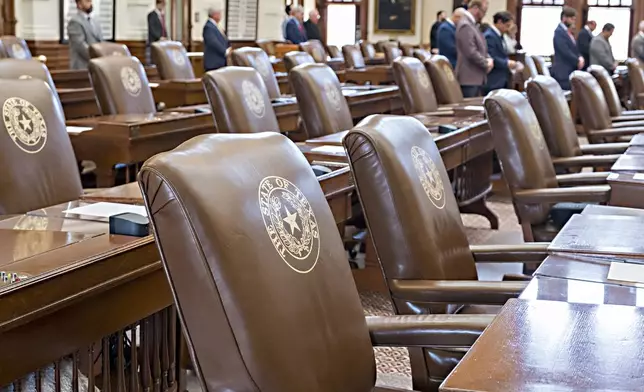
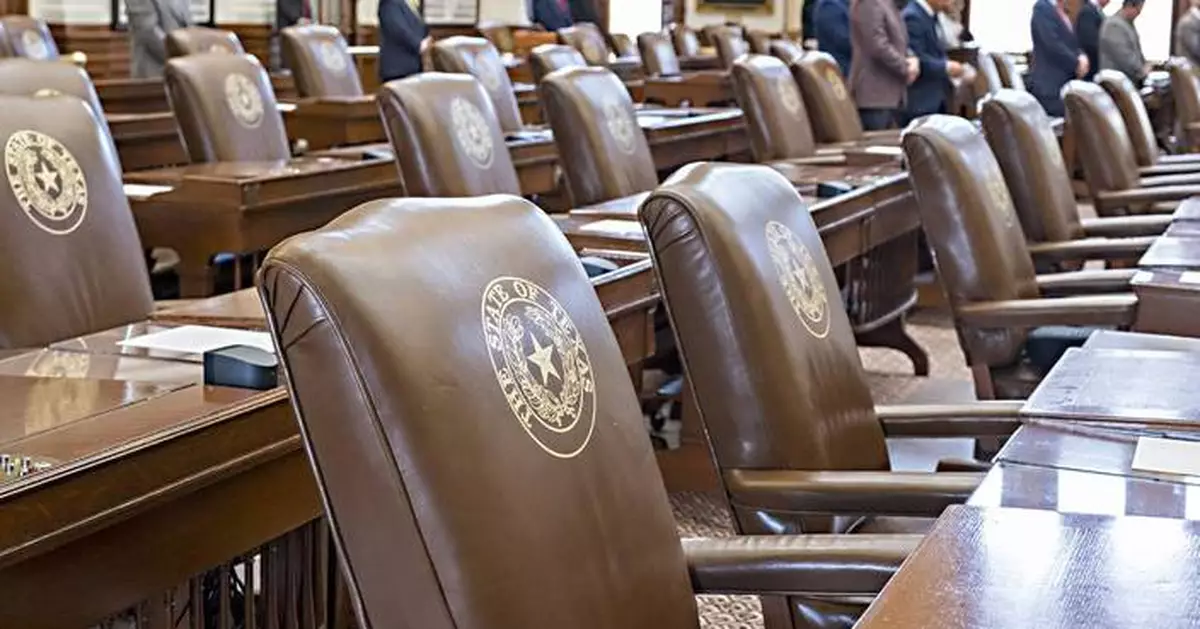
Empty chairs belonging to House Democrats remain empty during session convocation in protest to a redistricting map in the State Capitol, Tuesday, Aug. 5, 2025, in Austin, Texas. (AP Photo/Rodolfo Gonzalez)
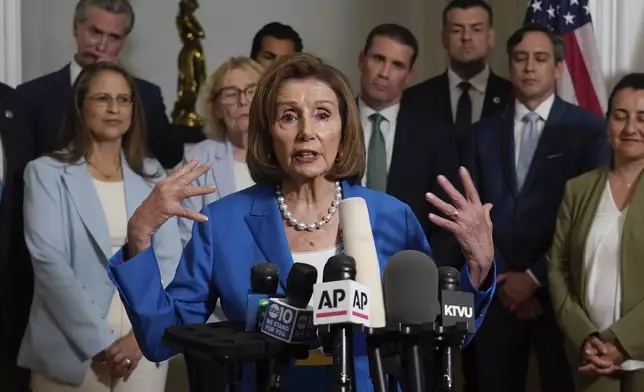
Rep. Nancy Pelosi speaks in support of the Texas Democratic lawmakers for their walk out to block a vote on a congressional redistricting plan sought by President Donald Trump, during a news conference in Sacramento, Calif., Friday Aug. 8, 2025. (AP Photo/Rich Pedroncelli)
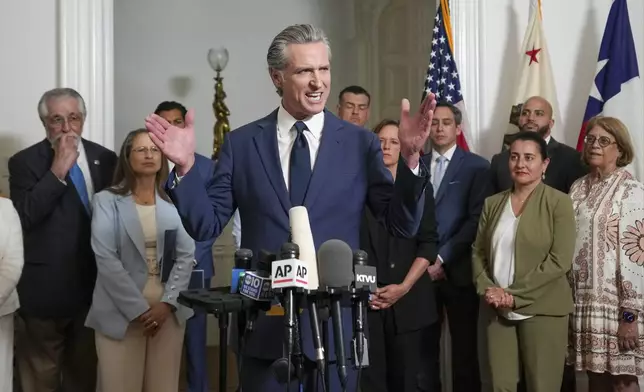
Accompanied by California and Texas lawmakers, California Gov. Gavin Newsom, center, discusses the push to schedule a special election to redraw California's Congressional voting districts, during a news conference in Sacramento, Calif., Friday Aug. 8, 2025. (AP Photo/Rich Pedroncelli)
Texas House Speaker, Dustin Borrow, R - Lubbock, adjourns the House after a quorum was not met at the State Capitol, Friday, Aug. 8, 2025, in Austin, Texas. (AP Photo/Rodolfo Gonzalez)
Texas House Speaker, Dustin Borrow, R - Lubbock, right, speaks with House Rep. Briscoe Cain, R - Deer Park, following a Republican Caucus meeting at the State Capitol, Friday, Aug. 8, 2025, in Austin, Texas. (AP Photo/Rodolfo Gonzalez)
Democratic Texas Rep. Gene Wu, center, surrounded by other Texas House Democrats and Democratic members of Congress, speaks during a press conference at the Democratic Party in Warrenville, Ill., Monday, Aug. 4, 2025. (AP Photo/Nam Y. Huh)
Empty chairs belonging to House Democrats remain empty during session convocation in protest to a redistricting map in the State Capitol, Tuesday, Aug. 5, 2025, in Austin, Texas. (AP Photo/Rodolfo Gonzalez)
California is moving toward a special election in November that Democrats hope could slash five Republican-held House seats in the liberal-leaning state, in direct response to the maneuvering in Texas.
“We are trying to defend democracy, as opposed to see it destroyed district by district,” Newsom said amid the crowd of lawmakers at the governor's mansion. “There are no rules for Donald Trump.”
Pelosi defended the Texas walkout, calling it “self-defense for our democracy.”
She said Democrats will not let Trump “pave over” free and fair elections in the country.
The appearance of nationally prominent Democrats Newsom — a potential 2028 presidential candidate — and Pelosi underscored the increasingly high stakes for a deeply divided Washington.
Earlier Friday the Texas House failed to meet a quorum for the third time this week as Democratic lawmakers continued to stay away from Austin.
Texas Republicans had warned they would escalate efforts to end the walkout if defiant Democrats do not return to the Capitol. But the lawmakers who bolted for points across the country Aug. 3 still were not back for Friday’s scheduled House floor vote.
Frustrated Republican leaders continued to ratchet up the pressure, including new and expanding efforts to try to remove Democratic lawmakers from office and seeking help from the FBI to assist state troopers trying to find them.
“We have all hands on deck, we are continuing to explore” options to force Democrats home, Speaker Dustin Burrows said after the chamber failed to reach a quorum. “We will keep pressing forward until the job is done. … Each one of you knows eventually you will come back.”
Texas Attorney General Ken Paxton sued former U.S. Rep. Beto O’Rourke, who ran unsuccessfully for governor and Senate, in state district court, alleging that his political group, Powered by People, improperly gave money to cover costs for the absent Democrats and continued to raise more for them.
In an initial win for Republicans, Paxton said Friday that he had been granted a temporary restraining order halting the spending and fundraising while the case continues.
In a response on the social platform X, O'Rourke wrote, “They want to make examples out of those who fight so that others won’t.”
The news conference in Sacramento came several days after Texas Democrats appeared in Illinois with Gov. J.B. Pritzker, who said he supported the walkout “because they don’t want to live in a country where the president rigs elections for his side. That’s not democracy.”
One of the lawmakers in California, Texas State Rep. Ann Johnson, alluded to the national implications of the dispute, saying, “We recognize this is not just about Texas. This is about ensuring that the voters get to determine the outcome of their next election.”
As California Democrats privately prepare a proposal for new House district lines that would go to voters, Assembly member Isaac Bryan said, “This is not a turn-the-other-cheek moment while they continue to send blow after blow to the foundations of democracy.”
The Texas House is scheduled to reconvene Monday, but the dozens of Democrats who left the state have shown no signs of buckling.
Texas Attorney General Ken Paxton filed a lawsuit directly to the all-Republican state Supreme Court on Friday seeking to have 13 of the Democratic lawmakers immediately removed from office, or at least given a 48-hour warning that they must return or have their offices declared vacated.
The lawsuit argues that the lawmakers have effectively “abandoned” their office and duties, and they were singled out for making public statements that they left for the purpose of blocking the vote and disrupting House business.
"Their out-of-state rebellion cannot go unchecked, and the business of Texas must go on,” Paxton said.
Paxton's lawsuit includes Rep. Gene Wu, chairman of the House Democratic Caucus, who also faces a similar lawsuit filed by Gov. Greg Abbott. Wu's legal team argued that the state constitution allows House members to be removed only by a two-thirds vote of the chamber, not the courts.
Wu said this week that quorum-breaking is not an abandonment of office but a legitimate form of dissent.
Abbott promised that he's willing to play the long game to get the bill passed.
“We have an agenda to pass priorities critical to Texans, and we will get it done. I’ll call special session after special session—no matter how long it takes—until the job is finished,” Abbott said on X.
The current special session ends Aug. 19, and the missing lawmakers already face mounting fines for every day they are gone and civil arrest warrants issued by the state House.
Trump wants five more seats out of Texas to potentially avoid a repeat of the 2018 midterms, when Democrats reclaimed the U.S. House and proceeded to thwart his agenda and impeach him twice.
The dynamics could embroil the 2026 midterm campaign in legislative and court battles testing Trump’s power over the Republican Party, Democrats’ ability to mount opposition and the durability of the U.S. system of federalism that balances power between Washington and the states.
Vertuno reported from Austin, and Blood from Los Angeles. Associated Press writers Nadia Lathan in Austin, Texas, and Kate Payne in Tallahassee, Florida, contributed. Payne and Lathan are corps members for The Associated Press/Report for America Statehouse News Initiative. Report for America is a nonprofit national service program that places journalists in local newsrooms to report on undercovered issues.
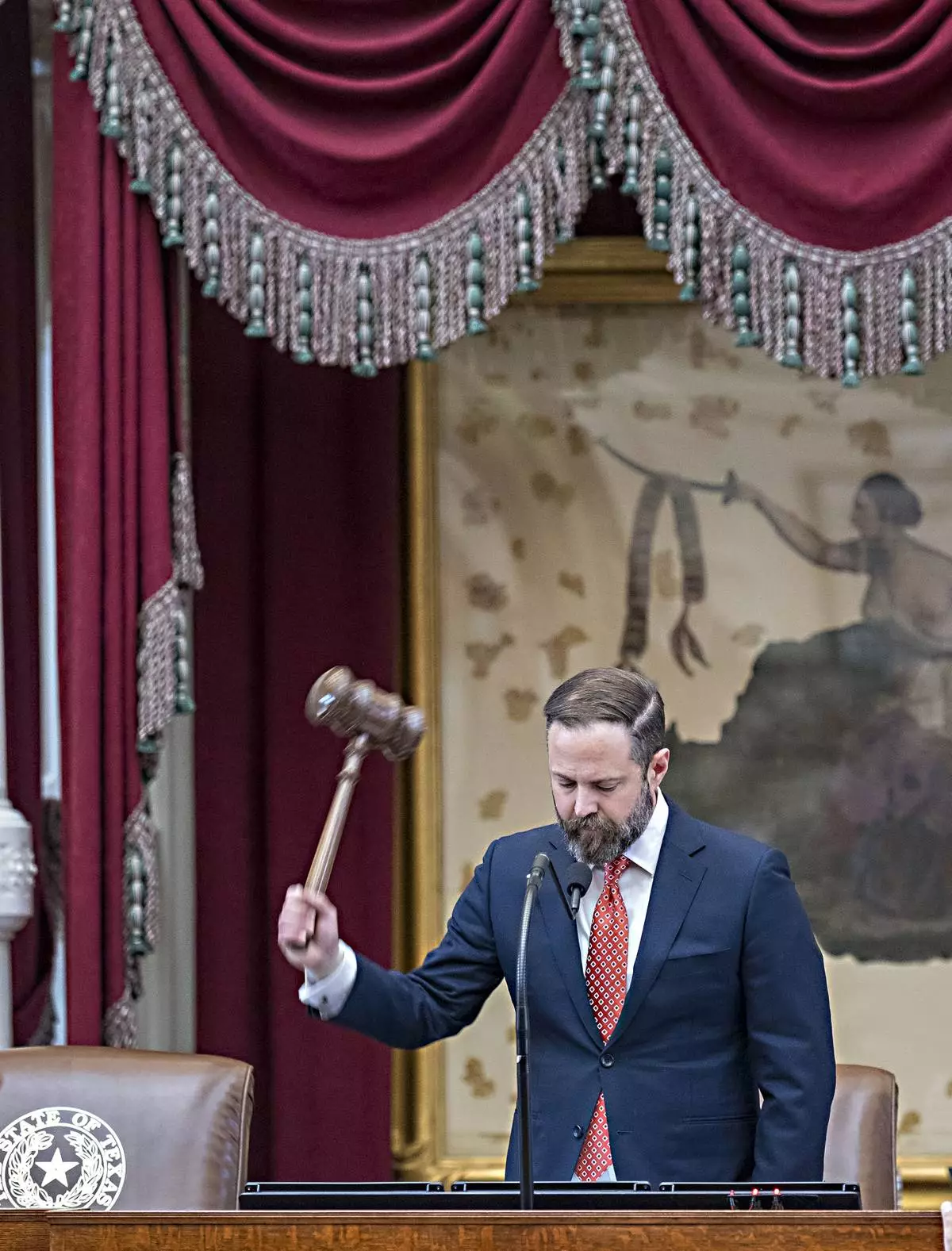
Texas House Speaker, Dustin Borrow, R - Lubbock, adjourns the House after a quorum was not met at the State Capitol, Friday, Aug. 8, 2025, in Austin, Texas. (AP Photo/Rodolfo Gonzalez)
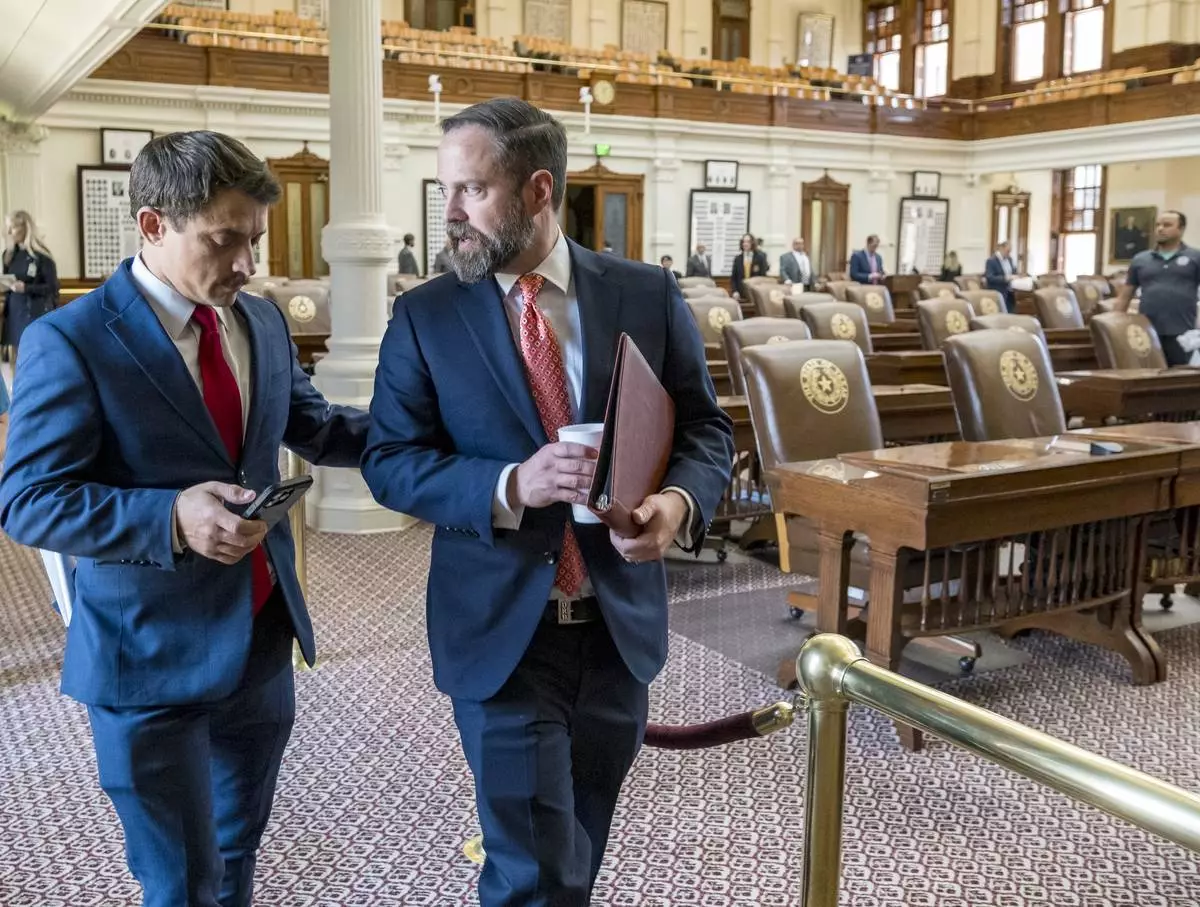
Texas House Speaker, Dustin Borrow, R - Lubbock, right, speaks with House Rep. Briscoe Cain, R - Deer Park, following a Republican Caucus meeting at the State Capitol, Friday, Aug. 8, 2025, in Austin, Texas. (AP Photo/Rodolfo Gonzalez)
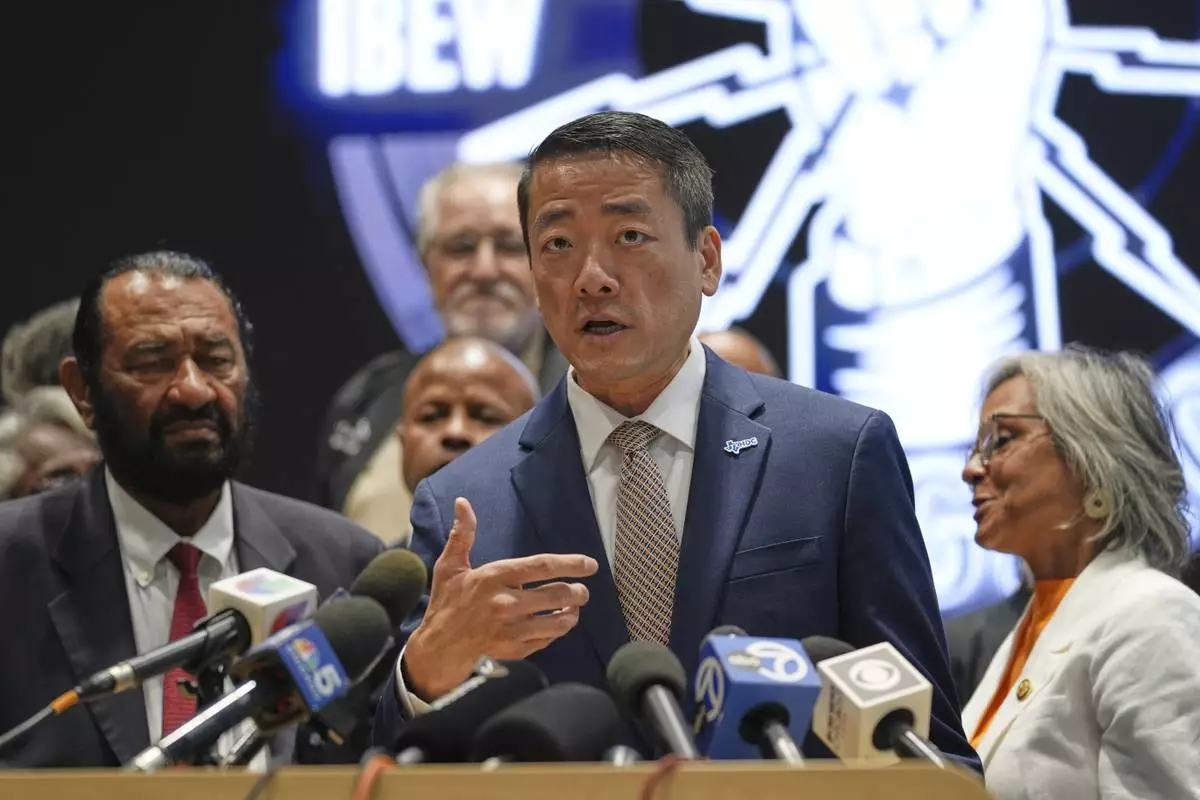
Democratic Texas Rep. Gene Wu, center, surrounded by other Texas House Democrats and Democratic members of Congress, speaks during a press conference at the Democratic Party in Warrenville, Ill., Monday, Aug. 4, 2025. (AP Photo/Nam Y. Huh)
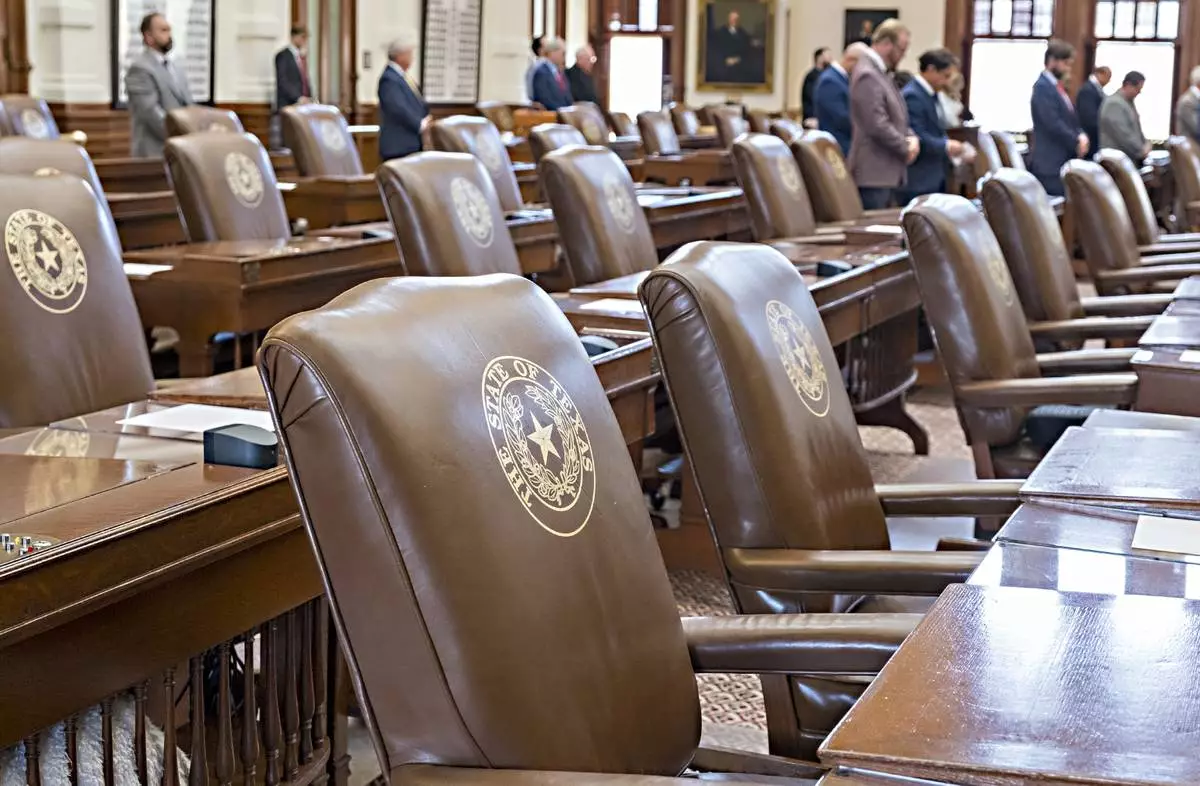
Empty chairs belonging to House Democrats remain empty during session convocation in protest to a redistricting map in the State Capitol, Tuesday, Aug. 5, 2025, in Austin, Texas. (AP Photo/Rodolfo Gonzalez)
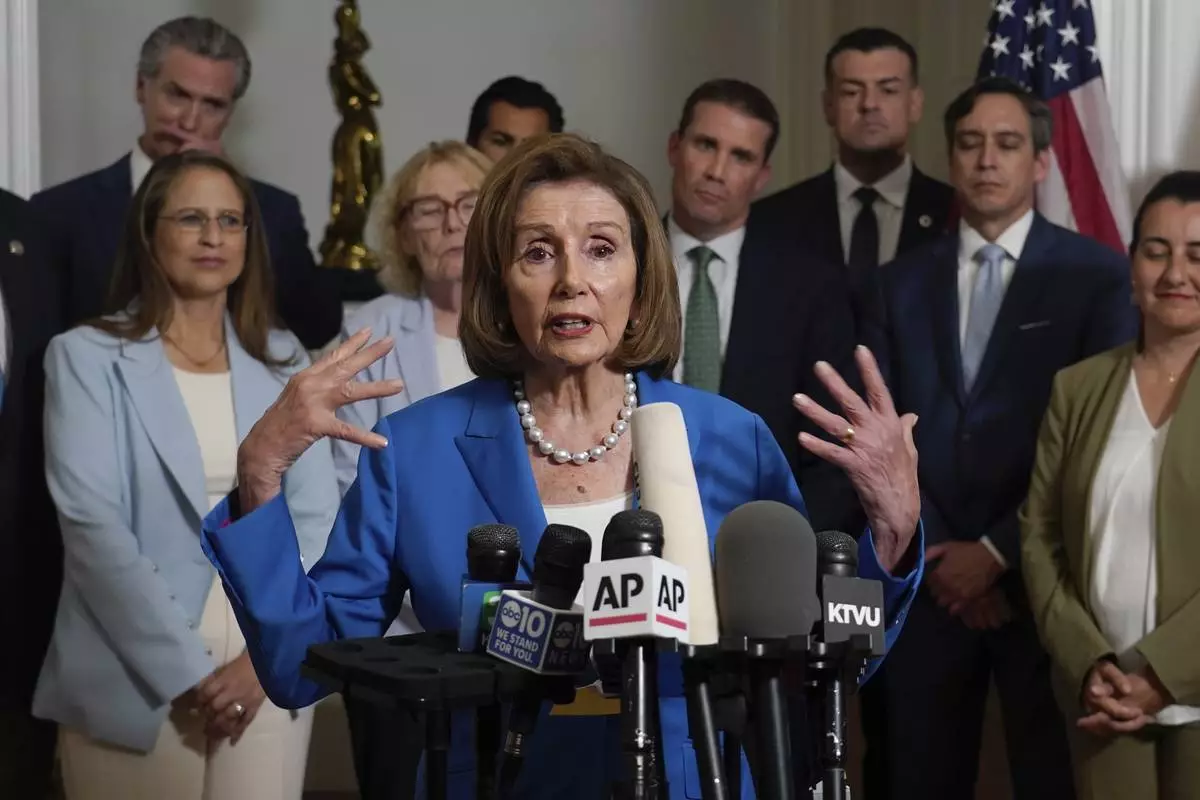
Rep. Nancy Pelosi speaks in support of the Texas Democratic lawmakers for their walk out to block a vote on a congressional redistricting plan sought by President Donald Trump, during a news conference in Sacramento, Calif., Friday Aug. 8, 2025. (AP Photo/Rich Pedroncelli)
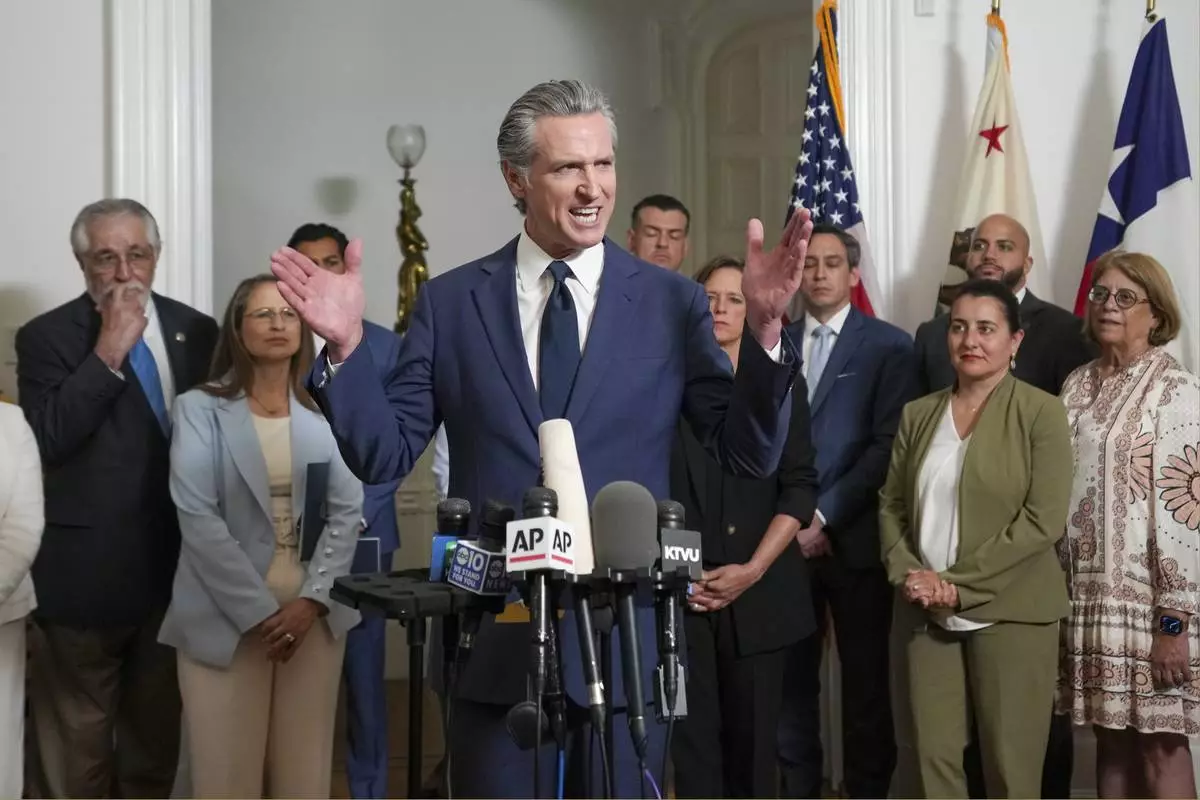
Accompanied by California and Texas lawmakers, California Gov. Gavin Newsom, center, discusses the push to schedule a special election to redraw California's Congressional voting districts, during a news conference in Sacramento, Calif., Friday Aug. 8, 2025. (AP Photo/Rich Pedroncelli)
Texas House Speaker, Dustin Borrow, R - Lubbock, adjourns the House after a quorum was not met at the State Capitol, Friday, Aug. 8, 2025, in Austin, Texas. (AP Photo/Rodolfo Gonzalez)
Texas House Speaker, Dustin Borrow, R - Lubbock, right, speaks with House Rep. Briscoe Cain, R - Deer Park, following a Republican Caucus meeting at the State Capitol, Friday, Aug. 8, 2025, in Austin, Texas. (AP Photo/Rodolfo Gonzalez)
Democratic Texas Rep. Gene Wu, center, surrounded by other Texas House Democrats and Democratic members of Congress, speaks during a press conference at the Democratic Party in Warrenville, Ill., Monday, Aug. 4, 2025. (AP Photo/Nam Y. Huh)
Empty chairs belonging to House Democrats remain empty during session convocation in protest to a redistricting map in the State Capitol, Tuesday, Aug. 5, 2025, in Austin, Texas. (AP Photo/Rodolfo Gonzalez)