Quzhou City, a short drama hub in east China's Zhejiang Province, is propelling the industrialization of the country's short drama industry and accelerating its global expansion through a specialized service model focused on fast shooting, trending content, and exporting Chinese short dramas with high-end production technologies.
Quzhou's short drama industry has rapidly expanded in recent years, with Quzhou Meigao Cultural Communication Company producing dozens of short dramas in the past year, all venturing into international markets.
Established in June last year, the Meigao Short Drama Super Factory boasts a floor space of 66,000 square meters and accommodates over 200 meticulously designed sets, allowing for the simultaneous production of 30 projects.
Sun Yu, a short drama producer who makes short dramas for the North American market, is currently shooting two series at the factory.
"I used to shoot mostly on location in Los Angeles, but here the costs are much lower -- studio fees are at least half the price. The shooting schedule for a 60-episode short drama can be reduced from nine or 10 days to less than a week. Everything is right next to the sets, including on-site accommodation, which makes production much more convenient," Sun said.
As China's largest one-stop production hub for short dramas, the factory can complete an episode in just five hours. This industrial-scale efficiency is propelling China's thriving short drama industry towards global expansion.
Its comprehensive one-stop service model, encompassing script development, filming, post-production, and distribution, has demonstrated remarkable effectiveness.
"We provide tailored production packages. Meigao's 200 plus skilled staff handle every step: scriptwriting, directing, filming, and platform distribution," said Dai Wenxue, general manager of the Quzhou Chaoqilin Holding Group, investor of the Quzhou Meigao Cultural Communication Company.
Moreover, the Versatile AI Virtual Film Base in Quzhou, just a five-hour drive from the factory, showcases elaborate large-scale sets -- from natural disasters to epic war scenes -- that materialize entirely within virtual environments displayed on a huge LED screen.
Scene transitions can be executed in mere minutes, resulting in cost savings of 20 to 30 percent. Virtual production technology is unlocking unprecedented creative potential, breathing life into numerous imaginative concepts previously constrained by physical limitations or budgetary constraints.
"It is 5,000 square meters and features a 270-degree curved screen, making it the largest of its kind in the world," said Shen Chenqi, general manager of the film base.

Zhejiang's short dramas set sail for global markets through fast-production model
A video featuring a former member of Unit 731, a notorious Japanese germ-warfare unit during World War II (WWII), was released on Thursday in northeast China's Harbin, revealing details of how the unit used meteorological data to conduct horrific bacterial experiments on human beings.
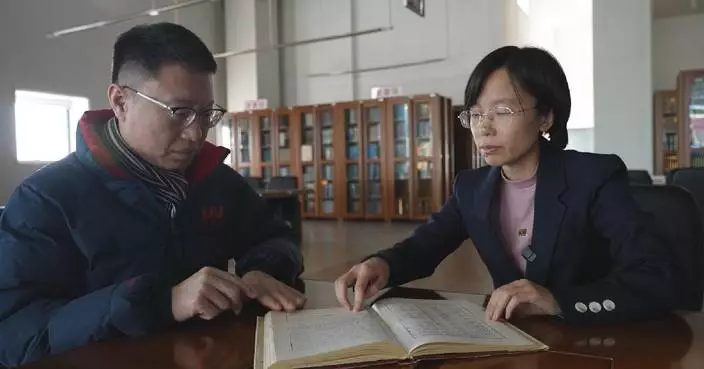
The video was released by the Exhibition Hall of Evidence of Crimes Committed by Unit 731 of the Japanese Imperial Army, in which former Unit 731 member Tsuruo Nishijima detailed how the unit used meteorological data to carry out a bacterial dispersal experiment.
The video was recorded in 1997 by Japanese scholar Fuyuko Nishisato and donated to the exhibition hall in 2019, according to the hall, which was built on the former site of the headquarters of Unit 731 in Harbin, the capital city of Heilongjiang Province.
Jin Shicheng, director of the Department of Publicity, Education and Exhibition of the exhibition hall, said that Nishijima joined Unit 731 in October 1938 and served in the unit's meteorological squad. The squad was not a simple observation section but rather an auxiliary force supporting the unit's field human experiments by measuring wind direction, wind speed, and other conditions to ensure optimal experimental results, according to Jin.
Nishijima confirmed in the footage that "the meteorological squad had to be present at every field experiment." He testified to the "rainfall experiments" conducted by Unit 731, which involved aircraft releasing bacterial agents at extremely low altitudes.
At a field-testing site in Anda City, Heilongjiang, Unit 731 aircraft descended to about 50 meters above the ground. They sprayed bacterial culture liquids onto "maruta" -- human test subjects -- who were tied to wooden stakes. Each experiment involved about 30 people, spaced roughly 5 meters apart. After the experiments, the victims were loaded into sealed trucks and transported back to the unit, where their symptoms and disease progression were recorded over a period of several days.
"Unit 731's bacterial weapons were dropped by aircraft from a height of 50 meters in the open air. Therefore, the meteorological squad needed to observe wind direction and speed, which directly affected the precision and accuracy of the bacterial weapons deployment," said Jin.
Nishijima recounted the harrowing experience of the human test subjects.
"They were fully aware that inhaling the substances would certainly lead to death, so they closed their eyes and held their breath to avoid breathing them in. Their resistance prevented the experiment from proceeding. To compel them to comply, they were forced at gunpoint to open their mouths and lift their heads," said Nishijima.
These experiments, disguised as "scientific research," were in fact systematic tests of biological warfare weapons conducted by the Japanese military. The data generated from these inhumane activities became "research findings" shared among the Japanese army medical school, the medical community, and the military at large.
"At that time, the entire Japanese medical community tacitly approved, encouraged, and even participated in the criminal acts of Unit 731. The unit comprised members from Japan's medical and academic sectors who served the Japanese war of aggression against China. Thus, Unit 731 was not just a military unit but represented an organized and systematic criminal enterprise operating from the top down," said Jin.
Unit 731 was a top-secret biological and chemical warfare research base established in Harbin as the nerve center for Japanese biological warfare in China and Southeast Asia during WWII.
At least 3,000 people were used for human experiments by Unit 731, and Japan's biological weapons killed more than 300,000 people in China.

Video offers details of Japan's germ-warfare crimes in northeast China