SHENZHEN, China, Aug. 11, 2025 /PRNewswire/ -- EngineAI, an innovation practitioner in humanoid robotics, showcased its latest advancements and a range of cutting-edge products at the World Robot Conference 2025, held in Yizhuang, Beijing, on August 8, highlighting its efforts in the field of robotics innovation.
Committed to driving innovation through in-house research and development, as well as fostering an open-source ecosystem, EngineAI is focused on accelerating the commercialization of robotics technologies and promoting cross-industry collaboration. During the event, the company engaged in high-level discussions with global counterparts to chart a course for future advancements. EngineAI's contributions are helping to build an open and collaborative global robotics ecosystem, reinforcing its mission to enhance innovation capabilities and strengthen its competitive position in the global robotics market.
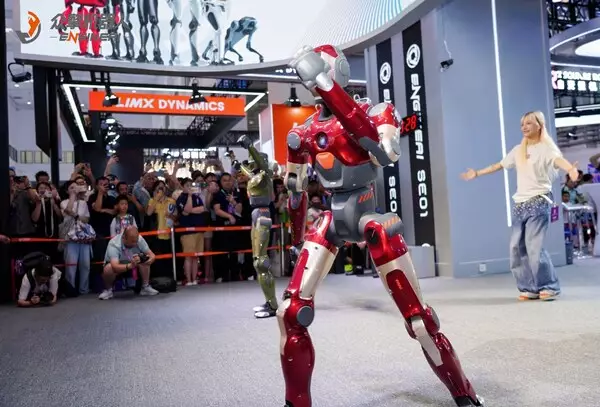
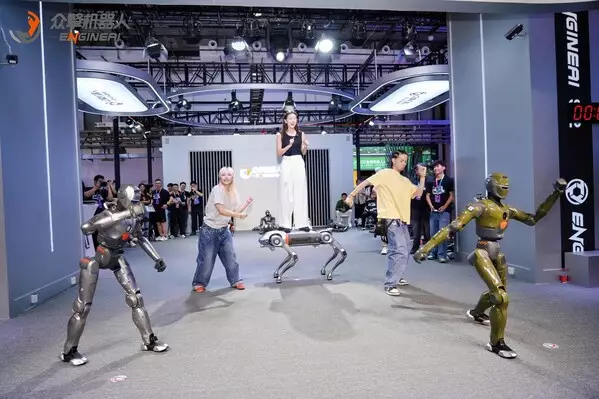
The spotlight was on EngineAI's PM01 humanoid robot, which demonstrated impressive dexterity with lifelike movements, including autonomous fall recovery. Its ability to navigate complex environments showcased its adaptability, while its precise sitting and resting motions demonstrated its integration into everyday scenarios. In a live showcase, the PM01 also impressed audiences with its high-speed running ability, exhibiting remarkable dynamic performance. Enhanced by advanced algorithms, its gait was notably more fluid and natural, making it a standout feature of the expo.
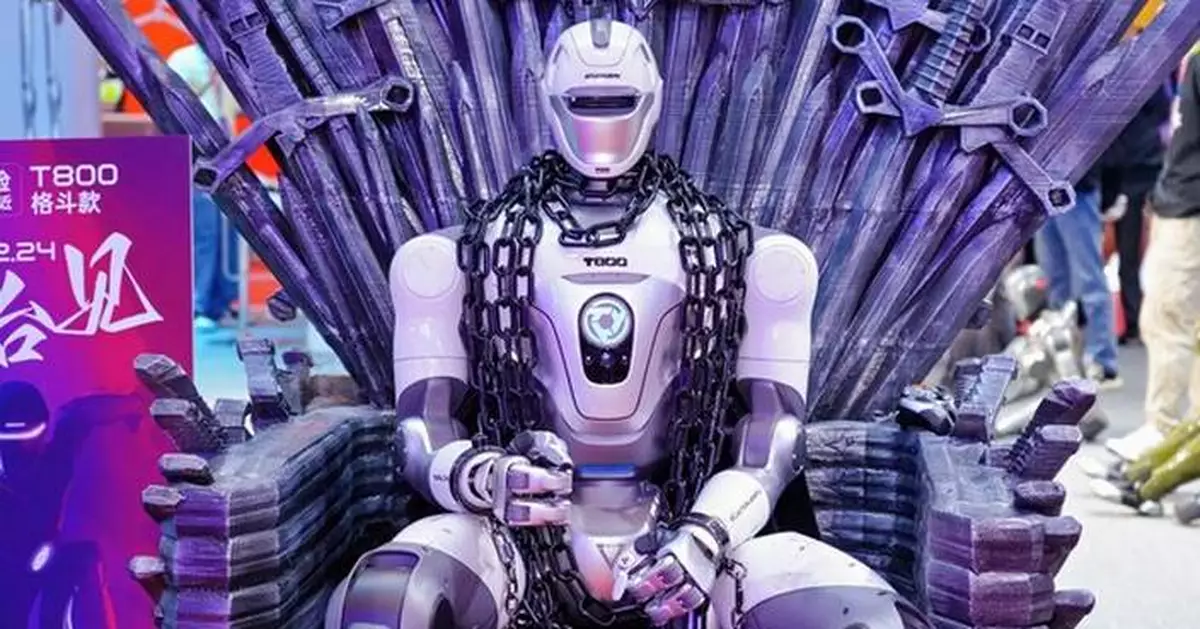
Making its global debut, the T800, EngineAI's first heavy-duty, full-sized humanoid robot, stole the show. Standing at 1.85 meters (6 feet 1 inch) tall and weighing 85 kg (187 pounds), the T800 is built with 41 high-degree-of-freedom joints, a solid-state battery, and an aluminum alloy exoskeleton, offering robust structural integrity for heavy-load tasks. It also boasts enhanced endurance for demanding, high-load, and dynamic environments.
The T800 is equipped with a multi-sensor fusion system, which enables real-time environmental data processing and rapid decision-making. This integration boosts operational efficiency and safety, setting a new standard for humanoid robotics in industrial applications.
The robot is scheduled to compete in the EngineAI Robot Free Combat Tournament: "Mecha King" on December 24, 2025.
In addition, EngineAI teased the upcoming SA02, a lightweight humanoid robot designed for young enthusiasts. With a starting price of US 5,300, SA02 promises to make humanoid robotics more accessible to the next generation of engineers and robotics fans.
EngineAI also debuted the JS01, a high-mobility quadrupedal robot built for rugged terrains. Featuring bionic mechanics, adaptive shock-absorbing joints, LiDAR, and depth cameras, the JS01 can traverse slippery and uneven surfaces with ease. Its terrain-sensing algorithms allow it to adjust its gait in real time, ensuring stable all-terrain performance. The modular design enables customizable add-ons, making it ideal for industrial inspections, emergency rescue, and logistics operations.
Looking ahead, EngineAI remains committed to an innovation-driven strategy, advancing mission-critical robotics with faster development cycles and stronger performance in extreme environments. By uniting industry, academia, and research, the company is scaling embodied AI and expanding robotics into manufacturing, daily life, and beyond. With open partnerships and global collaboration, EngineAI aims to shape the next wave of smart transformation.
** The press release content is from PR Newswire. Bastille Post is not involved in its creation. **
EngineAI Unveils Groundbreaking Innovations at World Robot Conference 2025
EngineAI Unveils Groundbreaking Innovations at World Robot Conference 2025

EngineAI Unveils Groundbreaking Innovations at World Robot Conference 2025
|
Agreement Calls for Over 100,000 tonnes of Carbon Dioxide Removal (CDR) across 3 Years
GURUGRAM, India, Jan. 15, 2026 /PRNewswire/ -- Varaha, a leading developer of carbon dioxide removal (CDR) projects with smallholder farmers across Asia, today announced a major offtake agreement with Microsoft for biochar carbon removal in India.
Varaha will develop 18 industrial gasification reactors that will operate for 15 years, with a total projected removal volume exceeding 2 million tonnes of CO₂ over the project's lifetime.
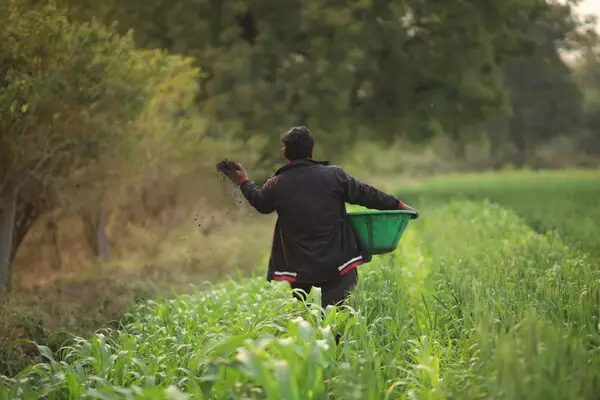
The project sources cotton stalks from smallholder farms in Maharashtra, India for use as the feedstock for biochar production. After harvest, these stalks are treated as waste biomass, and open-field burning is a common practice across the region's cotton belt. This project provides an alternative use for the stalks, converting them into biochar through Varaha's biomass gasification facilities and sequestering biogenic carbon for centuries.
Delivering Local Impact
Varaha's biochar project also delivers measurable benefits for farmers and communities:
- Improvement in Air Quality: The project mitigates the widespread burning of cotton crop residue, significantly reducing PM 2.5 pollutants that contribute to poor air quality. By providing an economically viable alternative to field burning, the initiative tackles a major source of seasonal air pollution.
- Promotion of Regenerative Agriculture: Farmers participating in the program adopt regenerative practices like crop residue mulching and biochar application to soils, improving soil health, water retention, and long-term agricultural productivity.
- Lifting Farmer Livelihoods: The program directly enhances the livelihoods of thousands of smallholder farmers, who receive payment both for contributing agricultural biomass and for implementing crop residue incorporation practices.
"This agreement demonstrates that high-integrity carbon removal can drive transformative co-benefits for communities and ecosystems," said Madhur Jain, Varaha CEO. "We're not just removing carbon—we're creating economic incentives for farmers to mitigate open burning of crop residues."
The project's first reactor will operate alongside Varaha's 52-acre cotton research farm in Maharashtra, where Varaha works directly with farmers to test sustainable practices, including soil application of biochar, under real-world conditions. With up to 18 total reactors funded across India's cotton belt through Microsoft's commitment, the focus remains clear: scaling quickly while putting farmers first.
Setting New Standards for Asian Carbon Markets
The agreement signals growing recognition of the region's potential for high-quality carbon removal projects. Biochar offers permanent carbon storage on geological timescales while supporting agricultural systems, making it one of the most promising pathways for durable carbon dioxide removal.
"This offtake agreement broadens the diversity of Microsoft's carbon removal portfolio with Varaha's biochar project design that is both scalable and durable. It represents a step forward in scaling biochar CDR growth in Asia and advancing co-benefits for farmers—improved soils, cleaner air, and shared economic opportunity," said Phil Goodman, program director, CDR at Microsoft.
The credits generated through the Varaha program meet rigorous standards for measurement, reporting, and verification, ensuring that each tonne represents genuine, permanent carbon removal.
About Varaha
Varaha is a leading developer of carbon dioxide removal (CDR) projects in Asia, with a mission of scaling smallholder farmer-led climate solutions to remove carbon from the atmosphere and strengthen rural livelihoods. Specializing in regenerative agriculture, agroforestry, biochar, and enhanced rock weathering projects across South Asia, Varaha has pioneered a technology- and science-driven approach to carbon project development since its founding in 2022. Varaha is headquartered in Gurugram, India, and operates 20 carbon projects across India, Nepal, and Bangladesh.
Agreement Calls for Over 100,000 tonnes of Carbon Dioxide Removal (CDR) across 3 Years
GURUGRAM, India, Jan. 15, 2026 /PRNewswire/ -- Varaha, a leading developer of carbon dioxide removal (CDR) projects with smallholder farmers across Asia, today announced a major offtake agreement with Microsoft for biochar carbon removal in India.
Varaha will develop 18 industrial gasification reactors that will operate for 15 years, with a total projected removal volume exceeding 2 million tonnes of CO₂ over the project's lifetime.
The project sources cotton stalks from smallholder farms in Maharashtra, India for use as the feedstock for biochar production. After harvest, these stalks are treated as waste biomass, and open-field burning is a common practice across the region's cotton belt. This project provides an alternative use for the stalks, converting them into biochar through Varaha's biomass gasification facilities and sequestering biogenic carbon for centuries.
Delivering Local Impact
Varaha's biochar project also delivers measurable benefits for farmers and communities:
- Improvement in Air Quality: The project mitigates the widespread burning of cotton crop residue, significantly reducing PM 2.5 pollutants that contribute to poor air quality. By providing an economically viable alternative to field burning, the initiative tackles a major source of seasonal air pollution.
- Promotion of Regenerative Agriculture: Farmers participating in the program adopt regenerative practices like crop residue mulching and biochar application to soils, improving soil health, water retention, and long-term agricultural productivity.
- Lifting Farmer Livelihoods: The program directly enhances the livelihoods of thousands of smallholder farmers, who receive payment both for contributing agricultural biomass and for implementing crop residue incorporation practices.
"This agreement demonstrates that high-integrity carbon removal can drive transformative co-benefits for communities and ecosystems," said Madhur Jain, Varaha CEO. "We're not just removing carbon—we're creating economic incentives for farmers to mitigate open burning of crop residues."
The project's first reactor will operate alongside Varaha's 52-acre cotton research farm in Maharashtra, where Varaha works directly with farmers to test sustainable practices, including soil application of biochar, under real-world conditions. With up to 18 total reactors funded across India's cotton belt through Microsoft's commitment, the focus remains clear: scaling quickly while putting farmers first.
Setting New Standards for Asian Carbon Markets
The agreement signals growing recognition of the region's potential for high-quality carbon removal projects. Biochar offers permanent carbon storage on geological timescales while supporting agricultural systems, making it one of the most promising pathways for durable carbon dioxide removal.
"This offtake agreement broadens the diversity of Microsoft's carbon removal portfolio with Varaha's biochar project design that is both scalable and durable. It represents a step forward in scaling biochar CDR growth in Asia and advancing co-benefits for farmers—improved soils, cleaner air, and shared economic opportunity," said Phil Goodman, program director, CDR at Microsoft.
The credits generated through the Varaha program meet rigorous standards for measurement, reporting, and verification, ensuring that each tonne represents genuine, permanent carbon removal.
About Varaha
Varaha is a leading developer of carbon dioxide removal (CDR) projects in Asia, with a mission of scaling smallholder farmer-led climate solutions to remove carbon from the atmosphere and strengthen rural livelihoods. Specializing in regenerative agriculture, agroforestry, biochar, and enhanced rock weathering projects across South Asia, Varaha has pioneered a technology- and science-driven approach to carbon project development since its founding in 2022. Varaha is headquartered in Gurugram, India, and operates 20 carbon projects across India, Nepal, and Bangladesh.
** The press release content is from PR Newswire. Bastille Post is not involved in its creation. **
Varaha Signs Carbon Removal Agreement with Microsoft