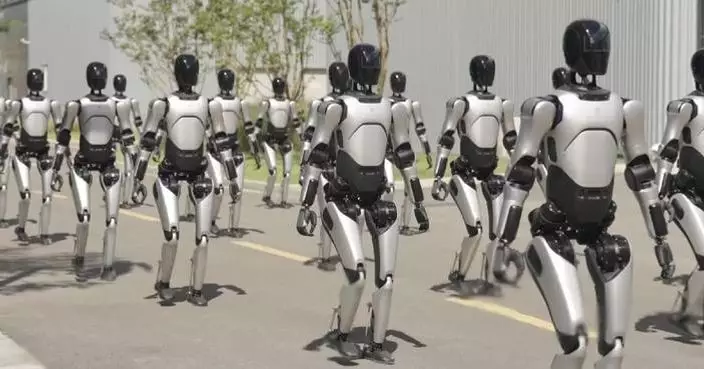
Industry insiders are divided on whether humanoid robots will soon become common household helpers or remain confined to specific industrial and service roles in the future, as differing views emerged at the ongoing World Robot Conference (WRC) in Beijing.
The five-day event, which kicked off in the Chinese capital on Friday, is featuring a series of forums, exhibitions, competitions, and networking events, with over 200 robotics companies from around the world showcasing their latest innovations.
Given current technological trends, many anticipate that robots could one day be found in every home, working alongside family members to complete everyday tasks. Tan Seng Chuan, president-elect of the World Federation of Engineering Organizations (WFEO), noted that lots of households already have some form of cleaning robot, and believes that robots will be even more commonplace when it comes to more industrial uses.
However, Alexander Verl, chairman of Research Committee of International Federation of Robotics (IFR), pointed out that humanoid robots are not suitable for all factory settings, due to their restrictive technical and physical limitations. However, he did acknowledge that some sectors could benefit greatly from the assistance they can provide.
"There will not be many humanoids working in the car industry, no, because they are too weak. They cannot carry 100 kilograms; they can carry 20 [kilos] at most. But there will be other areas that will benefit from humanoids, where we have a labor shortage like, for example, for elderly care," said Verl.
The conference saw the release of a new report detailing the top 10 trends of embodied intelligent robots, which focused on fields such as cognition, decision-making and safety.
Furthermore, Beijing's Yizhuang District announced a new two-year program targeting embodied intelligence, marking the latest step in China's ongoing commitment to developing robotics technology to further foster new quality productive forces in the sci-tech sector and promote more large-scale social applications.
The program plans to roll out nearly 10,000 embodied robots -- valued at nearly 5 billion yuan (some 696 million U.S. dollars) -- to meet demand, with more than 1,000 of these units being humanoid robots.
Amid this fast-paced growth in an ever-changing industry, experts caution that such large-scale deployment will also raise new ethical and safety challenges that be addressed before these robots are fully utilized in society.
"I think the challenge is more on the ethics aspect. AI is quite commonly used and there's a lot of scams around. So how [do] you produce a guideline to be more ethical using the robots, so they [can be] used in the right way," said Tan.
"[If], for example, a humanoid loses power and falls over – it can harm you. And to prevent that, the law says they only can move slowly as long as there are people nearby. So to work on that, to be able to increase the productivity of humanoids while still collaborating with people, that's an ongoing thing," Verl said.
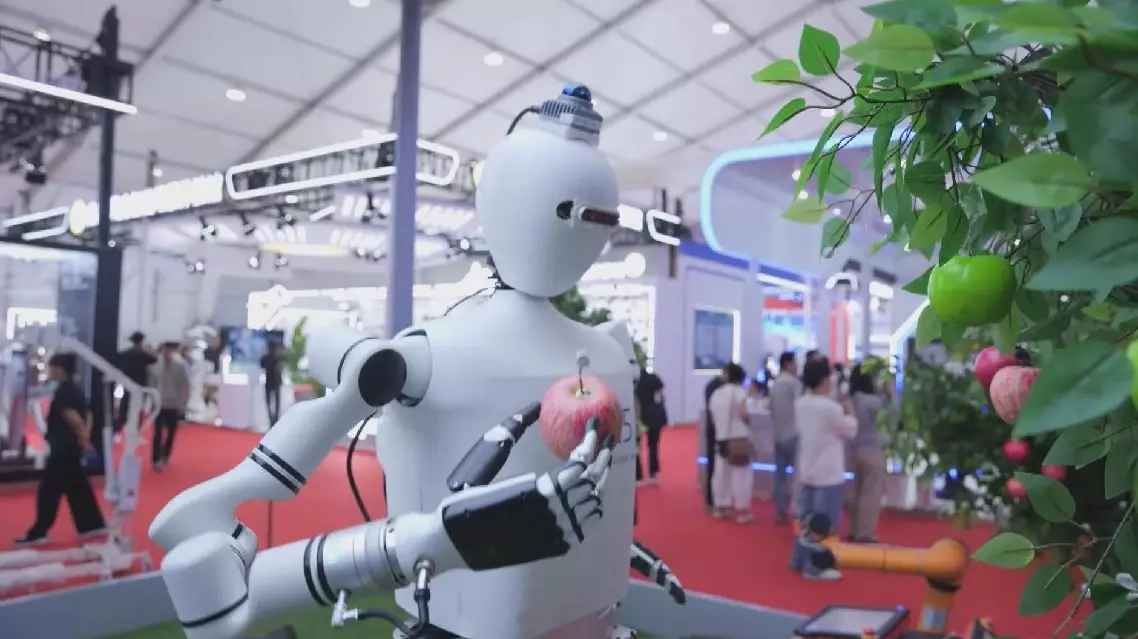
Industry insiders remain divided on future role of humanoid robots