A major undersea power cable project has successfully linked Greece's island of Crete to the mainland's electricity grid, marking a transformative milestone in the Mediterranean region's clean energy transition and a significant example of energy cooperation between Europe and China.
The Ariadne Interconnection, backed by China's State Grid, is already delivering results and helping the European country reach its climate goals.
Spanning 335 kilometers across the Aegean Sea and diving over 1,000 meters deep, it ranks among the deepest high-voltage direct current (HVDC) power cables in the world.
The cable links Heraklion, Crete's largest city and administrative capital, with Greek capital Athens, enabling the transmission of up to one gigawatt of electricity. This critical infrastructure aims to phase out Crete's reliance on outdated, oil-fired power plants.
By switching to cleaner, more stable power from the mainland, the project is expected to cut over 400,000 tonnes of carbon dioxide emissions annually and save millions of euros in fuel costs.
"This is a historic project. It protects our environment, supports tourism, and brings real energy security to Crete -- something we've waited decades for," said Stavros Arnaoutakis, governor of Grete.
Funded by Greece's Independent Power Transmission Operator (IPTO) and 20 percent owned by China's State Grid, the 1.1-billion-euro project is already live in trial mode and expected to begin full commercial operation this autumn.
The successful implementation of the project highlights the growing role of international partnerships in advancing sustainable infrastructure.
"State Grid will keep promoting openness and cooperation and work with partners like IPTO to encourage professional exchange, share expertise, and advance common goals such as energy security and low-carbon development," said Qi Qu, a senior executive from China's State Grid International Development Company.
Each line of the project has already passed full-load tests. Engineers say the system is ready to deliver clean, reliable power throughout the year, even during Crete's peak tourism season.
"This is state-of-the-art HVDC technology. It's stable, efficient, and gives us room to expand renewables on the island," said Christangelos Stamatelos, project director at IPTO.
The project aligns with the EU's 2030 climate targets, making Crete a critical link in Europe's energy future.
"Crete's clean energy potential is enormous. With this link, we can finally tap into it at scale and send it where it's needed," said Stamatelos.
With abundant wind and solar resources, Crete could eventually feed up to 2.5 gigawatts of locally generated renewable power back into the mainland grid of Greece, transforming the island from an energy consumer into a net exporter.
"Crete is no longer on the sidelines. We are becoming an energy hub for the Mediterranean -- supporting both Greece and Europe's clean future," said Arnaoutakis.
As Europe accelerates its energy transition, the Ariadne Interconnection stands as a symbol of cross-continental partnership, linking continents, economies, and clean energy visions beneath the waves.
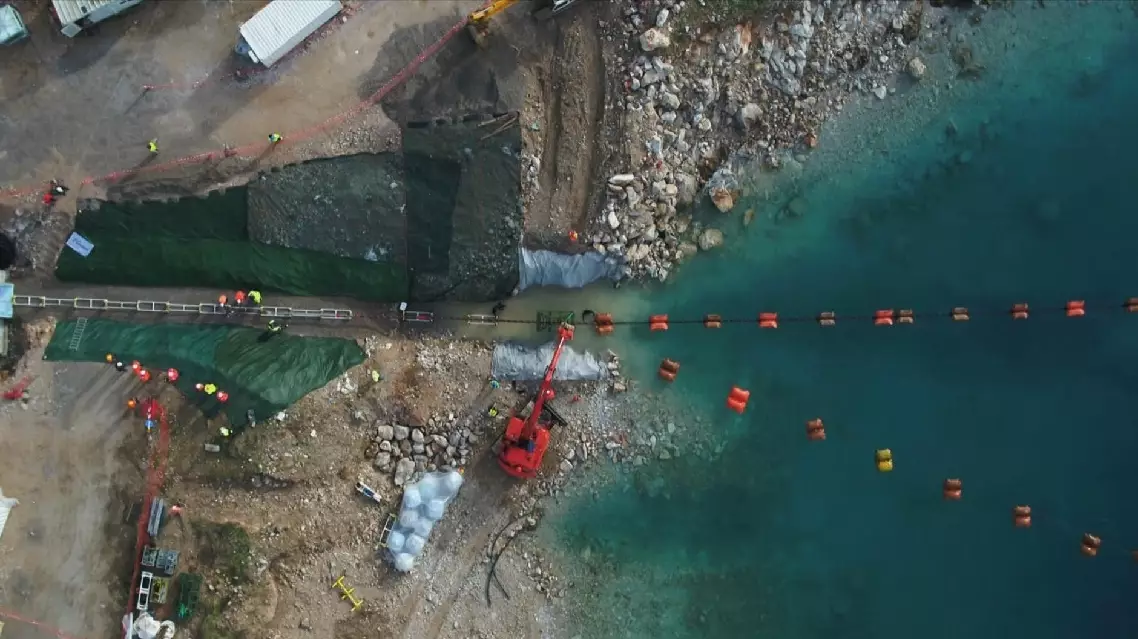
China-backed undersea cable powers clean energy future for Greece's Crete island