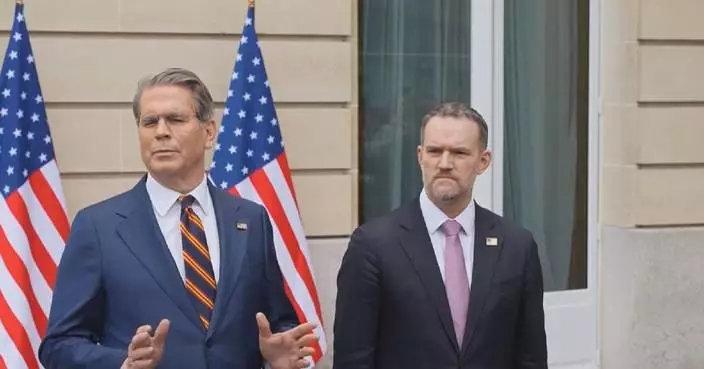
The Chinese and U.S. delegations held candid, in-depth and constructive exchanges and consultations in Paris from Sunday to Monday on economic and trade issues of mutual concern, including tariff arrangements, promoting bilateral trade and investment, and maintaining existing consultation consensus.
During the talks, which are guided by the important consensus reached by the two heads of state, the two sides reached some new consensus and agreed to continue consultations.
Under the strategic guidance of the important common understandings between the two heads of state, and following five rounds of economic and trade consultations last year, China and the United States have reached a series of outcomes in the economic and trade area, said Chinese Vice Premier He Lifeng during the new round of China-U.S. economic and trade talks with U.S. lead person Treasury Secretary Scott Bessent and U.S. Trade Representative Jamieson Greer.
These outcomes have injected greater certainty and stability into bilateral economic and trade relations as well as the global economy, He said.
Recently, the U.S. Supreme Court ruled that the tariffs imposed by the U.S. government under the International Emergency Economic Powers Act were unlawful, said He, noting that subsequently, the U.S. side levied an additional 10 percent import surcharge on all trading partners under Section 122 of the Trade Act of 1974, and successively introduced a series of negative measures concerning China, including the Section 301 investigations, corporate sanctions and market access restrictions.
China has consistently opposed the unilateral tariffs imposed by the United States, He said, urging Washington to completely remove such tariffs and other restrictive measures.
China will take necessary steps to firmly safeguard its legitimate rights and interests, He added.
China expects the United States to move in the same direction, follow through on the important consensus reached by the two heads of state, expand areas of cooperation and reduce problems, so as to promote the healthy, stable and sustainable development of China-U.S. economic and trade relations, He said.
The U.S. side said that a stable China-U.S. economic and trade relationship is of great importance to both countries and the world, and helps promote global economic growth, supply chain security and financial stability. Both sides should reduce frictions, avoid escalation of the situation, and resolve differences through consultation.
The two sides agreed to study the establishment of a cooperation mechanism to promote bilateral trade and investment, continue to make good use of the China-U.S. economic and trade consultation mechanism, strengthen dialogue and communication, properly manage differences, expand practical cooperation, and promote the sustained, stable and sound development of bilateral economic and trade relations.
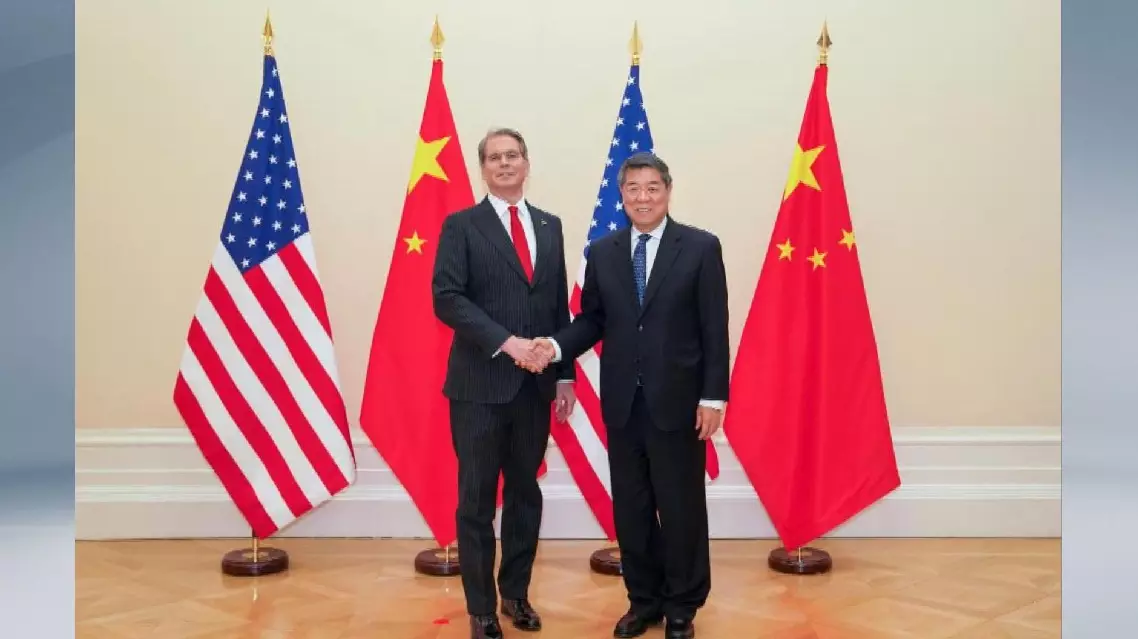
China, U.S. hold candid, in-depth, constructive talks on economic, trade issues