The Battle of Changsha fought in central Chinese city has been remembered as as a major turning point during China's War of Resistance Against Japanese Aggression, where Chinese forces halted the Japanese advance with grit, strategy, and sheer will.
After experiencing four major campaigns and five years of brutal conflict from 1939-1944, Changsha, the capital of Hunan Province, became the cornerstone of China's resistance against Japanese invasion in the World War II.
The Tianxin Pavilion, once a frontline command post in the Battle of Changsha, saw Chinese forces mount a fierce defense during this tough period.
"China's war of resistance came at a time when the Chinese nation was fighting for its very survival. Hunan, at that point, was right at the heart of the country, geographically central, and strategically critical. It was also the gateway to the entire southwest. If Changsha fell, nothing would stop the Japanese from pushing deeper into China's hinterland," said Li Xuanzhao, descendant of a WWII veteran and a council member of the Society for Modern Chinese Historical Studies.
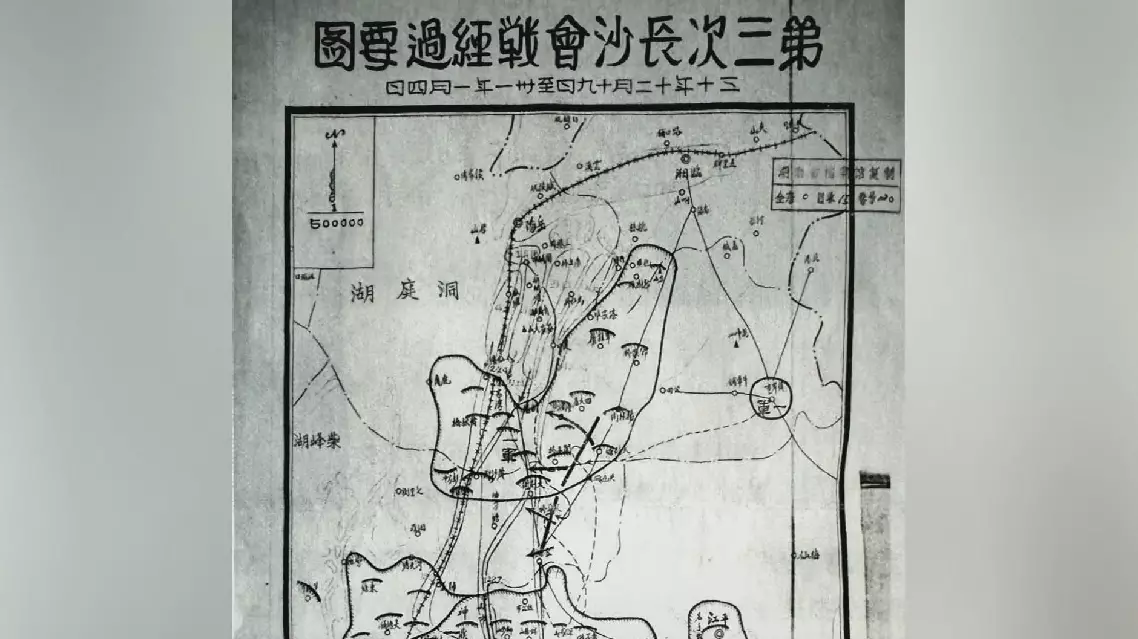
With fewer tanks and fewer planes than their enemy, the Chinese army fought smarter. Leading the charge was General Xue Yue who adopted a strategy called the "Furnace Tactic."
"We lured the enemy in, then hit them step by step, section by section. We deliberately stretched their supply lines, dragging the battle all the way to the outskirts of Changsha. This area, the Changsha basin, became a natural furnace. Our troops, having pulled back to the Hunan-Hubei region, surrounded them from all directions. It became a trap," Li explained.
"Xue Yue called it 'retreat to win, strike from the wings.' It looked passive, but it was devastating to the invaders," said Li Bin, director of the Institute of History of Hunan Academy of Social Sciences.
The Chinese army defeated the enemy forces with smart tactics, turning their disadvantages into advantages.
"The Japanese forces deployed 322 heavy artillery pieces, while we only had mortars at the time, a completely asymmetrical combat situation. Just look at the way they came to fight, waves upon waves of troops, like a swarm of ants. We turned roads into fields, dug them up and flooded them. The Japanese military vehicles got stuck. They couldn't move, slower than walking," Li said.
The Battle of Changsha resulted in tens of thousands of casualties for Japanese forces. At a time when the world was losing ground to fascism, Changsha proved it could be stopped -- not just with weapons, but with will, terrain, and a strategy born from desperation.
"The complete victory in the Battle of Changsha not only boosted the confidence of the Chinese people to keep resisting, it also sent a powerful signal to the entire anti-fascist front around the world," Li said.
"With the lives of a few generations, we lay the immortal foundation of a nation for millennia to come," Li added, quoting inscription by Liang Zhongjiang, a senior senior staff officer during the Battle of Changsha.
Battle of Changsha remembered as turning point for China's resistance against Japanese invasion