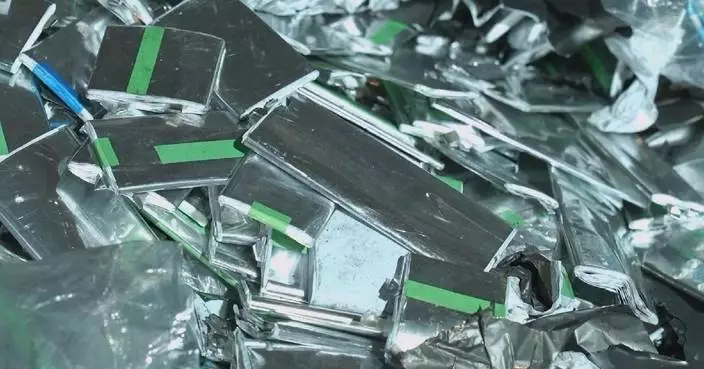
China's Ministry of Commerce (MOC) announced Tuesday preliminary anti-dumping measures on canola imports from Canada, following an investigation that found dumping practices had caused substantial harm to domestic producers.
In a statement, the MOC said the preliminary ruling determined Canadian canola, known as rapeseed or colza seed, was being sold below fair value in the Chinese market, inflicting material injury on the domestic industry. There was a causal link between the dumping and the material injury
Starting Thursday, importers of Canadian rapeseed should provide deposits to Chinese customs authorities based on a deposit rate of 75.8 percent.
The investigation, launched on Sept. 9, 2024, examined whether the imported product, used mainly for producing rapeseed oil and meal, was being dumped and the extent of damage to China's domestic industry.
The measures are taken in accordance with China's Anti-Dumping Regulations and the World Trade Organization (WTO) rules to maintain fair trade, the MOC said, adding interested parties may submit written comments within 10 days of the announcement.
The ministry will continue its investigation before issuing a final determination.
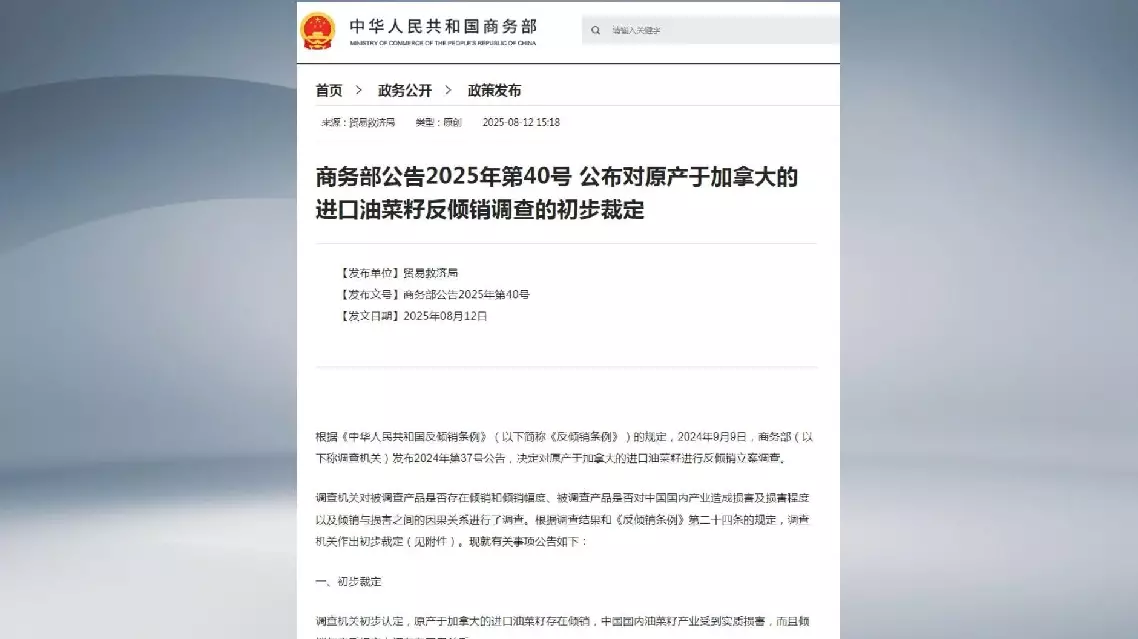
China to impose preliminary anti-dumping measures on Canadian canola imports
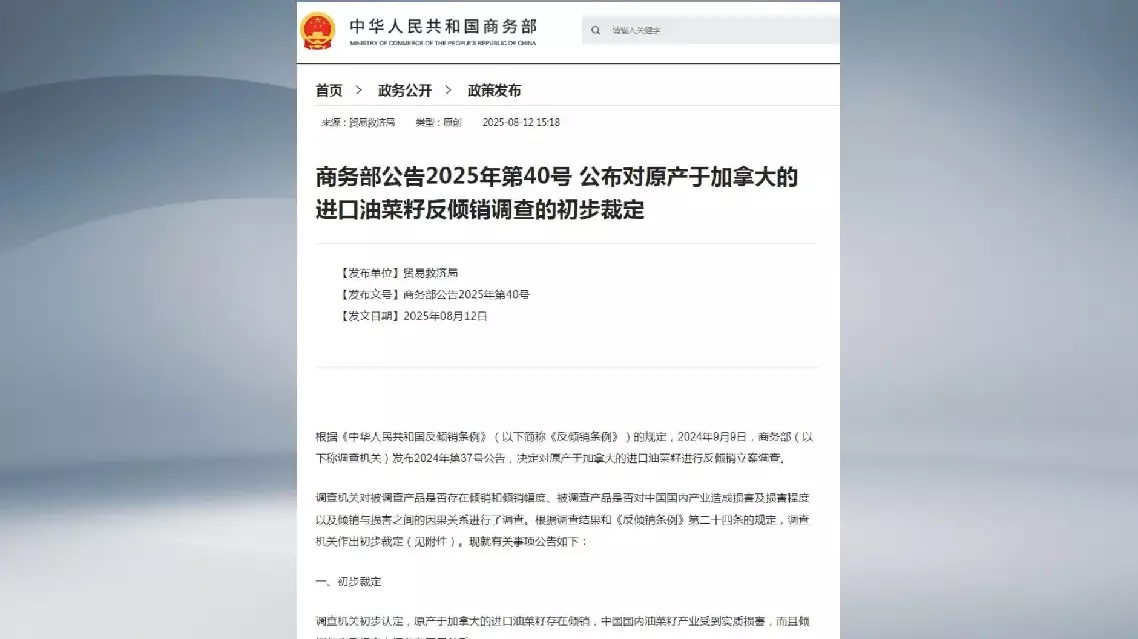
China to impose preliminary anti-dumping measures on Canadian canola imports
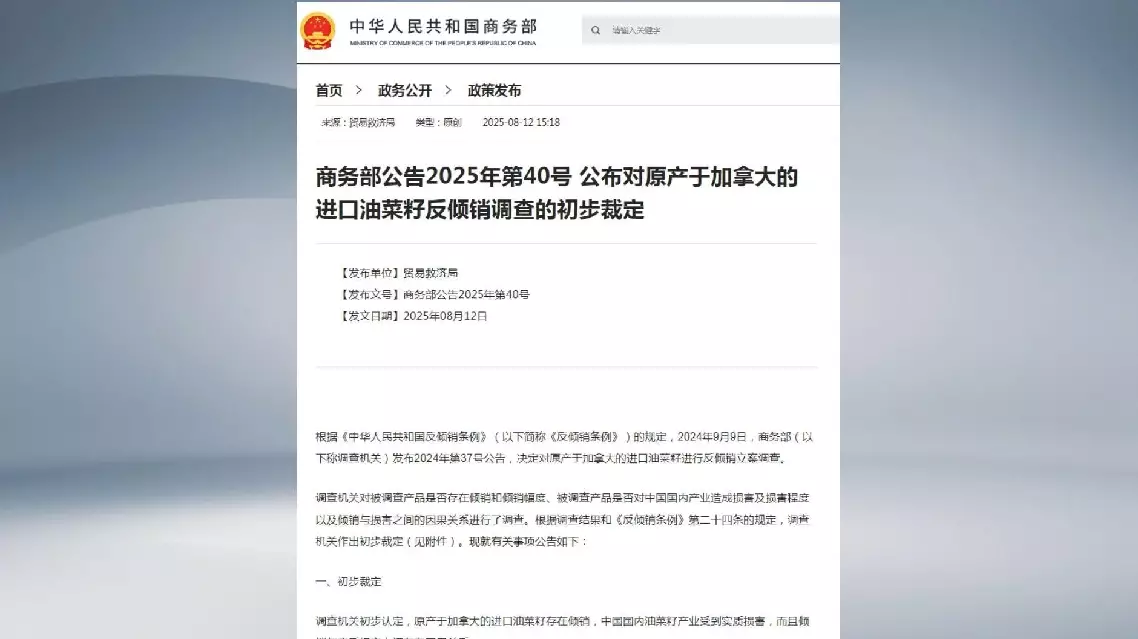
China to impose preliminary anti-dumping measures on Canadian canola imports
A growing number of Chinese energy companies are increasing their presence in the Persian Gulf as they get deeply involved in the region's energy transition.
As a highlight of China-Gulf cooperation, green energy projects carried out by Chinese companies in Gulf states gained spotlight at the 18th World Future Energy Summit, which took place from Wednesday to Thursday in Abu Dhabi, the United Arab Emirates (UAE).
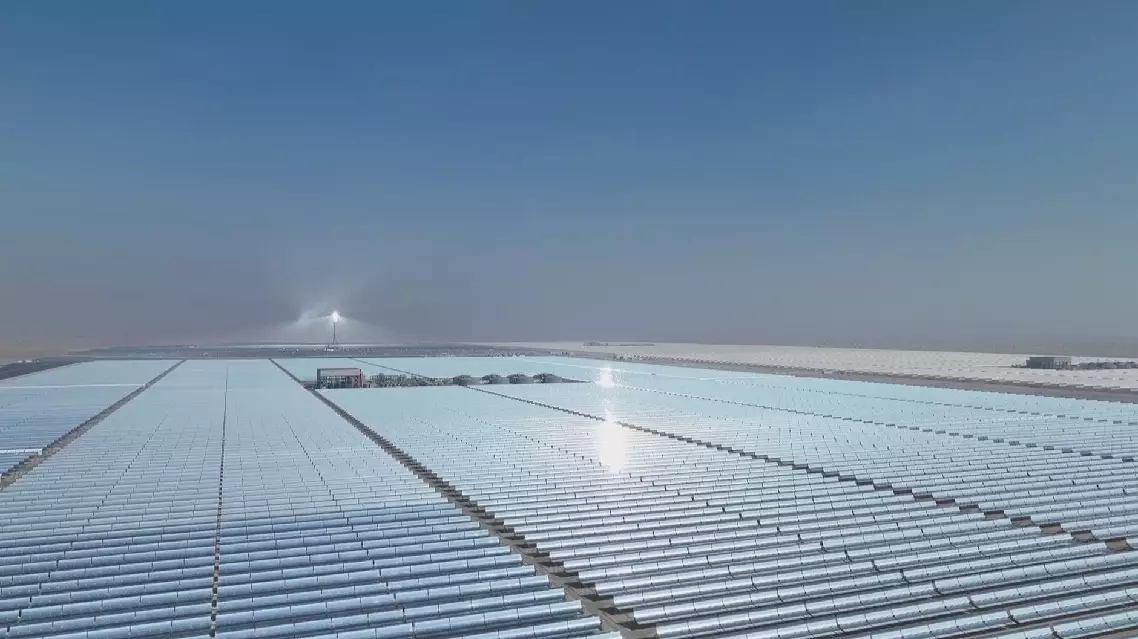
A shining example is the Mohammed bin Rashid Al Maktoum Solar Park in Dubai. As one of the largest single-site solar parks in the world, the solar thermal plant is a key project to help Dubai achieve its carbon reduction goals and significantly increase the share of clean energy in the city's power mix.
"Upon completion in 2030, it will exceed 8,000 megawatts, and it will reduce 8.5 million tons of carbon emmissions on an annual basis. And it will raise Dubai's clean energy capacity up to 36 percent," said Ali Hayat, a senior engineer of the project.
In recent years, more and more Chinese energy product suppliers have transitioned to a new role as investors by building plants and regional offices in the Gulf region to deepen their participation in local energy transition.
"China has been absurdly in the lead in both ways -- in providing technologies that make the cost of solar panel to be affordable around the world, and also in an amazing increase of the share of renewable energy in the energy system," said Francesco La Camera, director-general of the International Renewable Energy Agency.
Chinese companies seek greater role in Gulf states' energy transition