A small village in east China's Zhejiang Province where "Lucid waters and lush mountains are invaluable assets" - a saying that represents Chinese President Xi Jinping's vision for ecological civilization - was first proposed 20 years ago, has turned itself into an idyllic getaway through years of green development.
Once a dusty mining site, Yucun Village has evolved into a lush, vibrant destination that draws over a million visitors a year.
Pan Chunlin, the owner of Yucun's first homestay Chunlin Inn, takes pride in treating guests with home-cooked dishes using local ingredients.
"We do local flavors right. Our vegetables are homegrown and organic. And our price is just right, perfect for travelers," he said.
Pan's homestay is one of the hundreds in the five-square-kilometer village, where forests cover 95 percent of the land.
In 2024 alone, over one million tourists visited, generating more than 7.5 million US dollars in revenue.
Today, city dwellers come to Yucun to relax, get in touch with nature and breathe in the fresh air. Locals like Pan can still recall a different sight.
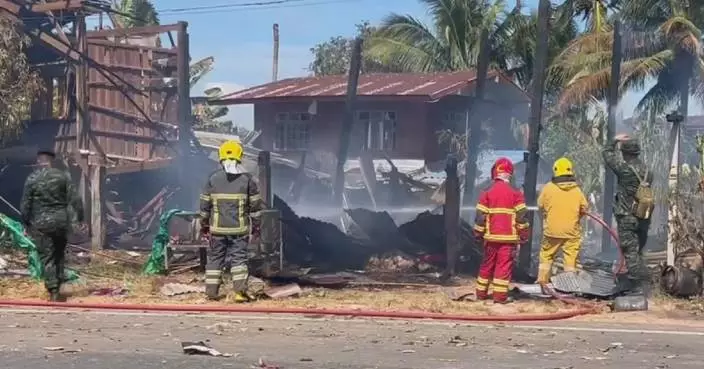
In the 1990s, Yucun thrived on limestone mining and cement production. It was the richest village in the area, but at a steep environmental cost. Back then, Pan was a tractor driver.
"Out before dawn, home after dark. You'd leave clean and tidy, and come back looking like a giant panda, just two shiny eyes blinking through the grime," he said.
Yucun's environmental challenges mirrored those across Zhejiang Province, where breakneck growth came at the cost of the environment.
In 2003, Zhejiang launched a rural green revival program to reverse the damage. Yucun closed its mines and cement plants, a bold move that slashed incomes and left villagers feeling uncertain about their futures.
In August 2005, Xi, then Secretary of the Zhejiang Provincial Committee of the Communist Party of China, visited the village.
For the first time, he put forward the now-famous concept of "lucid waters and lush mountains are invaluable assets."
"Just now, you said you had decided to shut down some mines. It's a wise move. Lucid waters and lush mountains are invaluable assets. We used to say that we wanted both lucid waters and lush mountains, as well as mountains of gold and silver. In fact, lucid waters and lush mountains are mountains of gold and silver," Xi said during the visit.
Pan Chunlin was the first to pivot his living situation, turning his home into a guesthouse. As the local environment improved, business began to flourish.
In 2020, President Xi came back to the village. Pan and his wife invited him to their home.
"Your achievements today prove our path is correct. Ecology itself is an economic asset. Protect the environment, and it will reward you," Xi said.
Today's Yucun has brought over 30 hectares of mine-scarred land back to life while planting trees on 200 hectares more. In 2021, it was named a 'Best Tourism Village' by the UN World Tourism Organization. Average incomes have soared from 1,000 in 2005 to over 9,000 US dollars per year in 2024.
Yucun is also attracting talent. Through an initiative called "Global Partners," the village is opening its doors to young people from all over the world to help reimagine rural life.
"We revitalized idle spaces by inviting people with good ideas. Over 60 projects have launched under our 'Global Partners' program," said Yu Xiaoping, the deputy head of Yucun Village.
Yucun has also attracted people from overseas.
Jessica from Poland found more than just a job, she found a home in the village. She teaches English, makes videos about rural life, and shares Yucun's transformation with a global audience. Now a mother of two, she hopes more young people, Chinese and international, will come and stay.
"I want to show this place from the most beautiful side here. And also I want to encourage foreigners to come here, and I want them to settle down here," said Jessica.
From smoke and dust to clear skies and bamboo forests, Yucun's journey has become more than a local transformation, but a living case study of how ecology and economy can thrive hand in hand.
Today, it anchors a "Greater Yucun", a joint development effort with 24 nearby villages. Its model is being studied by officials, scholars, and rural leaders from around the world, who are eager to find their own green path to prosperity.
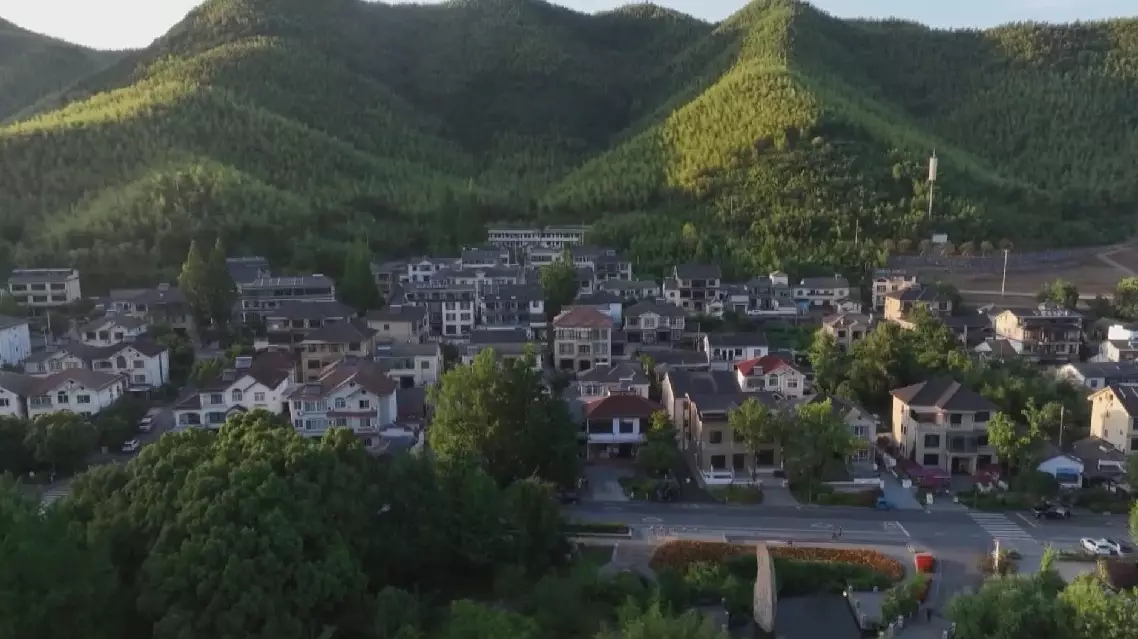
Mining site transformed into model village under green development concept