Skip to Content Facebook Feature Image

High-tech farm automates vegetable planting, harvest in China's Zhejiang

China

China

China

High-tech farm automates vegetable planting, harvest in China's Zhejiang

2025-08-14 13:29 Last Updated At:14:07

The rainbow of vegetables on your salad plate might have been grown right here at a smart agriculture demonstration park in Deqing County of east China’s Zhejiang Province without a single human hand ever touching it.

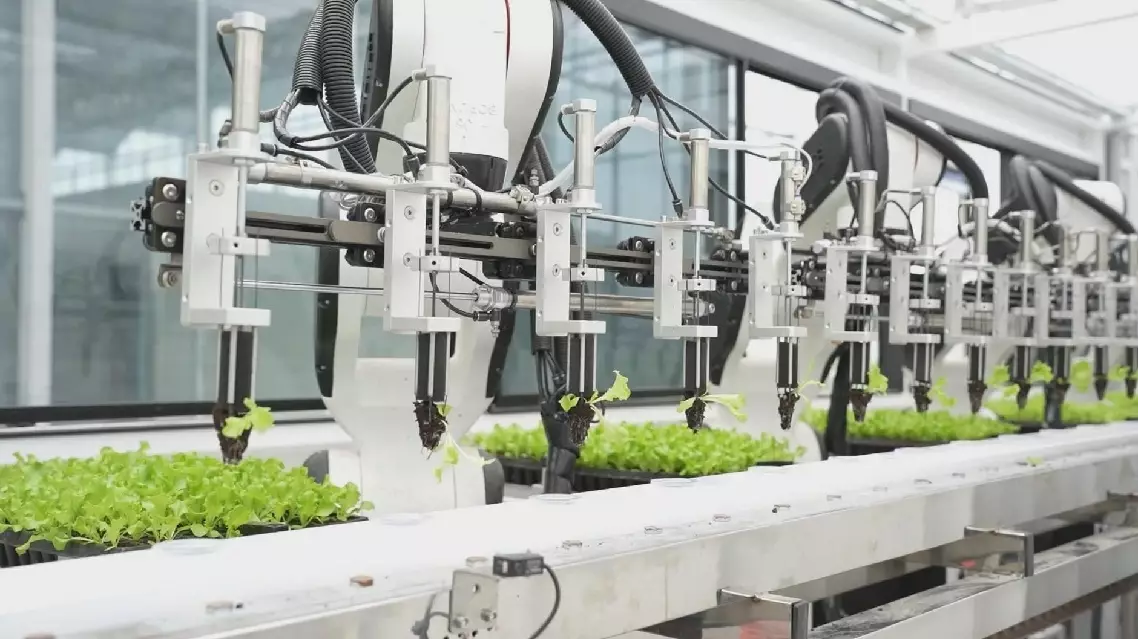
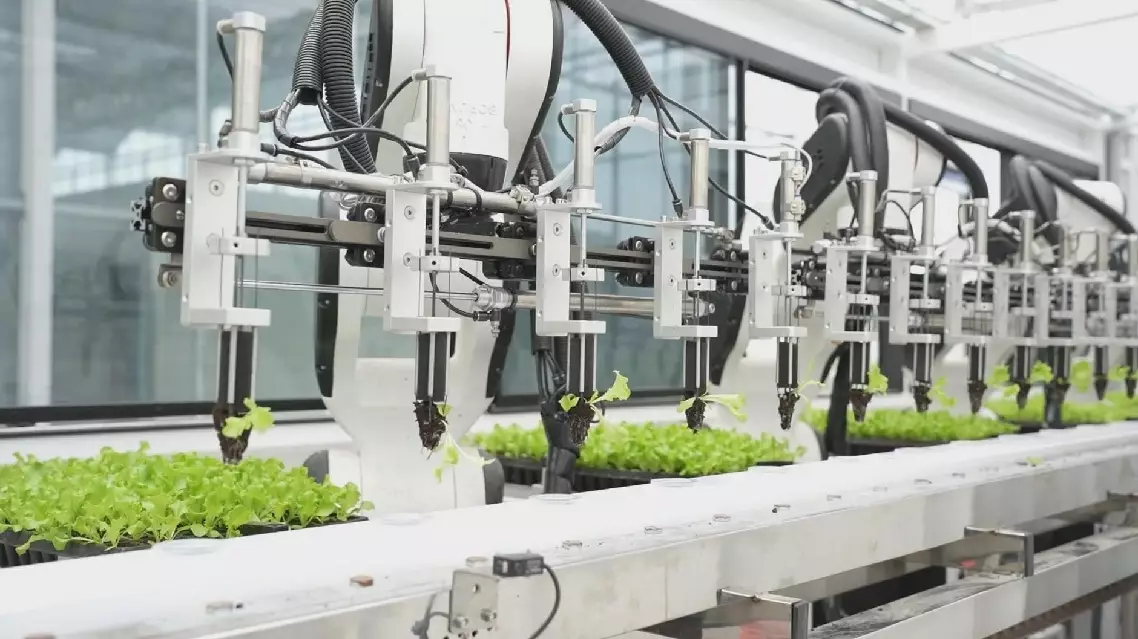
Using cutting-edge technology, the park integrates AI with the Internet of Things to manage every step of crop production, from lettuce to arugula, with full-process smart control.

"This is an auto-transplanting machine that we’ve developed by ourselves. It is designed to replace manual labor in the transplanting process. In just 40 seconds, it can transplant 30 vegetable seedlings, boosting efficiency by over 70 percent. Along with automated transportation lines, cleaning machines, and our greenhouse environment control system, we’ve created a fully unmanned operation," said Hu Yaofeng, technical manager of Zhejiang Houji Intelligent Technology.

Researchers say these crops are free from pesticides and heavy metals, and yield five to seven times more than traditional open-field farming.

"These are Arugula seedlings. They can be transplanted in about 15 days of cultivation. As you can see, we have already had mature sesame plants outside that have been transplanted. These plants are usually ready for harvest in 25 to 30 days. After harvesting, we sell them to companies like Freshippo and Yum! Brands," Hu said.

From farm to shelf in record time, this high-tech harvest is supplying some of China’s biggest retailers and showcasing the future of agriculture.

It’s one the most important innovations on how China’s technology is driving the modernization of agriculture. And the goal is to deliver safer, healthier vegetables directly to your table.
High-tech farm automates vegetable planting, harvest in China's Zhejiang
High-tech farm automates vegetable planting, harvest in China's Zhejiang
High-tech farm automates vegetable planting, harvest in China's Zhejiang

High-tech farm automates vegetable planting, harvest in China's Zhejiang

Continued surges in global oil prices, a result of the ongoing U.S.-Israeli military strikes against Iran, will put severe pressure on Japan's heavily energy-import-dependent economy, a Japanese scholar warned.

The warning came as the Japanese government started a historic oil reserve release on Monday to ease the impact of volatile international oil prices. The release totaled around 80 million barrels, equal to roughly 45 days of Japan's domestic oil consumption, marking the largest-ever drawdown of the country's oil reserves.

Tomohiko Nakamura, a professor of the Faculty of Economics at Kobe International University, said that while the reserve release will have a limited effect in curbing oil price hikes, protracted geopolitical tensions in the Middle East will undermine the policy's impact given Japan's finite oil stockpiles.

"I believe the release of oil reserves will have a certain effect in curbing oil price hikes. However, if the tensions in the Middle East become protracted, that will pose a problem as Japan's oil reserves are not unlimited. We are facing a double whammy: on one hand, crude oil prices are rising, and on the other, the yen's depreciation is driving up import costs. The impact of soaring crude prices is being felt not just in Japan, but across the world. For example, the power sector, where a large share of electricity generation still relies on oil, will see higher generation costs, and as a result, nearly all industries will be affected. These unforeseen impacts may gradually become apparent over the next month," he said.

Beyond the immediate macroeconomic pressures, Nakamura expressed particular concern for Japan's small and medium-sized enterprises (SMEs), which form the backbone of the country's economic activity.

"The biggest impact is the sharp rise in raw material and fuel costs. While large corporations can reduce costs through bulk purchasing, SMEs find it difficult to achieve the same. As a result, the operating pressures on SMEs will grow increasingly severe, leading to a probable rise in the number of businesses exiting the market. The trend of declining SME numbers could accelerate further," he said.

Soaring oil prices put severe pressure on Japan's economy: Japanese scholar

Soaring oil prices put severe pressure on Japan's economy: Japanese scholar

Recommended Articles