LONDON (AP) — The summer holidays are here and many of us will heading off on trips to hot and sunny destinations, and bringing our electronic devices along.
But don't forget that phones, tablets and other electronics are vulnerable to extreme heat. Southern European nations like Spain, Italy and Greece have been baking under the sun, while forecasters have consistently issued heat advisories across the United States, particularly in the Southeast.
Here's what device makers and experts say on keeping your electronics cool:
Most electronic devices work best in a specific temperature range. Apple says iPhones and iPads are designed to be used in temperatures between 32-95 degrees Fahrenheit (0-35 degrees Celsius).
A device might change its behavior to deal with extreme temperatures, Apple warns. “Using an iOS or iPadOS device in very hot conditions can permanently shorten battery life.”
Your phone might temporarily warm up if you’re charging wirelessly, downloading big files, streaming high-quality video or doing anything else that requires lots of power or data. Samsung says that’s normal and it won’t affect the performance or battery lifespan.
If your phone gets so hot that it becomes uncomfortable to hold, Samsung recommends that you stop using it.
An overheating iPhone will alert users with a warning message that it needs to cool down before it can be used. Android devices will display a similar message, telling user that the screen will dim, apps will be closed and charging will be paused.
There are things you can do to protect your device from high heat.
Don't leave it in a car on hot day and don't leave it in direct sunlight for long.
Apple also warns against using some features when it's very hot or in direct sunlight for long periods, like GPS navigation when driving, playing a graphics-heavy video game or using the camera.
Google, which makes Pixel Android phones, advises users not to use resource-intensive features or apps while charging.
The best thing you can do in extreme heat is turn off your device completely.
“Even background processes can generate heat,” say experts at British electronics chain Curry’s. “A full shutdown helps it cool faster.”
Remove the case, if your phone or tablet has one, because they can trap heat.
Also keep it out of direct sunlight and put it somewhere cool, like an air-conditioned room or in front of a fan. But be careful about putting it in cool places.
“Never put your device in the fridge or freezer, as condensation can cause water damage,” Curry's says.
Is there a tech topic that you think needs explaining? Write to us at onetechtip@ap.org with your suggestions for future editions of One Tech Tip.

A commuter watches a video on his mobile phone lying down at a bus stop in New Delhi, India, Tuesday, Aug. 12, 2025. (AP Photo/Manish Swarup)
NEW YORK (AP) — The U.S. stock market is pushing to more records Thursday as companies like Dollar Tree, Snowflake and Hormel Foods keep piling up profits. That's even as oil prices continue to swing and more data shows pressure building on the economy because of the war with Iran.
The S&P 500 added 0.5% to its all-time high set the day before after drifting between small gains and losses earlier in the morning. The Dow Jones Industrial Average was down 10 points, or less than 0.1%, as of 1:26 p.m. Eastern time, and the Nasdaq composite was 0.8% higher after both indexes also set records the day before.
Even with worries about expensive oil and high inflation, the U.S. stock market has run to records largely because U.S. companies keep making more money. Stock prices tend to follow the path of corporate profits over the long term, and companies have been routinely topping analysts' expectations for the first three months of 2026.
Dollar Tree’s stock soared 19% after it became the latest to report fatter profit than analysts expected. CEO Mike Creedon said improved store conditions helped the retailer make more profit off each $1 in sales during the latest quarter despite tariffs adding to its costs. The company also gave a forecast for profit over the full year that topped analysts’ expectations.
Kohl’s rallied 18.9% after the retailer reported better results for the latest quarter than analysts had feared, while Best Buy climbed 18% following its own better-than-expected profit report. Hormel Foods climbed 13.1% after a strong performance for its Jennie-O ground turkey and exports of its Spam luncheon meat helped it report a better profit than analysts expected.
Snowflake rose 38.8% after saying artificial intelligence continues to be a strong driver of its business, and profit and revenue for the latest quarter exceeded expectations.
They helped offset a dip for Marvell Technology, which fell 3.1% after its profit for the latest quarter only matched analysts' expectations. It also said AI is driving big revenue growth for it, particularly its data center business.
In the oil market, prices ticked higher following their latest U-turns. The price for a barrel of benchmark U.S. crude oil rose 0.4% to $89.04, but only after bouncing between $87 and $92. It's been swinging as hopes rise and fall that the United States and Iran may reach a deal to reopen the Strait of Hormuz and get oil flowing again from the Persian Gulf to customers worldwide.
The latest threat to the ceasefire in the war came after U.S. Central Command said Kuwait had intercepted missiles launched by Iran late Wednesday night. That followed earlier “defensive” strikes by the U.S. military on missile launch sites and minelaying boats in southern Iran.
In the bond market, Treasury yields eased after a report said the measure of inflation that the Federal Reserve likes to use accelerated last month but was roughly within economists’ expectations.
The yield on the 10-year Treasury fell to 4.46% from 4.48% late Wednesday after giving up an earlier gain.
Data also showed how U.S. households are less able to save money, with the personal savings rate down to a four-year low of 2.6%, “pointing up the financial pressure on lower- and middle-income families,” according to Gary Schlossberg, global strategist at Wells Fargo Investment Institute.
U.S. households have been saying they’re feeling discouraged about the economy and inflation, even as the stock market keeps chugging along.
High yields in bond markets worldwide recently have threatened to slow economies and undercut prices for stocks and all kinds of other investments. High yields have already forced the average long-term U.S. mortgage rate to its most expensive level since last summer, and they could curtail companies’ borrowing to build the AI data centers that have supported the U.S. economy’s growth recently.
A report on Thursday said the pace of sales of new U.S. homes unexpectedly slowed last month, as the weight of higher mortgage rates hurts the market.
In stock markets abroad, indexes dipped across much of Europe and Asia. Hong Kong’s Hang Seng fell 1.3% for one of the world’s larger losses.
AP Business Writer Elaine Kurtenbach contributed to this report.

Trader Robert Arciero works on the floor of the New York Stock Exchange, Friday, May 22, 2026. (AP Photo/Richard Drew)
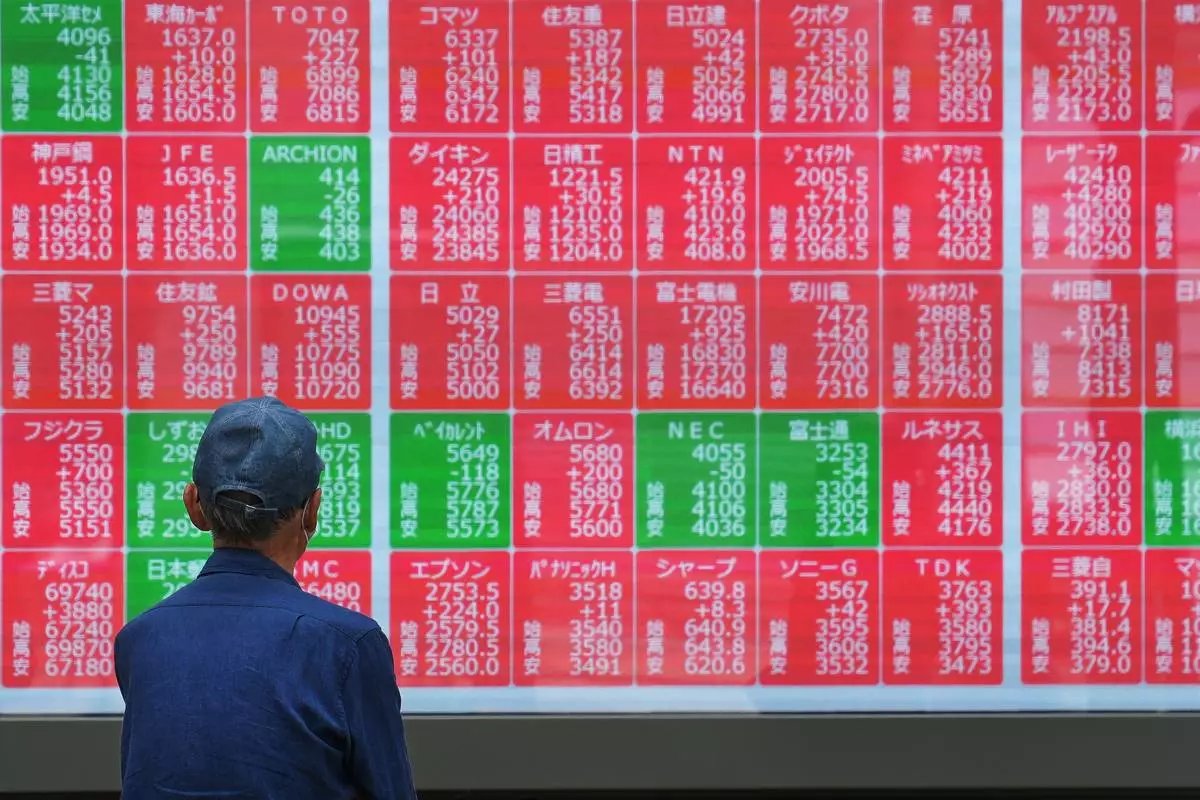
A person looks at an electronic stock board showing Japan's Nikkei index at a securities firm Monday, May 25, 2026, in Tokyo. (AP Photo/Eugene Hoshiko)
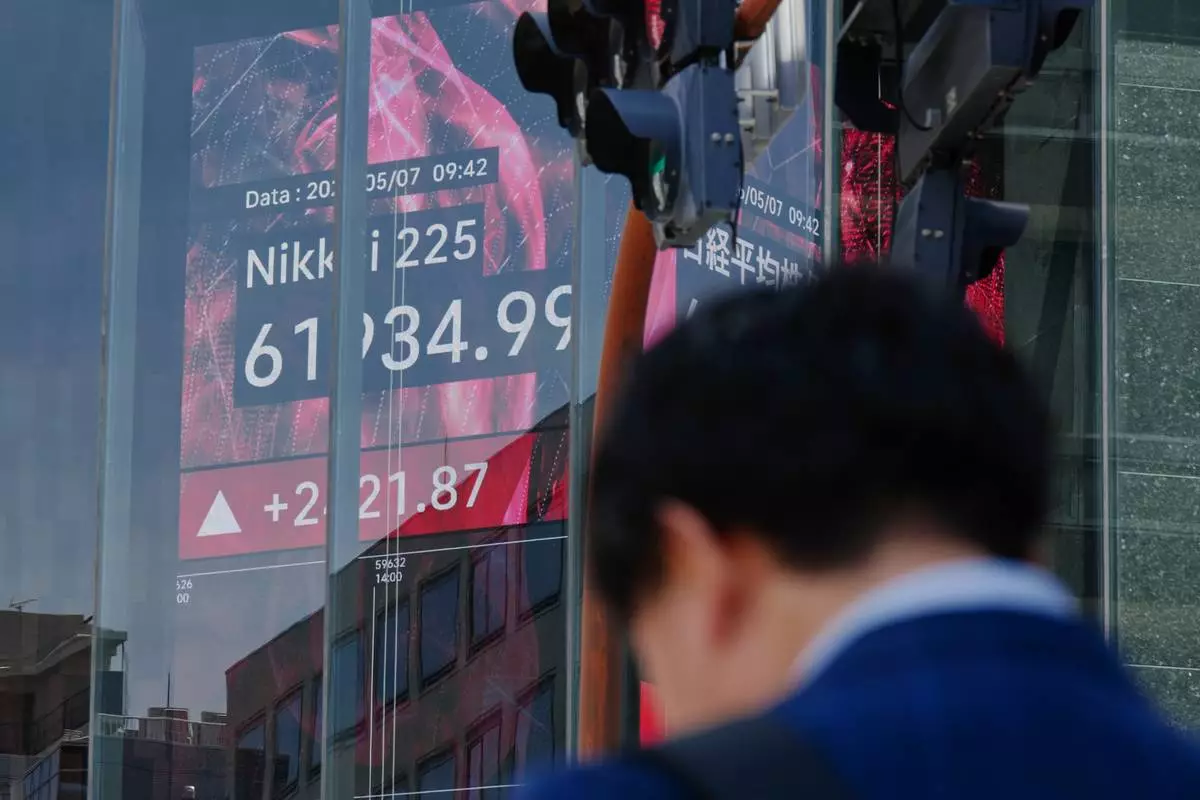
FILE - A person stands in front of an electronic stock board showing Japan's Nikkei index, seen through the glass wall of an office building in Tokyo, May 7, 2026. (AP Photo/Eugene Hoshiko, File)
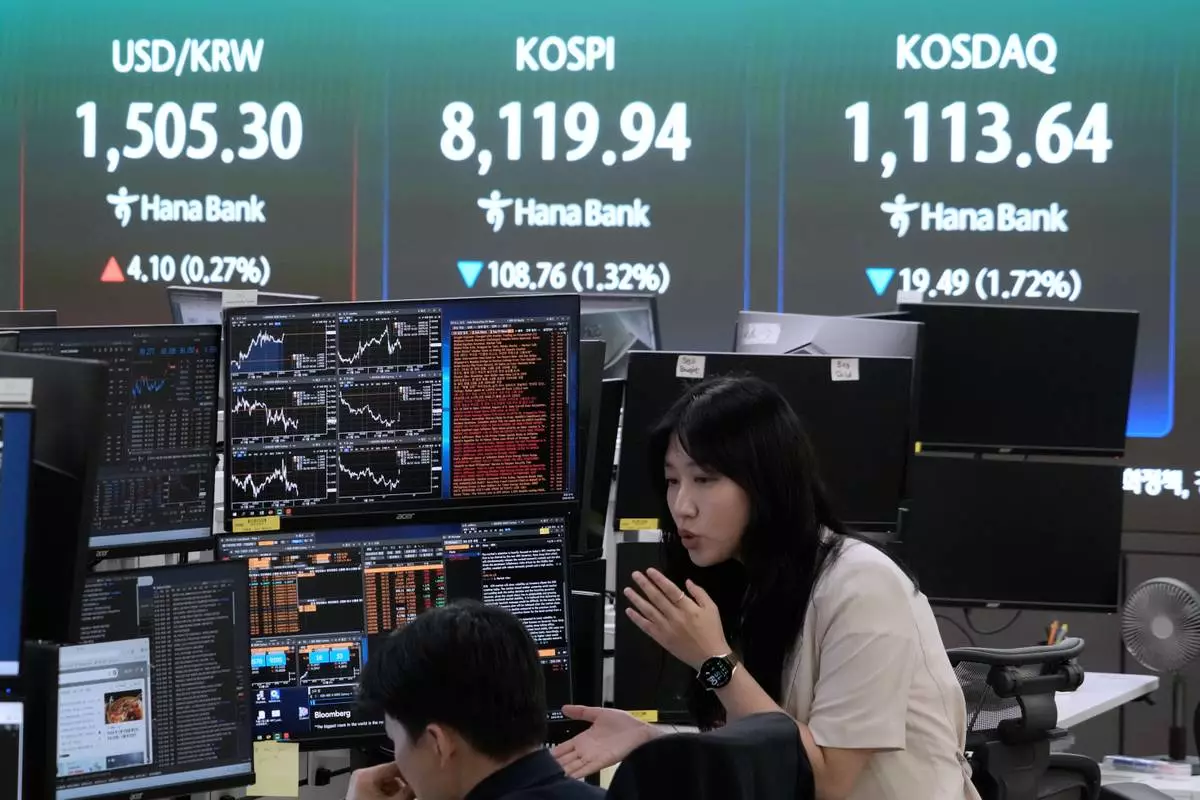
Currency traders work near a screen showing the Korea Composite Stock Price Index (KOSPI), top center, and the foreign exchange rate between U.S. dollar and South Korean won, top left, at the foreign exchange dealing room of the Hana Bank headquarters in Seoul, South Korea, Thursday, May 28, 2026. (AP Photo/Ahn Young-joon)
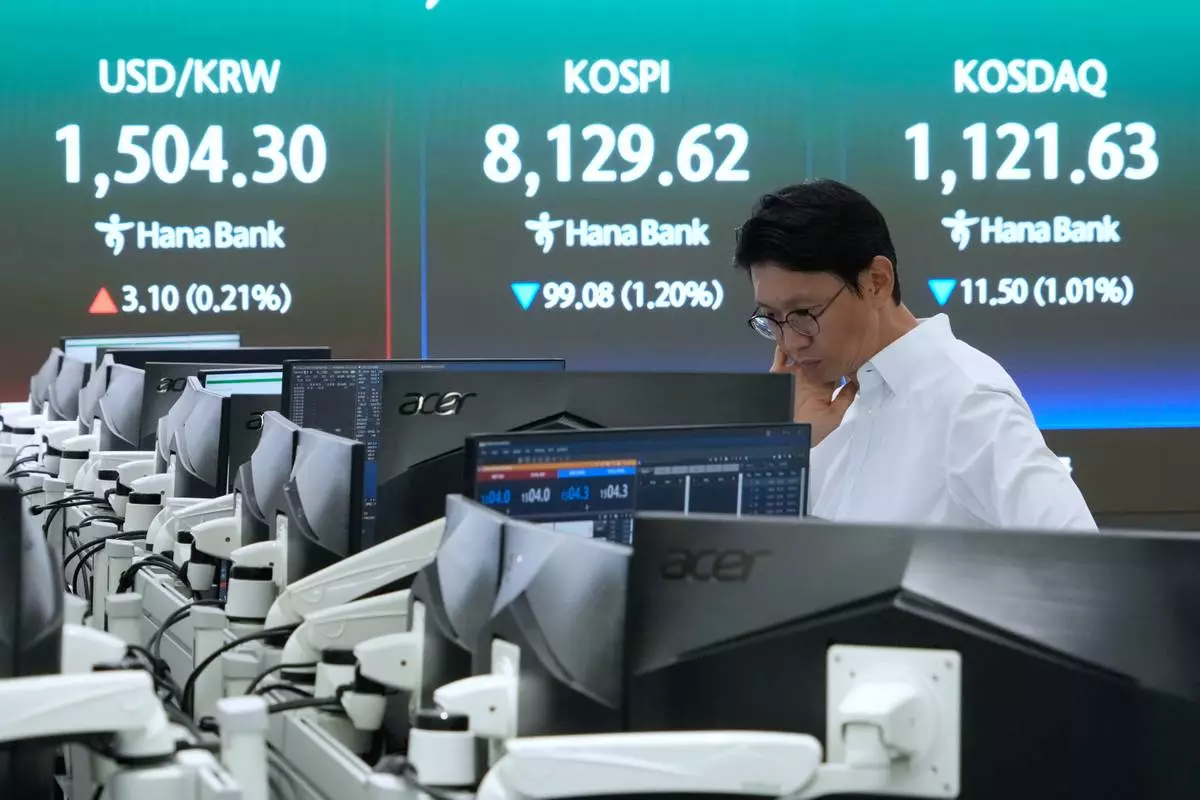
A currency trader watches monitors near a screen showing the Korea Composite Stock Price Index (KOSPI), top center, and the foreign exchange rate between U.S. dollar and South Korean won, top left, at the foreign exchange dealing room of the Hana Bank headquarters in Seoul, South Korea, Thursday, May 28, 2026. (AP Photo/Ahn Young-joon)
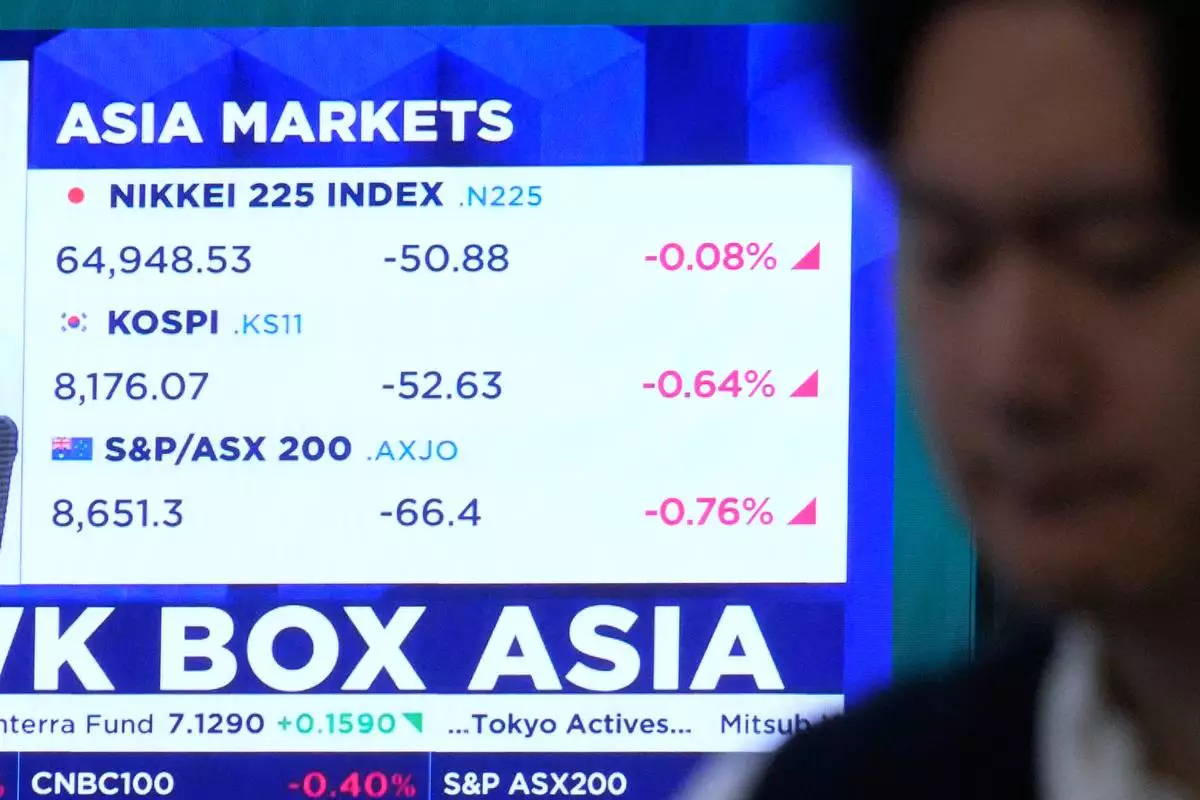
Asia markets index of Japan, South Korea and Australia is seen on a screen at the foreign exchange dealing room of the Hana Bank headquarters in Seoul, South Korea, Thursday, May 28, 2026. (AP Photo/Ahn Young-joon)