SAN JOSE, Calif.--(BUSINESS WIRE)--Dec 18, 2025--
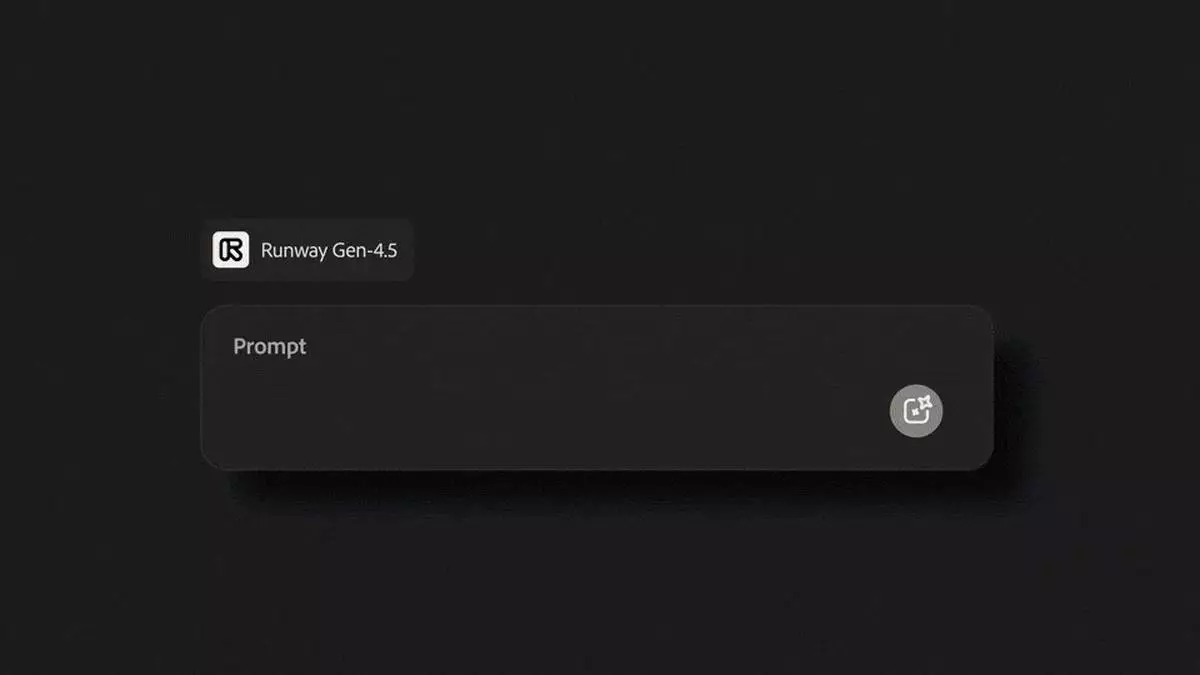
Adobe (Nasdaq: ADBE), the global technology leader that unleashes creativity, productivity and customer experiences through innovative tools and platforms, announced today a multi-year strategic partnership with Runway. The partnership brings together Runway’s generative video technology and Adobe’s industry-leading creative tools, trusted by creators and brands to define the next generation of AI-powered video workflows. Adobe will be Runway’s preferred API creativity partner, enabling Adobe to provide its customers with early access to Runway’s latest models, including Runway’s new Gen-4.5, which is now available for a limited time exclusively in Adobe Firefly – the all-in-one creative AI studio – and on Runway’s platform. The two companies will collaborate to develop new AI innovations that will be available exclusively in Adobe applications, starting with Adobe Firefly.
This press release features multimedia. View the full release here: https://www.businesswire.com/news/home/20251218643834/en/
“As AI transforms video production, pros are turning to Adobe’s creative ecosystem – from Firefly to Premiere to After Effects – to imagine, craft and scale their stories across every screen,” said Ely Greenfield, chief technology officer and senior vice president, digital media, Adobe. “Runway’s generative video innovation combined with Adobe’s trusted pro workflows will help creators and brands expand their creative potential and meet the growing demands of modern content and media production.”
“We’re building AI tools that are redefining creativity, storytelling and entertainment, with Gen-4.5 as the latest example,” said Cristóbal Valenzuela, co-founder and CEO, Runway. “This partnership puts our latest generative video technology in front of more storytellers, inside Adobe’s creative tools that are already the industry standard for many creators around the world.”
Building the Future of Professional Generative Video and Workflows
Runway named Adobe its preferred API creativity partner, enabling it to provide Adobe customers with early access to Runway’s latest models. Following new model releases from Runway, Firefly customers will be the first to access those models through Adobe’s creative workflows.
Starting today, Adobe Firefly customers can access Runway’s new Gen-4.5 model ahead of its broader public release. Gen-4.5 's motion quality, prompt adherence and visual fidelity enable dynamic, controllable action with strong temporal consistency across a wide range of generation modes. Creators can use it to stage complex, multi-element scenes with precise compositions, realistic physics and expressive characters whose gestures and facial performances hold up from shot to shot. Creators can generate video from text prompts using Gen-4.5, explore different visual directions, pacing and motion, and then move seamlessly into Firefly video editor to assemble generated clips into polished, shareable videos. Creative Professionals can take their generations into Adobe Premiere, After Effects, and other Creative Cloud applications for further control and refinement.
Adobe and Runway are joining forces to make generative video an essential and dependable part of creative AI workflows for creators and brands. The companies will work directly with independent filmmakers, major studios, leading agencies, streaming platforms, Fortune 500 brands and global enterprises to co-develop new video capabilities directly into the Adobe tools that industry professionals already trust for their most important projects.
A Creator-First Approach to AI: Industry-Leading Choice and Flexibility in Models and Tools
Creators work with different models depending on the style and tone of their project and story. Adobe Firefly makes it seamless to mix and match the models that work best for each project. It is the only place where creators can use the industry’s top generative models and the best AI-powered tools for video, audio, imaging and design.
In Firefly, creators can work with Adobe’s commercially safe Firefly models, an expanding ecosystem of industry-leading partner models from Runway and other companies, including Black Forest Labs, ElevenLabs, Google, Luma AI, OpenAI and Topaz Labs – as well as Firefly Custom Models to generate in their own unique style.
Adobe takes the most creator-friendly approach to AI in the industry. Adobe’s view is that AI is a tool for, not a replacement of, human creativity. No matter which model a creator chooses to use in the Firefly app, the content is not used to train generative AI models. For more information on Adobe’s approach to generative AI, visit: https://www.adobe.com/ai/overview/firefly/gen-ai-approach.html
Availability
Runway’s Gen-4.5 is available today in the Adobe Firefly app and on Runway’s platform. Adobe customers with a Firefly Pro plan will have access to unlimited generations until December 22.
About Adobe
Adobe is empowering everyone to create. For more information, visit www.adobe.com
Adobe Forward-Looking Statements
This press release contains “forward-looking statements” within the meaning of applicable securities laws, including those related to Adobe’s strategic partnership with Runway, including collaborating to develop specialized AI capabilities, Adobe being Runway’s preferred creativity partner, Adobe providing exclusive early access to Runway models outside of Runway’s platform, and potential benefits to Adobe. Each of the forward-looking statements made in this press release involves risks, uncertainties and assumptions based on information available to Adobe as of the date of this press release. Such risks and uncertainties, many of which relate to matters beyond Adobe’s control, could cause actual results to differ materially from these forward-looking statements. Factors that might cause or contribute to such differences include, but are not limited to: failure to innovate effectively and meet customer needs; issues relating to development and use of AI; failure to compete effectively; damage to Adobe’s reputation or brands; failure to realize the anticipated benefits and goals of the strategic partnership with Runway or any other investments or acquisitions; service interruptions or failures in information technology systems by Adobe or third parties; security incidents; failure to effectively develop, manage and maintain critical third-party business relationships; risks associated with being a multinational corporation and adverse macroeconomic conditions; complex sales cycles; failure to recruit and retain key personnel; litigation, regulatory inquiries and intellectual property infringement claims; changes in, and compliance with, global laws and regulations, including those related to information security and privacy; failure to protect Adobe’s intellectual property; changes in tax regulations; complex government procurement processes; risks related to fluctuations in or the timing of revenue recognition from Adobe’s subscription offerings; fluctuations in foreign currency exchange rates; impairment charges; existing and future debt obligations; catastrophic events; and fluctuations in Adobe’s stock price. Further information on these and other factors are discussed in the section titled “Risk Factors” in Adobe’s most recently filed Annual Report on Form 10-K and Adobe's most recently filed Quarterly Reports on Form 10- Q. The risks described in this press release and in Adobe’s filings with the U.S. Securities and Exchange Commission should be carefully reviewed. Adobe undertakes no obligation, and does not intend, to update the forward-looking statements, except as required by law.

Adobe announced today a multi-year strategic partnership with Runway, bringing together Runway’s generative video technology and Adobe’s industry-leading creative tools.

The top commander of the U.S. military’s Central Command said the campaign against Iran is “ahead or on plan," as the Israeli military began what it called "a wide-scale wave of strikes targeting Iranian terror regime infrastructure” early Monday.
U.S. Navy Adm. Brad Cooper gave his first one-on-one interview of the war to the Farsi-language satellite network Iran International, which aired it early Monday. Iranian media reported new airstrikes targeting Tehran without identifying the sites being hit.
The previous day, Tehran warned it could attack U.S. and Israeli energy and infrastructure assets if Israel or the U.S. attempt to follow through on President Donald Trump 's threat that the U.S. would “obliterate” Iran’s power plants if it doesn’t fully open the Strait of Hormuz.
Trump — who is facing increasing pressure at home to secure the strait as oil prices soar — issued the ultimatum in a social media post while he spent the weekend at his Florida home.
The death toll from the war has risen to more than 1,500 people in Iran, more than 1,000 people in Lebanon, 15 in Israel and 13 U.S. military members, as well as a number of civilians on land and sea in the Gulf region. Millions of people in Lebanon and Iran have been displaced.
Here is the latest:
Ther strike on the bridge Monday in the southern village of Qaaqaaiyet al-Jisr cut a main link between the southern city of Nabatiyeh and al-Hujair valley region further south.
The state-run National News Agency gave no further details about the latest strike on a bridge on the Litani river to be destroyed in recent days.
On Sunday, Israel struck the Qasmiyeh bridge near the southern port city of Tyre.
Lebanese President Joseph Aoun called Israel’s new targeting of bridges in the south “a prelude to a ground invasion.”
Iran’s Defense Council threatened Monday to deploy naval mines across the “entire Persian Gulf” if a land invasion happens.
The council issued the statement as concern in Tehran grows about the potential arrival of U.S. Marines to the region.
“Any attempt by the enemy to target Iran’s coasts or islands will, naturally and in accordance with established military practice, lead to the mining of all access routes ... in the Persian Gulf and along the coasts,” the council said.
The U.S. has been trying to reopen the Strait of Hormuz, the narrow mouth of the Persian Gulf, to energy shipments. The Marines could come ashore to seize either islands or territory in Iran to support that mission. Israel also has suggested a ground operation could take part in the war.
Jamal Abdi, head of the National Iranian American Council, described President Donald Trump’s threat to strike Iran’s energy facilities as a “collective punishment.”
“Threatening to bomb Iran’s power plants is a threat to millions of civilians,” he said. “This is not a ‘targeted’ strike. This is collective punishment.”
A senior United Nations official said the war in the Middle East has “far reaching” impact on millions of people particularly in developing countries in Asia and Africa.
In a Monday statement, Jorge Moreira da Silva, executive director of the U.N. Office for Project Services, detailed the ripple effects of the war, now in its fourth week, including “exponential price hikes in oil, fuel and gas.”
“Our world is the most violent it has been since the Second World War,” he said.
He warned that the number of hungry people is likely to increase by tens of millions over the course of the year, as the widening war threatens remittance flows.
The war also displaced 3.2 million people in Iran and 1 million in Lebanon, he said.
He called for diplomacy to end the conflict, saying: “There is no military solution.”
As Trump’s 48-hour deadline to bomb power-generation sites in Iran over the opening of the Strait of Hormuz approaches, there are several electrical sites that could be targets in the Islamic Republic.
Some 80% of all power generated in Iran is created at plants powered by natural gas.
Those plants have continued working, even after Israel last week bombed Iran’s South Pars offshore natural gas field in the Persian Gulf.
Among the top natural gas plants are Damavand Power Plant, Shahid Salimi Neka Power Plant and Shahid Rajaee Power Plant – all around Iran’s capital, Tehran.
Knocking those plants offline could affect businesses and homes in Tehran, as well as halt gas stations and other crucial sites.
By Jon Gambrell
An adviser to the UAE has criticized Arab and Islamic organizations’ response to Iran’s continued attacks in the Arab Gulf countries.
“Where are the joint Arab and Islamic labor institutions,” Anwar Gargash said in a social media post Monday, naming the Arab League and the Organization of Islamic Cooperation.
Gargash, who is a former state minister for foreign affairs, said it will be “unacceptable” after the war to talk about “the decline of the Arab and Islamic role or to criticize the American and Western presence” in the Gulf region which hosts U.S. and Western bases.
The UAE, which has close ties with Israel and the U.S., has been the hardest hit by Iranian missiles and drones since the war in the Middle East began on Feb. 28.
After Iran threatened power plants across the Mideast, news outlets published a list of such facilities, including the United Arab Emirates’ nuclear power plant.
The report by the semiofficial Fars news agency, close to its paramilitary Revolutionary Guard, appeared to be an indirect threat to the sites, including desalination plants in the Middle East. The list also included the UAE’s Barakah nuclear power plant, which has four reactors out in the western deserts of the country near its border with Saudi Arabia.
The judiciary’s Mizan news agency also published the list.
The threat by Tehran puts at risk both electrical supplies and water in the Gulf Arab states, particularly as the desert nations commingle their power stations with desalination plants crucial for supplying drinking water.
Trump’s self-declared 48-hour deadline expires just before midnight GMT Tuesday, further raising the stakes of the ongoing war with Iran that has disrupted global energy supplies, sending natural gas and gasoline prices soaring.
U.S. President Donald Trump wrote on his Truth Social website early Monday: “PEACE THROUGH STRENGTH, TO PUT IT MILDLY!!!”
The head of the U.S. military’s Central Command says Iran is “operating in a sign of desperation” by targeting civilian sites in the war.
In an interview with the Farsi-language satellite network Iran International aired early Monday, U.S. Navy Adm. Brad Cooper said: “They’re operating in a sign of desperation. ... In the last couple of weeks, they’ve attacked civilian targets very deliberately, more than 300 times.”
Cooper also noted the slowdown in Iranian incoming fire across the Mideast as the war has entered its fourth week.
“At the beginning of the conflict, you saw large volumes in the dozens of drones and missiles,” Cooper said.
“You no longer see that. It’s all one or two at a time.”
The top commander of the U.S. military’s Central Command said the U.S. campaign against Iran is “ahead or on plan.”
U.S. Navy Adm. Brad Cooper gave his first one-on-one interview of the war to the Farsi-language satellite network Iran International, which aired it early Monday.
Cooper said Iran’s continued attacks on Gulf Arab states and the wider Mideast put civilians at risk.
He added that the U.S. and Israel were targeting missile and drone manufacturing sites as well.
“We’re also going after the manufacturing,” he said. “So it’s not just about the threat today. We’re eliminating the threat of the future, both in terms of the drones, the missiles, as well as the navy.”
Cooper also said it isn’t time for the Iranian public to come to the streets, although both Israel and the U.S. have said they hope the Iranian public would topple the country’s theocracy as a result of the strikes.
“They’re launching missiles and drones from populated areas and you need to stay inside for right now,” Cooper said. “There will be a clear signal at some point, as the president has indicated, for you to be able to come out.”
A cargo ship carrying vehicles sails through the Arabian Gulf toward the Strait of Hormuz in the United Arab Emirates, Sunday, March 22, 2026. (AP Photo)
Israeli security forces survey the site that was struck by an Iranian missile in Dimona, southern Israel, Sunday, March 22, 2026. (AP Photo/Ariel Schalit)
A displaced girl feeds a baby as other children stand at tents sheltering people who fled Israeli airstrikes in Dahiyeh, in Beirut's southern suburbs, along the wall of the Pine Residence, the official residence of the French ambassador, in Lebanon. (AP Photo/Hassan Ammar)
Smoke and flames rise from an Israeli airstrike that hit the Qasmiyeh Bridge near the coastal city of Tyre, Lebanon, Sunday, March 22, 2026. (AP Photo/Mohammad Zaatari)