The United Nations Security Council on Wednesday rejected the announcement of the establishment of a parallel governing authority in areas controlled by Sudan's Rapid Support Forces (RSF).
In a press statement, the Security Council members also expressed grave concern about the implications of such actions, which represent a direct threat to Sudan's territorial integrity and unity and further risk exacerbating the ongoing conflict in Sudan, fragmenting the country and worsening an already dire humanitarian situation.
The council members unequivocally reaffirmed their unwavering commitment to Sudan's sovereignty, independence, unity, and territorial integrity. They stressed that any unilateral steps that undermine these principles threaten not only the future of Sudan, but also the peace and stability of the broader region.
They reiterated that the priority is for the parties to resume talks to reach a lasting ceasefire and "create the necessary conditions for a political resolution on the conflict."
They also recalled Security Council Resolution 2736, which demands that the RSF lift the siege of El Fasher and calls for an immediate halt to the fighting and for de-escalation in and around the city.
They also expressed grave concern about incoming reports of a renewed RSF offensive in El Fasher and urged the RSF to allow unhindered humanitarian access to the city.
The council members condemned reported attacks in the Kordofan region in recent weeks by the parties, which have caused the deaths of large numbers of civilians. They also expressed deep concern over the impact of the conflict, including attacks on humanitarian operations. They called on the parties in Sudan to allow and facilitate safe and unhindered humanitarian access in a manner consistent with the relevant provisions of international law.
They urged all UN member states to refrain from external interference that seeks to foment conflict and instability, to support efforts for lasting peace, to abide by their obligations under international law, and to implement relevant Security Council resolutions.
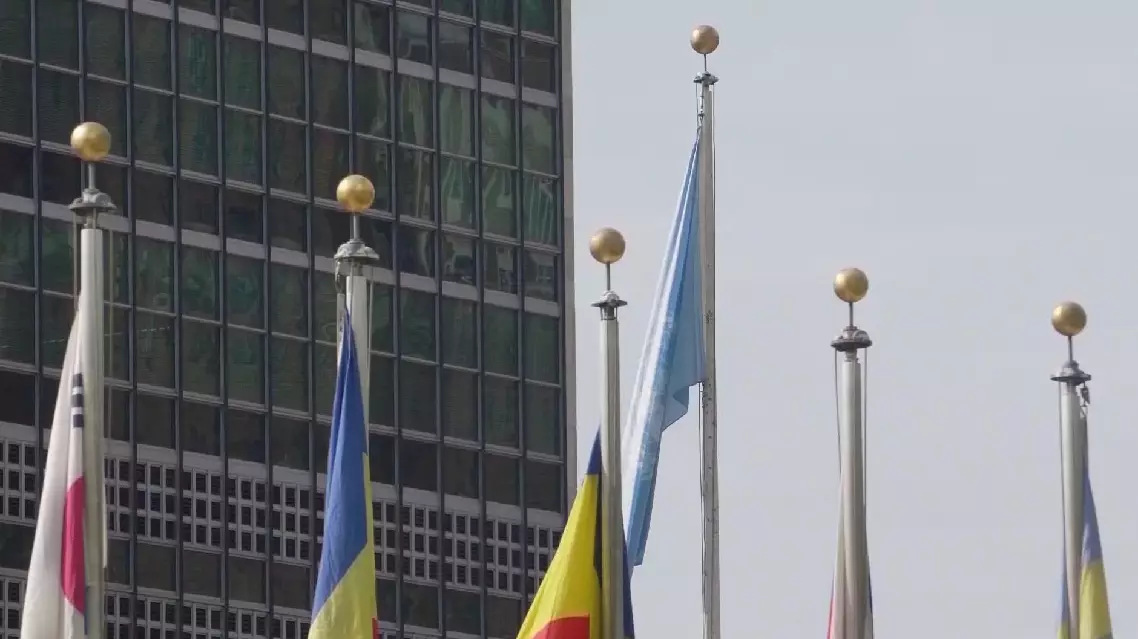
UN Security Council rejects parallel authority announced by Sudan's RSF
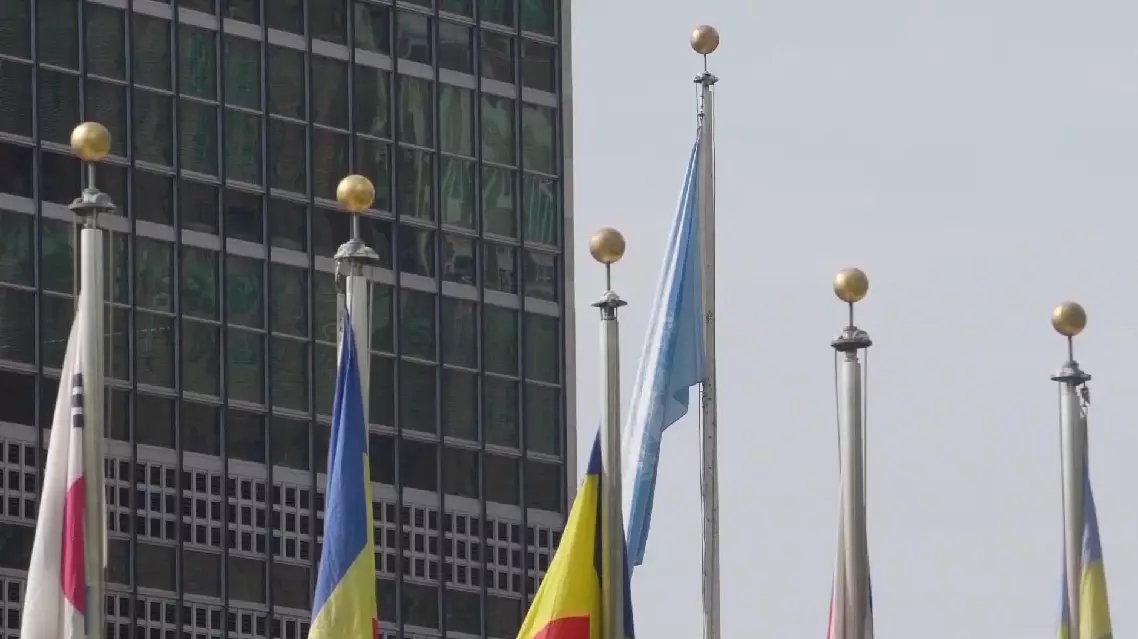
UN Security Council rejects parallel authority announced by Sudan's RSF
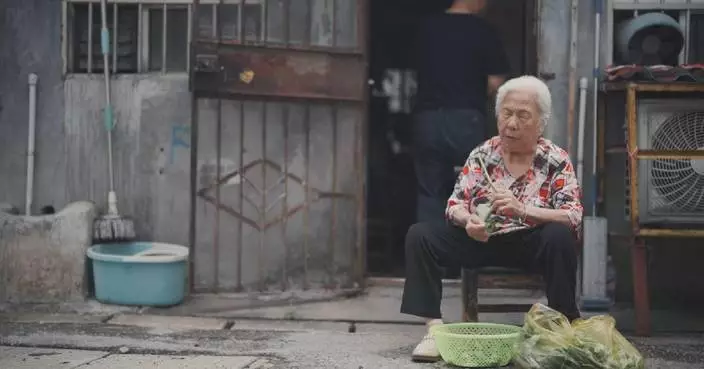
The heartbreaking story of 96-year-old Peng Zhuying, one of the last living survivors from the Japanese military's "comfort women" system in the Chinese mainland, has been shared in a moving documentary produced by the China Global Television Network (CGTN).
Peng remains one of only seven registered survivors in the Chinese mainland of the Japanese military's "comfort women" system, a brutal a state-enforced regime of sexual slavery during World War II, victimizing over 400,000 women across Asia.
She is also the only living survivor who is officially documented as a victim of both sexual slavery and of Japan's chemical warfare during the Japanese militarists' war of aggression against China.
Eight decades on, Peng has bravely shared the story of her horrifying experiences in the CGTN original documentary "Last Daughters," which reveals the deep scars left by war and captures the quiet strength and warmth that endured, even in the darkest depths of human suffering.
Blinded by mustard gas at age nine and mutilated at 14 before being forced into a military brothel during the war, Peng was able to survive despite facing these unimaginable hardships in her young life.
Peng shared some of the artifacts and the stories behind them from those difficult days.
"This is a fortune slip, a divination note, meaning you need to be cautious in what you do. When I was 16, my father forced me to study fortune-telling. He told me if I didn't learn, I would not get any food. At that time, I wanted to care for children instead, but I could make the call myself. I had to listen to him to make a living," she said.
She memorized every incantation as part of the fortune-telling custom. For 80 years, it was her livelihood, and she has continued to show strength to overcome any challenges in her life.
"I've gone through so much hardship, and yet I'm still alive. Now, I'm only afraid of getting sick and dying from it. I was sick for most of last year, and have yet to recover until now," said Peng.
Though she survived all the tortures and survived from the atrocities conducted by the Japanese aggressors, Peng's health is never been too strong, as she suffered from severe gynecological injuries and became infertile, while also losing her sight as she fell victim to a chemical warfare attack.
"These are gallstones. She had them for several decades. But she lost her eyesight early on and never had toxic exposure. The only explanation is the mustard gas she inhaled. Life for her has been harsh, far harsher than it appears on the surface," said her nephew Peng Zifang.
Japan's "comfort women" system, a state-sponsored sexual slavery scheme by the military, was unprecedented in modern history. It enslaved at least 400,000 women across Asia and the Pacific, including Chinese, Korean, Filipino and many other victims.
Half of those who suffered were Chinese. The Japanese opened its first "comfort women station" in Shanghai and over 2,100 followed in other places they invaded. Girls, deemed "military supplies," were trafficked like weapons.
Later in life, aged 43, Peng married a fisherman 20 years older than her. Only after his death did she speak openly about what she faced.
"Before my father passed away, he told me the stories of my two aunts. I was deeply shaken. Both of my aunts revealed the truth about the 'comfort stations' only after their husbands died. The often-cited figure [of 400,000] known victims barely scratches the surface of the true scale. Many more endured in silence because of the conservative traditions of that era. To speak up meant risking scorn, oppression and even violence. So they bore it quietly," said Peng Zifang.

Documentary reveals life of Chinese survivor of Japan's sexual slavery during WWII