BRUSSELS (AP) — European leaders have praised President Donald Trump for agreeing to allow U.S. military support for a force they are mustering to police any future peace in Ukraine — a move that vastly improves the chances of success for an operation that could prove essential for the country's security.
The leaders said Trump offered American military backup for the European “reassurance force” during a call they held with him ahead of his planned summit with Russian President Vladimir Putin on Friday. They did not say what the assistance might involve, and Trump himself has not publicly confirmed any support.
Click to Gallery
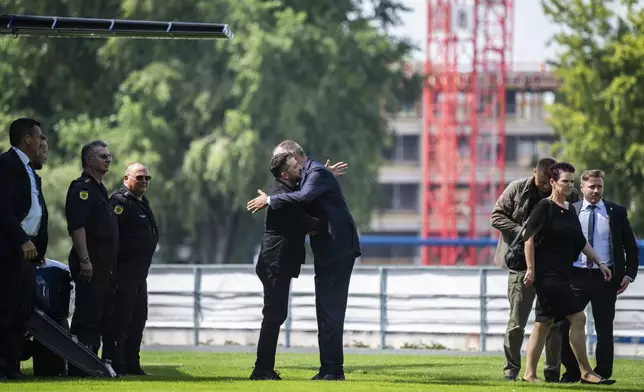
Ukrainian President Volodymyr Zelenskyy, center left, is welcomed by German Chancellor Friedrich Merz upon arrival in the garden of the chancellery in Berlin, Germany, Wednesday, Aug. 13, 2025 to join a video conference of European leaders with the U.S. President on the Ukraine war. (John MacDougall/Pool Photo via AP)
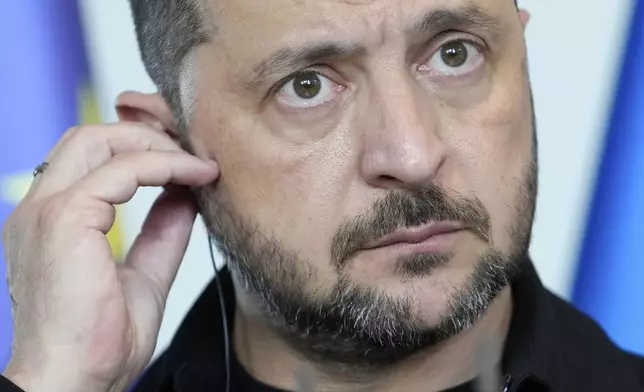
Ukrainian President Volodymyr Zelenskyy attends a joint press statement with German Chancellor Friedrich Merz following talks with European and U.S. leaders in Berlin, Germany, Wednesday, Aug. 13, 2025. (AP Photo/Ebrahim Noroozi)
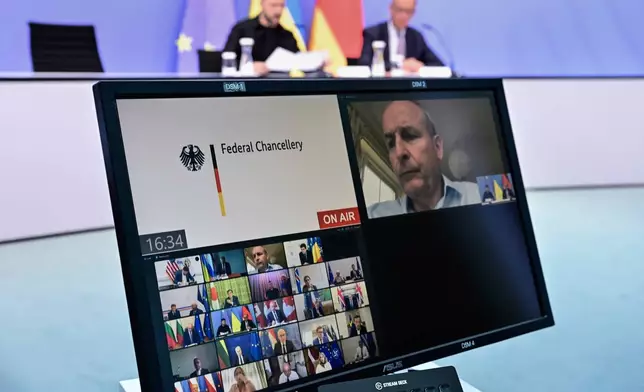
Ukrainian President Volodymyr Zelenskyy, left, and German Chancellor Friedrich Merz attend a video meeting of European leaders with US President Donald Trump on the Ukraine war in Berlin, Germany, Wednesday, Aug. 13, 2025, ahead of the summit between the US and Russian leaders. (John MacDougall/Pool Photo via AP)
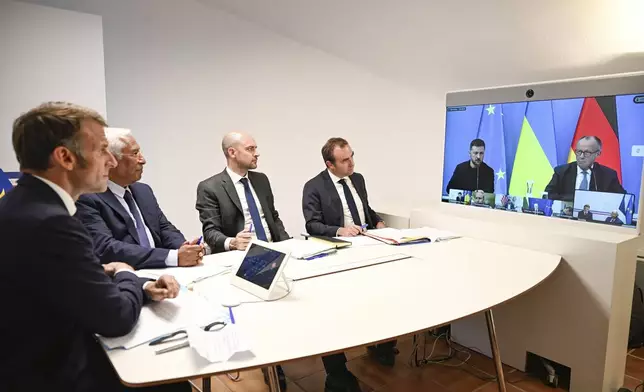
French President Emmanuel Macron, left, Antonio Costa, President of the European Council, second left, French Foreign Minister Jean-Noel Barrot, third right, and French Defense Minister Sebastien Lecornu, attend a video conference on Ukraine at the Fort de Bregancon in Bormes-les-Mimosas, southern France, Wednesday Aug.13, 2025. (Philippe Magoni, Pool via AP)
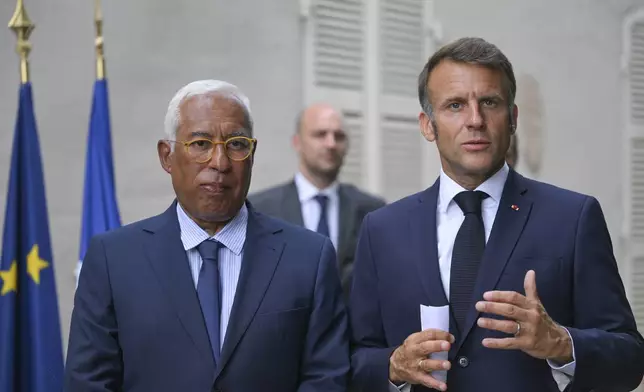
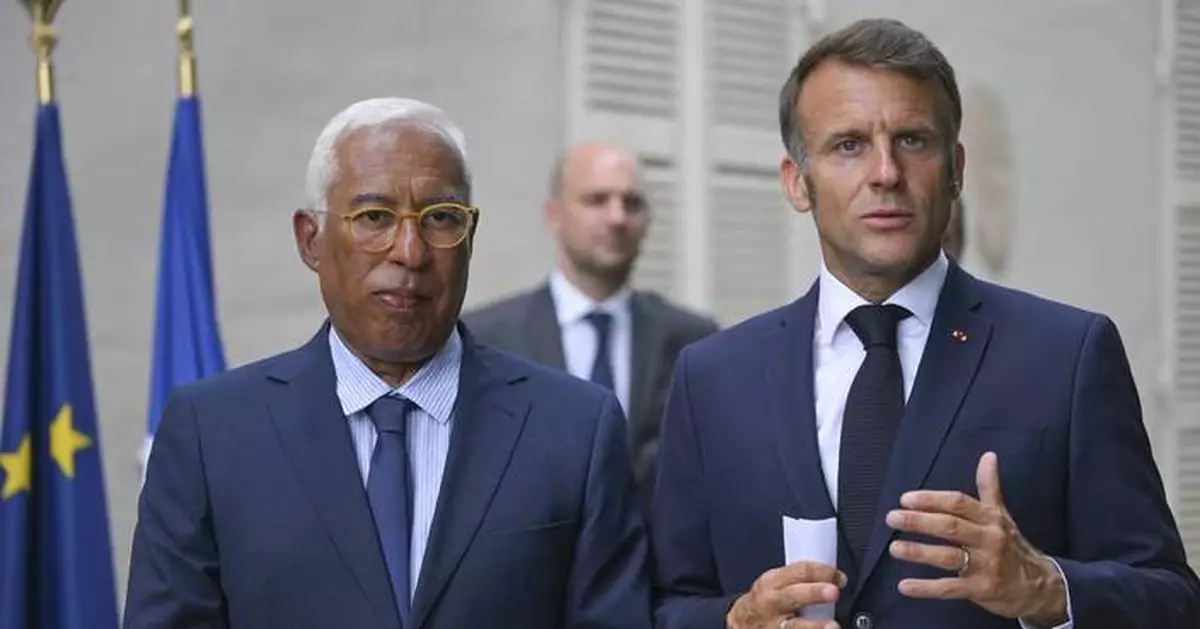
French President Emmanuel Macron, right, and Antonio Costa, President of the European Council, attend a statement following a video conference on Ukraine at the Fort de Bregancon in Bormes-les-Mimosas, southern France, Wednesday Aug.13, 2025. (Philippe Magoni, Pool via AP)
The effectiveness of the operation, drawn up by the coalition of about 30 countries supporting Ukraine, hinges on the deterrent effect of U.S. airpower or other military equipment that European armed forces do not have, or have only in short supply.
No U.S. troops would be involved, but the threat of American airpower, if needed, behind the European force would likely help to dissuade Russian troops from testing Europe's resolve.
Senior Russian officials have repeatedly rejected the idea of European peacekeepers in Ukraine, even though a traditional U.N.-style peacekeeping force is not being planned.
EU leaders have regularly underlined how the United States is “crucial” to the success of the security operation dubbed Multinational Force Ukraine. But the Trump administration has long refused to commit, perhaps keeping its participation on hold as leverage in talks with Russia.
After a meeting Wednesday between Trump and European leaders, European Council President Antonio Costa welcomed “the readiness of the United States to share with Europe the efforts to reinforce security conditions once we obtain a durable and just peace for Ukraine.”
French President Emmanuel Macron said Trump insisted that NATO cannot be part of such security guarantees, but he said the U.S. leader agreed that “the United States and all the (other) parties involved should take part.”
“It’s a very important clarification,” Macron said.
No details of possible U.S. support were made public. U.S. Vice President JD Vance sat in on the coalition meeting for the first time.
More than 200 military planners have worked for months on ways to ensure a future peace should the war, now in its fourth year, finally end. Ukraine’s armed forces also have been involved, and British personnel have led reconnaissance work inside Ukraine.
The exact size of the force has not been made public, although Britain has said it could number 10,000 to 30,000 troops. It must be enough to deter Russian forces, but also of a realistic size for nations that shrank their militaries after the Cold War and are now rearming.
The mission “will be to strengthen Ukraine’s defenses on the land, at sea and in the air because the Ukrainian Armed Forces are the best deterrent against future Russian aggression,” U.K. Defense Secretary John Healey told lawmakers last month. Western trainers will work with Ukrainian troops.
“It will secure Ukraine’s skies by using aircraft,” Healey said, “and it will support safer seas by bolstering the Black Sea Task Force with additional specialist teams.”
Bulgaria, Romania and Turkey launched that naval force a year ago to deal with mines in Black Sea waters.
The force initially will have its headquarters in Paris before moving to London next year. A coordination headquarters in Kyiv will be involved once hostilities cease and it deploys.
Russian Foreign Minister Sergey Lavrov recently said peacekeepers in Ukraine would be just as “unacceptable” for Moscow as Ukraine’s membership in NATO.
“The appearance of troops, armed forces from the same NATO countries, but under a foreign flag, under the flag of the European Union or national flags, does not change anything in this regard. This is, of course, unacceptable to us,” Lavrov said.
European efforts to set up the force have been seen as a first test of the continent’s willingness to defend itself and its interests, given Trump administration warnings that Europe must take care of its own security and that of Ukraine in future.
Still, U.S. forces clearly provide a deterrent that the Europeans cannot muster.
Details of what the U.S. might contribute were unknown, and Trump has changed his mind in the past, so it remains to be seen whether this signal will be enough to persuade more countries in the coalition to provide troops.
Greece has publicly rejected doing so. Prime Minister Kyriakos Mitsotakis said last month that those discussions were “somewhat divisive” and distracted from the goal of ending the war as soon as possible.
Italian Prime Minister Giorgia Meloni has said Rome will not contribute troops, but she previously has underlined the importance of working with the U.S. on ending the conflict and called for the participation of an American delegation in force coordination meetings.
NATO membership would be Ukraine's best security guarantee, but the Trump administration took that possibility off the table in February. Putin is deeply opposed to Ukraine joining the world's biggest military alliance, and some allies fear it might drag NATO into a broader war with nuclear-armed Russia.
Associated Press writers Emma Burrows in London and Katie Marie Davies in Manchester, England, contributed to this report.
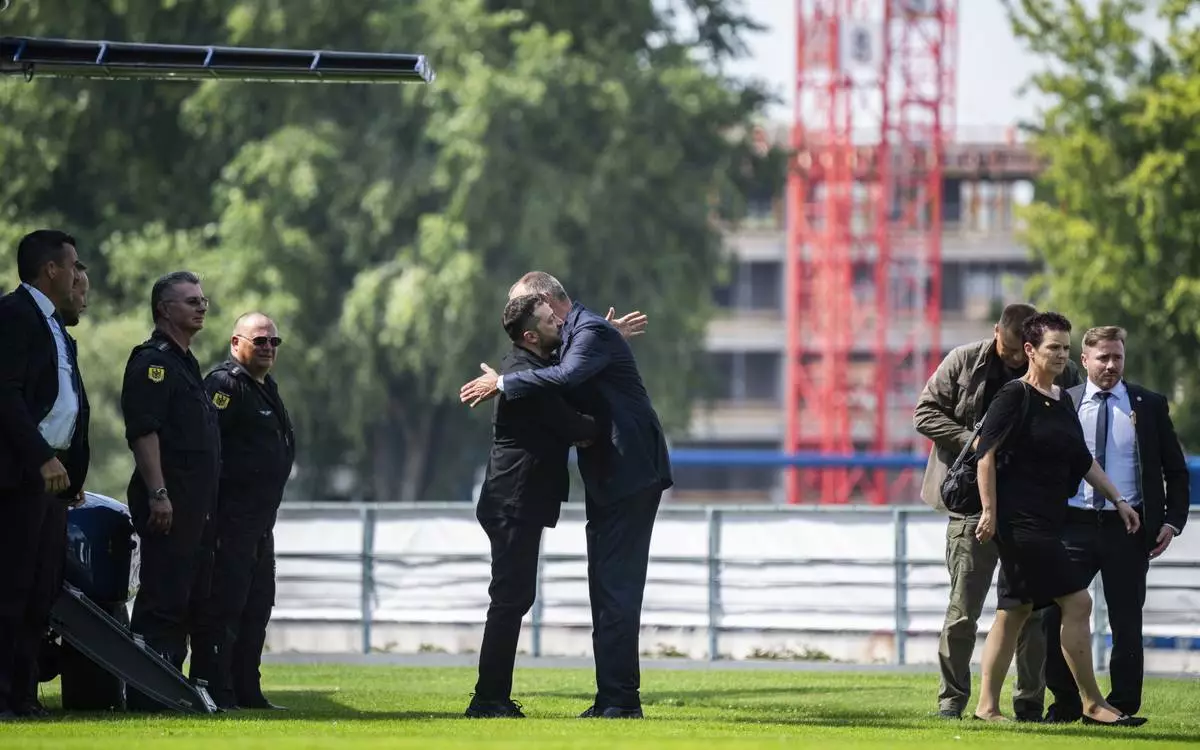
Ukrainian President Volodymyr Zelenskyy, center left, is welcomed by German Chancellor Friedrich Merz upon arrival in the garden of the chancellery in Berlin, Germany, Wednesday, Aug. 13, 2025 to join a video conference of European leaders with the U.S. President on the Ukraine war. (John MacDougall/Pool Photo via AP)
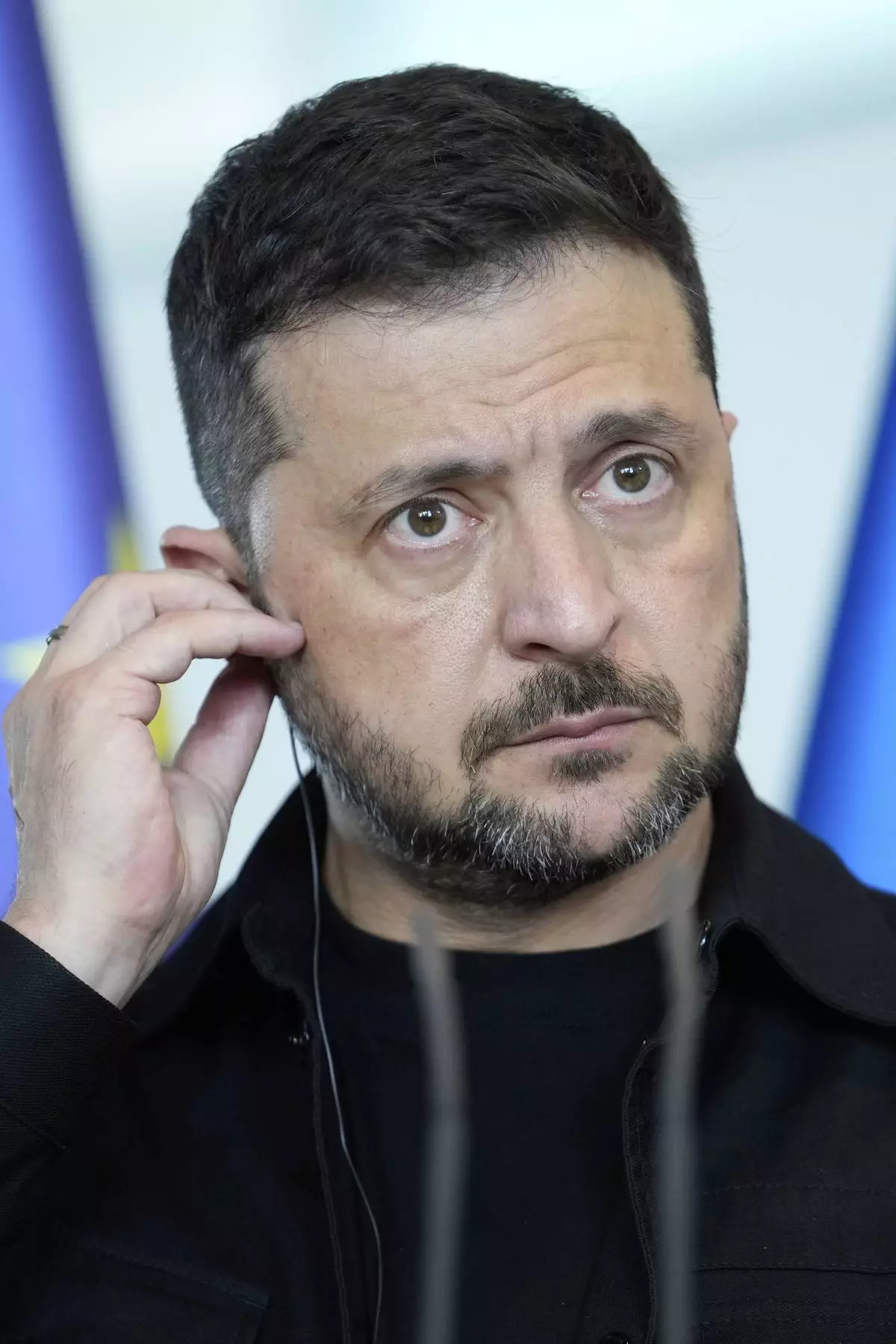
Ukrainian President Volodymyr Zelenskyy attends a joint press statement with German Chancellor Friedrich Merz following talks with European and U.S. leaders in Berlin, Germany, Wednesday, Aug. 13, 2025. (AP Photo/Ebrahim Noroozi)
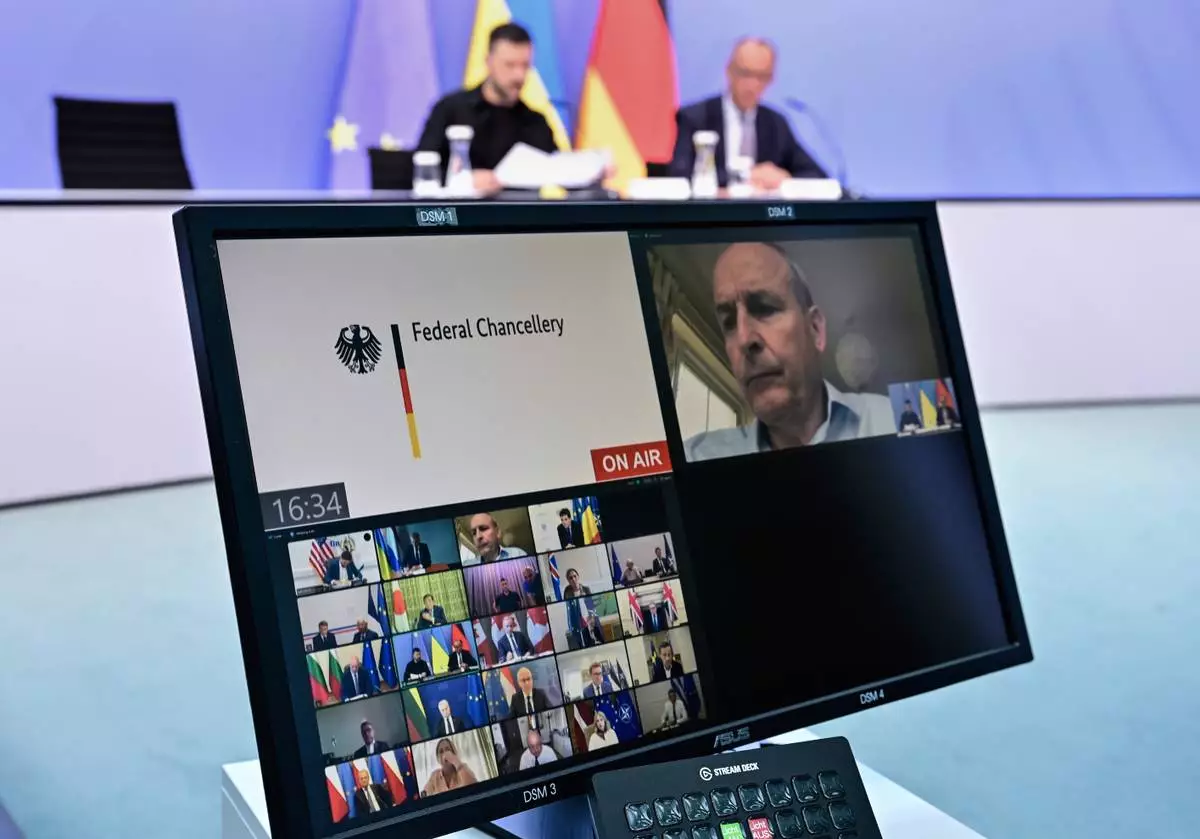
Ukrainian President Volodymyr Zelenskyy, left, and German Chancellor Friedrich Merz attend a video meeting of European leaders with US President Donald Trump on the Ukraine war in Berlin, Germany, Wednesday, Aug. 13, 2025, ahead of the summit between the US and Russian leaders. (John MacDougall/Pool Photo via AP)
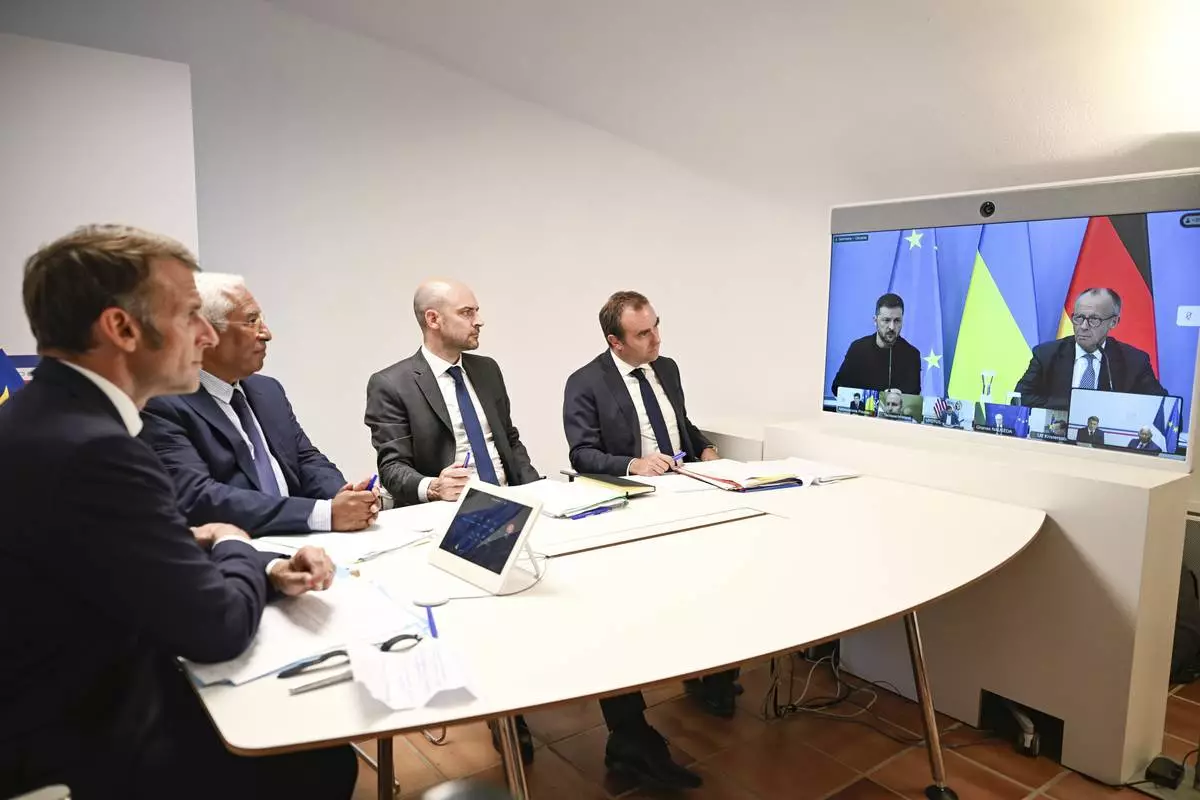
French President Emmanuel Macron, left, Antonio Costa, President of the European Council, second left, French Foreign Minister Jean-Noel Barrot, third right, and French Defense Minister Sebastien Lecornu, attend a video conference on Ukraine at the Fort de Bregancon in Bormes-les-Mimosas, southern France, Wednesday Aug.13, 2025. (Philippe Magoni, Pool via AP)

French President Emmanuel Macron, right, and Antonio Costa, President of the European Council, attend a statement following a video conference on Ukraine at the Fort de Bregancon in Bormes-les-Mimosas, southern France, Wednesday Aug.13, 2025. (Philippe Magoni, Pool via AP)