Skip to Content Facebook Feature Image

Air quality concerns linger in the wake of steel plant explosion in Pennsylvania

News

Air quality concerns linger in the wake of steel plant explosion in Pennsylvania
News

News

Air quality concerns linger in the wake of steel plant explosion in Pennsylvania

2025-08-15 08:26 Last Updated At:08:30

The Pennsylvania county where an explosion at a U.S. Steel plant south of Pittsburgh killed two people and injured more than 10 others announced Thursday that it is stepping up air quality monitoring in the area of the sprawling facility that has a troubled environmental record.

The Allegheny County Health Department announced that mobile air units provided by the state and Carnegie Mellon University will be stationed in the Mon Valley where the plant is Thursday and Friday. The county said these measures are part of its ongoing investigation into Monday's explosion at Clairton Coke Works.

The county said the measures go “well beyond the normal and rigorous regulatory air quality monitoring” and will assess parts of the valley for different types of pollutants such as volatile organic compounds, PM2.5 pollutants and sulfur dioxide. 

After Monday’s blast, the county health department initially told residents within 1 mile (1.6 kilometers) of the plant to remain indoors and close all windows and doors. The department lifted the advisory after its monitors didn’t detect levels of soot or sulfur dioxide above federal standards.

Dr. Deborah Gentile, the medical director of Community Partners in Asthma Care, called the mobile units an “excellent move for the county" because the general public “has no idea what is going on at the facility.”

“The current regulatory monitors are in fixed locations, and many residents live in closer proximity to the plant than these stationary monitors,” she said. “Having monitors in additional locations will help identify if there are any exceedances of the criteria pollutants. So this is good news.”

The Allegheny County Medical Examiner’s Office also confirmed Thursday that the second person who died in the blast was Steven Menefee, 52, of Clairton. Earlier, the county medical examiner’s office identified one of the dead as Timothy Quinn, 39.

U.S. Steel CEO David Burritt said Tuesday the company is working closely with local, state and federal authorities. He would not speculate about the cause of the explosion.

The massive plant along the Monongahela River in Clairton converts coal to coke, a key component in the steelmaking process. The facility is considered the largest coking operation in North America and is one of four major U.S. Steel plants in Pennsylvania.

To make coke, coal is baked in special ovens for hours at high temperatures to remove impurities that could otherwise weaken steel. The process creates what is known as coke gas — a lethal mix of methane, carbon dioxide and carbon monoxide.

The plant has a long history of environmental problems, especially fouling the air in communities nearby the sprawling plant.

In 2018, a Christmas Eve fire damaged pollution-control equipment and led to repeated releases of sulfur dioxide, according to a subsequent lawsuit. The fire prompted Allegheny County to warn residents to limit outdoor activities. Residents said it was hard to breathe for weeks afterward and that the air felt acidic and smelled like rotten eggs. U.S. Steel settled a lawsuit last year with an agreement to spend $19.5 million in equipment upgrades and $5 million on local clean air efforts and programs.

In 2019, U.S. Steel agreed to settle a lawsuit regarding air pollution from Clairton for $8.5 million.

The concerns about air quality also come as the federal Environmental Protection Agency moves to postpone new hazardous air pollution standards for coke plants, like Clairton.

Matthew Mehalik, executive director of the Breathe Project, a public health advocacy group in Pittsburgh, said the regulations were deemed to be almost insignificant to operational costs and would have helped protect the public with air quality monitoring.

The regulation would have required — like is already required at refineries all over the United States — fence-line monitoring for hazardous air pollutants at the Clairton plant, Mehalik said.

That information would have been “incredibly useful” when the explosion happened on Monday, Mehalik said.

Gentile, who studied asthma levels after the 2018 fire and found twice as many patients sought medical treatment, said the fenceline data, a measure of air pollution at the property line of a manufacturing site, would have helped with the latest blast.

“If fenceline monitoring were in place at the time of the event and now in the aftermath, it would be providing us with valuable information on emissions during these times, which in turn would help us advise the community on their risk of adverse health effects,” she said.

Associated Press writer Marc Levy contributed to this report from Harrisburg, Pennsylvania.
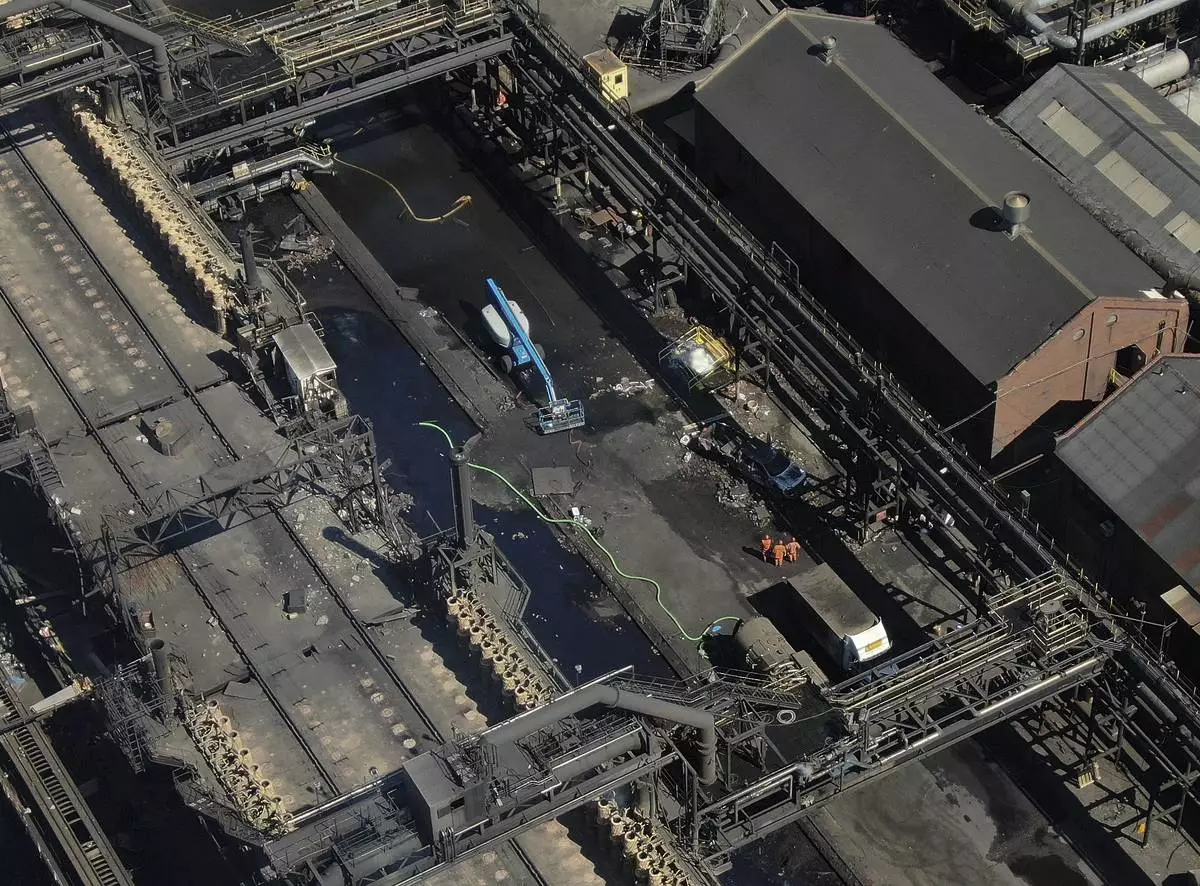
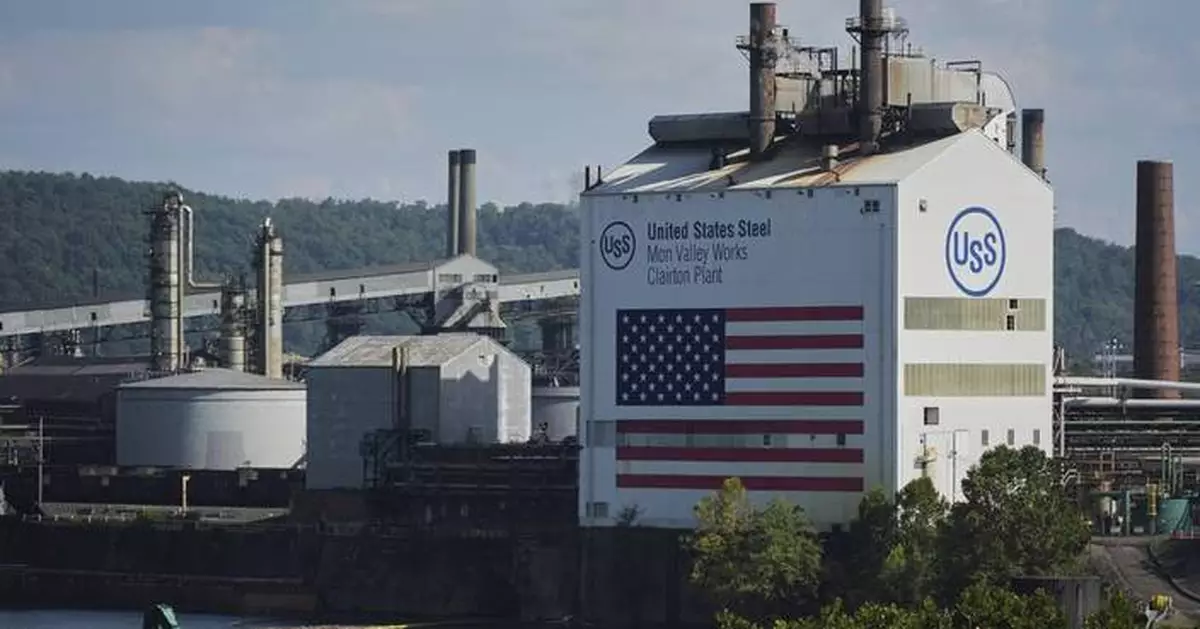
The Clairton Coke Works, a U.S. Steel coking plant, is seen Tuesday, Aug 12, 2025, in Clairton, Penn. (Sean Stipp/Pittsburgh Tribune-Review via AP)
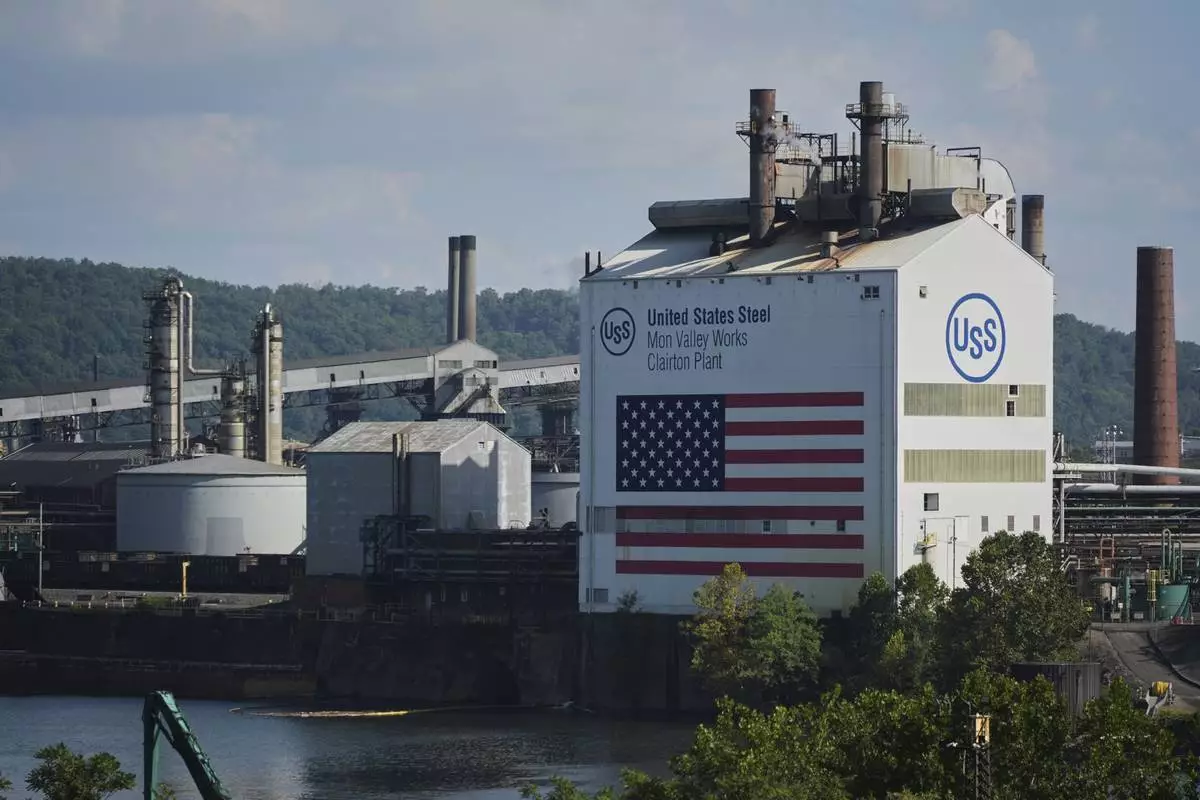
The Clairton Coke Works, a U.S. Steel coking plant, is seen Tuesday, Aug 12, 2025, in Clairton, Penn. (Sean Stipp/Pittsburgh Tribune-Review via AP)

The Clairton Coke Works, a U.S. Steel coking plant, is seen Monday, Aug 11, 2025, in Clairton, Penn. (AP Photo/Gene Puskar)
The Clairton Coke Works, a U.S. Steel coking plant, is seen Monday, Aug 11, 2025, in Clairton, Penn. (AP Photo/Gene Puskar)
CAPE CANAVERAL, Fla. (AP) — An ailing astronaut returned to Earth with three others on Thursday, ending their space station mission more than a month early in NASA’s first medical evacuation.

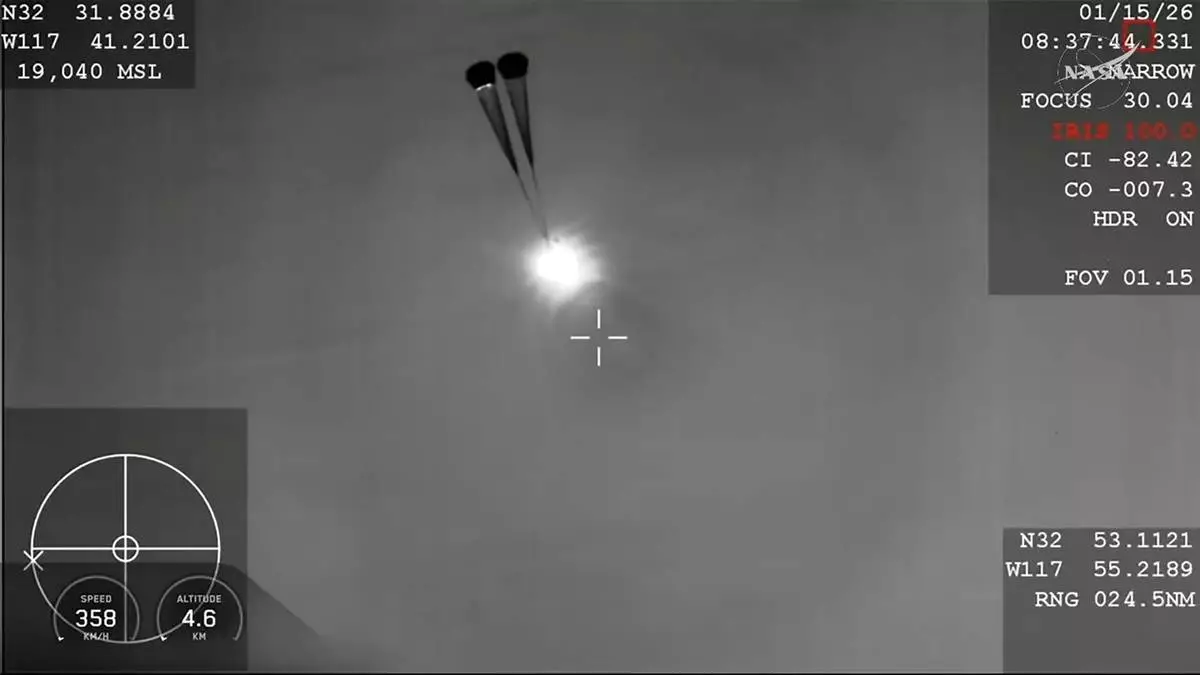
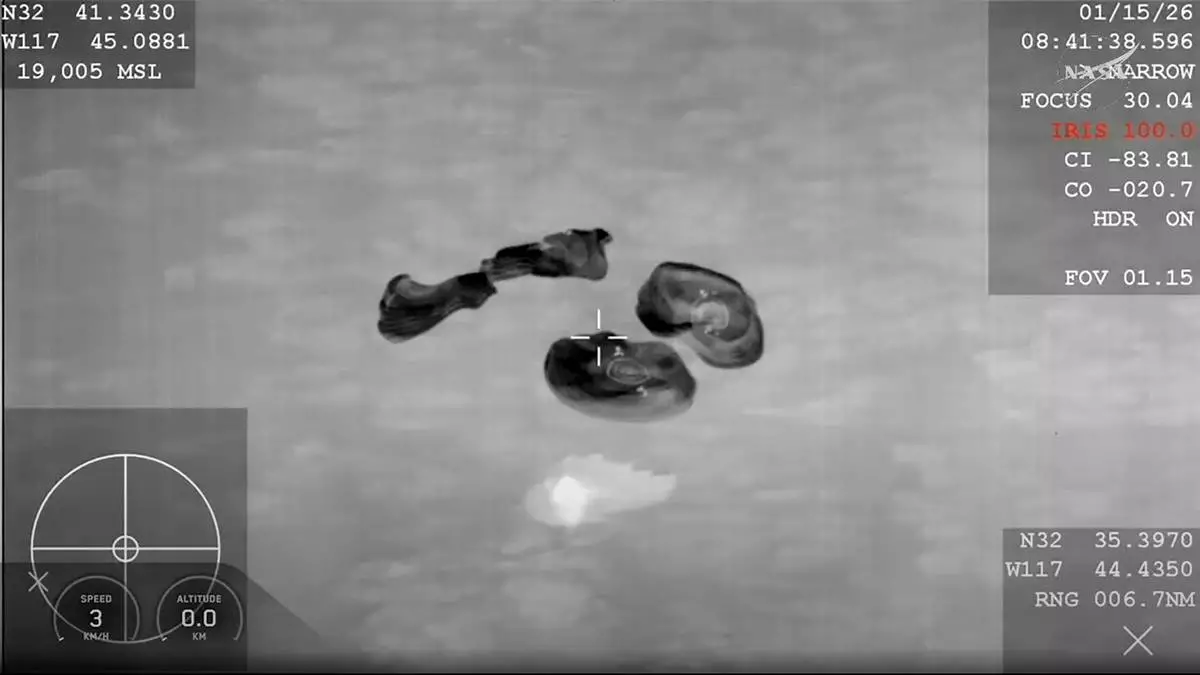
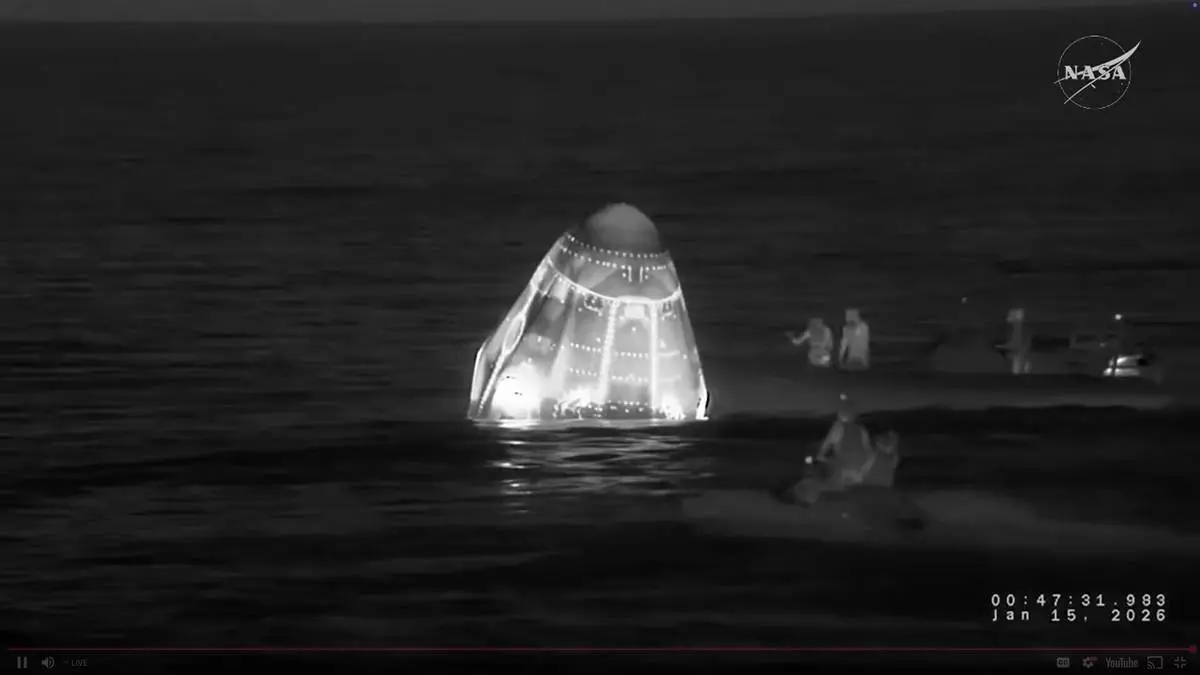
SpaceX guided the capsule to a middle-of-the-night splashdown in the Pacific near San Diego, less than 11 hours after the astronauts exited the International Space Station.

“It’s so good to be home,” said NASA astronaut Zena Cardman, the capsule commander.

It was an unexpected finish to a mission that began in August and left the orbiting lab with only one American and two Russians on board. NASA and SpaceX said they would try to move up the launch of a fresh crew of four; liftoff is currently targeted for mid-February.

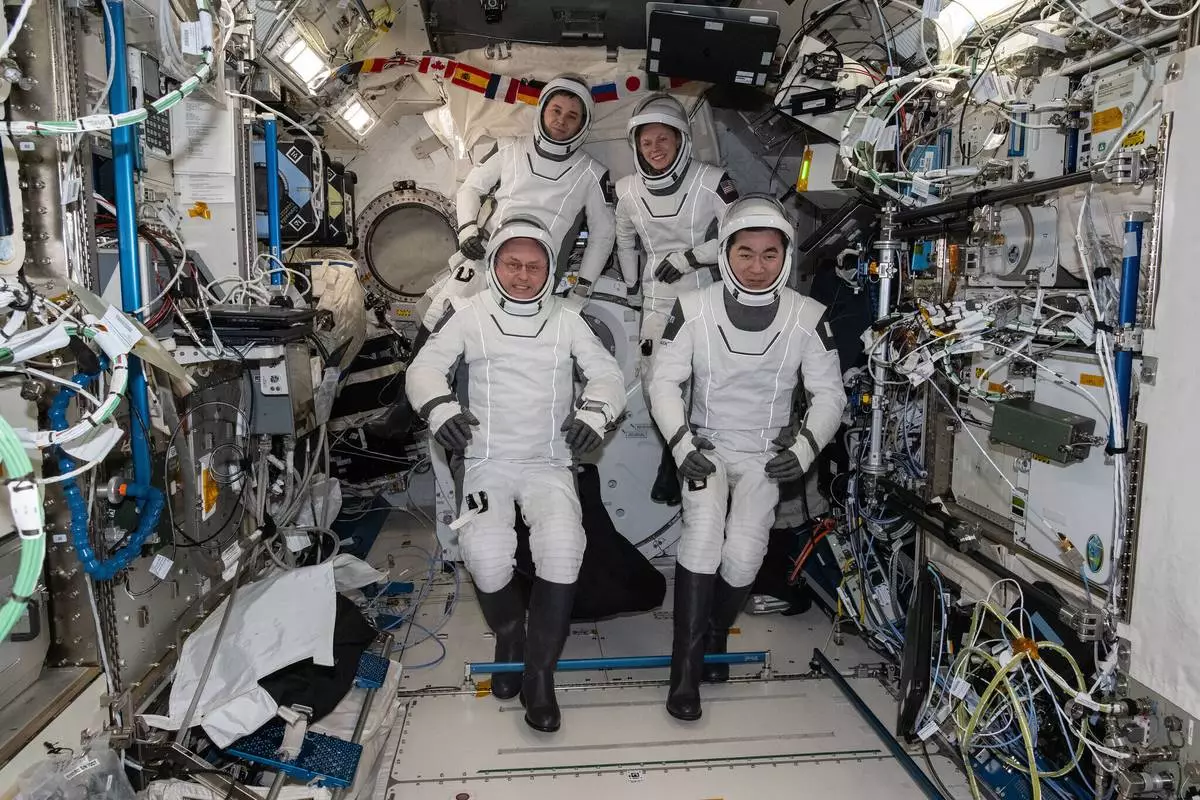
Cardman and NASA’s Mike Fincke were joined on the return by Japan’s Kimiya Yui and Russia’s Oleg Platonov. Officials have refused to identify the astronaut who had the health problem or explain what happened, citing medical privacy.

While the astronaut was stable in orbit, NASA wanted them back on Earth as soon as possible to receive proper care and diagnostic testing. The entry and splashdown required no special changes or accommodations, officials said, and the recovery ship had its usual allotment of medical experts on board. It was not immediately known when the astronauts would fly from California to their home base in Houston. Platonov’s return to Moscow was also unclear.

NASA stressed repeatedly over the past week that this was not an emergency. The astronaut fell sick or was injured on Jan. 7, prompting NASA to call off the next day’s spacewalk by Cardman and Fincke, and ultimately resulting in the early return. It was the first time NASA cut short a spaceflight for medical reasons. The Russians had done so decades ago.

The space station has gotten by with three astronauts before, sometimes even with just two. NASA said it will be unable to perform a spacewalk, even for an emergency, until the arrival of the next crew, which has two Americans, one French and one Russian astronaut.

The Associated Press Health and Science Department receives support from the Howard Hughes Medical Institute’s Department of Science Education and the Robert Wood Johnson Foundation. The AP is solely responsible for all content.

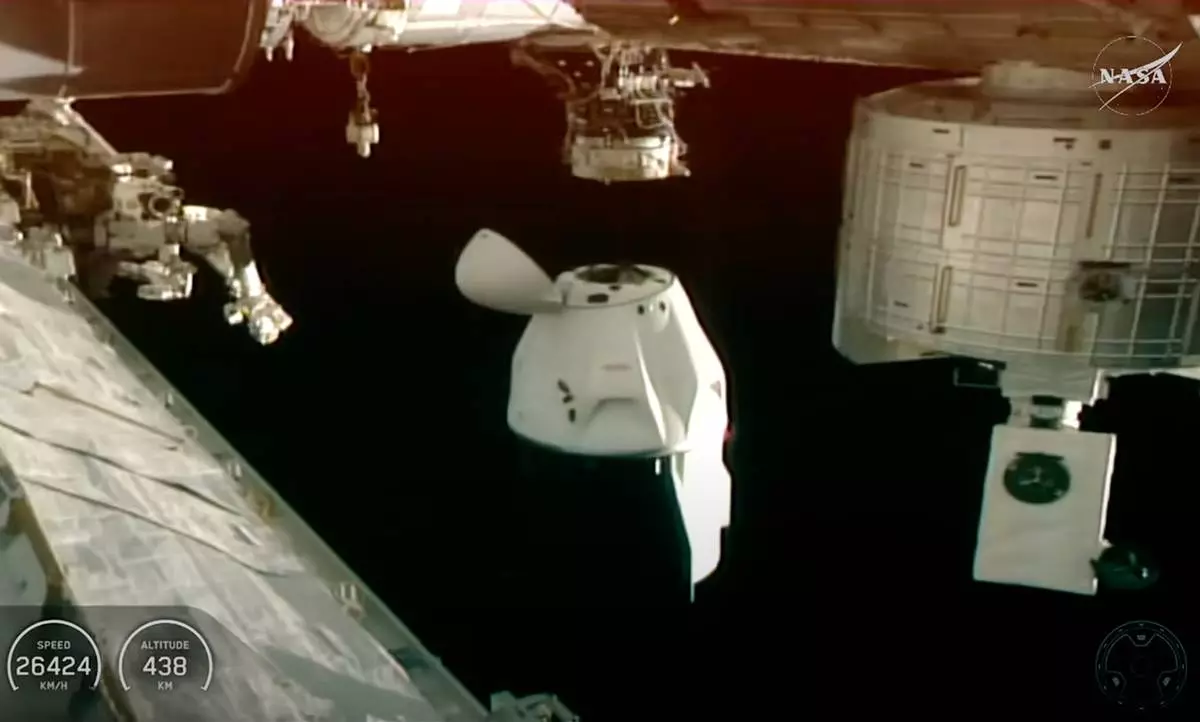
This screengrab from video provided by NASA TV shows the SpaceX Dragon departing from the International Space Station shortly after undocking with four NASA Crew-11 members inside on Wednesday, Jan. 14, 2026. (NASA via AP)

This screengrab from video provided by NASA TV shows the SpaceX Dragon departing from the International Space Station shortly after undocking with four NASA Crew-11 members inside on Wednesday, Jan. 14, 2026. (NASA via AP)

This photo provided by NASA shows clockwise from bottom left are, NASA astronaut Mike Fincke, Roscosmos cosmonaut Oleg Platonov, NASA astronaut Zena Cardman, and JAXA (Japan Aerospace Exploration Agency) astronaut Kimiya Yui gathering for a crew portrait wearing their Dragon pressure suits during a suit verification check inside the International Space Station’s Kibo laboratory module, Wednesday, Jan. 14, 2026. (NASA via AP)

This photo provided by NASA shows clockwise from bottom left are, NASA astronaut Mike Fincke, Roscosmos cosmonaut Oleg Platonov, NASA astronaut Zena Cardman, and JAXA (Japan Aerospace Exploration Agency) astronaut Kimiya Yui gathering for a crew portrait wearing their Dragon pressure suits during a suit verification check inside the International Space Station’s Kibo laboratory module, Wednesday, Jan. 14, 2026. (NASA via AP)

This screengrab from video provided by NASA shows recovery vessels approaching the NASA's SpaceX Crew-11 capsule to evacuate one of the crew members after they re-entered the earth in a middle-of-the-night splashdown near San Diego, Calif., Thursday, Jan. 15, 2026. (NASA via AP)

This screengrab from video provided by NASA shows recovery vessels approaching the NASA's SpaceX Crew-11 capsule to evacuate one of the crew members after they re-entered the earth in a middle-of-the-night splashdown near San Diego, Calif., Thursday, Jan. 15, 2026. (NASA via AP)

This screengrab from video provided by NASA shows the NASA's SpaceX Crew-11 members re entering the earth in a middle-of-the-night splashdown near San Diego, Calif., Thursday, Jan. 15, 2026. (NASA via AP)

This screengrab from video provided by NASA shows the NASA's SpaceX Crew-11 members re entering the earth in a middle-of-the-night splashdown near San Diego, Calif., Thursday, Jan. 15, 2026. (NASA via AP)

This screengrab from video provided by NASA shows the NASA's SpaceX Crew-11 members re entering the earth in a middle-of-the-night splashdown near San Diego, Calif., Thursday, Jan. 15, 2026. (NASA via AP)

This screengrab from video provided by NASA shows the NASA's SpaceX Crew-11 members re entering the earth in a middle-of-the-night splashdown near San Diego, Calif., Thursday, Jan. 15, 2026. (NASA via AP)

Recommended Articles