Located at the southern foot of the Himalayas, the sparsely populated Yumai Township in southwest China's Xizang Autonomous Region once had a population of only three. Today, the township is home to over 200 people and oversees two villages.
Since 2018, Yumai Township has embarked on a path of building itself into a prosperous border township with steel-framed houses, a drainage system, schools, and central parks one after another.
In 2019, the reconstruction of a 50-kilometer paved road connecting Yumai to a neighboring township was completed with an investment of over 500 million yuan (about 70.28 million U.S. dollars) by the state, which put an end its history of being snowbound every year.
Additionally, the State Grid extended a 10-kilovolt power transmission line to Yumai, providing stable and secure electricity supply.
"In 2018, an armed force unit was transformed into an immigration management police unit. At that time, they were protecting us. Now I wish to be one of them to protect local people," said Lhapa Tsering, a local villager.
Thirty-one-year old Tenzin Samdrup has been rooted in Yumai for nearly a decade after graduating from university. He got married and had children here, and the couple have devoted themselves to the local courier business.
"In the past, villagers would go to urban areas to buy daily necessities. Now it's very convenient for them to buy things online, as roads have been improved and delivery services can reach here," said Tenzin Samdrup.
"Nowadays, there are hundreds of express parcels every day, and today we have over 300 parcels. When we just came here, there weren't many young people, while now there are many more young people, and more and more of them are shopping online. Although it's more attractive to live in big cities, we can spend time with parents and look after children here," said Sonam Drolkar, Tenzin Samdrup's wife.
Since the 1980s, grazing and patrolling the border have been a tradition of border defense passed down by local villagers for over four decades.
Since 2024, a regular collaboration mechanism has been established between police officers and border guards. They jointly conduct five to six hours of border patrols every week, and the cumulative patrol mileage has exceeded 1,800 kilometers.
In addition, immigration management police also carry out a border patrol once a month, which takes them at least three days each time to climb over mountain passes at an altitude of over 5,000 meters. In case of heavy snow, it may take more than a week.
"We would bring equipment such as sleeping bags with us, in order that we can sleep on the ground. There is no house to shelter us from the rain. The food is either compressed food or self-heating rice. If there are bear footprints, we would spray a bear repellent around. Before we sleep at night, we will also spray the repellent around to prevent any creatures from approaching," said Ngawang Phuntsog, a border police officer.
"We have established a tourist service and reception center, which is expected to be put into use by the end of this year. It will be helpful to attract tourists and increase the income of our village collective," said Rinchen Phuntsog, head of Yumai Township.
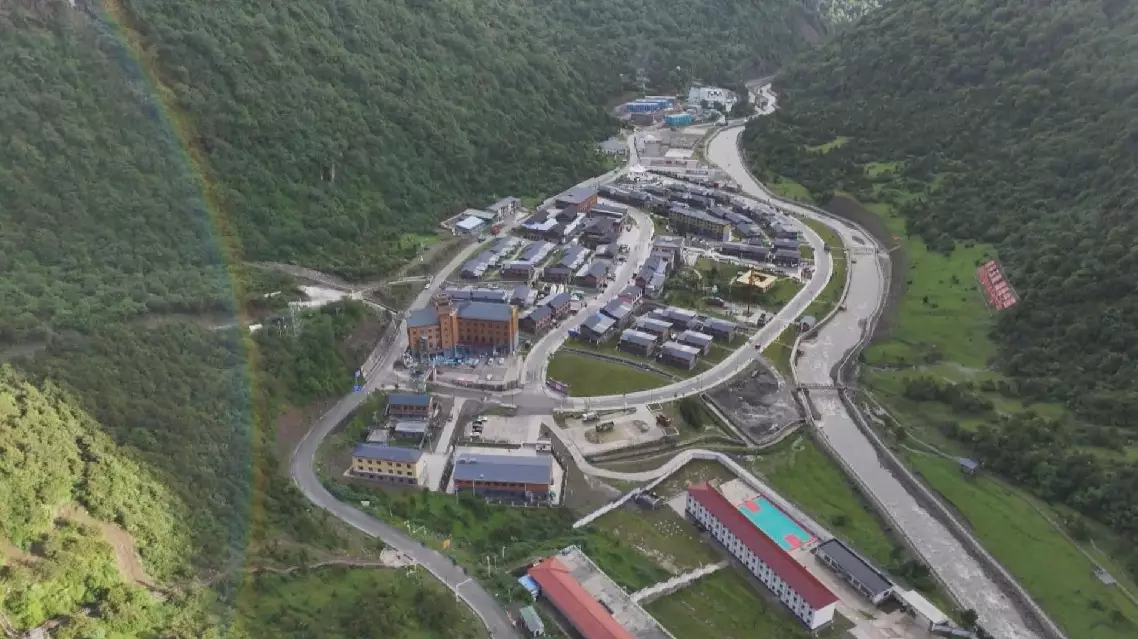
Life improves for residents in sparsely populated township of China's Xizang