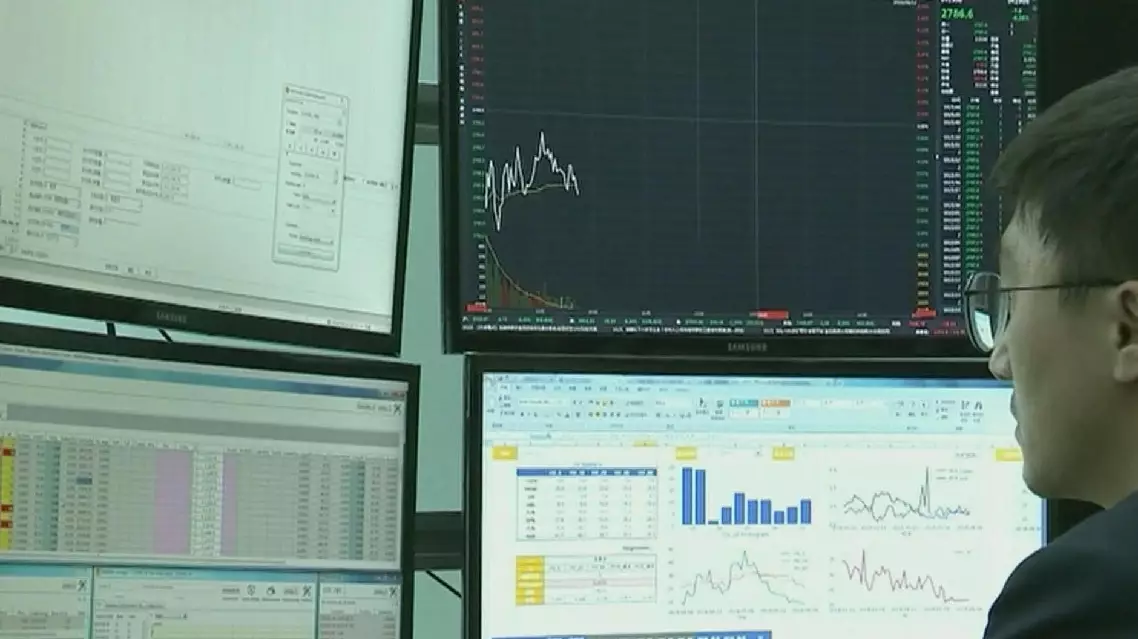
China's A-share market has shown robust performance recently, with margin financing balances surpassing the two trillion yuan (about 278.54 billion U.S. dollars) mark to hit a decade high.
Margin financing in the A-share market refers to investors using cash or stocks as collateral to borrow money from securities firms to purchase stocks.
To be more specific, if investors believe a stock will rise, they can initially purchase some shares with their own funds and then increase their position through margin financing. If the stock price rises, upon selling, they repay the borrowed amount along with interest and keep the additional profit. This profit represents the extra income generated through leverage, illustrating the leverage effect of margin trading.
The margin financing balance refers to the remaining amount of borrowed funds in the market that have not yet been repaid. Therefore, a higher balance indicates a larger amount of borrowed funds that are still outstanding.
As of Friday, the Shanghai and Shenzhen stock exchanges reported margin financing balances of around 1.0339 trillion yuan (about 143.99 billion U.S. dollars) and 1.0004 trillion yuan (about 139.33 billion U.S. dollars), respectively, pushing the combined total above two trillion yuan -- a near-decade high.
"Since September 24 last year, thanks to the continued effects of policies aimed at ensuring stable growth, there has been a sustained improvement in market risk appetite and investors' sentiment. Consequently, the relative attractiveness of the stock market has increased to some extent," said Li Qiusuo, chief domestic strategy analyst at the research department of China International Capital Corporation (CICC).
Experts believe that with the increasing trading activity and the accelerated pace of capital inflows into the market, financing conditions have become more accommodative, thereby providing robust support for the stock market's rise.
China's A-share market rises with margin financing balances at decade high