A county in central China's Henan Province, once marked by barren hills, is transforming into a vibrant landscape of lush mountains through the development of local industries focused on oil-seed camellia cultivation.
In Guangshan County, hills and low mountains comprise more than half of the area. Fifteen years ago, lacking effective methods to leverage the terrain for economic development, locals primarily used the vegetation on the hills for cooking.
"In the past, these were all barren hills or what we call firewood hills. Local farmers would chop scrub trees from the mountains to use as firewood," said Chen Yong, general manager of Guangshan County Chengxin Industrial Development Company.
Blanketing the hills today are evergreen camellia trees, a species distinguished among the world's four major woody oil crops, alongside oil palm, olive and coconut.
"The camellia flowers can be a source for honey. The oil extracted from its seeds can also be used to make cosmetics and soap," said Chen Zhu, head of plantation of Henan Lianxing Camellia Oil Company.
Embedded in the local popular saying is evidence of the economic prosperity camellia trees have delivered to communities here.
"[We have a saying:] One Chinese measurement of mu (about 0.067 hectares) of camelliea trees yields 100 pounds of oil, bringing wealth to build houses and families. These trees can live over 100 years, with a peak fruiting period lasting up to 80 years, meaning one generation's planting can benefit three generations," Chen Zhu said.
Achieving oil-production maturity requires approximately 10 years of growth for the camellia trees, meaning the first decade demands continuous investment without generating returns, which raises critical questions about the community's welfare in the near term.
Guangshan County thus reinvests profits from tea cultivation, seedling nurseries and other industries to subsidize the camellia plantations. First, they facilitate land-use rights transfer from local villagers, increasing their income through rental payments. Second, the year-round maintenance of their plantations creates steady jobs. During peak seasons like spring tea harvesting, the over-130-hectare plantation requires 500 to 800 workers to meet daily operational demands.
"Initially, villagers were skeptical. We paid daily wages immediately after each work session: noon payment for morning tasks, evening payments for afternoon tasks. Now payments are made three times a year: during rice transplanting season when farmers need fertilizer funds, before September's school start for children's expenses, and finally, before the Chinese New Year for festival preparations. To develop a viable industry, achieving scale and intensive operations is essential. With tea plantations currently underutilized, we should implement agroforestry and multi-tiered farming systems, raising cattle, goats, chickens and free-range pigs across these lands," said Chen Shifa, founder and president of Henan Lianxing Camellia Oil Company.
The county's forest coverage is now approaching 50 percent. This thriving ecosystem is drawing more visitors to Guangshan and boosting its green economy.
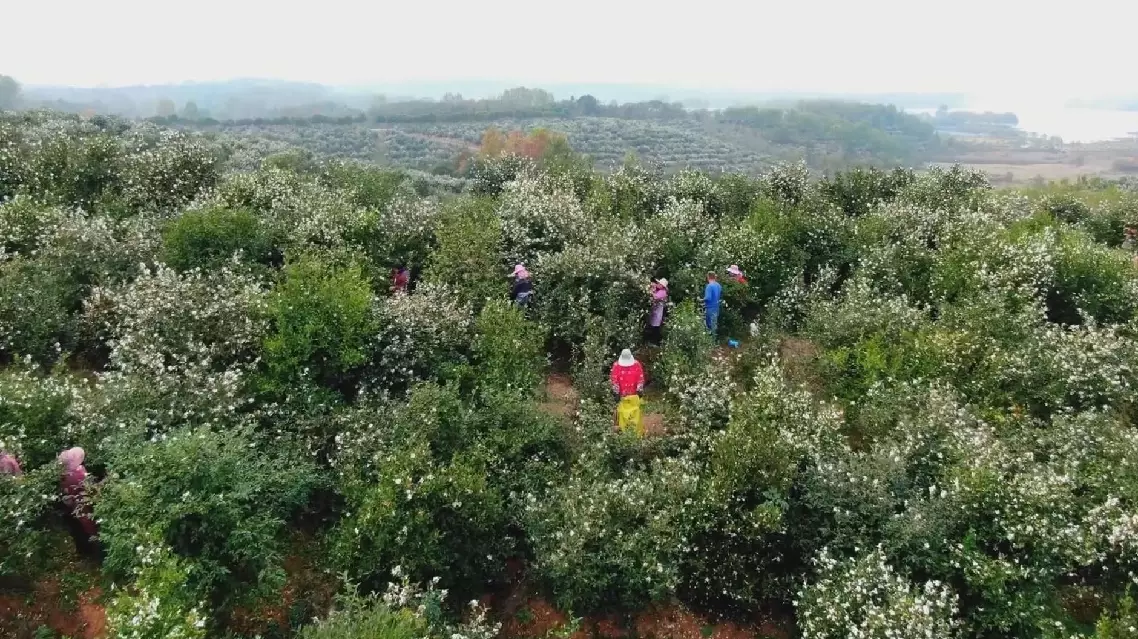
Camellia plantations transform barren central China county into thriving green economy