LA PAZ, Bolivia (AP) — Bolivians headed to the polls on Sunday to vote in presidential and congressional elections that could spell the end of the Andean nation's long-dominant leftist party and see a right-wing government elected for the first time in over two decades.
The election on Sunday is one of the most consequential for Bolivia in recent times — and one of the most unpredictable.
Click to Gallery
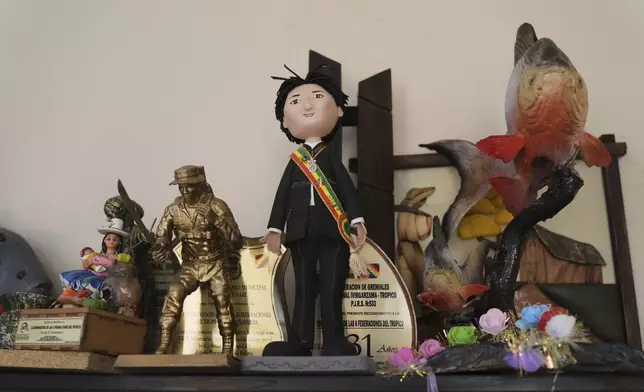
A doll adorned with a miniature presidential depicting former President Evo Morales, who is promoting a null vote campaign in the presidential and legislative elections, sits on a shelf in his office during an interview in Lauca N, Chapare region, Bolivia, Saturday, Aug. 16, 2025. (AP Photo/Jorge Saenz)
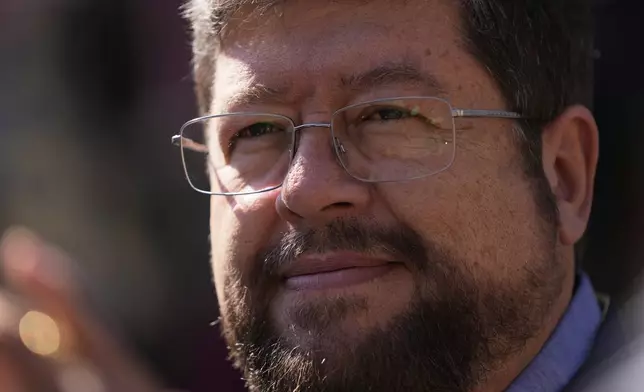
FILE - Bolivian presidential candidate Samuel Doria Medina attends his campaign rally ahead of the upcoming presidential election, in La Paz, Bolivia, July 12, 2025. (AP Photo/Juan Karita, File)
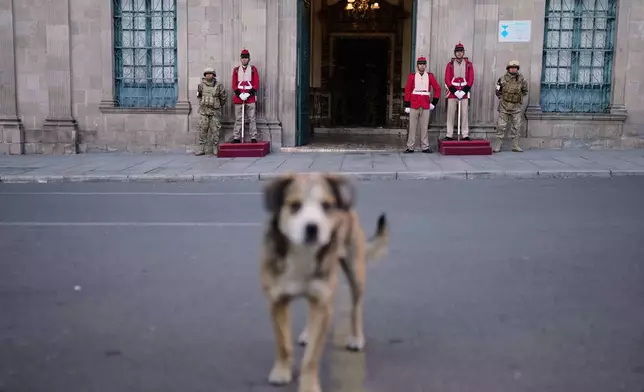
Honor guards stand outside the presidential palace, days ahead of the presidential election in La Paz, Bolivia, Wednesday, Aug. 13, 2025. (AP Photo/Natacha Pisarenko)
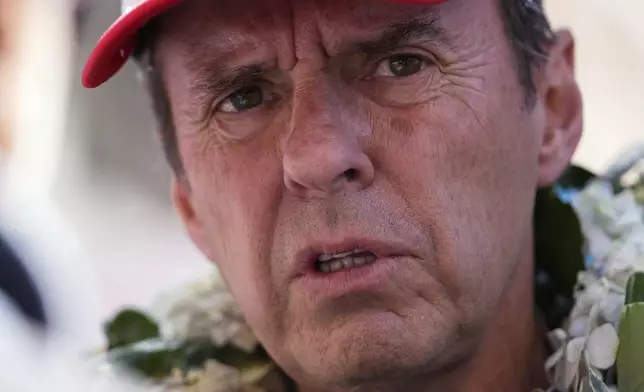
FILE - Bolivian presidential candidate Jorge "Tuto" Quiroga attends his campaign rally ahead of the upcoming presidential election, in La Paz, Bolivia, Aug. 7, 2025. (AP Photo/Juan Karita, File)
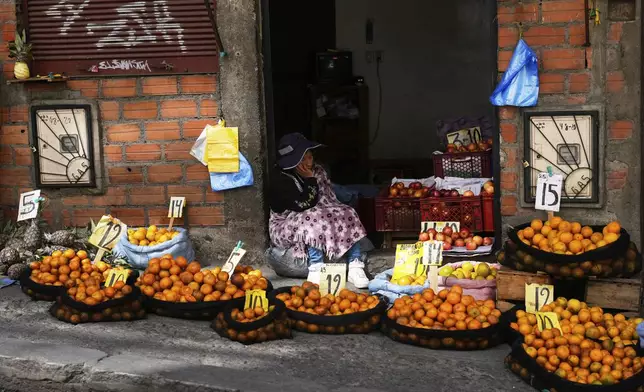
FILE - A fruit vendor waits for customers in La Paz, Bolivia, Aug. 8, 2025. (AP Photo/Juan Karita, File)
Even at this late stage, a remarkable 30% or so of voters remain undecided. Polls show the two leading right-wing candidates, multimillionaire business owner Samuel Doria Medina and former President Jorge Fernando “Tuto” Quiroga, locked in a virtual dead heat.
But a right-wing victory isn't assured. Many longtime voters for the governing Movement Toward Socialism, or MAS, party, now shattered by infighting, live in rural areas and tend to be undercounted in polling.
With the nation’s worst economic crisis in four decades leaving Bolivians waiting for hours in fuel lines, struggling to find subsidized bread and squeezed by double-digit inflation, the opposition candidates are billing the race as a chance to alter the country’s destiny.
“I have rarely, if ever, seen a situational tinderbox with as many sparks ready to ignite,” Daniel Lansberg-Rodriguez, founding partner of Aurora Macro Strategies, a New York-based advisory firm, writes in a memo. Breaking the MAS party's monopoly on political power, he adds, pushes “the country into uncharted political waters amid rising polarization, severe economic fragility and a widening rural–urban divide.”
The outcome will determine whether Bolivia — a nation of about 12 million people with the largest lithium reserves on Earth and crucial deposits of rare earth minerals — follows a growing trend in Latin America, where right-wing leaders like Argentina’s libertarian Javier Milei, Ecuador’s strongman Daniel Noboa and El Salvador’s conservative populist Nayib Bukele have surged in popularity.
A right-wing government in Bolivia could trigger a major geopolitical realignment for a country now allied with Venezuela’s socialist-inspired government and world powers such as China, Russia and Iran.
Doria Medina and Quiroga have praised the Trump administration and vowed to restore ties with the United States — ruptured in 2008 when charismatic, long-serving former President Evo Morales expelled the American ambassador.
The right-wing front-runners also have expressed interest in doing business with Israel, which has no diplomatic relations with Bolivia, and called for foreign private companies to invest in the country and develop its rich natural resources.
After storming to office in 2006 at the start of the commodities boom, Morales, Bolivia's first Indigenous president, nationalized the nation's oil and gas industry, using the lush profits to reduce poverty, expand infrastructure and improve the lives of the rural poor.
After three consecutive presidential terms, as well as a contentious bid for an unprecedented fourth in 2019 that set off popular unrest and led to his ouster, Morales has been barred from this race by Bolivia's constitutional court.
His ally-turned-rival, President Luis Arce, withdrew his candidacy for the MAS on account of his plummeting popularity and nominated his senior minister, Eduardo del Castillo.
As the party splintered, Andrónico Rodríguez, the 36-year-old president of the senate who hails from the same union of coca farmers as Morales, launched his bid.
Rather than back the candidate widely considered his heir, Morales, holed up in his tropical stronghold and evading an arrest warrant on charges related to his relationship with a 15-year-old girl, has urged his supporters to deface their ballots or leave them blank.
Voting is mandatory in Bolivia, where some 7.9 million Bolivians are eligible to vote.
Doria Medina and Quiroga, familiar faces in Bolivian politics who both served in past neoliberal governments and have run for president three times before, have struggled to stir up interest as voter angst runs high.
“There's enthusiasm for change but no enthusiasm for the candidates,” said Eddy Abasto, 44, a Tupperware vendor in Bolivia's capital of La Paz torn between voting for Doria Medina and Quiroga. “It's always the same, those in power live happily spending the country’s money, and we suffer.”
Doria Medina and Quiroga have warned of the need for a painful fiscal adjustment, including the elimination of Bolivia’s generous food and fuel subsidies, to save the nation from insolvency. Some analysts caution this risks sparking social unrest.
“A victory for either right-wing candidate could have grave repercussions for Bolivia’s Indigenous and impoverished communities,” said Kathryn Ledebur, director of the Andean Information Network, a Bolivian research group. “Both candidates could bolster security forces and right-wing para-state groups, paving the way for violent crackdowns on protests expected to erupt over the foreign exploitation of lithium and drastic austerity measures.”
All 130 seats in Bolivia’s Chamber of Deputies, the lower house of Parliament, are up for grabs, along with 36 in the Senate, the upper house.
If, as is widely expected, no one receives more than 50% of the vote, or 40% of the vote with a lead of 10 percentage points, the top two candidates will compete in a runoff on Oct. 19 for the first time since Bolivia's 1982 return to democracy.
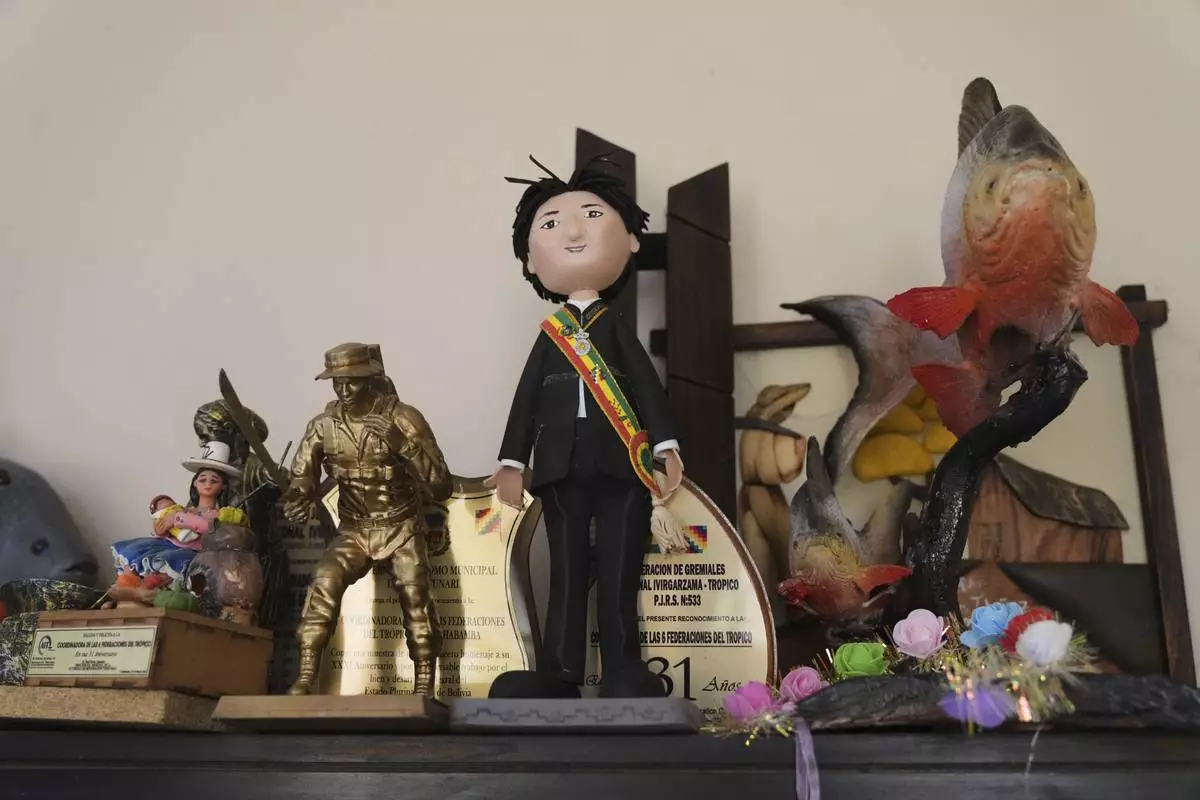
A doll adorned with a miniature presidential depicting former President Evo Morales, who is promoting a null vote campaign in the presidential and legislative elections, sits on a shelf in his office during an interview in Lauca N, Chapare region, Bolivia, Saturday, Aug. 16, 2025. (AP Photo/Jorge Saenz)
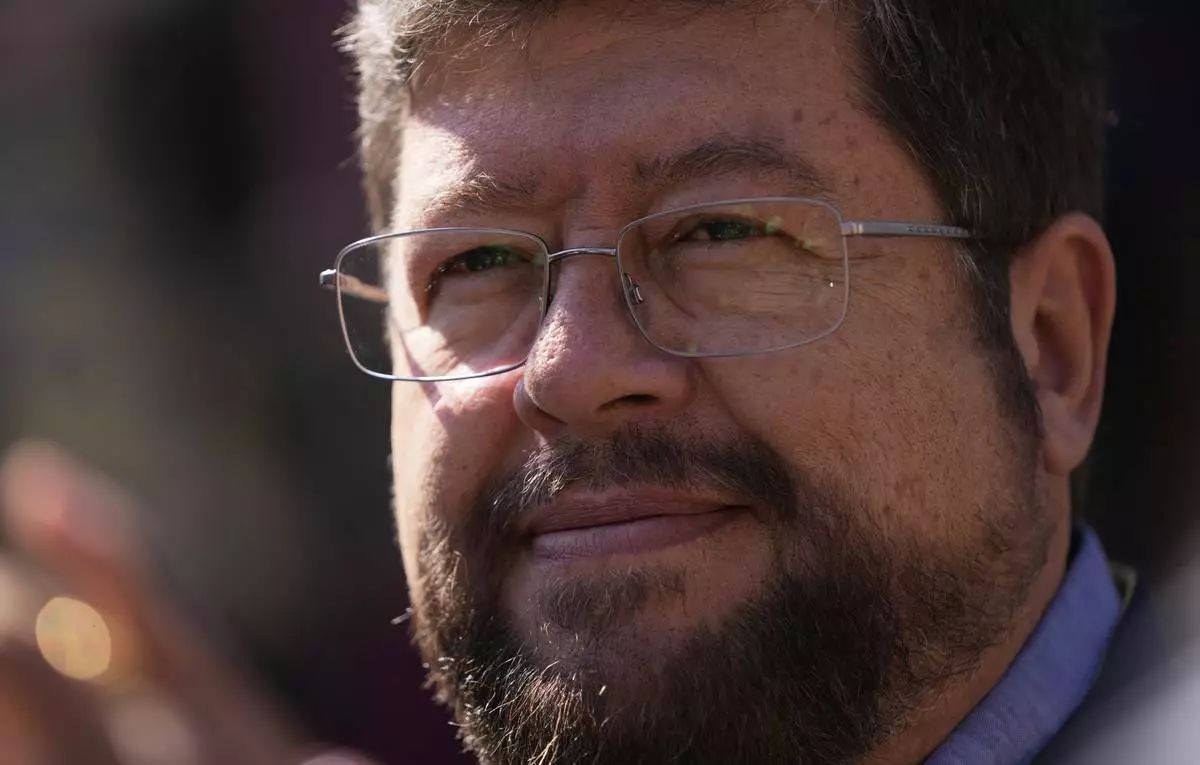
FILE - Bolivian presidential candidate Samuel Doria Medina attends his campaign rally ahead of the upcoming presidential election, in La Paz, Bolivia, July 12, 2025. (AP Photo/Juan Karita, File)
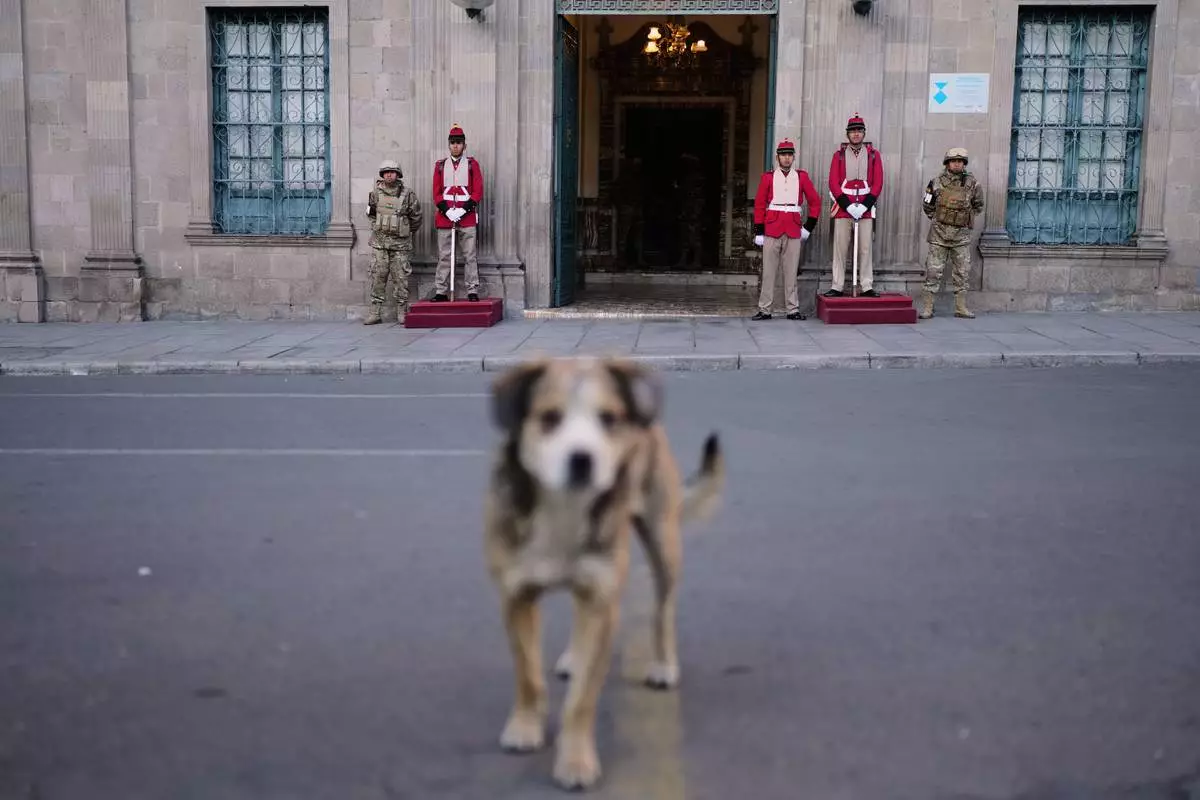
Honor guards stand outside the presidential palace, days ahead of the presidential election in La Paz, Bolivia, Wednesday, Aug. 13, 2025. (AP Photo/Natacha Pisarenko)
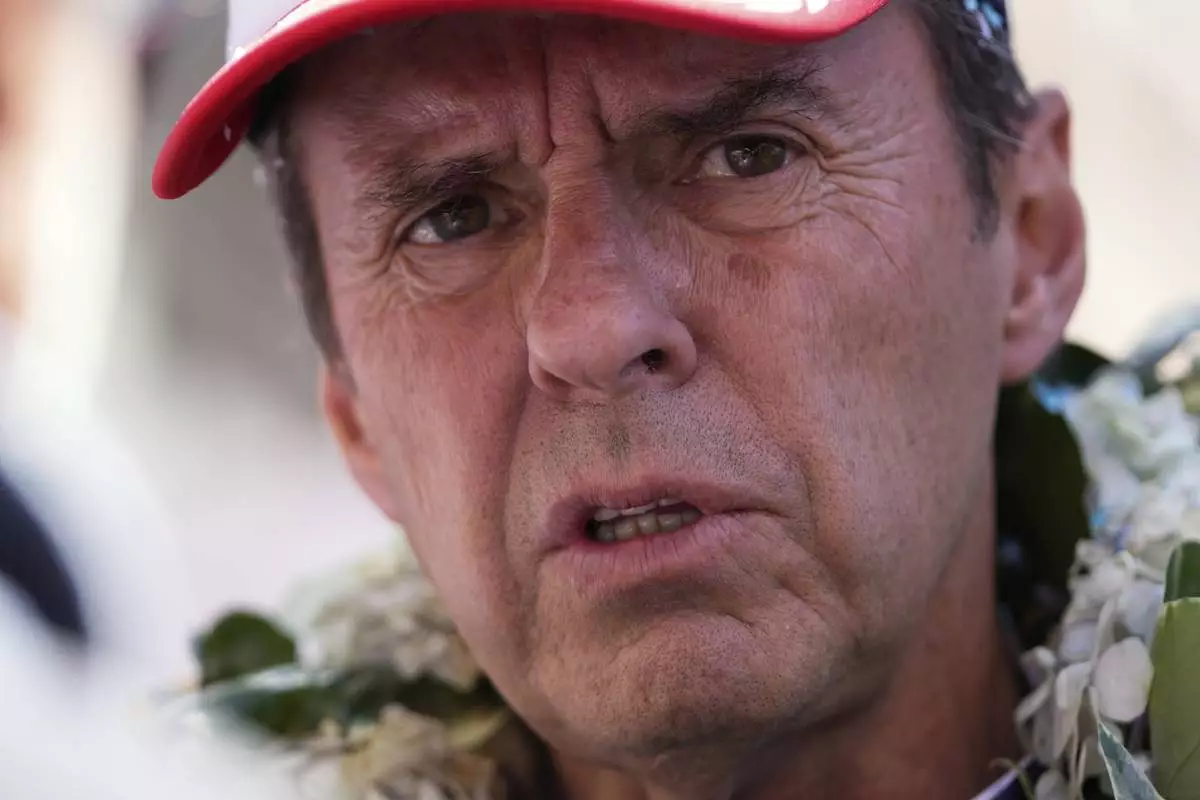
FILE - Bolivian presidential candidate Jorge "Tuto" Quiroga attends his campaign rally ahead of the upcoming presidential election, in La Paz, Bolivia, Aug. 7, 2025. (AP Photo/Juan Karita, File)
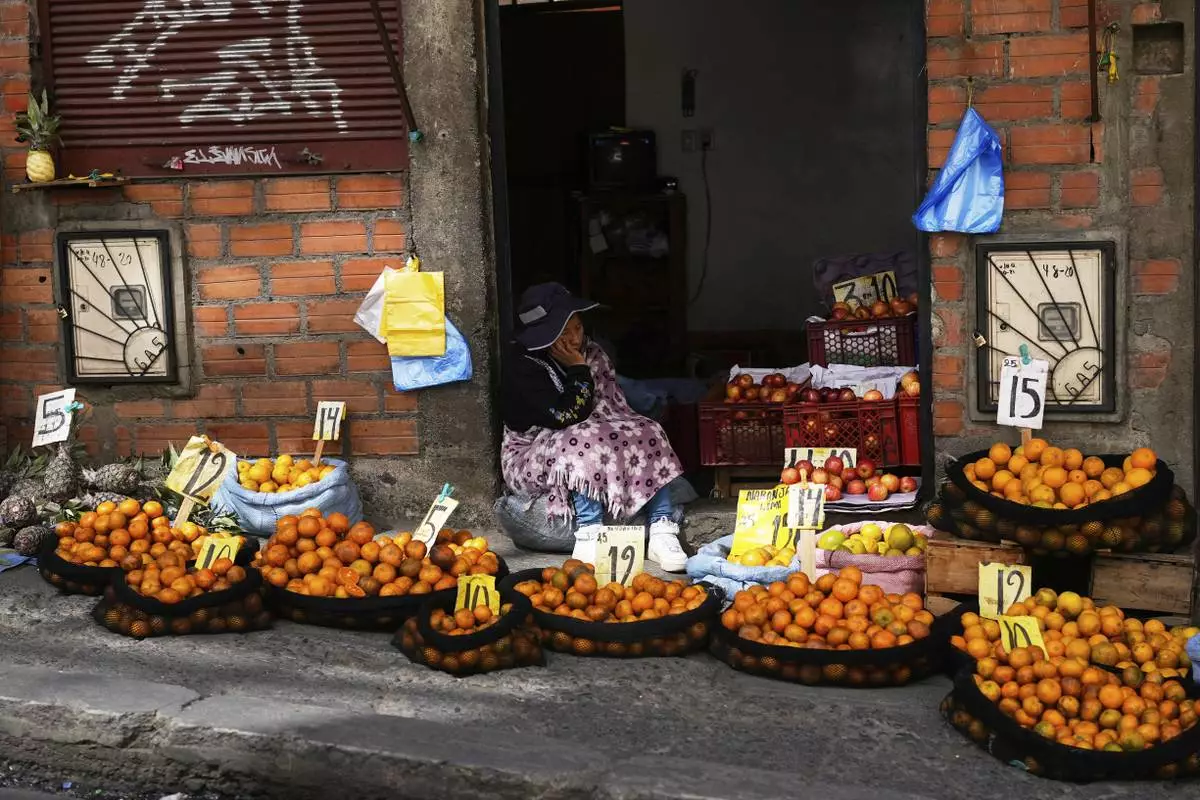
FILE - A fruit vendor waits for customers in La Paz, Bolivia, Aug. 8, 2025. (AP Photo/Juan Karita, File)
Federal immigration agents deployed to Minneapolis have used aggressive crowd-control tactics that have become a dominant concern in the aftermath of the deadly shooting of a woman in her car last week.
They have pointed rifles at demonstrators and deployed chemical irritants early in confrontations. They have broken vehicle windows and pulled occupants from cars. They have scuffled with protesters and shoved them to the ground.
The government says the actions are necessary to protect officers from violent attacks. The encounters in turn have riled up protesters even more, especially as videos of the incidents are shared widely on social media.
What is unfolding in Minneapolis reflects a broader shift in how the federal government is asserting its authority during protests, relying on immigration agents and investigators to perform crowd-management roles traditionally handled by local police who often have more training in public order tactics and de-escalating large crowds.
Experts warn the approach runs counter to de-escalation standards and risks turning volatile demonstrations into deadly encounters.
The confrontations come amid a major immigration enforcement surge ordered by the Trump administration in early December, which sent more than 2,000 officers from across the Department of Homeland Security into the Minneapolis-St. Paul area. Many of the officers involved are typically tasked with arrests, deportations and criminal investigations, not managing volatile public demonstrations.
Tensions escalated after the fatal shooting of Renee Good, a 37-year-old woman killed by an immigration agent last week, an incident federal officials have defended as self-defense after they say Good weaponized her vehicle.
The killing has intensified protests and scrutiny of the federal response.
On Monday, the American Civil Liberties Union of Minnesota asked a federal judge to intervene, filing a lawsuit on behalf of six residents seeking an emergency injunction to limit how federal agents operate during protests, including restrictions on the use of chemical agents, the pointing of firearms at non-threatening individuals and interference with lawful video recording.
“There’s so much about what’s happening now that is not a traditional approach to immigration apprehensions,” said former Immigration and Customs Enforcement Director Sarah Saldaña.
Saldaña, who left the post at the beginning of 2017 as President Donald Trump's first term began, said she can't speak to how the agency currently trains its officers. When she was director, she said officers received training on how to interact with people who might be observing an apprehension or filming officers, but agents rarely had to deal with crowds or protests.
“This is different. You would hope that the agency would be responsive given the evolution of what’s happening — brought on, mind you, by the aggressive approach that has been taken coming from the top,” she said.
Ian Adams, an assistant professor of criminal justice at the University of South Carolina, said the majority of crowd-management or protest training in policing happens at the local level — usually at larger police departments that have public order units.
“It’s highly unlikely that your typical ICE agent has a great deal of experience with public order tactics or control,” Adams said.
DHS Secretary Tricia McLaughlin said in a written statement that ICE officer candidates receive extensive training over eight weeks in courses that include conflict management and de-escalation. She said many of the candidates are military veterans and about 85% have previous law enforcement experience.
“All ICE candidates are subject to months of rigorous training and selection at the Federal Law Enforcement Training Center, where they are trained in everything from de-escalation tactics to firearms to driving training. Homeland Security Investigations candidates receive more than 100 days of specialized training," she said.
Ed Maguire, a criminology professor at Arizona State University, has written extensively about crowd-management and protest- related law enforcement training. He said while he hasn't seen the current training curriculum for ICE officers, he has reviewed recent training materials for federal officers and called it “horrifying.”
Maguire said what he's seeing in Minneapolis feels like a perfect storm for bad consequences.
“You can't even say this doesn't meet best practices. That's too high a bar. These don't seem to meet generally accepted practices,” he said.
“We’re seeing routinely substandard law enforcement practices that would just never be accepted at the local level,” he added. “Then there seems to be just an absence of standard accountability practices.”
Adams noted that police department practices have "evolved to understand that the sort of 1950s and 1960s instinct to meet every protest with force, has blowback effects that actually make the disorder worse.”
He said police departments now try to open communication with organizers, set boundaries and sometimes even show deference within reason. There's an understanding that inside of a crowd, using unnecessary force can have a domino effect that might cause escalation from protesters and from officers.
Despite training for officers responding to civil unrest dramatically shifting over the last four decades, there is no nationwide standard of best practices. For example, some departments bar officers from spraying pepper spray directly into the face of people exercising Constitutional speech. Others bar the use of tear gas or other chemical agents in residential neighborhoods.
Regardless of the specifics, experts recommend that departments have written policies they review regularly.
“Organizations and agencies aren’t always familiar with what their own policies are,” said Humberto Cardounel, senior director of training and technical assistance at the National Policing Institute.
“They go through it once in basic training then expect (officers) to know how to comport themselves two years later, five years later," he said. "We encourage them to understand and know their training, but also to simulate their training.”
Adams said part of the reason local officers are the best option for performing public order tasks is they have a compact with the community.
“I think at the heart of this is the challenge of calling what ICE is doing even policing,” he said.
"Police agencies have a relationship with their community that extends before and after any incidents. Officers know we will be here no matter what happens, and the community knows regardless of what happens today, these officers will be here tomorrow.”
Saldaña noted that both sides have increased their aggression.
“You cannot put yourself in front of an armed officer, you cannot put your hands on them certainly. That is impeding law enforcement actions,” she said.
“At this point, I’m getting concerned on both sides — the aggression from law enforcement and the increasingly aggressive behavior from protesters.”
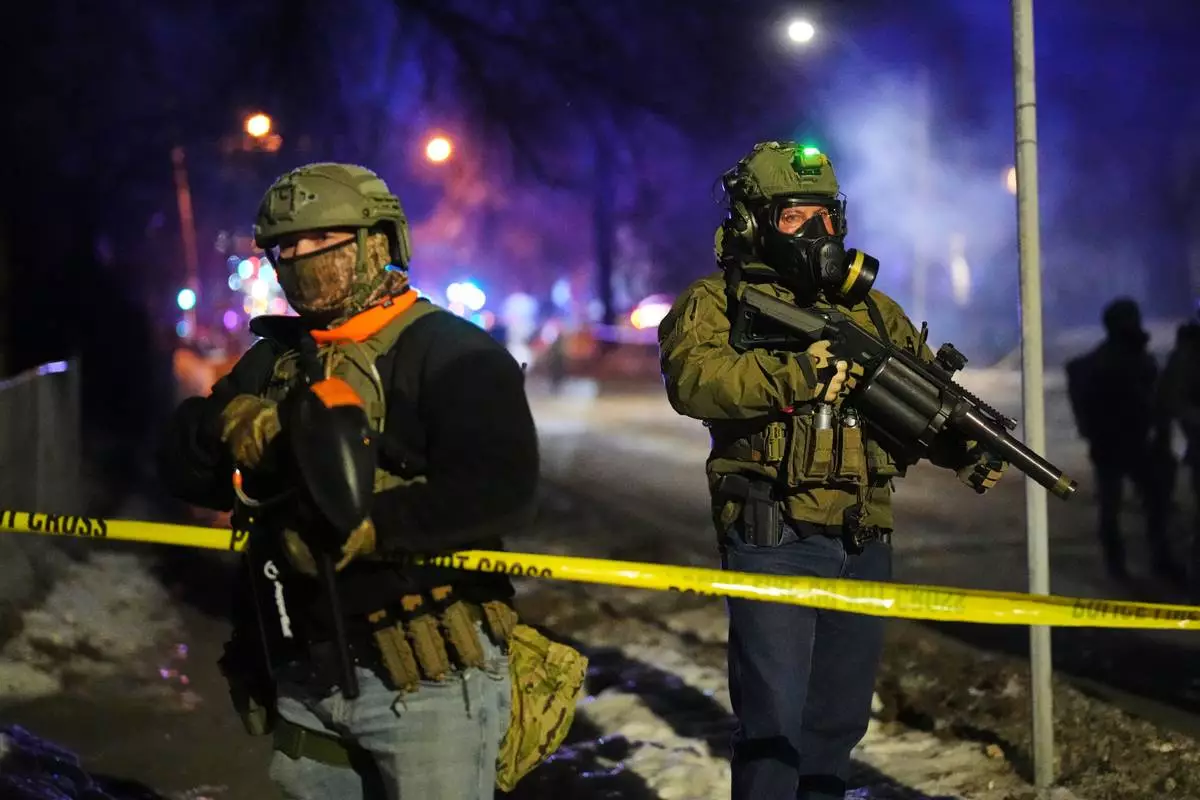
Law enforcement officers at the scene of a reported shooting Wednesday, Jan. 14, 2026, in Minneapolis. (AP Photo/Adam Gray)
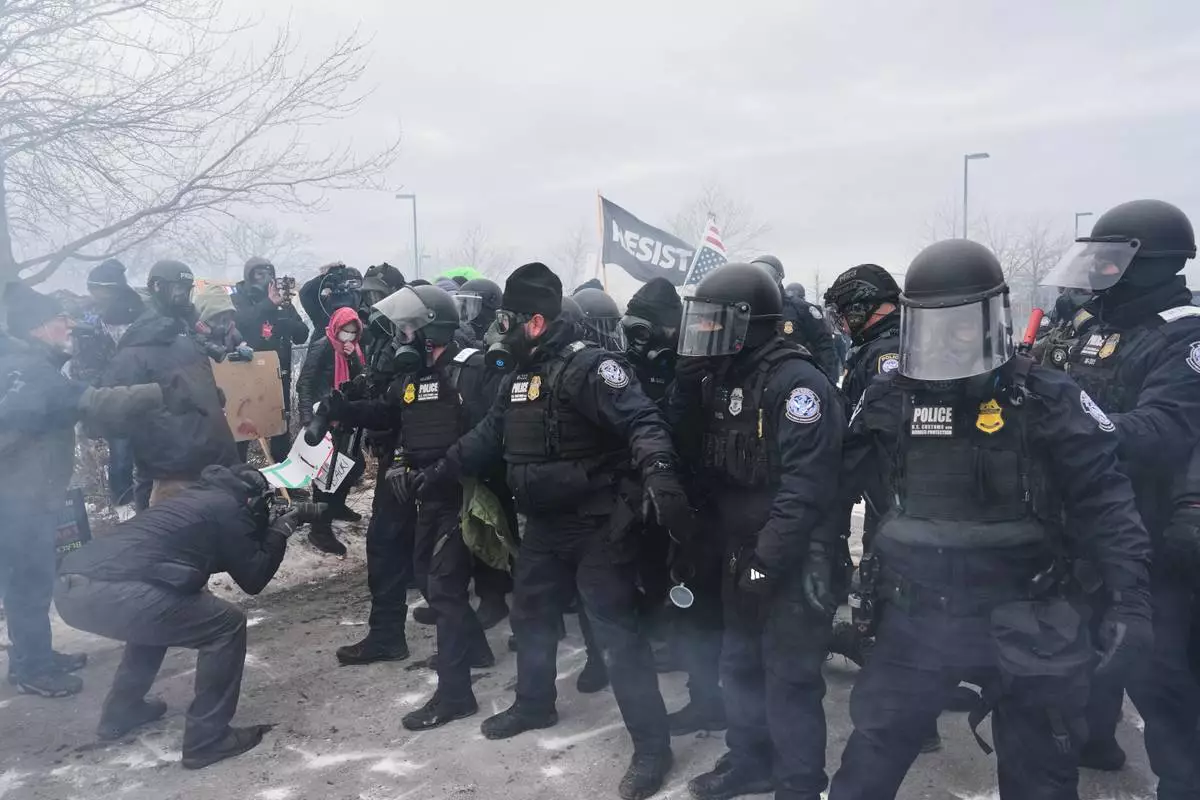
Federal immigration officers confront protesters outside Bishop Henry Whipple Federal Building, Thursday, Jan. 15, 2026, in Minneapolis. (AP Photo/Adam Gray)
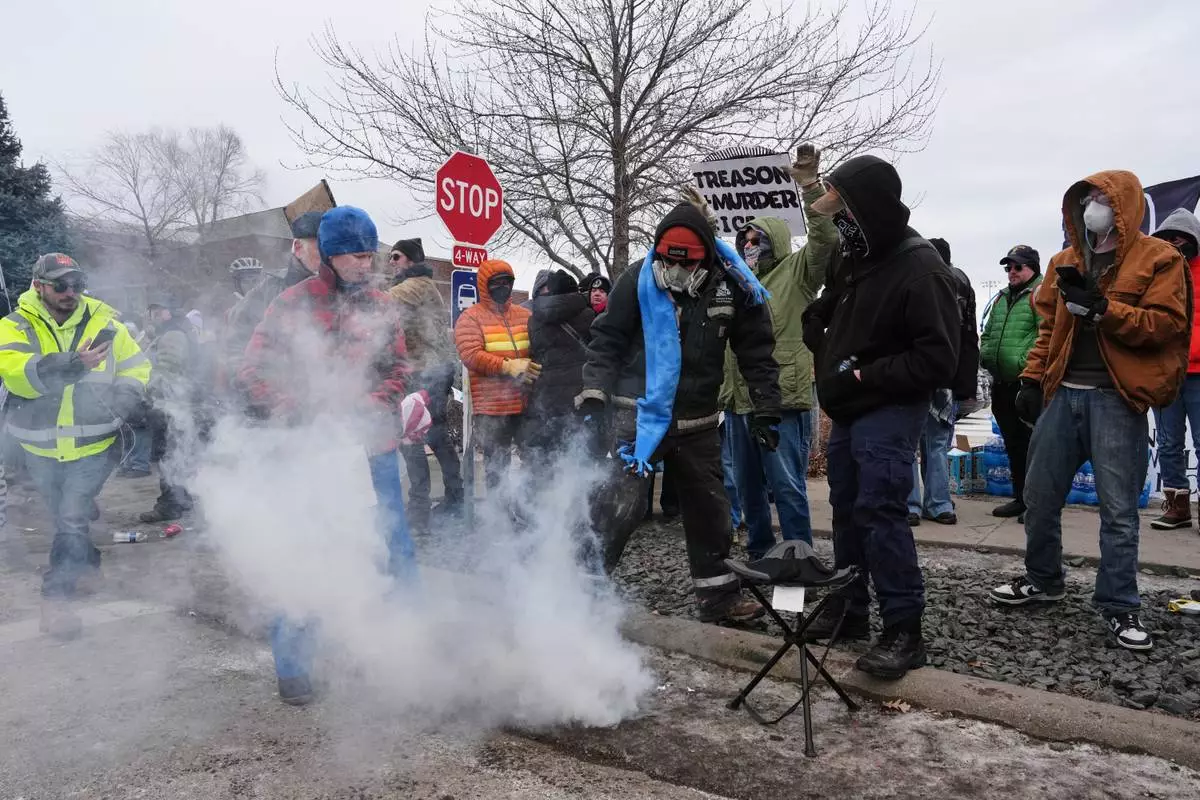
People cover tear gas deployed by federal immigration officers outside Bishop Henry Whipple Federal Building, Thursday, Jan. 15, 2026, in Minneapolis. (AP Photo/Adam Gray)
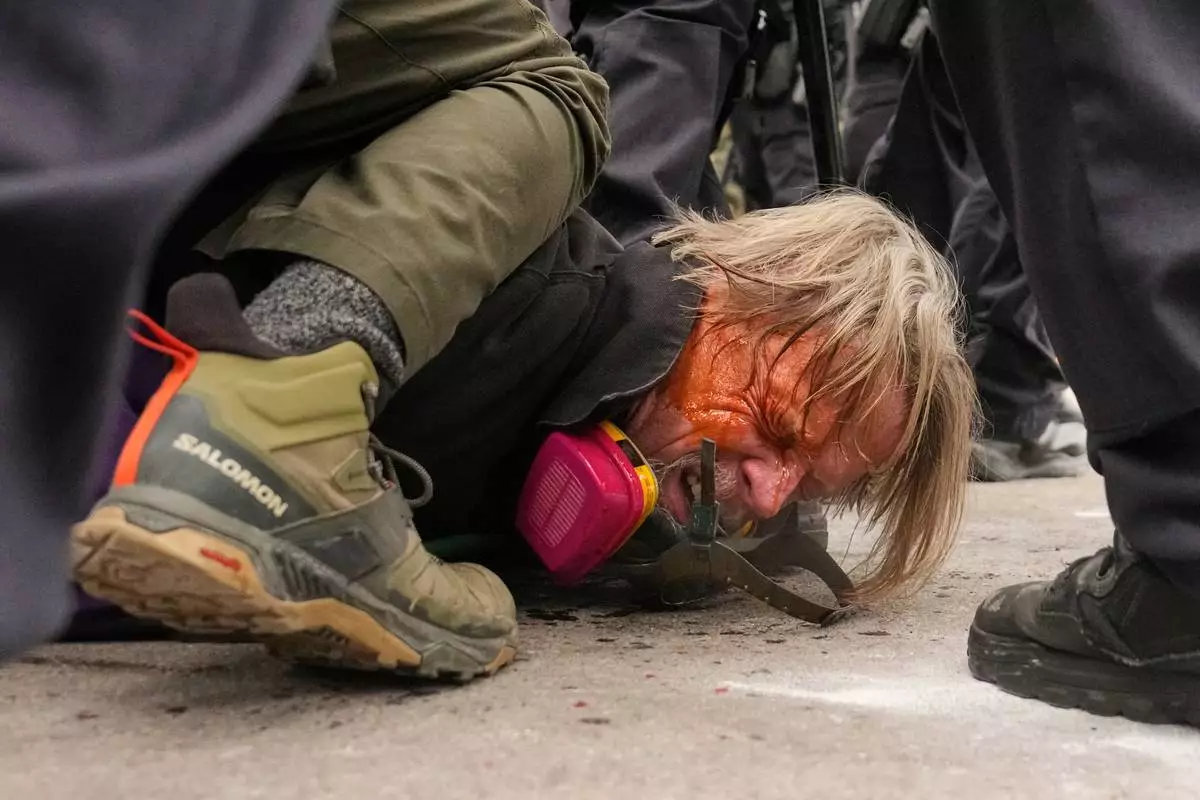
A man is pushed to the ground as federal immigration officers confront protesters outside Bishop Henry Whipple Federal Building, Thursday, Jan. 15, 2026, in Minneapolis. (AP Photo/John Locher)
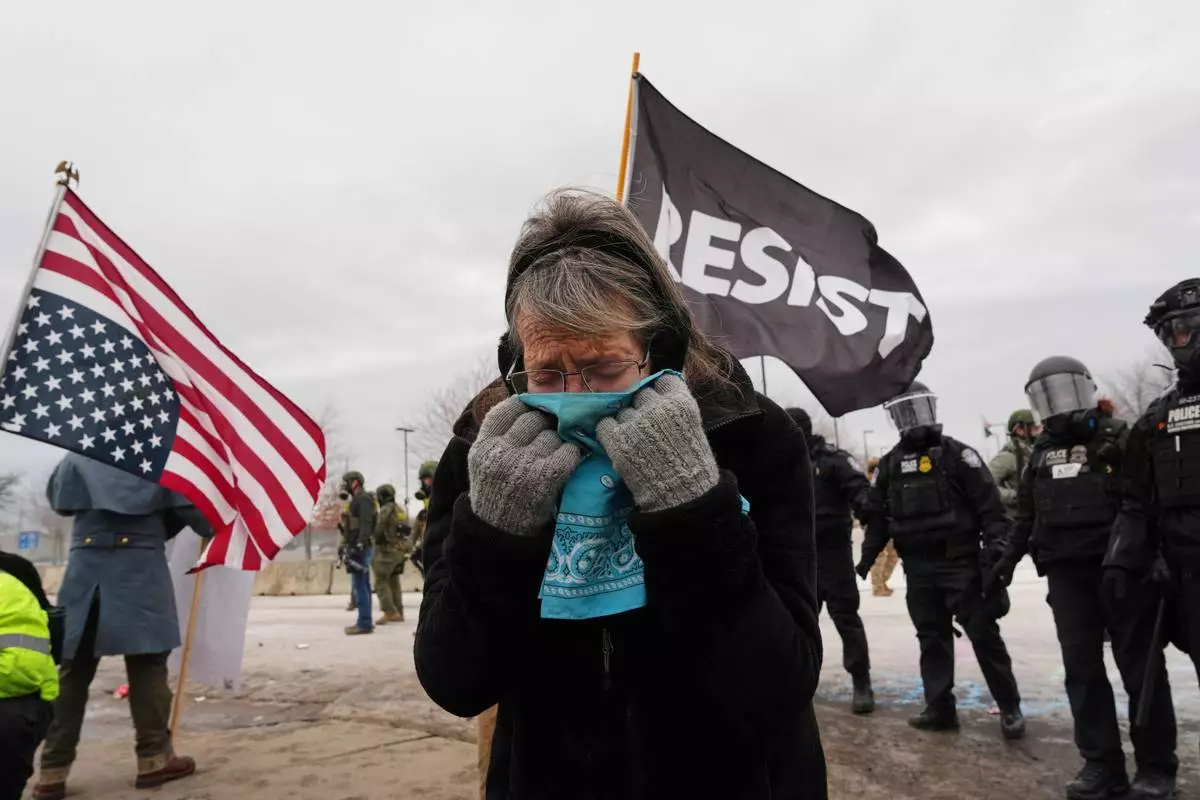
A woman covers her face from tear gas as federal immigration officers confront protesters outside Bishop Henry Whipple Federal Building, Thursday, Jan. 15, 2026, in Minneapolis. (AP Photo/Adam Gray)