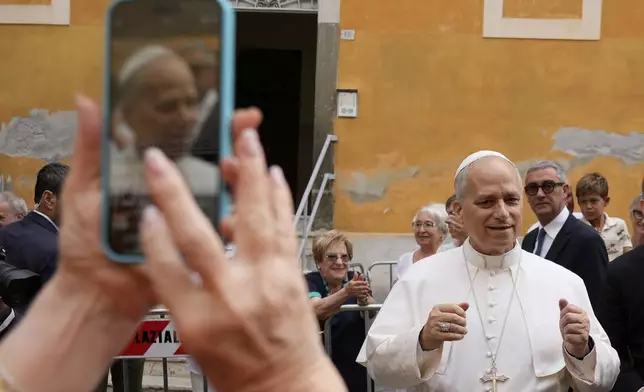
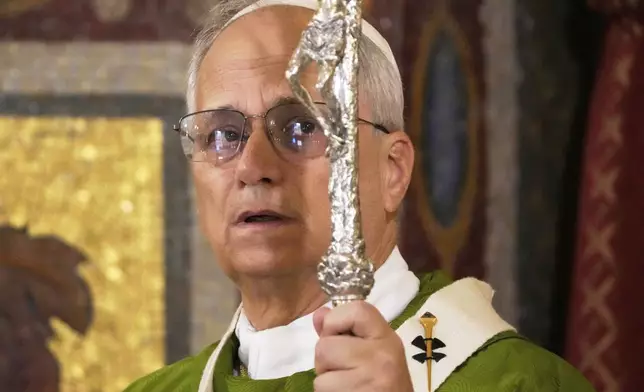
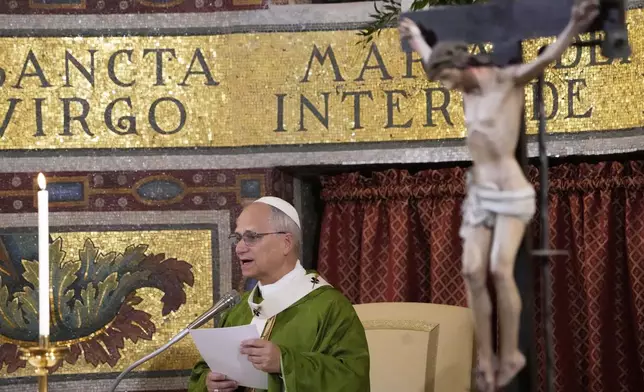
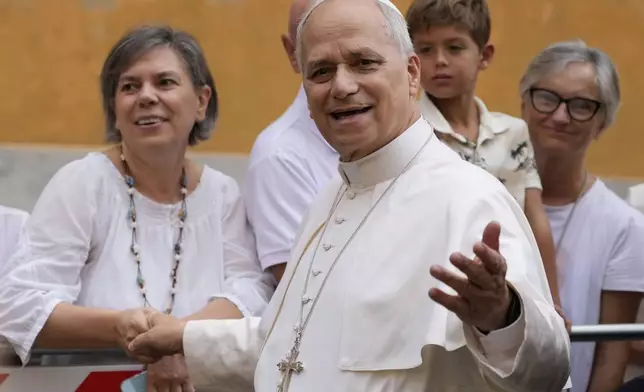
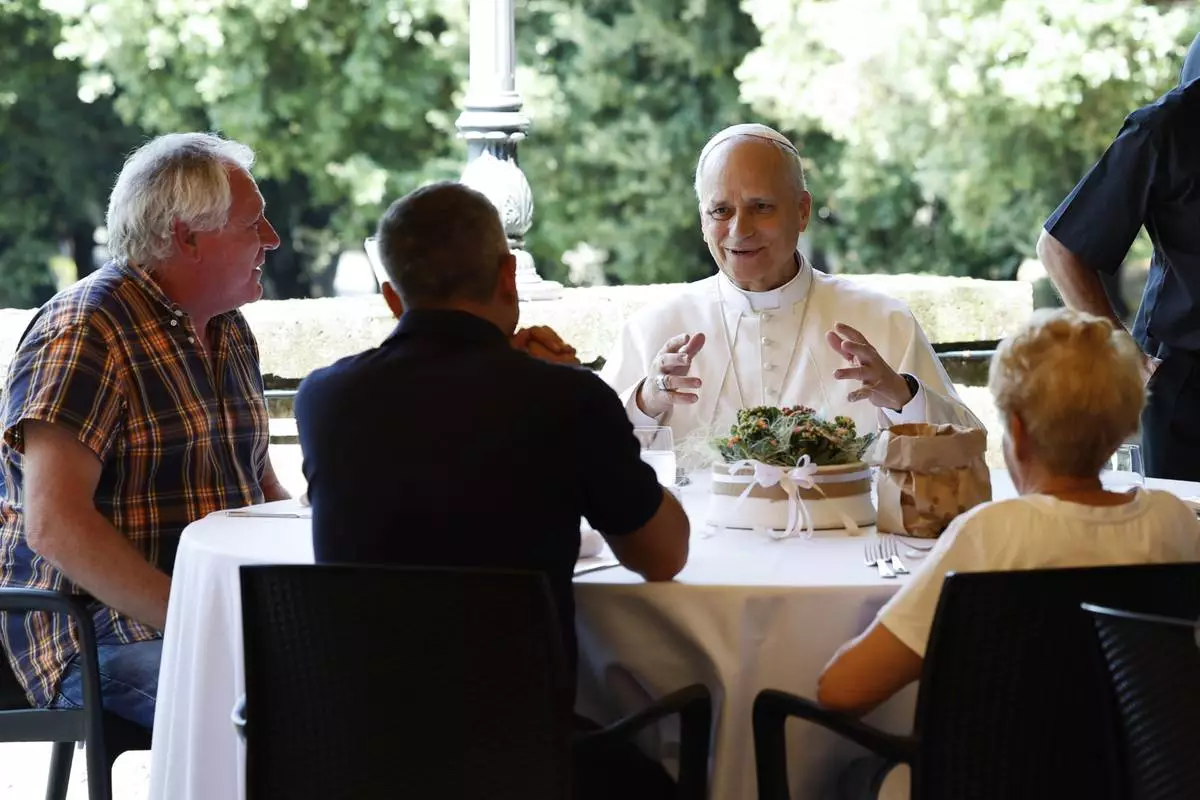
CASTEL GANDOLFO, Italy (AP) — Pope Leo XIV spent the last Sunday of his summer vacation with several dozen refugees, homeless and poor people and the church volunteers who help them, celebrating a special Mass for them and inviting them into the Vatican’s lakeside estate for a lunch of lasagna and roast veal.
Welcoming them for the luncheon, Leo said he was happy to “break bread” with them "in such a beautiful place that reminds us of the beauty of nature, of creation, but also makes us think that the most beautiful creature is the one created in the likeness, in the image of God, which is all of us."
Click to Gallery
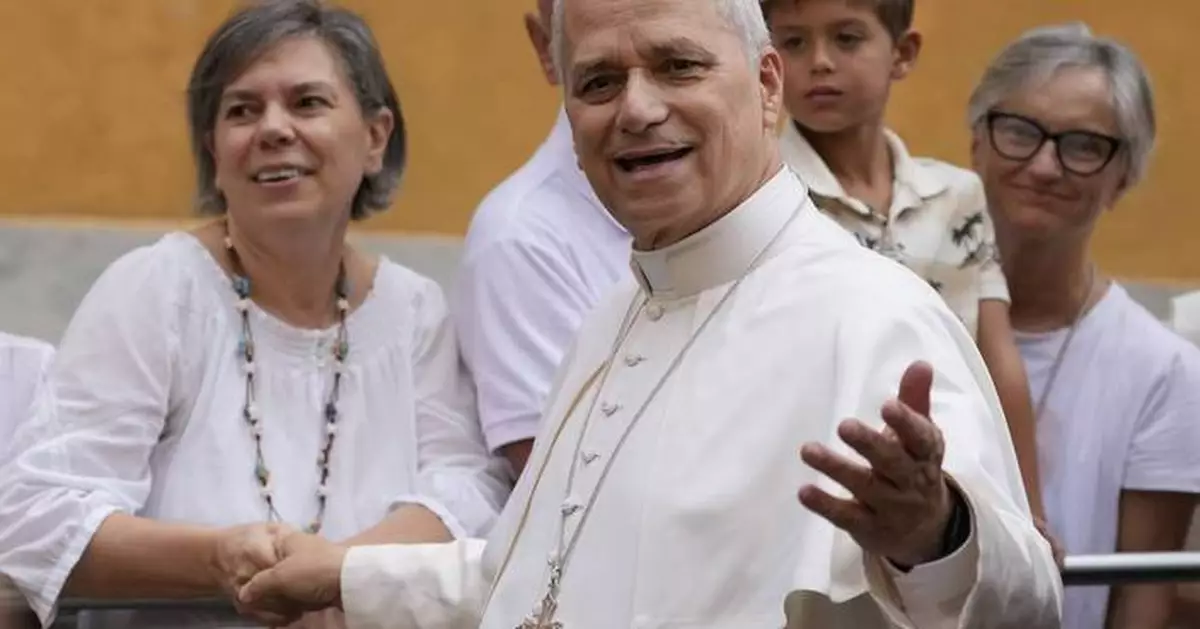
Pope Leo XIV greets faithful at the end of the Angelus prayer in Castel Gandolfo, Italy Sunday, Aug. 17, 2025. (AP Photo/Gregorio Borgia)
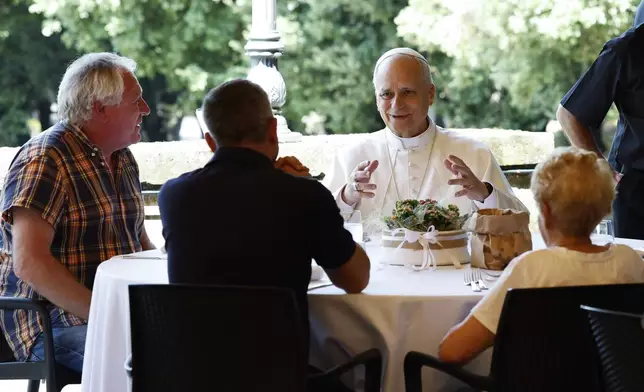
Pope Leo XIV attends a festive lunch with the poor of the Diocese of Albano Laziale at Borgo Laudato Si, in the garden of the Pontifical Villas in Castel Gandolfo, Italy, Sunday Aug. 17, 2025. (Remo Casilli/Pool via AP)
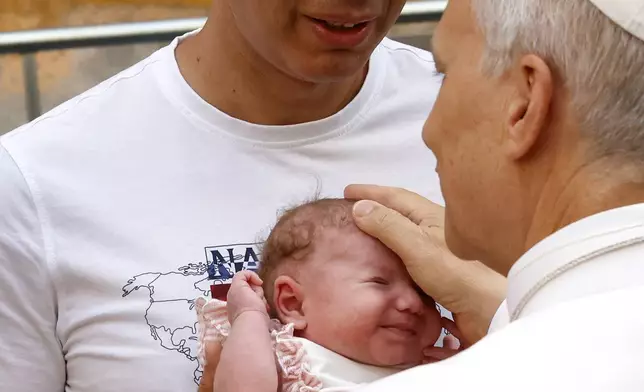
Pope Leo XIV caresses a baby as he arrives to celebrate a Mass at the Sanctuary of Santa Maria della Rotonda in Albano Laziale, near Rome, Sunday, Aug. 17, 2025. (AP Photo/Riccardo De Luca)
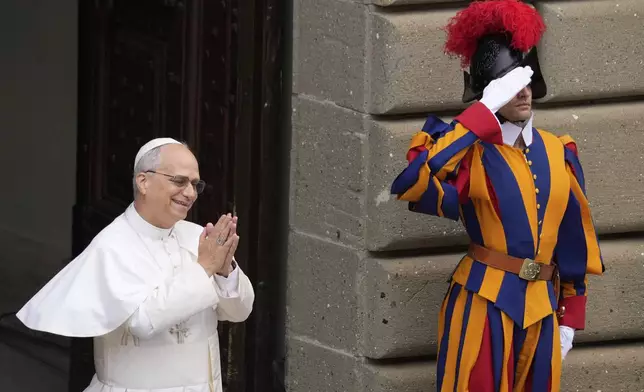
Pope Leo XIV is cheered by faithful as he arrives to celebrate a Mass at the Santa Maria della Rotonda Sanctuary in Albano Laziale, Sunday, Aug. 17, 2025. (AP Photo/Gregorio Borgia)
Pope Leo XIV celebrates a Mass at the Santa Maria della Rotonda Sanctuary in Albano Laziale, Sunday, Aug. 17, 2025. (AP Photo/Gregorio Borgia, Pool)
Pope Leo XIV celebrates a Mass at the Santa Maria della Rotonda Sanctuary in Albano Laziale, Sunday, Aug. 17, 2025. (AP Photo/Gregorio Borgia, Pool)
Pope Leo XIV is cheered by faithful as he arrives to celebrate a Mass at the Santa Maria della Rotonda Sanctuary in Albano Laziale, Sunday, Aug. 17, 2025. (AP Photo/Gregorio Borgia)
The guests included around 110 people cared for by the local Caritas church charity, and the volunteers who run the diocese’s shelters, clinics and social service offices. Many had attended Mass with him in the nearby St. Mary sanctuary of Albano.
In his homily, Leo celebrated the “fire of charity” that had brought them together.
“And I encourage you not to distinguish between those who assist and those who are assisted, between those who seem to give and those who seem to receive, between those who appear poor and those who feel they have something to offer in terms of time, skills, and help,” he said.
In the church, he said, everyone is poor and precious, and all share the same dignity.
Leo, the former Robert Prevost, spent most of his adult life working with the poor people of Peru, first as an Augustinian missionary and then as bishop. Former parishioners and church workers say he greatly reinforced the work of the local Caritas charity, opening soup kitchens and shelters for migrants and rallying funds to build oxygen plants during the COVID-19 pandemic.
The luncheon was held at the Borgo Laudato Si’, the Vatican’s environmental educational center in the gardens of the papal villa in Castel Gandolfo. The center is named for Pope Francis’ 2015 landmark environmental encyclical, Laudato Si (Praised Be).
Local caterers provided a menu of lasagna, eggplant parmesan and roast veal. For dessert, the menu called for fruit salad and sweets named for the pope, “Dolce Leone.”
Guests at Leo's table included Rosabal Leon, a Peruvian refugee who has been in Italy for a few months, along with her husband and two children. One of his other luncheon companions was an 85-year-old Roman, Gabriella Oliveiro, who lives on her own, organizers said.
Leo is expected to wrap up his vacation Tuesday and return to the Vatican, but there are indications he plans to use the Castel Gandolfo retreat regularly as an escape from Rome, resuming the tradition that Pope Francis had eschewed in favor of staycations at the Vatican.
Leo's older brother, John Prevost, told NBC's Chicago affiliate that the pope found the getaway relaxing and had actually hoped to read a book during his vacation — the pope likes legal thrillers — but hadn't found the time. He did, however, make use of the estate's tennis court and swimming pool, he said.
Prevost, who speaks daily with the pope to compare notes on the New York Times daily Wordle puzzle, said he understood the thing Leo missed most about being pope was not being able to drive.
“Driving to him is totally relaxing,” Prevost said, adding that when they were together, his little brother would always insist on driving himself. “Absolutely, because otherwise then he would criticize my driving,” Prevost said, chuckling.
In the interview, Prevost revealed the pope's favorite pizza — pepperoni — and candy: Peeps.
Rosa reported from Albano, Italy, and Winfield from Rome.
Associated Press religion coverage receives support through the AP’s collaboration with The Conversation US, with funding from Lilly Endowment Inc. The AP is solely responsible for this content.
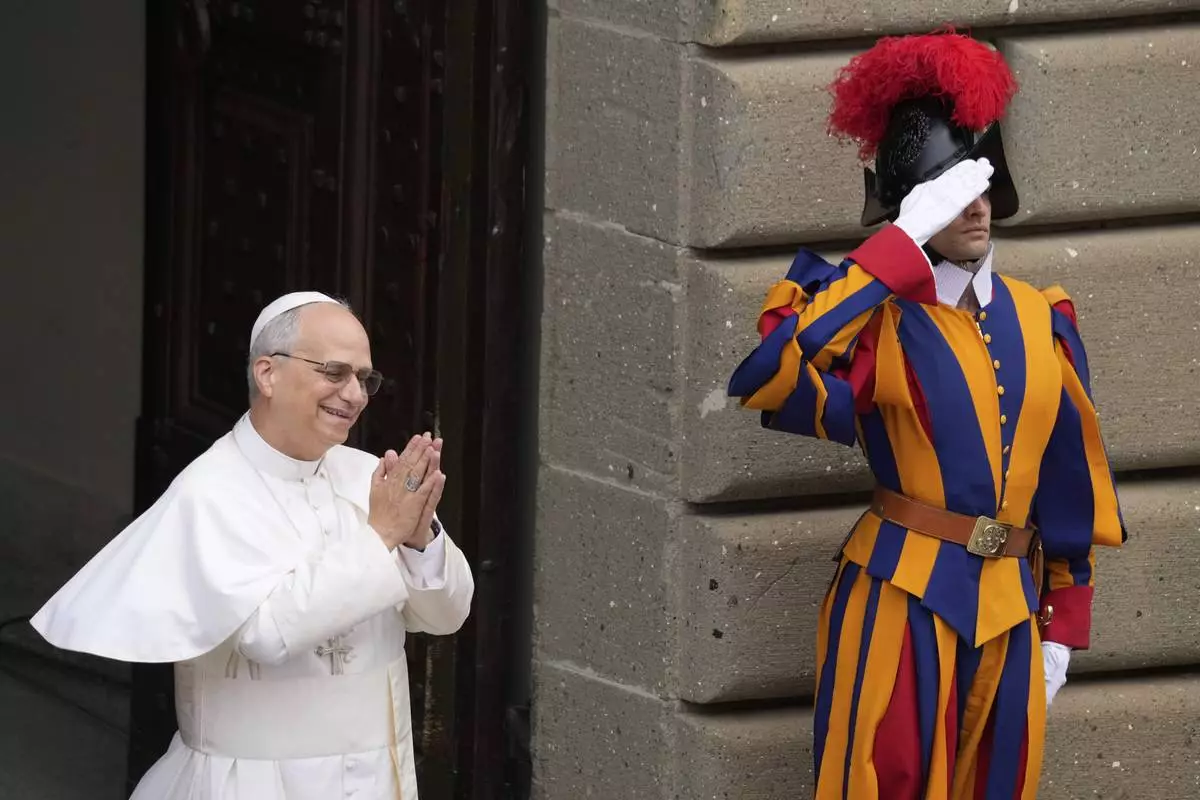
Pope Leo XIV greets faithful at the end of the Angelus prayer in Castel Gandolfo, Italy Sunday, Aug. 17, 2025. (AP Photo/Gregorio Borgia)
Pope Leo XIV attends a festive lunch with the poor of the Diocese of Albano Laziale at Borgo Laudato Si, in the garden of the Pontifical Villas in Castel Gandolfo, Italy, Sunday Aug. 17, 2025. (Remo Casilli/Pool via AP)

Pope Leo XIV caresses a baby as he arrives to celebrate a Mass at the Sanctuary of Santa Maria della Rotonda in Albano Laziale, near Rome, Sunday, Aug. 17, 2025. (AP Photo/Riccardo De Luca)
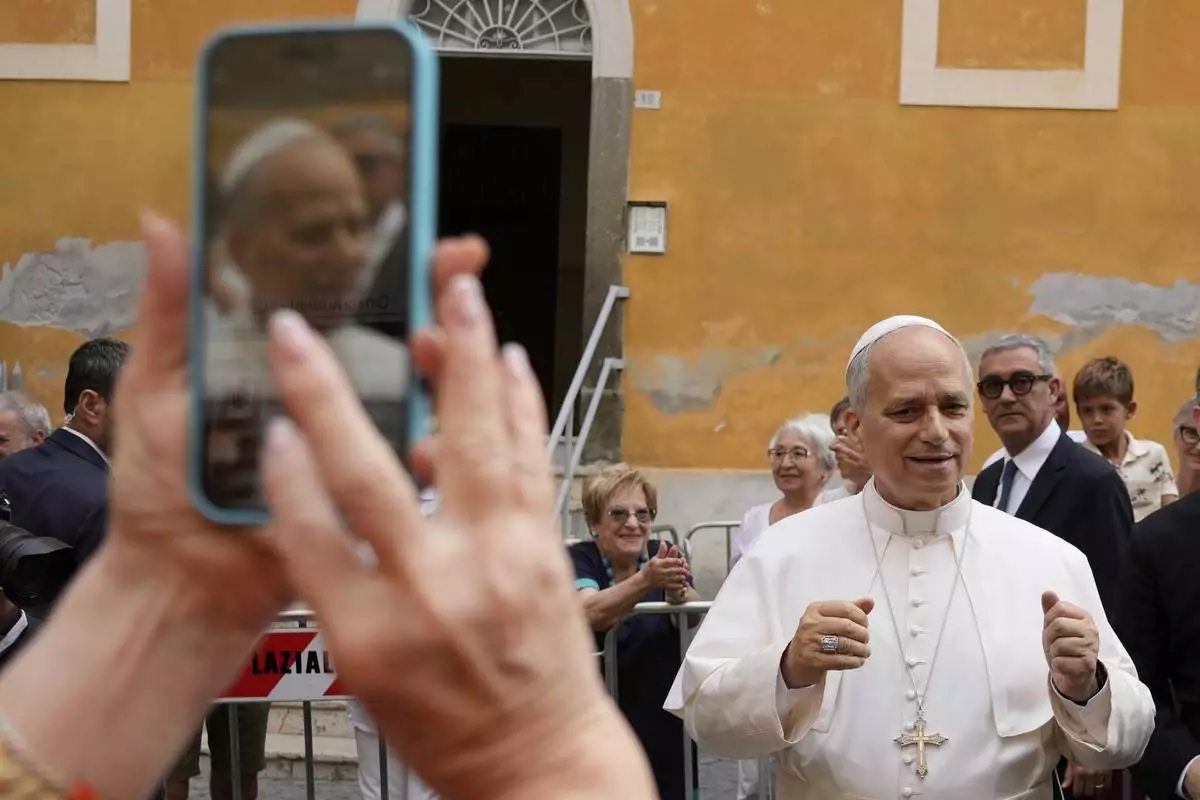
Pope Leo XIV is cheered by faithful as he arrives to celebrate a Mass at the Santa Maria della Rotonda Sanctuary in Albano Laziale, Sunday, Aug. 17, 2025. (AP Photo/Gregorio Borgia)
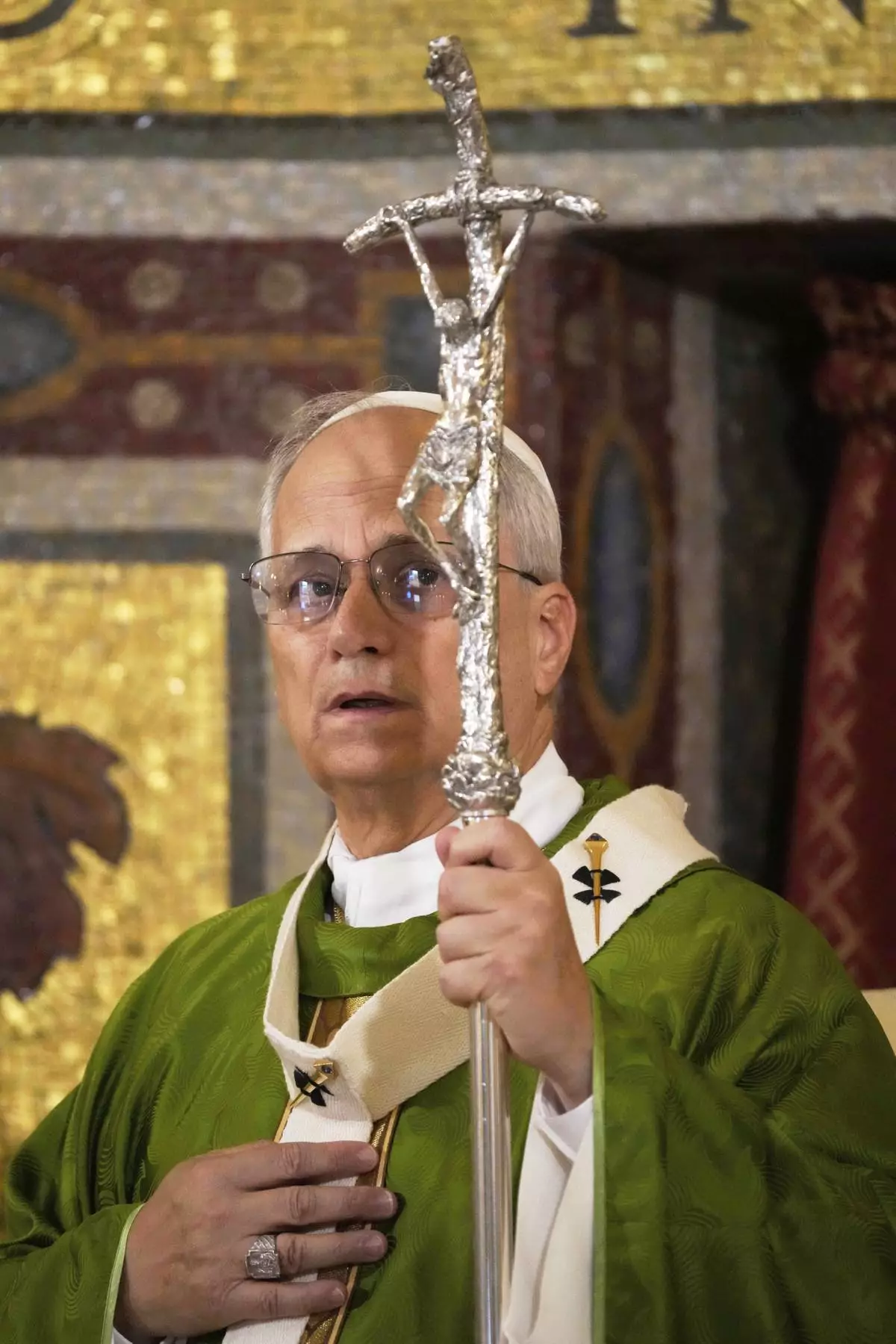
Pope Leo XIV celebrates a Mass at the Santa Maria della Rotonda Sanctuary in Albano Laziale, Sunday, Aug. 17, 2025. (AP Photo/Gregorio Borgia, Pool)
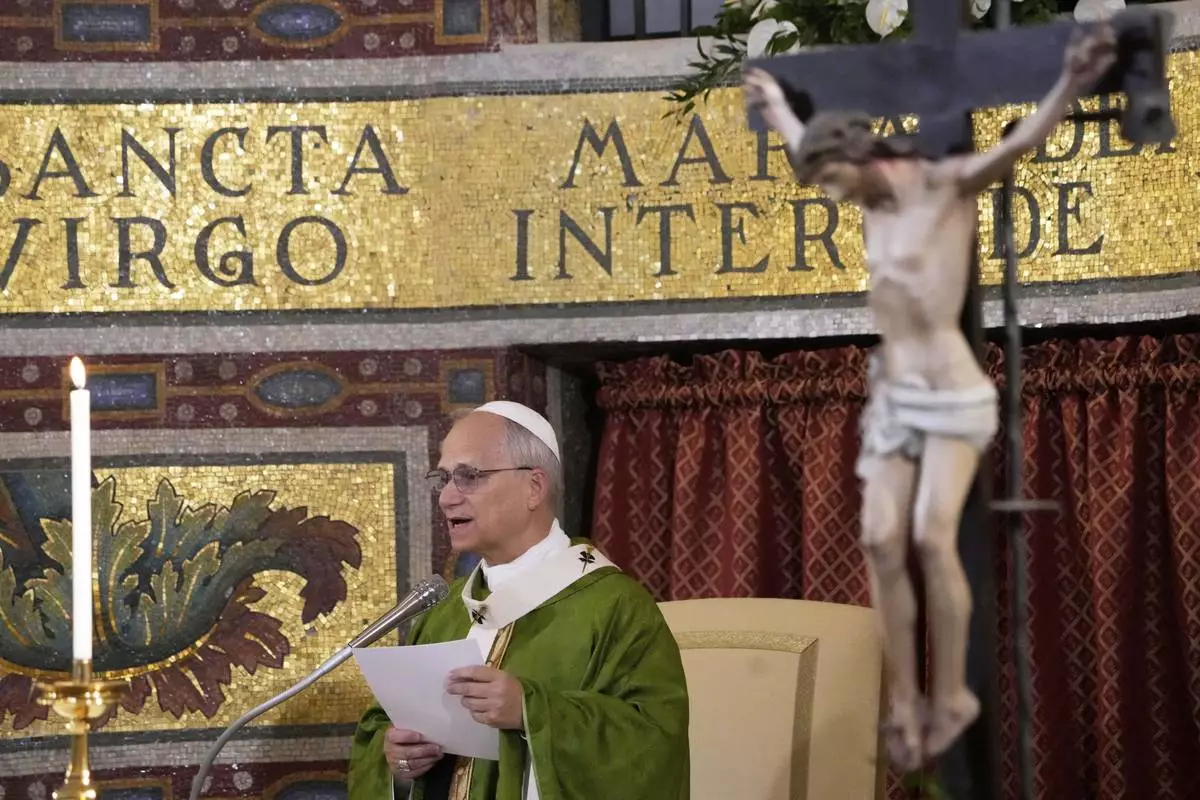
Pope Leo XIV celebrates a Mass at the Santa Maria della Rotonda Sanctuary in Albano Laziale, Sunday, Aug. 17, 2025. (AP Photo/Gregorio Borgia, Pool)
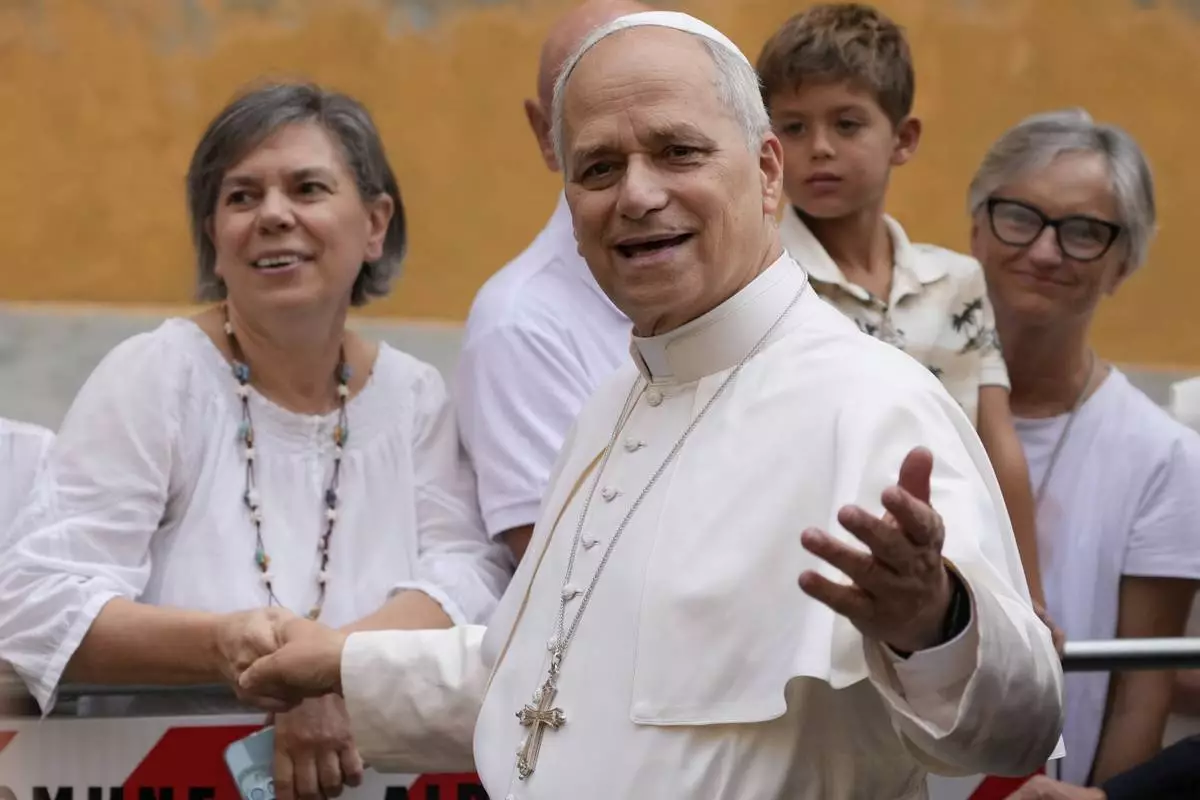
Pope Leo XIV is cheered by faithful as he arrives to celebrate a Mass at the Santa Maria della Rotonda Sanctuary in Albano Laziale, Sunday, Aug. 17, 2025. (AP Photo/Gregorio Borgia)
ADAMUZ, Spain (AP) — Spanish police said Monday that at least 39 people are confirmed dead in a high-speed rail collision the previous night in the south of the country when the tail end of a train jumped the track, causing another train speeding past in the opposite direction to derail.
The impact tossed the second train's lead carriages off the track, sending them plummeting down a 4-meter (13-foot) slope. Some bodies were found hundreds of meters (feet) from the crash site, Andalusia regional president Juanma Moreno said, describing the wreckage a “mass of twisted metal" with bodies likely still to be found inside.
Efforts to recover the bodies continued Monday, and the death toll could rise. Authorities are also focusing on attending hundreds of distraught family members and have asked for them to provide DNA samples to help in the identification of the victims.
The crash occurred Sunday at 7:45 p.m. when the tail end of a train carrying 289 passengers on the route from Malaga to the capital, Madrid, went off the rails. It slammed into an incoming train traveling from Madrid to Huelva, another southern Spanish city, according to rail operator Adif.
The head of the second train, which was carrying nearly 200 passengers, took the brunt of the impact, Spanish Transport Minister Óscar Puente said. That collision knocked its first two carriages off the track. Puente said that it appeared the largest number of the deaths occurred in those carriages.
Authorities said all the survivors had been rescued in the early morning.
The accident shook a nation which leads Europe in high-speed train mileage and takes pride in a network that is considered at the cutting edge of rail transport.
Spanish Prime Minister Pedro Sánchez declared three days of national mourning for the victims of the crash.
“Today is a day of pain for all of Spain,” Sánchez said on a visit to Adamuz, a village near the accident site, where many locals helped emergency services handle the influx of distraught and hurt passengers overnight.
Moreno, the regional leader, said Monday morning that emergency services were still searching for bodies.
“Here at ground zero, when you look at this mass of twisted iron, you see the violence of the impact,” Moreno said. “The impact was so incredibly violent that we have found bodies hundreds of meters away.”
He added that authorities are still searching the area near the accident for possible bodies.
Video released by the Civil Guard showed the worst-hit carriages shredded open, train seats cast on the gravel packing under the tracks. One carriage lay on its side, bent around a large concrete pillar, with debris scattered around the area.
Passengers reported climbing out of smashed windows, with some using emergency hammers to break the glass.
Andalusia’s regional emergency services said 43 people remained hospitalized, 12 of whom were in intensive care units. Another 79 passengers were discharged by Monday afternoon, authorities said.
Train services Monday between Madrid and cities in Andalusia were canceled.
Transport Minister Puente early Monday said the cause of the crash was unknown.
He called it “a truly strange” incident because it happened on a flat stretch of track that had been renovated in May. He also said the train that jumped the track was less than 4 years old. That train belonged to the Italian-owned company Iryo, while the second train was part of Spain’s public train company, Renfe.
According to Puente, the back part of the first train derailed and crashed into the head of the other train. An investigation into the cause could take a month, he said.
Álvaro Fernández, the president of Renfe, told Spanish public radio RNE that both trains were well under the speed limit of 250 kph (155 mph); one was going 205 kph (127 mph), the other 210 kph (130 mph). He also said that “human error could be ruled out.”
The incident “must be related to the moving equipment of Iryo or the infrastructure,” he said.
Iryo issued a statement on Monday saying that its train was manufactured in 2022 and passed its latest safety check on Jan. 15. It reiterated its condolences for the victims and said it would completely cooperate with the official investigation.
Various Spaniards who had loved ones on the trains posted messages on social media saying they were unaccounted for and pleading for any information.
The Civil Guard opened an office in Cordoba, the nearest city to the crash, as well as Madrid, Malaga, Huelva and Seville for family members of the missing to seek help and leave DNA samples.
“There were moments when we had to remove the dead to get to the living,” Francisco Carmona, firefighter chief of Cordoba, told Onda Cero radio.
A sports center in Adamuz, a town in the province of Cordoba, about 370 kilometers (about 230 miles) south of Madrid, was turned into a makeshift hospital. The Spanish Red Cross set up a help center offering assistance to emergency services and people seeking information. Members of the Civil Guard and civil defense worked on site throughout the night.
“The scene was horrific. It was terrible,” Adamuz mayor Rafael Moreno told The Associated Press and other reporters. “People asking and begging for help. Those leaving the wreckage. Images that will always stay in my mind.”
One passenger had been treated in a local hospital along with her sister before she returned to Adamuz with hopes of finding her lost dog. She was limping and had a small bandage on her cheek, as seen by an AP reporter.
The Vatican issued a statement saying that Pope Leo XIV expressed his condolences for the dead and hope for the quick recovery of the injured.
European Commission President Ursula von der Leyen also said she was following the “terrible news.”
Spanish King Felipe VI expressed his condolences Monday, adding that the royal house was looking into a visit to Adamuz in the coming days.
“I understand the desperation of the families and the number of injured people who have suffered this accident, and we are all really worried,” the king said, speaking from Athens.
The Spanish flag was flown at half-staff in front of Parliament in Madrid for the victims on Monday.
Spain has spent decades investing heavily in high-speed trains and currently has the largest rail network in Europe for trains moving over 250 kph (155 mph), with more than 3,100 kilometers (1,900 miles) of track, according to the European Union.
The network is a popular, competitively priced and safe mode of transport. Renfe said more than 25 million passengers took one of its high-speed trains in 2024.
Iryo became the first private competitor in high-speed to Renfe in Spain in 2022.
Sunday's accident was the first with deaths on a high-speed train since Spain's high-speed rail network opened its first line in 1992.
Spain’s worst train accident this century occurred in 2013, when 80 people died after a train derailed in the country’s northwest. An investigation concluded the train was traveling 179 kph (111 mph) on a stretch with an 80 kph (50 mph) speed limit when it left the tracks. That stretch of track was not high speed.
Wilson reported from Barcelona, Spain, and Naishadham from Madrid. Video-journalist Alicia León in Adamuz and AP journalist Barry Hatton in Lisbon, Portugal, contributed.
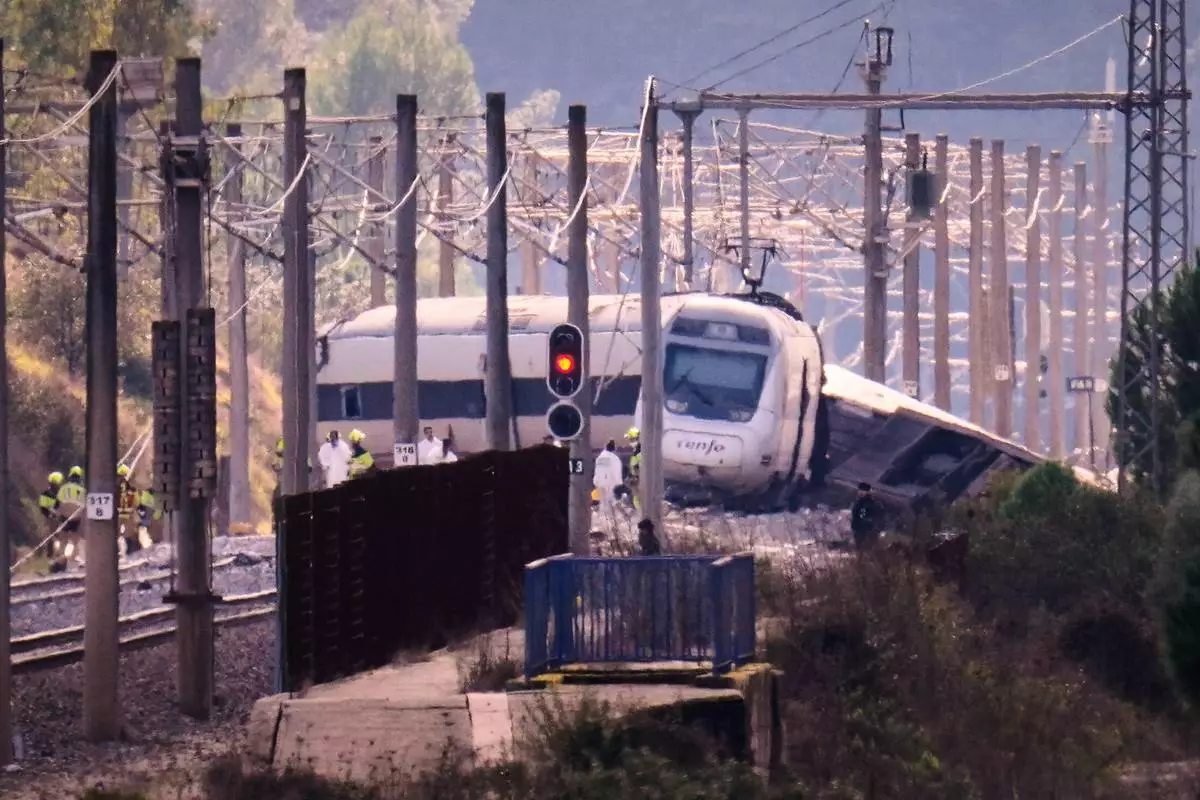
Emergency crews work at the site of a train collision in Adamuz, southern Spain, Monday, Jan. 19, 2026. (AP Photo/Manu Fernandez)
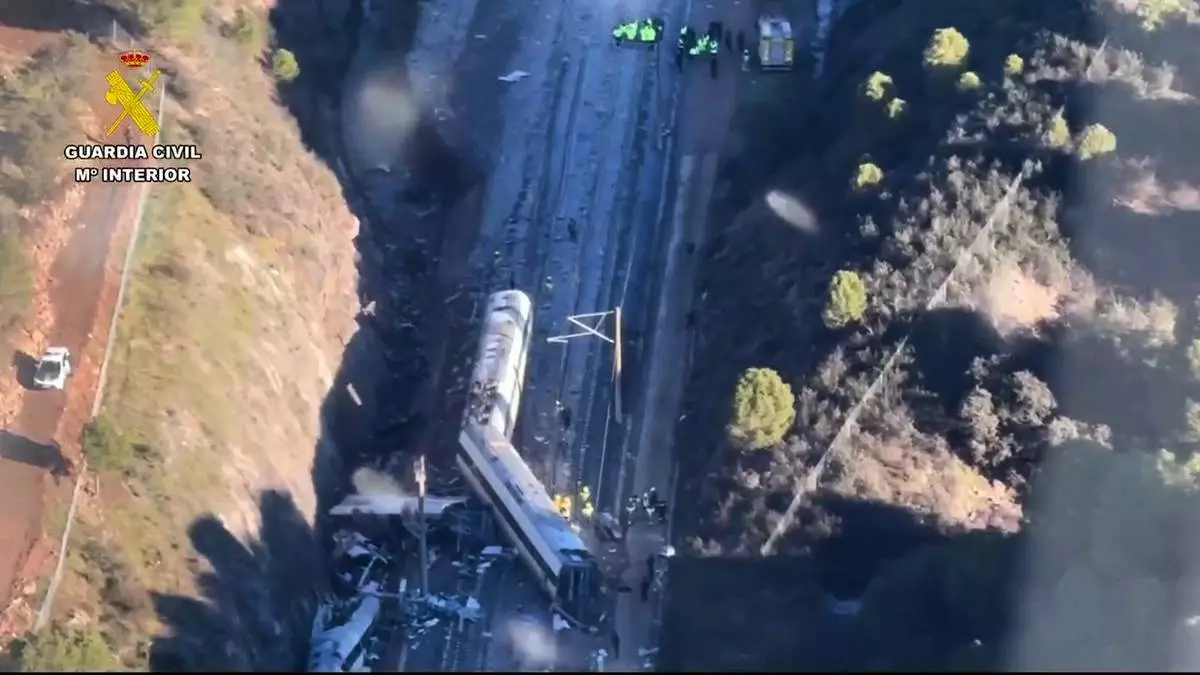
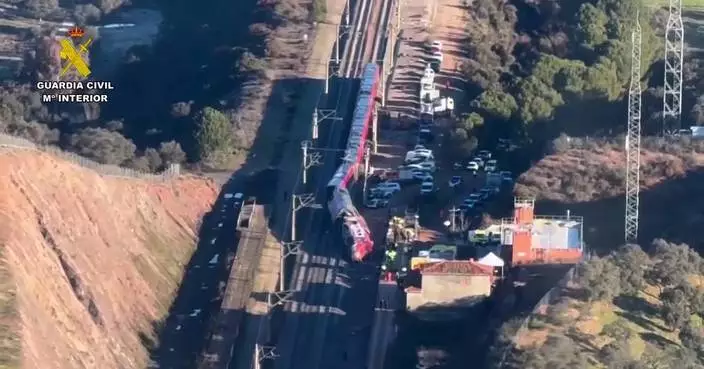
In this aerial view grab taken from video provided by Guardia Civil, a view of the Alvia train with rescue workers at the scene after a high-speed train collision, near Adamuz, Spain, Monday, Jan. 19, 2026. (Guardia Civil via AP)
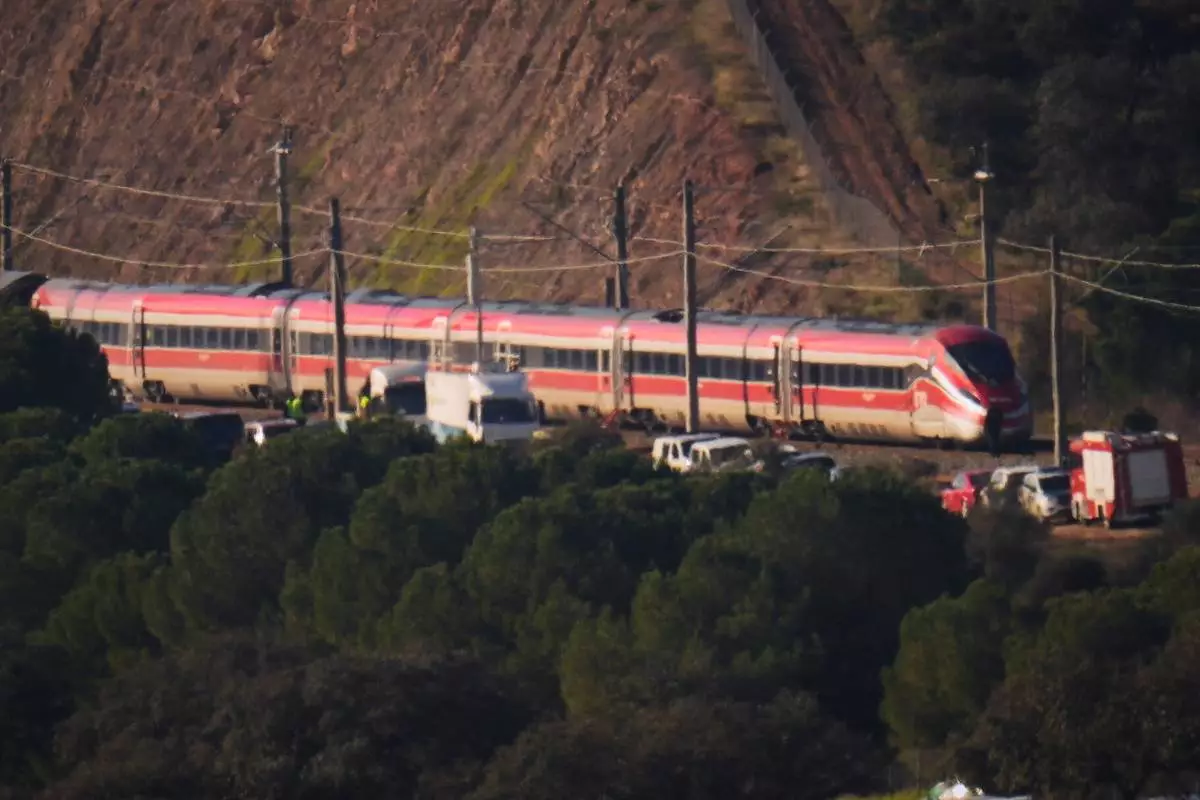
Emergency crews work alongside one of the trains involved in a train collision, in Adamuz, Spain, Monday, Jan. 19, 2026. (AP Photo/Manu Fernandez)
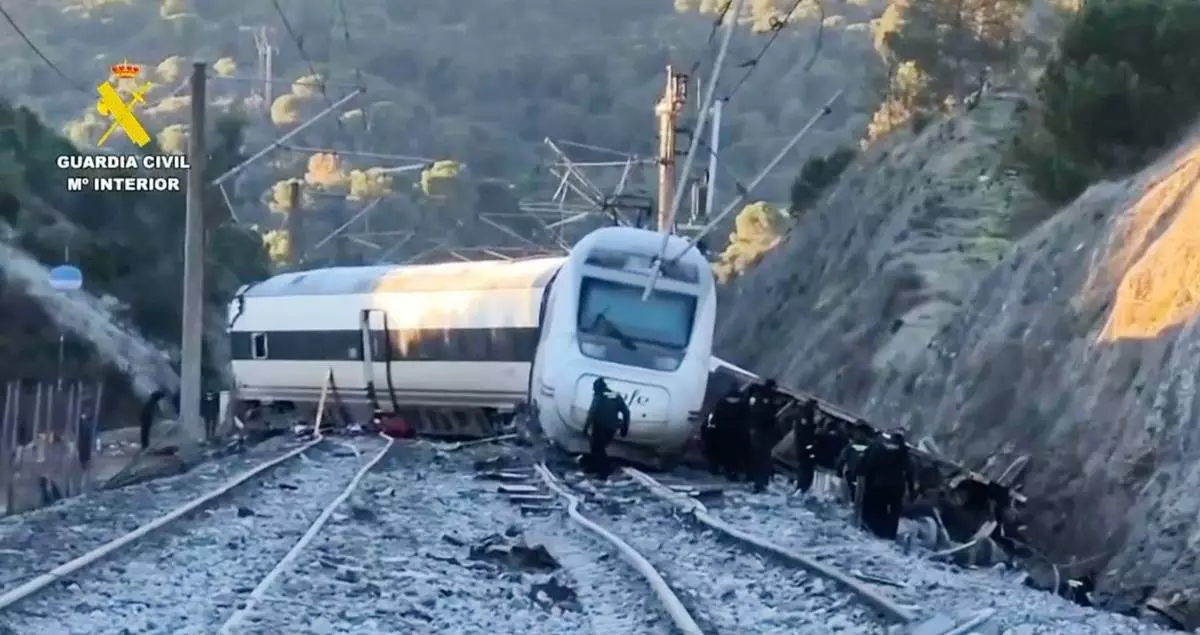
In this grab taken from video provided by Guardia Civil, rescue workers at the scene after a high speed train collision, in Adamuz, Spain, Monday, Jan. 19, 2026. (Guardia Civil via AP)
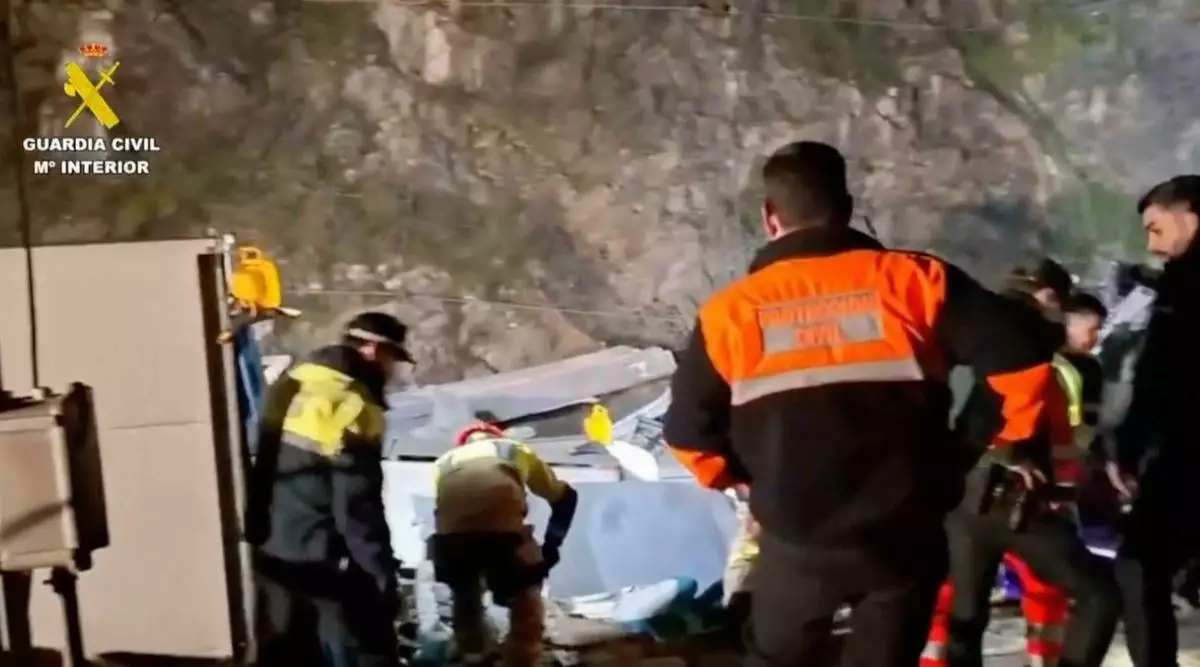
In this grab taken from video provided by Guardia Civil, rescue workers at the scene after a high speed train collision, in Adamuz, Spain, Monday, Jan. 19, 2026. (Guardia Civil via AP)
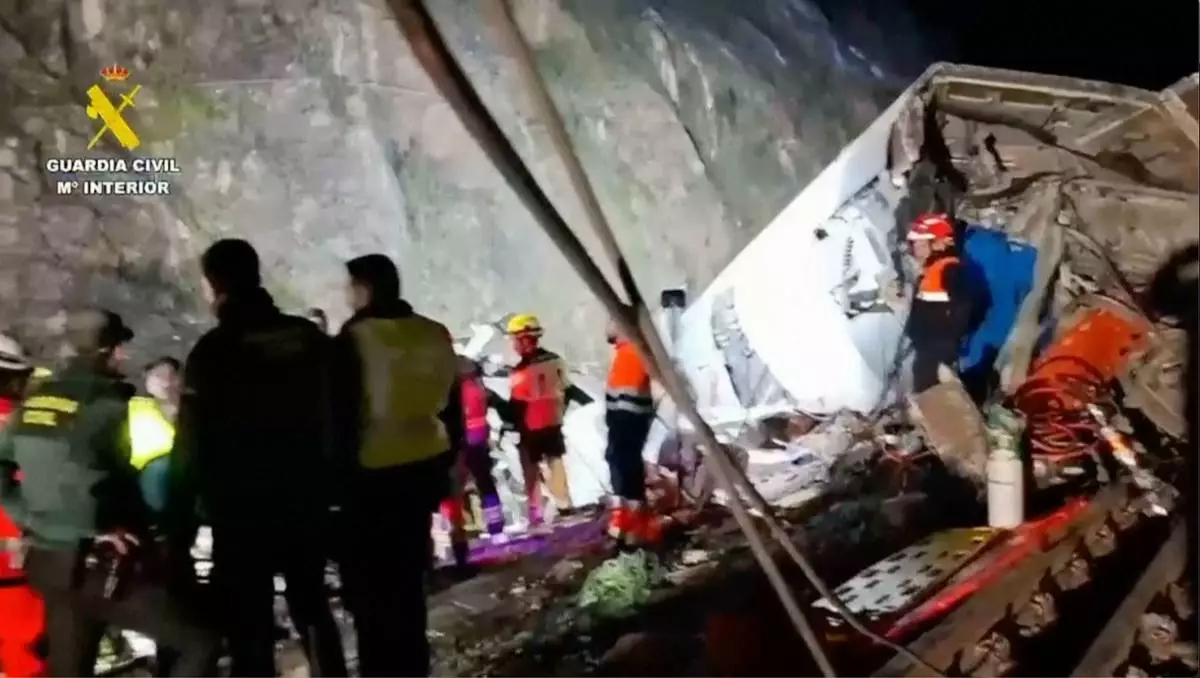
In this grab taken from video provided by Guardia Civil, rescue workers at the scene after a high speed train collision,in Adamuz, Spain, Monday, Jan. 19, 2026. (Guardia Civil via AP)
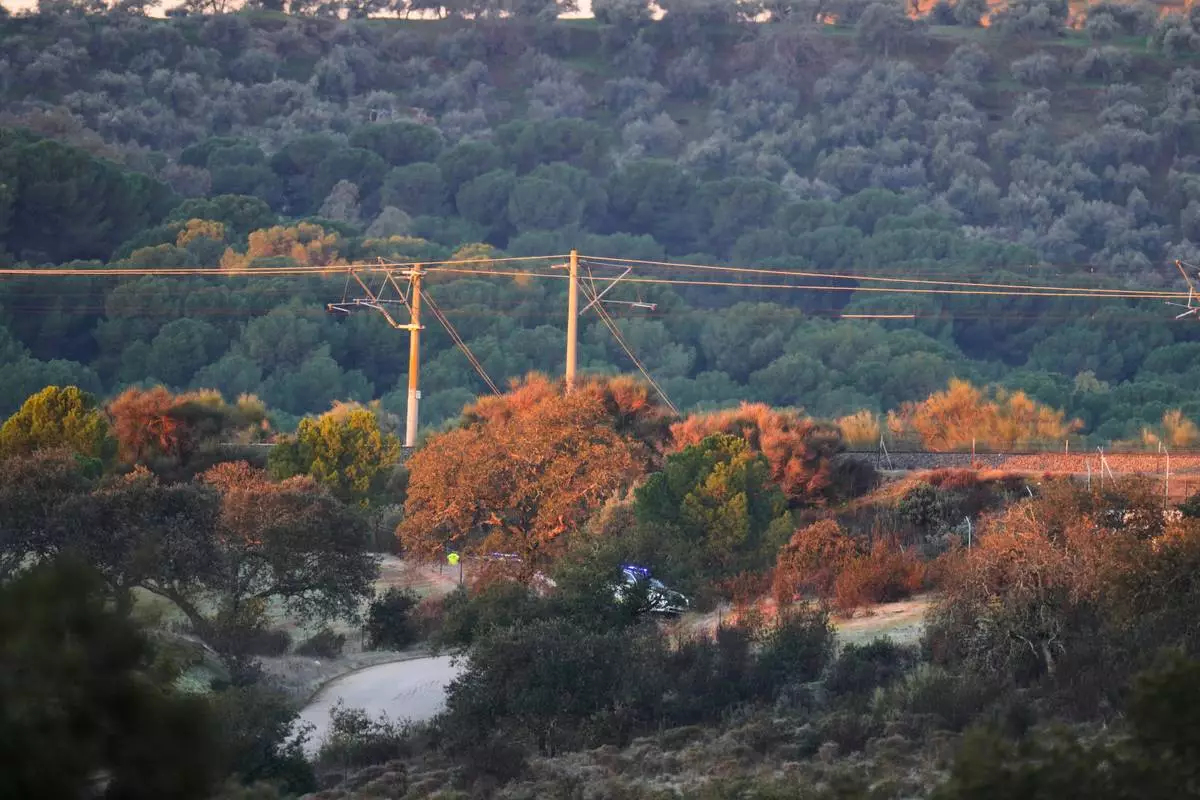
Police cars near the site of a high-speed train collision in Adamuz, near Córdoba, southern Spain, Monday, Jan. 19, 2026. (AP Photo/Manu Fernandez)
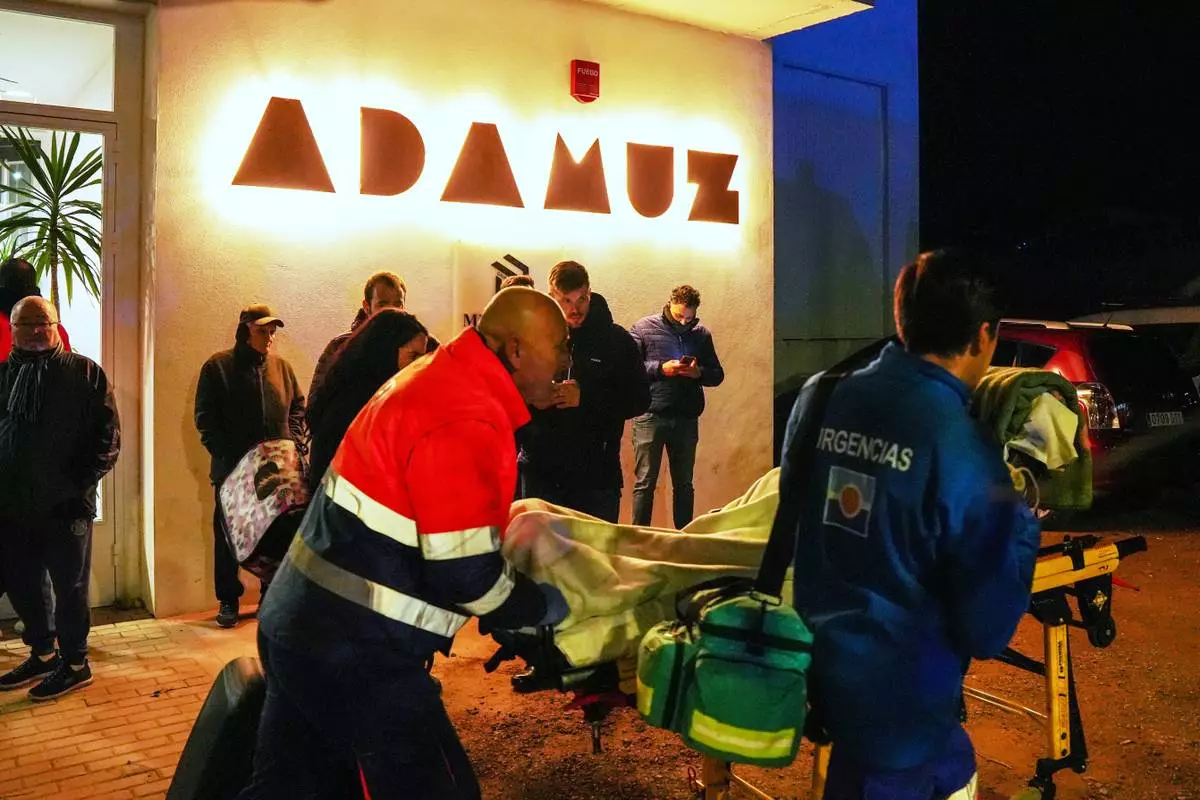
An injured person is transported to the makeshift hospital in the sports center in Adamuz, near Córdoba, southern Spain, Monday, Jan. 19, 2026, after a high-speed train derailed and collided with another train. (Francisco J. Olmo/Europa Press via AP)
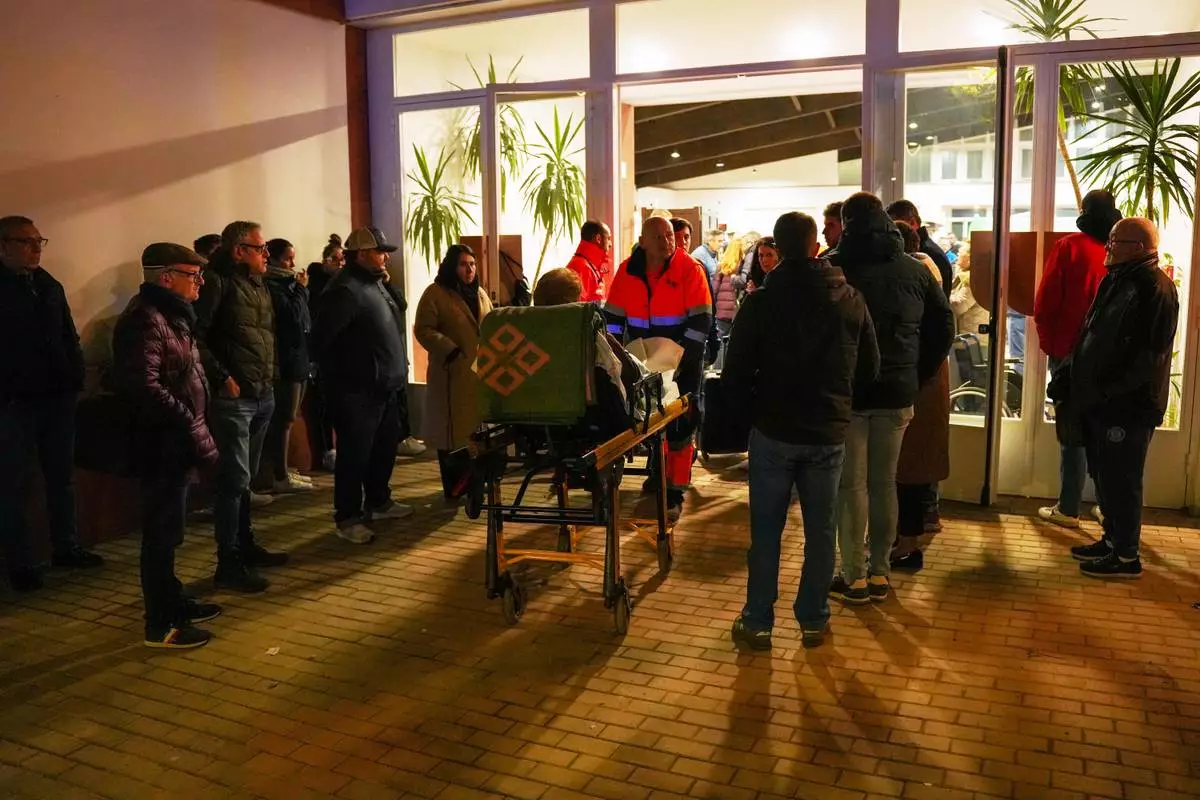
An injured person is transported to the makeshift hospital in the sports center in Adamuz, near Córdoba, southern Spain, Monday, Jan. 19, 2026, after a high-speed train derailed and collided with another train. (Francisco J. Olmo/Europa Press via AP)
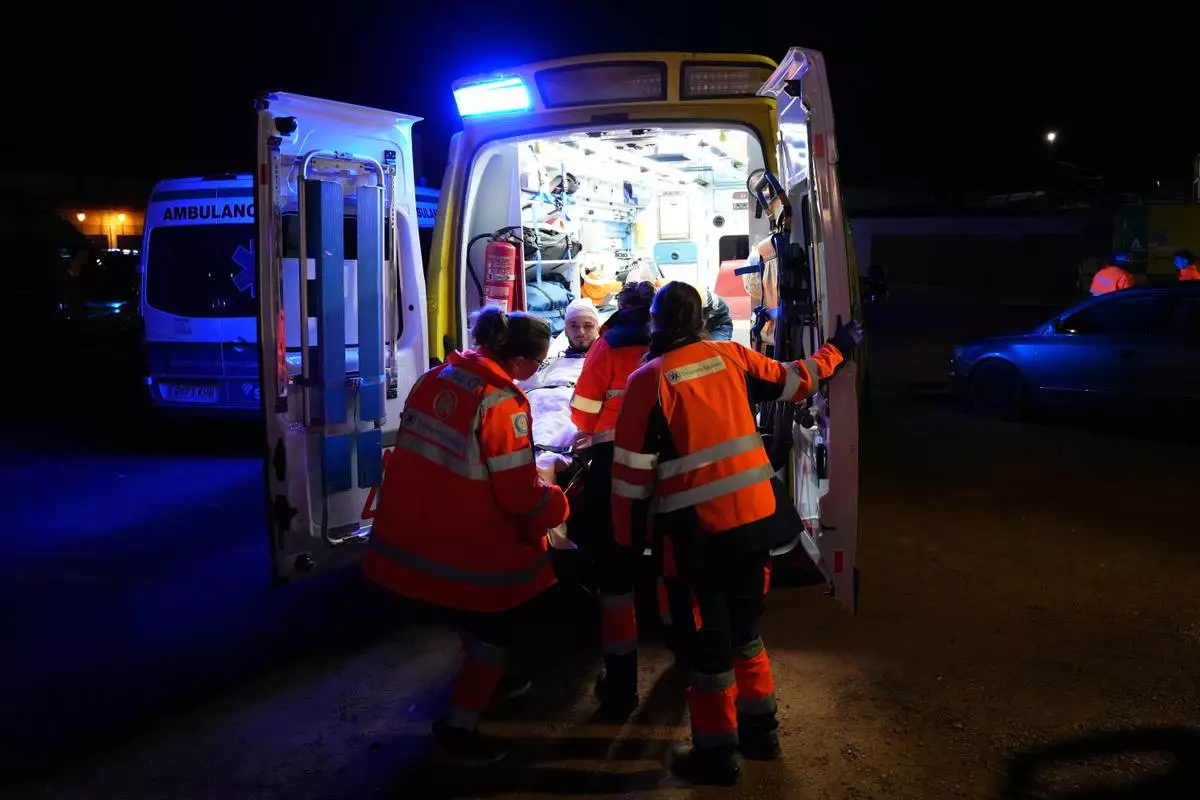
An injured person is transported by ambulance in Adamuz, near Córdoba, southern Spain, Monday, Jan. 19, 2026, after a high-speed train derailed and collided with another train. (Francisco J. Olmo/Europa Press via AP)