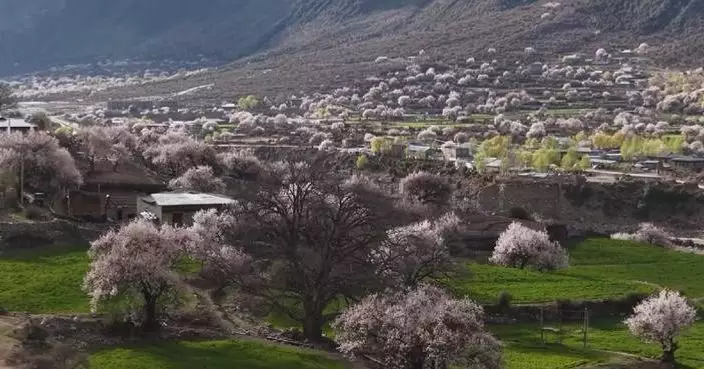
A high-altitude village in east China's Fujian Province is capitalizing on its natural resources and achievements in ecological restoration and water system management to attract visitors seeking to escape the summer heat and experience rural life.
Shaotuo Village is situated in the lush mountains and serene waters of Shouning County in the province; the picturesque landscape and pleasant climate are the primary reasons that attract many tourists to visit during the hot summer.
"Coming to Shaotuo Village feels like coming to a natural air-conditioned room, a natural oxygen bar, making people feel particularly comfortable," said visitor Wang Houhua.
Since 2016, the local government has launched a comprehensive ecological and environmental remediation of the reservoir area. At the same time, it has also expanded the reservoir water area and improved the construction of basic river and lake management facilities, such as lakeside trails and forest boardwalks.
In addition, Shaotuo Village has also optimized its old facilities, such as converting the abandoned reservoir management building into a cafe and the idle pond into a camping site, and introducing fishing, lake tours, lawn concerts and other entertainment formats.
According to statistics, Shaotuo Village has received over 150,000 tourists so far this year, and many villagers have made a living from tourism right at their doorstep.
"Currently, there are more than 200 people in the village, all of whom are engaged in homestays and agritainment," said Xu Feng, Party branch secretary of Shaotuo Village.
"The number of tourists is increasing day by day, so I converted my house into a homestay. The occupancy rate is quite high now. I'm happy to be able to make money right at home," villager Fan Zengfeng said.

Fujian village attracts summer tourists through successful resource management
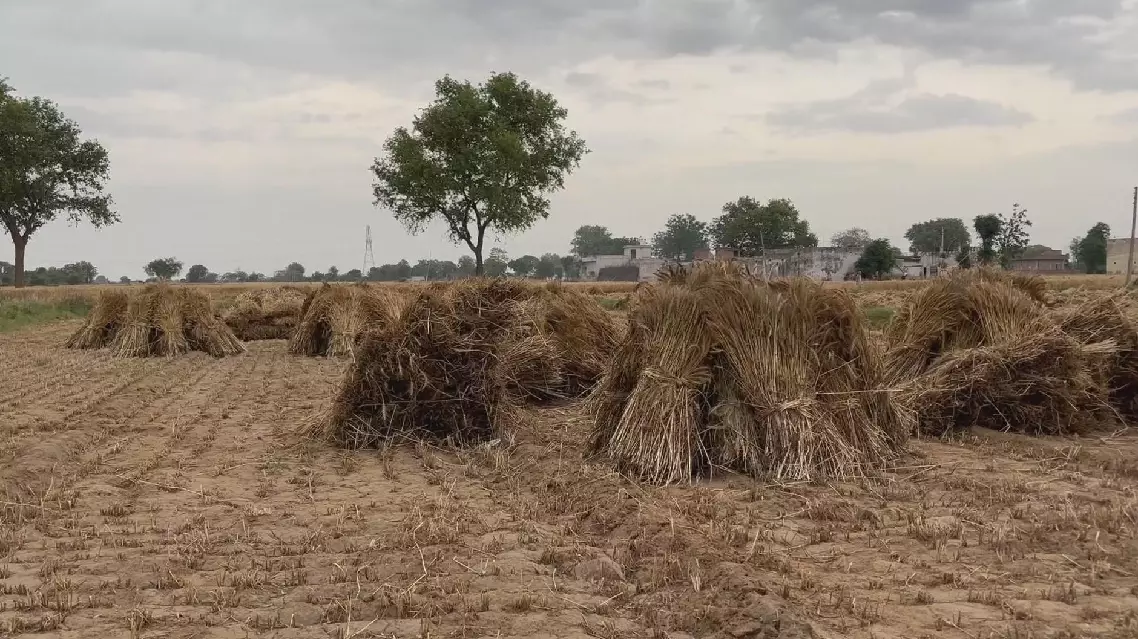
Farmers in India, a major agricultural producer and fertilizer importer, are raising concerns over fertilizer availability ahead of the planting season, as the escalating Middle East conflict and disruptions to shipping through the Strait of Hormuz put global supplies at risk.
The Middle East serves as both a vital energy hub and a major global fertilizer supplier, yet the ongoing U.S.-Israeli war with Iran has heightened risks of disruption to international supplies.
Chand Singh Yadav, a farmer in Haryana, a northern Indian state, said poor crop yields would be disastrous for the country and called on the government to ensure adequate supplies of fertilizers, agrochemicals and seeds to prevent a food crisis. "Without fertilizers, our crops will not grow well, and this would be disastrous for the entire country. If farmers cannot grow crops, people will not be able to buy food in the market. We urge the government to improve the supply system for fertilizers, agrochemicals and seeds to prevent the country and society as a whole from sliding into a food crisis," he said.
The Indian government is stepping up subsidies for farmers and optimizing fertilizer distribution and allocation to stabilize the supply. Prices have remained broadly stable, but demand is expected to surge ahead of the planting season, potentially exacerbating supply pressures.
"The current situation is worrying for us farmers. Spring sowing has not yet started, and the rainy season has not arrived. Fertilizer prices are temporarily stable, but in two months, demand for agricultural fertilizers will become pressing. Without fertilizers, it will be difficult to properly cultivate various types of crops. Urea and diammonium phosphate are especially critical. Crops can only grow normally when these fertilizers are applied. As these fertilizers are largely imported, if the conflict persists, supplies cannot be guaranteed," said Santosh Mishra, a farmer in India's eastern state of Odisha.
Escalating Middle East conflict strains India’s fertilizer supply
Escalating Middle East conflict strains India’s fertilizer supply